Startup Funding News Today, October 8, 2026: Manus, Universal Quantum, Mecka, Verso & More
 Nickie Louise
Posted On October 8, 2026

Startup funding over the past 24 hours has been dominated by a remarkable comeback in the AI agent market, alongside major investments in quantum computing, physical AI, cybersecurity, fusion energy, and financial infrastructure. Manus led the day with more than $500 million in fresh funding, returning to the private capital market after Chinese regulators forced Meta to unwind its $2 billion-plus acquisition. British quantum computing startup Universal Quantum raised more than $100 million, while Mecka secured $60 million from Sequoia Capital and a group of major technology investors to build the human-motion data infrastructure needed to train robots.
The 10 companies selected for today’s report disclosed more than $727 million in dollar-denominated financing, €7.12 million in euro-denominated funding, and a ¥3.23 billion Series B second close in Japan. The Japanese figure has an important qualification: Helical Fusion’s announcement includes an investment previously disclosed in July, so its entire second-close amount should not be treated as newly announced capital. Across the selected deals, investors are financing AI agents, robotics training data, quantum processors, agent security, industrial membranes, satellite communications, payments, and consumer intelligence.
Three companies—Manus, Universal Quantum, and Mecka—account for more than $660 million of the disclosed dollar funding. That concentration makes October 8 another example of a venture market where a small number of unusually large investments can dominate daily totals. Yet the smaller rounds are equally revealing: Rein Security is securing autonomous agents as they execute actions, UniSieve is reducing industrial energy consumption through advanced membranes, and Golbriak Space is preparing laser communication hardware for satellite constellations.
The Macro Environment: AI Agents, Physical Intelligence, and Strategic Infrastructure Attract Capital
Today’s funding activity highlights a venture market increasingly divided between companies that control digital intelligence and companies building the physical systems required to turn that intelligence into economic value.
Manus represents the software side. Its general-purpose agents can perform multistep tasks with limited human intervention, and the company is trying to rebuild its independent business after an acquisition that once seemed like a lucrative exit. Mecka represents the next layer: creating training data from human movement so robots can learn tasks that text or internet video alone can’t teach. Universal Quantum is pursuing an entirely different computing architecture, hoping modular trapped-ion systems can eventually solve problems beyond conventional computing.
These investments share an important characteristic. Investors are financing difficult-to-reproduce capabilities, not merely access to existing foundation models. For Manus, that may mean agent execution infrastructure, distribution, and customer relationships. For Mecka, it means proprietary sensors, data-collection operations, and the ability to translate human demonstrations into machine-readable training data. For Universal Quantum, it means semiconductor fabrication, quantum control systems, and specialized engineering accumulated over years.
Cybersecurity is becoming another beneficiary of growing AI autonomy. Rein Security’s financing arrives as organizations give software agents permission to browse internal systems, retrieve documents, execute code, and perform business transactions. That creates new attack surfaces, including malicious instructions hidden inside ordinary files and data. The Wall Street Journal reported today that global cybersecurity startups raised approximately $5.26 billion in the third quarter of 2026, nearly double the previous quarter, with AI-related security increasingly attracting investor attention.
The non-AI rounds reinforce the broader theme of strategic infrastructure. Helical Fusion is assembling industrial partners around a Japanese approach to nuclear fusion. UniSieve is trying to replace heat-intensive chemical separation processes with membranes. Golbriak is addressing the communications requirements of increasingly large satellite networks. TrueLayer and IMMIX are building different components of financial payment infrastructure. These markets require more than a strong software demonstration for adoption: industrial validation, regulation, manufacturing, customer trust, and distribution all matter.
Manus raises over $500M to rebuild its independent AI agent business after Meta acquisition collapse
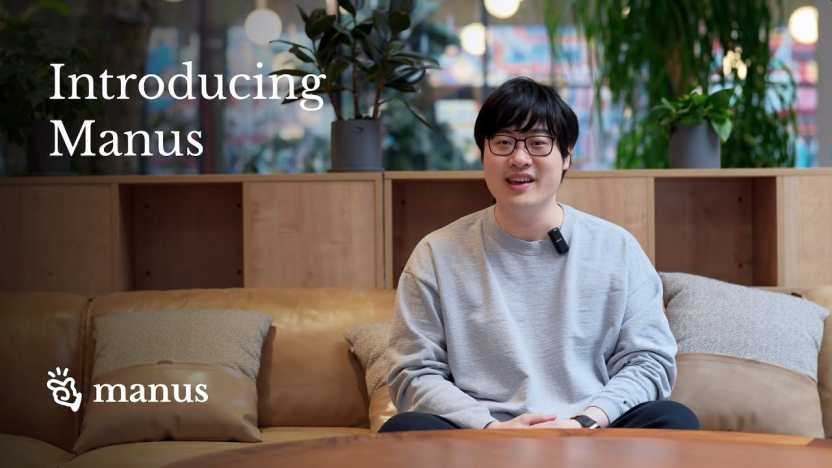
Butterfly Effect, the parent company of AI agent startup Manus, has raised more than $500 million in a new financing round co-led by Boyu Capital and IDG Capital. Existing investors Tencent, Sequoia China, and ZhenFund also participated.
The round follows an extraordinary sequence of events for the Singapore-based company, which originated in China. Meta announced an acquisition valued at more than $2 billion in December 2025, but Chinese authorities ordered the transaction unwound in April 2026 amid concerns about foreign control of advanced AI technology. Manus said in August that it would resume independent operations.
Manus develops general-purpose AI agents that can perform research, automation, coding, and other multistep tasks on behalf of users. The company attracted attention because its product could execute work rather than merely provide conversational responses. According to information previously reported by The Information and cited by Reuters, Manus had reached approximately $500 million in annualized revenue run rate by June, although that is not audited annual revenue and the company has not disclosed a more recent comparable figure.
The new financing is strategically significant for reasons extending beyond its size. Manus is showing that a failed acquisition does not necessarily end a technology company’s financing options, particularly when the underlying product has strong commercial traction. But it also highlights a growing risk for AI founders: regulatory jurisdiction can affect a company’s ownership, financing, and exit opportunities even after it moves its headquarters across borders.
Funding Details
Startup: Manus / Butterfly Effect
Investors: Boyu Capital, IDG Capital, Tencent, Sequoia China, ZhenFund
Amount Raised: More than $500 million
Total Raised: Not disclosed on a fully reconciled basis
Funding Stage: Not disclosed
Funding Date: October 8, 2026
Headquarters: Singapore; founded in China
Sector: Artificial intelligence / autonomous agents
Valuation: Not disclosed
Universal Quantum raises over $100M in funding to scale modular quantum computers
British quantum computing startup Universal Quantum raised more than $100 million in Series A funding co-led by DCVC and Firgun Ventures, with participation from Singapore’s EDBI, Artal, Integral GlobalTech, Main Sequence, Hostplus, NGS Super, IAG Capital, and other institutional and strategic investors. Roblox founder and CEO David Baszucki also invested.
The company describes the financing as the largest Series A raised by a UK-headquartered quantum computing startup. It brings Universal Quantum’s cumulative funding above $125 million, excluding the company’s substantial government contracts.
Founded in 2018 as a University of Sussex spinout, Universal Quantum is developing trapped-ion quantum computers. Its approach uses integrated quantum processing units manufactured through conventional semiconductor production techniques, with proprietary connections designed to link multiple processors into larger systems.
The company’s underlying thesis is that quantum computing’s biggest challenge is no longer simply demonstrating that individual qubits work. The industry must build machines with enough reliable, error-corrected qubits to solve commercially useful problems.
Universal Quantum has already secured major research contracts, including a German Aerospace Center program, and works with industrial partners on potential applications such as computational fluid dynamics. The company plans to expand internationally, including through research facilities in Singapore and Germany. Those partnerships provide technical validation, but they do not establish that commercially useful fault-tolerant quantum computing has been achieved.
The investment signals growing institutional willingness to finance the engineering required to move quantum computing beyond laboratory demonstrations. It also reflects international competition to control strategic computing technologies, with capital coming from the United States, Europe, Singapore, Japan, and Australia.
Funding Details
Startup: Universal Quantum
Investors: DCVC, Firgun Ventures, EDBI, Artal/Invus, Integral GlobalTech, Main Sequence, Hostplus, NGS Super, IAG Capital, EdenBase, Eigenstate Holdings, SiteGround Capital, David Baszucki and others
Amount Raised: More than $100 million
Total Raised: More than $125 million
Funding Stage: Series A
Funding Date: October 8, 2026
Headquarters: Haywards Heath, United Kingdom
Sector: Quantum computing/semiconductors / deep technology
Valuation: Not disclosed
Mecka raises $60M in funding to build the human-motion data infrastructure for physical AI
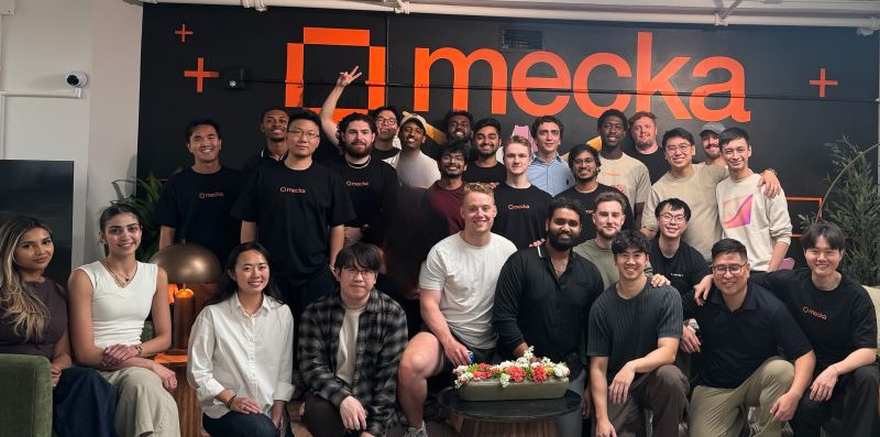
Mecka raised $60 million in Series B funding led by Sequoia Capital, with new investors including Nvidia, Microsoft venture arm M12, Qualcomm Ventures, and Samsung. Existing backers Kindred, Framework Ventures, and Neo participated, alongside individual investors including DoorDash CEO Tony Xu and former Tesla Optimus leader Milan Kovac.
The company is building infrastructure to solve one of robotics’ most persistent problems: getting enough real-world training data for machines to learn how people interact with physical objects.
Large language models have benefited from enormous collections of text and other internet content. Robots need different information. Understanding how to fold clothing, manipulate tools, apply pressure, or grasp unfamiliar objects requires data about motion, force, geometry, and physical interaction.
Mecka designs multisensor capture hardware and operates data-collection programs in homes and commercial environments. Its research systems reconstruct human movement and convert the resulting information into structured training data that robotics companies can use. The startup says its work includes collaborations with researchers at institutions including Stanford, MIT, Georgia Tech, and ETH Zurich.
The commercial numbers are striking. Mecka says it exceeded $100 million in annualized revenue run rate in June 2026 and expects to reach $300 million by year-end. Those figures are company-reported, and the year-end target is a projection, not achieved revenue.
This round reflects an emerging opportunity beneath the humanoid robotics boom. Instead of competing to manufacture the winning robot, Mecka is attempting to supply data and deployment infrastructure to multiple robotics companies.
If human-demonstration data becomes an important input for training physical AI, Mecka could benefit regardless of which robot manufacturers eventually dominate the market.
Funding Details
Startup: Mecka
Investors: Sequoia Capital, Nvidia, M12, Qualcomm Ventures, Samsung, Kindred, Framework Ventures, Neo and strategic angels
Amount Raised: $60 million
Total Raised: Approximately $128 million based on publicly reported financing history
Funding Stage: Series B
Funding Date: October 7, 2026
Headquarters: United States, with North American operations
Sector: Physical AI/robotics / training data infrastructure
Valuation: Not disclosed
TrueLayer raises $27M in funding to expand Europe’s account-to-account payment infrastructure
London-based payments company TrueLayer secured $27 million in fresh funding led by Italy’s CDP Venture Capital, with additional participation from new and existing investors. The financing supports its continued expansion in European account-to-account payments and its engineering operations in Milan.
TrueLayer provides infrastructure that enables consumers to pay merchants directly from their bank accounts rather than routing transactions through traditional card networks.
The company says more than 30 million consumers use its Pay by Bank network across 22 countries. Its customers and commercial relationships include prominent European merchants, and the company has expanded its network through acquisitions, including Swedish payments provider Zimpler earlier this year.
The strategic significance lies in Europe’s growing interest in payment infrastructure that operates independently of American card networks.
Account-to-account payments can reduce some merchant costs and support faster settlement, but competing with cards requires broad bank connectivity, merchant adoption, reliable authentication, fraud controls, and a familiar consumer experience.
TrueLayer has already raised substantial capital over its operating history, including a $50 million financing extension in 2024. Bloomberg reported that an earlier transaction valued the company at approximately $700 million, significantly below the unicorn valuation it reached in 2021. The valuation attached to today’s $27 million investment has not been disclosed.
For investors, the important question is whether growing adoption of Pay by Bank can translate into sustainable transaction revenue and stronger economics. Unlike many early-stage startups, TrueLayer is financing expansion in a market where it already has meaningful distribution and considerable competition.
Funding Details
Startup: TrueLayer
Investors: CDP Venture Capital and additional existing and new investors
Amount Raised: $27 million
Total Raised: Not fully reconciled; previously reported funding exceeded $320 million before this investment
Funding Stage: Not disclosed
Funding Date: October 8, 2026
Headquarters: London, United Kingdom
Sector: Fintech / open banking/payments infrastructure
Valuation: Not disclosed for the new round
Rein Security raises $25M in funding to protect autonomous AI agents while they execute actions
Rein Security raised $25 million in Series A funding co-led by Glilot Capital and Sienna Venture Capital, with participation from Corner Ventures, Atlacle, and RNP Capital Advisors. The financing brings total funding to $35 million.
Founded in 2024 and co-headquartered in New York and Tel Aviv, Rein is building security software for enterprises deploying autonomous AI agents.
Its platform uses a runtime monitoring architecture that observes agents as they execute code and interact with business systems. Rather than examining only an agent’s permissions before deployment, Rein attempts to identify dangerous behavior while actions are taking place.
That distinction matters because AI agents can be manipulated through ordinary-looking documents, emails, websites, and other inputs. An agent may have legitimate access to sensitive systems but still be induced to take unauthorized actions by instructions embedded in retrieved content.
Rein says its technology can monitor the resources agents access, trace activity to executed code, and block harmful actions without requiring organizations to route their data through a centralized proxy.
The company reports that revenue has grown eightfold and its customer base fivefold since its January 2026 product launch. Named customers include Dun & Bradstreet, Lemonade, Flex, and Swimlane. These are company-reported metrics, but they suggest enterprises are already allocating budgets to security specifically designed for agentic AI.
The opportunity is substantial, but competition will be intense. Established cybersecurity vendors are already moving toward AI-agent protection. Rein’s ability to differentiate will depend on deployment breadth, runtime visibility, response accuracy, and whether customers trust its controls inside critical production environments.
Funding Details
Startup: Rein Security
Investors: Glilot Capital, Sienna Venture Capital, Corner Ventures, Atlacle, RNP Capital Advisors
Amount Raised: $25 million
Total Raised: $35 million
Funding Stage: Series A
Funding Date: October 8, 2026
Headquarters: New York, United States, and Tel Aviv, Israel
Sector: Cybersecurity / agentic AI/runtime protection
Valuation: Not disclosed
Helical Fusion announces ¥3.23B Series B second close to advance Japanese fusion energy technology
Tokyo-based Helical Fusion announced the completion of a ¥3.23 billion Series B second close, adding industrial investors including Fuji Electric, Fujikura, Tokyo Gas, KKT, Urata, and Kepple Group. The announcement brings the total Series B financing to ¥5.93 billion.
The figure requires careful interpretation. The ¥3.23 billion second close includes a capital partnership with Ando Hazama, announced in July, along with investment through EcloudNEXT. Consequently, the announcement is new, but the full reported second-close amount does not represent capital first disclosed today.
Helical Fusion is developing a fusion reactor based on the helical, or stellarator, approach to plasma confinement. Unlike approaches that rely on large plasma currents, stellarator designs use complex magnetic fields generated by external coils to confine extremely hot plasma.
The company grew out of Japanese research associated with the National Institute for Fusion Science. Its development program includes high-temperature superconducting magnets and reactor components intended to support sustained operations, maintainability, and eventual commercial electricity generation
Helical’s roadmap includes an integrated demonstration system called Helix HARUKA and a planned commercial power-generation system called Helix KANATA, with major milestones targeted for the 2030s. Those remain development objectives, not operating commercial reactors.
The investor syndicate matters because commercial fusion will require expertise beyond plasma physics. Fuji Electric contributes industrial electrical equipment experience, Fujikura has expertise in superconducting materials, and Tokyo Gas brings energy-market knowledge.
For investors, fusion remains an exceptionally long-duration and technically risky category. But today’s announcement shows Japanese industrial companies beginning to finance the supply chain and engineering required for a potential future fusion industry rather than leaving development entirely to research institutions.
Funding Details
Startup: Helical Fusion
Investors: Fuji Electric, Fujikura, Tokyo Gas, KKT, Urata, Kepple Group, Ando Hazama, EcloudNEXT investors
Amount Raised: ¥3.23 billion Series B second close; partly includes previously announced investment
Total Raised: ¥13.05 billion including equity, loans, and grants
Funding Stage: Series B, second close
Funding Date: October 8, 2026 announcement
Headquarters: Chiyoda, Tokyo, Japan
Sector: Fusion energy / advanced energy infrastructure
Valuation: Not disclosed
UniSieve raises $9M to replace energy-intensive industrial separation with advanced membranes
Zurich-based UniSieve raised $9 million in Series A funding led by the Orano Venture Fund, managed by Supernova Invest, with participation from Amadeus APEX Technology Fund, Founderful, Zürcher Kantonalbank, Guenat Holding, and other investors. Total funding has reached approximately $25 million,
Founded in 2018 by ETH Zurich researchers Samuel Hess and Elia Schneider, UniSieve develops membranes that separate molecules using engineered porous materials, including metal-organic frameworks and zeolites.
Industrial chemical separation is one of the most energy-intensive parts of manufacturing. Conventional facilities frequently use heat to separate substances with different boiling points, requiring considerable energy even when the molecules involved differ only slightly in size.
UniSieve’s approach is to pass mixtures through specially engineered membranes that allow certain molecules through while retaining others. If the technology performs reliably at industrial scale, it could reduce the energy needed for processes used in petrochemicals, plastics, and carbon capture.
The company is targeting two initial commercial markets: separating olefins used in chemical manufacturing and capturing carbon dioxide from industrial emissions. Polish chemicals company Qemetica has begun testing a UniSieve carbon-capture installation, according to the funding coverage.
The financing is a bet on industrial economics as much as environmental performance. Chemical producers generally cannot justify adopting new separation technology solely because it reduces emissions. The system must also provide reliable throughput, manageable maintenance costs, and a credible financial return.
UniSieve is therefore entering the difficult transition from advanced materials research to equipment that must operate continuously inside industrial plants.
Funding Details
Startup: UniSieve
Investors: Orano Venture Fund/Supernova Invest, Amadeus APEX Technology Fund, Founderful, Zürcher Kantonalbank, Guenat Holding and others
Amount Raised: $9 million
Total Raised: $25 million
Funding Stage: Series A
Funding Date: October 8, 2026
Headquarters: Zurich, Switzerland
Sector: Climate technology / industrial membranes/carbon capture
Valuation: Not disclosed
Verso raises $6M in funding to build an AI-powered consumer intelligence platform

French startup Verso raised $6 million in Seed funding led by Angular Ventures, with participation from 100in, Kima Ventures, Olympe Capital, Sharpstone Capital, and angel investors. The company is also backed by startup studio Hexa.
Verso is attempting to replace parts of traditional consumer research with an AI platform that conducts interviews, analyzes responses, and maintains continuously updated customer intelligence.
Traditional market research can be expensive and slow. Companies may spend weeks recruiting participants, running interviews, interpreting results, and producing reports that other departments struggle to reuse.
Verso combines AI-moderated video interviews with a searchable research database. Its system can adjust questions during conversations, analyze large volumes of responses, and create consumer profiles that are updated as additional research becomes available.
The company says more than 30 organizations use its platform, including Ferrero, Orange, and Michelin. It claims its system can generate insights approximately ten times faster and at one-quarter the cost of conventional research agencies, although those figures are company-reported.
The investment thesis connects to a broader shift in enterprise AI: companies increasingly want access to continuously updated business intelligence rather than static reports.
Verso’s future defensibility will depend on the quality and breadth of its research data, its relationships with enterprise customers, and whether its platform becomes part of recurring product and marketing decisions.
Funding Details
Startup: Verso
Investors: Angular Ventures, 100in, Kima Ventures, Olympe Capital, Sharpstone Capital, angel investors
Amount Raised: $6 million
Total Raised: Not disclosed
Funding Stage: Seed
Funding Date: October 8, 2026
Headquarters: France
Sector: Enterprise AI/market research/consumer intelligence
Valuation: Not disclosed
Golbriak Space raises €4M in funding to mass-produce laser communication terminals for satellites
Estonian space technology company Golbriak Space raised €4 million in Seed funding co-led by Join Capital and PhotonVentures, with participation from Takeoff, the aerospace accelerator associated with CDP Venture Capital’s national accelerator network.
The investment was made into the company’s Italian holding entity, Iribits, and will support industrial development and production at its Estonian operating subsidiary.
Golbriak builds optical communication terminals that use lasers to transmit information between satellites, aircraft, and other platforms.
Laser communications can provide high-bandwidth connections while reducing dependence on crowded radio-frequency spectrum. But the hardware has historically presented difficult engineering problems, especially around beam alignment, reliability, size, and integration.
Golbriak is attempting to simplify these constraints through its own optical, electronic, mechanical, and software architecture. Its products include ERMESAI+ for space applications and ARES for airborne communications.
The company says it already has paying customers and is negotiating programs that could require several thousand terminals. Those prospective orders have not all converted into completed contracts, but they explain the emphasis on manufacturing scale.
Satellite constellations increasingly need to exchange data directly with one another rather than sending every transmission through ground stations. That creates an emerging equipment market for companies that can manufacture reliable optical communication terminals at scale.
Funding Details
Startup: Golbriak Space
Investors: Join Capital, PhotonVentures, Takeoff
Amount Raised: €4 million
Total Raised: Not disclosed
Funding Stage: Seed
Funding Date: October 8, 2026
Headquarters: Tallinn, Estonia; Italian holding company
Sector: Space technology/photonics / optical communications
Valuation: Not disclosed
IMMIX raises €3.12M in funding to build AI-driven currency infrastructure for stablecoin payments
London-based IMMIX raised €3.12 million ($3.5 million) in funding from Crane Venture Partners, BTSE, and Portfolio Ventures to expand its foreign-exchange infrastructure for stablecoin payments.
Founded by Andrew Mann and David Twomey, IMMIX is developing trading infrastructure that allows payments companies to convert between stablecoins denominated in different currencies.
The problem becomes especially pronounced outside the U.S. dollar. Stablecoin payments may settle quickly, but businesses still need reliable foreign-exchange liquidity when converting between currencies.
In fragmented markets, a transaction may require several conversions through intermediary assets. Each additional step introduces spreads, trading costs, liquidity requirements, and operational risk.
IMMIX uses machine-learning models to price transactions and provide liquidity. Its system is designed to combine multiple currency-conversion steps into a single transaction where possible.
The company says it has processed more than $25 billion in customer trading volume since 2024 and uses predictive models covering more than 10,000 financial instruments. Those figures are company-reported, but they suggest IMMIX is serving an operational market rather than building infrastructure without customers.
The round reflects investor interest in what happens after stablecoins achieve wider adoption. Issuing tokens is only one part of the payment system. Businesses still require currency conversion, liquidity, pricing, compliance, and reliable settlement across jurisdictions.
IMMIX is betting that providers of financial services can become valuable infrastructure, regardless of which stablecoin issuers ultimately dominate.
Funding Details
Startup: IMMIX
Investors: Crane Venture Partners, BTSE, Portfolio Ventures
Amount Raised: €3.12 million / approximately $3.5 million
Total Raised: At least €5.62 million in disclosed rounds
Funding Stage: Not disclosed
Funding Date: October 8, 2026
Headquarters: London, United Kingdom
Sector: Fintech/stablecoin infrastructure / foreign exchange / AI
Valuation: Not disclosed
What Today’s Funding Activity Reveals
The first conclusion is extreme capital concentration. Manus alone accounts for more than two-thirds of the newly disclosed U.S.-dollar financing across today’s selected companies. Add Universal Quantum and Mecka, and the concentration becomes even clearer.
That does not mean investors are abandoning smaller startups. It means companies perceived to control scarce technologies or strategically important markets can still attract checks much larger than those available to ordinary early-stage businesses.
Second, today’s funding supports a distinction between AI models and AI infrastructure.
Manus develops autonomous agents. Mecka creates the training data robots need. Rein secures the actions agents take. Verso builds a specialized consumer intelligence database. IMMIX uses machine learning within a broader financial trading system.
These companies participate in the AI economy, but they don’t compete in the same market.
Third, physical technology is attracting capital around commercialization rather than scientific novelty alone. Universal Quantum is building manufacturing-compatible quantum processors and interconnects. Helical Fusion is assembling industrial partners around reactor components. UniSieve is translating advanced porous materials into production membranes. Golbriak is moving from specialized optical engineering toward higher-volume manufacturing.
Each has to solve a problem that software startups rarely face: technical performance must survive real-world deployment at a commercially acceptable cost.
Fourth, the geographic distribution reinforces the international nature of strategic technology investment. A Singapore-based AI company with Chinese roots raises capital from major Chinese investors. A British quantum company attracts American, European, Singaporean, Japanese, and Australian capital. Japanese industrial companies invest in domestic fusion technology. European venture funds back space communications and payment infrastructure.
These transactions are global, but geopolitics is increasingly shaping how investors assess ownership, intellectual property, and deployment.
Fifth, cybersecurity is evolving alongside AI autonomy. Rein’s funding highlights an emerging distinction between securing an application’s configuration and securing the actions an agent takes after deployment.
Organizations may eventually operate thousands of agents interacting with databases, financial systems, customers, and other agents. Understanding what those systems are doing—and stopping unauthorized actions—could become a recurring enterprise security requirement.
Finally, financing structures deserve more scrutiny. Helical Fusion’s headline second-close amount partly overlaps with previously disclosed investment. Universal Quantum’s research contracts are separate from venture funding. Manus’s previously reported annualized revenue run rate is not audited annual revenue. Each distinction matters when using daily funding announcements to evaluate market health.
Startup Funding Table
| Startup | Amount Raised | Sector | Funding Stage | Lead/Key Investors | Country |
|---|---|---|---|---|---|
| Manus / Butterfly Effect | >$500M | AI agents / autonomous software | Not disclosed | Boyu Capital, IDG Capital, Tencent, Sequoia China, ZhenFund | Singapore |
| Universal Quantum | >$100M | Quantum computing/semiconductor technology | Series A | DCVC, Firgun Ventures, EDBI, Artal/Invus and others | United Kingdom |
| Mecka | $60M | Robotics / physical AI/training data | Series B | Sequoia, Nvidia, M12, Qualcomm Ventures, Samsung | United States |
| TrueLayer | $27M | Fintech / open banking/payments | Not disclosed | CDP Venture Capital and others | United Kingdom |
| Rein Security | $25M | Cybersecurity / agentic AI | Series A | Glilot Capital, Sienna Venture Capital, Corner Ventures | United States / Israel |
| Helical Fusion | ¥3.23B second close* | Fusion energy | Series B | Fuji Electric, Fujikura, Tokyo Gas and others | Japan |
| UniSieve | $9M | Industrial membranes/climate technology | Series A | Orano Venture Fund, Founderful, Zürcher Kantonalbank and others | Switzerland |
| Verso | $6M | Enterprise AI/consumer intelligence | Seed | Angular Ventures, Kima Ventures, 100in and others | France |
| Golbriak Space | €4M | Space communications/photonics | Seed | Join Capital, PhotonVentures, Takeoff | Estonia |
| IMMIX | €3.12M | Fintech/stablecoin FX infrastructure | Not disclosed | Crane Venture Partners, BTSE, Portfolio Ventures | United Kingdom |
Helical Fusion’s second close includes a transaction announced previously; the amount should not be counted entirely as capital first disclosed on October 8.
Strategic Takeaways for Founders and Investors
1. Proprietary data may become one of physical AI’s most valuable assets.
Mecka’s financing shows investors are willing to back companies building the data infrastructure behind robotics. Capturing physical interaction data requires hardware, collection operations, calibration, quality control, and specialized modeling. Unlike ordinary web data, much of that information cannot be collected simply by crawling the internet.
2. Quantum computing investment is moving toward manufacturability.
Universal Quantum’s financing emphasizes modular architectures, commercial semiconductor fabrication, and scalable processor connections. Investors are funding an engineering approach designed to bridge the gap between laboratory prototypes and large fault-tolerant systems.
3. AI agents create demand for new cybersecurity infrastructure.
Rein illustrates the opportunity created when agents move from generating recommendations to executing actions. Security products that can trace, authorize, interrupt, and audit agent behavior may become increasingly important as enterprises adopt autonomous workflows.
4. Geopolitical risk belongs in startup financial models.
Manus provides an unusually visible example. A multibillion-dollar acquisition was unwound following regulatory intervention, forcing the company to return to independent financing. Founders operating across sensitive jurisdictions should account for regulatory risk when evaluating capital sources, intellectual-property arrangements, headquarters decisions, and potential exits.
5. Industrial technology must demonstrate economic value alongside technical performance.
UniSieve’s membranes and Golbriak’s optical terminals face different engineering problems, but both must convince customers that their products can operate reliably at scale. Industrial buyers ultimately care about performance, integration costs, downtime, maintenance, and return on capital—not simply an impressive technical demonstration.
6. Strategic investors can contribute capabilities that financial investors cannot.
Helical Fusion’s relationships with industrial companies potentially provide access to equipment, manufacturing expertise, specialized materials, and future commercial partners. In capital-intensive markets, those contributions can sometimes be as important as the financing itself.
7. Payment infrastructure is becoming more specialized.
TrueLayer targets account-to-account payments, while IMMIX addresses foreign-exchange conversion between stablecoins. Both illustrate how payment innovation creates businesses underneath the consumer-facing transaction.
The economic opportunity may lie in infrastructure that handles liquidity, compliance, settlement, and integrations rather than the payment interface itself.
8. AI applications need durable customer knowledge to resist commoditization.
Verso is building a continuously updated base of consumer research. Its long-term value will depend on whether customers repeatedly use that information to make decisions and whether the accumulated research becomes difficult to reproduce.
The same principle applies more broadly: a company whose product improves through proprietary customer data may be better positioned than one selling access to an interchangeable model.
9. Funding headlines should be separated from realized financial performance.
Manus and Mecka have both reported substantial annualized revenue run rates. Those figures indicate business momentum, but they are not equivalent to audited annual revenue, recurring contractual revenue, or profitability.
Investors assessing fast-growing companies should examine customer concentration, margins, retention, cash conversion, and the cost of delivering the underlying service.
Conclusion
October 8 is one of the more substantial funding mornings of the week, led by Manus’s return to independent financing and Universal Quantum’s nine-figure investment in quantum computing. Mecka’s Series B adds another important dimension, directing capital toward the real-world data needed to train robots.
Beneath those headline transactions, investors are financing agent security, European payment infrastructure, advanced manufacturing materials, fusion energy, satellite communications, and specialized enterprise intelligence.
The common thread is not simply enthusiasm for AI or frontier technology. It is investment in capabilities that remain difficult to reproduce even when software becomes easier to build.
Manus needs reliable agents and commercial distribution. Mecka needs physical-world data. Universal Quantum needs advanced hardware and engineering. Rein needs trusted runtime controls. Helical Fusion, UniSieve, and Golbriak need technologies that perform outside the laboratory.
As intelligence becomes more widely available, investors are increasingly financing the scarce infrastructure, proprietary knowledge, and real-world execution required to turn technological capability into economic value.