Startup Funding News Today, October 6, 2026: Reactor, Vinci, Spiko, Hadrian, WhiteLab Genomics & More
 Nickie Louise
Posted On October 6, 2026

Startup funding over the past day sends a clear message: investors are still writing large checks for AI, but the money is moving toward specialized systems closer to real economic activity — semiconductor design, cybersecurity, healthcare administration, supply-chain transactions, genomic medicine, and enterprise finance.
The standout is Vinci, which raised $250 million at a $1.5 billion valuation to expand AI-driven physics simulation for chip and hardware design. Spiko followed with a $90 million Series B for tokenized cash-management infrastructure, while Dutch biotech RougeTx launched with a $58 million Series A. Cybersecurity startup Hadrian raised $40 million, and WhiteLab Genomics secured $26 million to combine AI-designed genomic assets with experimental validation.
Across the 10 selected rounds, startups disclosed $490 million in dollar-denominated funding and €28 million in euro-denominated capital, plus roughly $15 million of additional Series A capital at Reactor, inferred from cumulative funding rising from $59 million to $74 million. Eight of the 10 selected companies are AI-native or use AI as a central part of the product. Seven are Seed or Series A-stage businesses, showing that today’s capital is split between one unusually large AI infrastructure bet and a much wider set of younger vertical-technology companies.
Europe is unusually prominent by deal count: Spiko, RougeTx, Hadrian, WhiteLab, Procuros, Vocca, Cleavr, and calliora all have European headquarters or substantial European operations. That should not be mistaken for a full-day geographic shift.
The Macro Environment: Capital Is Moving From Models Into Operating Systems
Today’s deals fit a broader venture pattern. Global startups raised $159 billion in the third quarter of 2026, according to Crunchbase, up 53% from a year earlier even though funding fell 25% from Q2. AI companies captured $102 billion, or 64% of global venture capital, while a record 27 companies raised billion-dollar rounds. Roughly one-third of all Q3 venture funding went to those 27 companies alone.
That concentration matters because today’s slate shows what is happening underneath the mega-rounds. Vinci is not trying to build another general chatbot. It is applying AI to physics simulation inside semiconductor and hardware engineering. Hadrian is automating offensive-security work. Procuros is connecting the transaction systems used by suppliers and retailers. Vocca and calliora are inserting AI into healthcare administration. Cleavr is automating accounts receivable. Each company is operating where mistakes have direct financial or operational consequences.
The common investment thesis is increasingly about context rather than raw model intelligence. A chip-design system needs physics and engineering constraints. A hospital billing agent needs clinical documentation, reimbursement rules, and audit requirements. A supply-chain agent needs trusted transaction data. A medical receptionist needs specialty-specific scheduling logic. These are domains where a better model helps, but access to the model alone does not create the company.
Today’s biotech deals reinforce the same point from another direction. RougeTx is being financed around biological evidence and a potential therapy for a disease with no approved treatment. WhiteLab uses AI to design genomic delivery systems, then tests those designs experimentally and in living systems. Investors are paying for the bridge between computation and biological proof, not for an algorithm in isolation.
The result is a venture market that increasingly resembles two markets running simultaneously: giant pools of capital financing AI platforms and infrastructure, and smaller but still substantial checks backing companies that own a narrow workflow, dataset, regulatory position, scientific mechanism, or distribution channel.
Vinci raises $250M to bring AI-driven physics simulation deeper into chip design
Palo Alto-based Vinci raised $250 million at a $1.5 billion valuation, led by Advent, Temasek, and Xora Innovation. Eclipse, Khosla Ventures, and Madrona also participated.
Vinci builds AI-assisted physics simulation software for semiconductor and hardware engineers. The company began with thermal modeling — a growing problem as AI chips become larger, denser, and hotter — and plans to expand into full-system simulation, including vibration and electromagnetics. CEO Hardik Kabaria told Reuters the company is moving from a handful of pilot deployments toward broader production use.
The investment thesis matters because chip design is dominated by deeply embedded engineering software from companies such as Cadence and Synopsys. Replacing or augmenting those tools is difficult: simulation software has to produce results engineers trust before billions of dollars are committed to manufacturing.
That difficulty can become Vinci’s defense. If its models prove accurate enough to become part of production hardware workflows, switching costs can be high. A semiconductor engineer will tolerate a generative model producing a mediocre paragraph. The same engineer will not tolerate a simulation incorrectly predicting thermal behavior before a chip reaches fabrication.
The round also shows how AI is spreading into the tooling behind the AI boom itself. More AI chips create more design complexity, which creates more demand for faster simulation. Vinci is effectively selling picks and shovels to companies designing the hardware that trains and runs AI.
Funding Details
Startup: Vinci
Investors: Advent, Temasek, Xora Innovation, Eclipse, Khosla Ventures, Madrona
Amount Raised: $250 million
Total Raised: At least $296 million based on previously disclosed financing and the new round
Funding Stage: Not disclosed
Funding Date: October 6, 2026
Headquarters: Palo Alto, California, United States
Sector: Semiconductor software / AI/physics simulation
Valuation: $1.5 billion
Spiko raises $90M in funding to turn idle corporate cash into programmable yield
London- and Paris-based Spiko raised $90 million in Series B funding led by New Enterprise Associates, with Index Ventures, Bpifrance, Speedinvest, Flourish Ventures, Shapers, White Star Capital, Blockwall, Frst, EQNX, Mirana Ventures, Wintermute Ventures, and several angel investors participating. The round takes total funding to $120 million
Spiko issues regulated money-market funds whose ownership records run on public blockchains. Businesses can use the funds to earn yield on cash that might otherwise sit idle, while APIs allow financial platforms and corporate treasury systems to move funds automatically.
The company says it now manages $2.7 billion in assets, more than five times last year’s level, and serves more than 10,000 businesses and individuals across over 25 jurisdictions. Those are company-reported figures, but the scale explains why a traditional venture firm such as NEA is willing to lead a $90 million round in a category that once sat largely inside crypto markets.
The interesting part of Spiko is not simply tokenization. Money-market funds already exist. The bet is that putting regulated financial products onto programmable rails can change how companies manage working cash. Treasury software — and eventually AI agents — can automatically maintain operating balances, sweep excess cash into yield-bearing assets, and withdraw it when payments are due.
That creates a meaningful barrier around regulation, fund structure, liquidity management, and trust. Blockchain technology is relatively easy to copy. Convincing businesses to park billions of dollars on a platform is not.
Funding Details
Startup: Spiko
Investors: NEA, Index Ventures, Bpifrance, Speedinvest, Flourish Ventures, Shapers, White Star Capital, Blockwall, Frst, EQNX, Mirana Ventures, Wintermute Ventures and angels
Amount Raised: $90 million
Total Raised: $120 million
Funding Stage: Series B
Funding Date: October 6, 2026
Headquarters: London and Paris
Sector: Fintech / tokenized assets/treasury management
Valuation: Not disclosed
RougeTx raises $58M in funding to develop a disease-modifying treatment for inherited bleeding disorder HHT
Netherlands-based RougeTx launched with a $58 million Series A, co-led by BioGeneration Ventures, Angelini Ventures, and Kurma Partners, with support from the European Investment Bank’s Aurea co-investment facility. Epidarex Capital, Vesalius Biocapital Partners, ROM Utrecht Region, p53 Invest, and Kerna Ventures also participated.
RougeTx is developing RTX-001 for hereditary hemorrhagic telangiectasia, or HHT, an inherited disorder that causes abnormal blood-vessel formation and recurrent bleeding. There are currently no approved therapies specifically for HHT, leaving patients dependent largely on supportive and off-label treatments.
The company’s approach focuses on pericytes, cells that help support and stabilize blood vessels. RTX-001 is designed to restore their attachment to endothelial cells, addressing the biological instability underlying the disease rather than simply managing bleeding after it occurs.
The $58 million Series A is large for a company entering preclinical development, but biotech economics are different from software. Drug candidates require toxicology, manufacturing, regulatory work, and clinical studies long before revenue appears. Investors are financing RougeTx far enough toward first-in-human development to determine whether its biology translates into a viable therapy.
Its periSCOPE platform adds a second dimension to the round. If the mechanism works in HHT, RougeTx believes the same vascular biology could support treatments for other diseases involving unstable blood vessels. That platform potential helps explain why investors are willing to finance the company before clinical proof.
Funding Details
Startup: RougeTx
Investors: BioGeneration Ventures, Angelini Ventures, EIB/Aurea, Kurma Partners, Epidarex Capital, Vesalius Biocapital Partners, ROM Utrecht Region, p53 Invest, Kerna Ventures
Amount Raised: $58 million
Total Raised: $58 million disclosed
Funding Stage: Series A
Funding Date: October 6, 2026
Headquarters: Naarden, Netherlands
Sector: Biotechnology / rare disease / vascular medicine
Valuation: Not disclosed
Hadrian raises $40M to automate offensive cybersecurity with AI agents
Amsterdam-based Hadrian raised $40 million in funding co-led by Forgepoint Capital International and SmartFin, with existing investors HV Capital, Motive Partners, Picus Capital, and Oetker Ventures participating. The round brings total funding to $65 million.
Hadrian combines continuous attack-surface monitoring with AI-driven penetration testing. Its Atlas system maps an organization’s external assets and tries to determine which exposures are actually exploitable, while Nova performs deeper agentic penetration testing.
The distinction matters because security teams already face more alerts than they can investigate. Hadrian’s pitch is that an enterprise does not need another database of possible vulnerabilities; it needs to know which vulnerabilities an attacker can actually turn into an attack path.
The company lists customers including McKesson, NBCUniversal, TotalEnergies, Amadeus, Leroy Merlin, Francisco Partners, and Damen Shipyards. Hadrian says customers have seen faster remediation and higher visibility into exploitable risks, though those performance metrics come from the company rather than independent testing.
Investor interest in this category is understandable. Attackers can now automate reconnaissance, exploit generation, and portions of the intrusion chain. Defenders increasingly need software that can operate continuously rather than relying on a penetration test conducted once or twice a year. The larger strategic question is whether AI offensive-security platforms become standalone categories or eventually become features inside major cybersecurity suites.
Funding Details
Startup: Hadrian
Investors: Forgepoint Capital International, SmartFin, HV Capital, Motive Partners, Picus Capital, Oetker Ventures
Amount Raised: $40 million
Total Raised: $65 million
Funding Stage: Not disclosed
Funding Date: October 6, 2026
Headquarters: Amsterdam, Netherlands
Sector: Cybersecurity / agentic AI / offensive security
Valuation: Not disclosed
WhiteLab Genomics raises $26M to turn AI-designed genomic assets into experimentally validated medicine
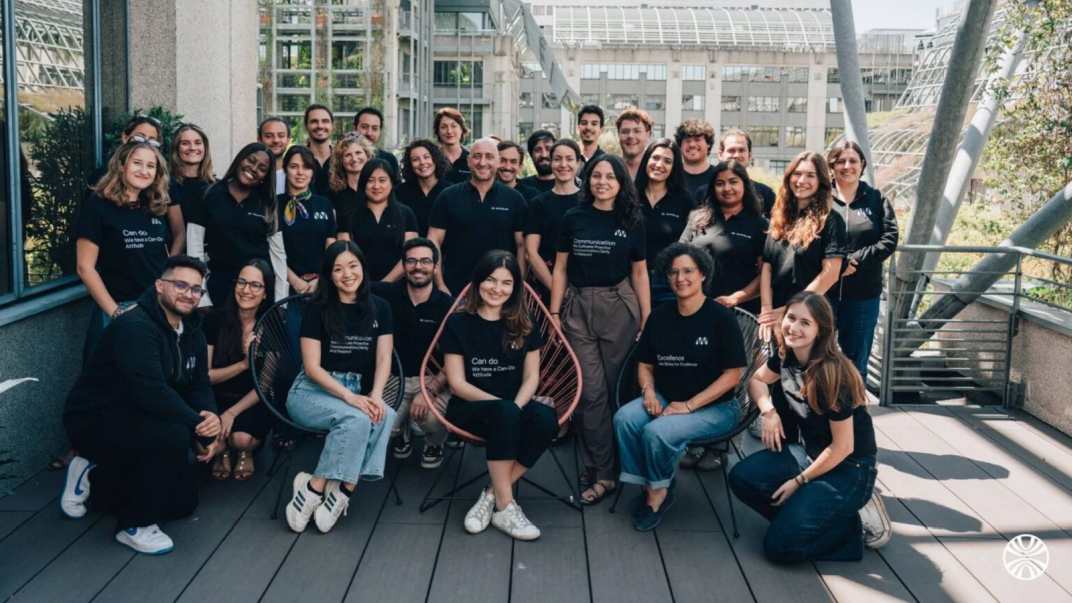
Paris-based WhiteLab Genomics closed a $26 million Series B led by AVP, with new investors Yaday Health and Blast Club joining existing backers Omnes Capital and Debiopharm Innovation Fund. The company has now raised roughly $37 million.
WhiteLab’s ALFRED platform uses AI to design viral and non-viral delivery vehicles and programmable genetic payloads for genomic medicines. The company then tests those designs experimentally and in vivo rather than stopping at computational predictions.
That combination is why WhiteLab stands out in the crowded AI-for-drug-discovery market. An algorithm can generate thousands of plausible molecules or delivery vehicles. The commercial bottleneck is determining which ones actually behave correctly in a living system.
WhiteLab says AI-designed AAV candidates developed with the Paris Brain Institute crossed the blood-brain barrier in animal studies while showing a strong brain-to-liver targeting ratio and no detectable liver signal. Those results remain preclinical and should not be confused with evidence in human patients.
The company also has about 15 revenue-generating partnerships with biotechnology and pharmaceutical companies, including Sanofi, according to Axios. That gives WhiteLab a business model that can generate partner revenue before carrying its own drugs through expensive clinical trials.
Funding Details
Startup: WhiteLab Genomics
Investors: AVP, Yaday Health, Blast Club, Omnes Capital, Debiopharm Innovation Fund
Amount Raised: $26 million / €23.2 million
Total Raised: Approximately $37 million
Funding Stage: Series B
Funding Date: October 6, 2026
Headquarters: Paris, France; operations also in Boston and Montreal
Sector: TechBio / genomic medicine / AI drug design
Valuation: Not disclosed
Procuros raises €20M to build the transaction layer for AI-powered supply chains
Hamburg-based Procuros raised €20 million in Series A funding led by XAnge, with W23 Global joining as a new investor and Point Nine, Creandum, SquareOne, b2venture, and angel investors participating. The round takes total funding to €34 million.
Procuros connects suppliers and retailers whose systems often communicate through incompatible ERP software, EDI formats, spreadsheets, PDFs, and manual processes. A company connects to Procuros once, and the platform translates orders, shipping notices, invoices, and other transaction data between trading partners.
The company says more than 300 customers now use the platform and that more than €3 billion in annualized order volume flows through it. It reports data accuracy above 99% and reductions in manual processing of up to 95%, though those operating figures are company claims.
The AI angle becomes more interesting as autonomous agents begin taking actions inside procurement and logistics systems. An agent cannot place an order reliably if the supplier, retailer, invoice, shipment, and ERP systems all speak different data languages. Procuros bets that the connective tissue beneath AI agents will become more valuable as those agents gain authority.
That could create a strong position because each new integration increases the network’s usefulness. The difficult asset is not the language model. It is the standardized, trusted flow of commerce data between organizations.
Funding Details
Startup: Procuros
Investors: XAnge, W23 Global, Point Nine, Creandum, SquareOne, b2venture, angel investors
Amount Raised: €20 million
Total Raised: €34 million
Funding Stage: Series A
Funding Date: October 6, 2026
Headquarters: Hamburg, Germany
Sector: Enterprise software / supply-chain infrastructure / AI
Valuation: Not disclosed
Vocca raises $20M to make AI the front desk for medical practices
Paris- and New York-based Vocca raised $20 million in Series A funding led by Norrsken VC, with Heal Capital, Speedinvest, Firstminute Capital, and angel investors including founders of Alan and Datadog participating.
Vocca’s voice AI answers patient calls, books and reschedules appointments, sends reminders, and handles routine administrative requests. Behind the conversational layer is a scheduling engine built around medical specialties, examination types, and practice-specific rules.
The company says it has grown from 2,000 to 15,000 medical practitioners across 1,500 practices in one year, while revenue increased sevenfold and monthly conversation volume rose tenfold to more than one million. Vocca reports resolving about 70% of conversations without human intervention, rising above 85% for mature customers. Those are company figures.
This illustrates why voice AI is becoming vertical software rather than simply a speech-model market. The hardest work isn’t answering the phone in a natural voice. It is understanding which examination can be booked, with which practitioner, for how long, under what specialty rules, and inside whatever scheduling system the practice already uses.
If Vocca becomes deeply embedded in those workflows, switching away means replacing operational knowledge accumulated over thousands of patient interactions. That can be much more defensible than voice quality alone.
Funding Details
Startup: Vocca
Investors: Norrsken VC, Heal Capital, Speedinvest, Firstminute Capital and strategic angels
Amount Raised: $20 million
Total Raised: $20 million plus previously disclosed €4.7 million; no single consolidated currency figure disclosed
Funding Stage: Series A
Funding Date: October 6, 2026
Headquarters: Paris, France and New York, United States
Sector: Healthcare AI / voice agents / medical administration
Valuation: Not disclosed
Reactor raises about $15M in a Series A extension as Nvidia backs world-model infrastructure

San Francisco-based Reactor added Nvidia’s NVentures and Sapphire Ventures to its Series A, taking total funding to $74 million. The incremental amount was not disclosed separately, but Reactor reported $59 million in total funding when it emerged from stealth in May, implying the extension added roughly $15 million.
Reactor does not build a world model itself. Instead, it provides infrastructure that allows developers to run interactive generative-video and world-model systems in real time through an inference engine, GPU cloud, streaming layer, SDK, and APIs.
That makes Nvidia’s participation strategically interesting. World models attempt to learn how physical environments behave so software or robots can reason about movement, objects, and consequences. Running those systems interactively requires large amounts of accelerated computing — exactly the kind of workload Nvidia wants to see proliferate.
Reactor is already working on projects across media, advertising, streaming, and robotics. The company says its infrastructure can render interactive environments at more than 60 frames per second with latency below 40 milliseconds, although those are company performance claims.
The longer-term opportunity is to become a neutral deployment layer regardless of which world-model developer wins. If model providers multiply while enterprises want a common way to run them, Reactor could benefit from the same abstraction dynamic that created large businesses around cloud and AI-model infrastructure.
Funding Details
Startup: Reactor
Investors: NVentures, Sapphire Ventures; existing investors include Lightspeed Venture Partners, WndrCo, Amplify Partners, Sky9 Capital and FPV Ventures
Amount Raised: Approximately $15 million in additional capital, inferred from cumulative funding increase
Total Raised: $74 million
Funding Stage: Series A extension
Funding Date: October 5, 2026
Headquarters: San Francisco, California, United States
Sector: AI infrastructure/world models / physical AI
Valuation: Not disclosed
Cleavr raises €8M to use AI to collect overdue invoices before working capital gets trapped
Paris-based Cleavr raised €8 million in Seed funding led by Varsity, with Kima Ventures, Better Angle, Portfolio Ventures, Kerala Ventures, Financière Saint James and other investors participating. The round follows a €1 million pre-seed financing earlier this year, bringing disclosed funding to €9 million.
Cleavr automates accounts-receivable work after an invoice is issued. Its software identifies the right customer contacts, manages follow-ups across email, phone, and SMS, tracks payment commitments, escalates disputes, and integrates the activity back into finance systems.
The startup says customers have reduced days sales outstanding by an average of 37%, collected 40% more cash, and spent substantially less time pursuing late payments. Those figures are company-reported and need to be judged over longer customer histories.
The business case becomes stronger when capital is expensive. An unpaid invoice is effectively an interest-free loan from the supplier to the customer. If software can reliably shorten that loan, the return can be measured directly in cash flow rather than softer productivity metrics.
That makes accounts receivable a good candidate for autonomous AI because the workflow is repetitive but still requires context: invoice history, customer relationships, disputed items, promises to pay, payment behavior, and escalation rules.
Funding Details
Startup: Cleavr
Investors: Varsity, Kima Ventures, Better Angle, Portfolio Ventures, Kerala Ventures, Financière Saint James, and others
Amount Raised: €8 million
Total Raised: €9 million
Funding Stage: Seed
Funding Date: October 6, 2026
Headquarters: Paris, France
Sector: Fintech/enterprise AI/accounts receivable
Valuation: Not disclosed
calliora raises $6M to catch hospital billing errors before insurers do
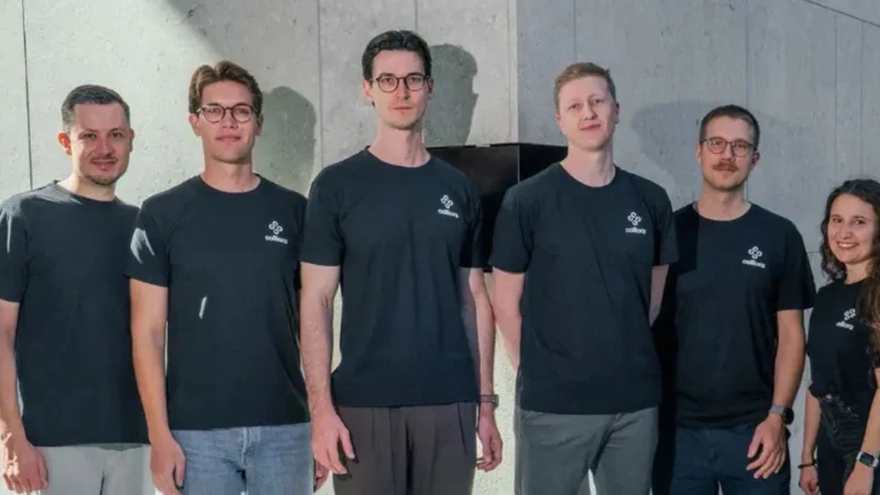
Munich-based calliora raised $6 million in pre-seed funding co-led by Bertelsmann Healthcare Investments and redalpine, with healthcare executives and AI researchers including Ulrich Wandschneider, Peter Sarlin and Frank Hutter participating.
calliora is building an AI operating layer around hospital billing and medical controlling. Its system looks across clinical documentation and coding data to identify missing diagnoses, missing evidence, or other errors before a hospital sends an invoice to an insurer.
The timing is unusually important. German reimbursement rules tightening in 2027 can expose hospitals with high error rates to significantly more insurer audits. According to reporting on the round, institutions with very poor audit results may eventually see nearly all invoices eligible for review. That turns billing accuracy from administrative housekeeping into an increasingly direct financial issue.
calliora says its software has more than halved the administrative effort required per case in early deployments, but it has not publicly named customer hospitals. That evidence gap matters: investors are financing a strong regulatory thesis and technically credible founding team before large-scale commercial proof is visible.
Still, the round illustrates a recurring pattern in today’s funding. Regulation creates complexity; complexity creates workflow; and workflow creates an opening for AI that knows the rules better than a generic assistant.
Funding Details
Startup: calliora
Investors: Bertelsmann Healthcare Investments, redalpine, Ulrich Wandschneider, Peter Sarlin, Frank Hutter, and other angels
Amount Raised: $6 million
Total Raised: $6 million disclosed
Funding Stage: Pre-seed
Funding Date: October 6, 2026
Headquarters: Munich, Germany
Sector: Healthcare AI/hospital billing / revenue-cycle software
Valuation: Not disclosed
What Today’s Funding Activity Reveals
The first pattern is capital concentration without complete market concentration. Vinci alone accounts for more than half of the explicitly dollar-denominated funding in today’s selected rounds. Yet nine other companies still attracted meaningful capital across finance, healthcare, cybersecurity, biotech, and enterprise infrastructure. This is not simply another story about one AI lab absorbing all available venture money.
Second, AI is moving closer to systems of record and systems of action. Procuros sits inside orders and invoices. Cleavr acts on unpaid receivables. Vocca manages medical appointments. calliora operates around hospital reimbursement. Hadrian probes live infrastructure. These products do not merely produce information; they interact with workflows where money, customers, security, or patient care can be affected.
Third, proprietary context is becoming a stronger competitive asset. Vinci needs physics data and engineering validation. Hadrian accumulates attack-path knowledge. Procuros connects transaction formats across trading networks. Vocca learns healthcare scheduling rules. Cleavr sees payment histories and disputes. The underlying models may improve for everyone, but these deployment histories accumulate company by company.
Fourth, AI and science are converging around validation. WhiteLab is valuable because it tests its designs experimentally. Vinci must prove simulation output matches physical reality. RougeTx ultimately has to show that its biological mechanism works in humans. The closer a startup gets to the physical world, the less investors can rely on benchmark scores alone.
Fifth, Europe is producing a large share of today’s qualifying companies, but capital still crosses borders freely. U.S. firm NEA leads Spiko. European and U.S. investors back WhiteLab. Norrsken’s Vocca is expanding into America. Angelini and the EIB are supporting Dutch biotech. The underlying investment market looks increasingly international even as governments become more sensitive to technological sovereignty.
Finally, today’s rounds reinforce why aggregate funding figures need context. Crunchbase counted $102 billion flowing into AI startups in Q3, but that number includes enormous frontier-model and infrastructure rounds. Today’s activity shows the other side of the market: AI is being broken into increasingly specialized businesses where the value proposition has to show up in security risk, engineering time, hospital revenue, inventory movement, cash collection, or patient access.
Startup Funding Table
| Startup | Amount Raised | Sector | Funding Stage | Lead/Key Investors | Country |
|---|---|---|---|---|---|
| Vinci | $250M | AI/semiconductor simulation | Not disclosed | Advent, Temasek, Xora Innovation | United States |
| Spiko | $90M | Fintech / tokenized cash funds | Series B | NEA, Index Ventures, Bpifrance + others | France / U.K. |
| RougeTx | $58M | Biotechnology / vascular disease | Series A | BioGeneration Ventures, Angelini Ventures, Kurma Partners | Netherlands |
| Hadrian | $40M | Cybersecurity / agentic AI | Not disclosed | Forgepoint Capital International, SmartFin | Netherlands |
| WhiteLab Genomics | $26M | TechBio / genomic medicine | Series B | AVP, Yaday Health, Blast Club, Omnes, Debiopharm | France |
| Procuros | €20M | Supply-chain infrastructure / AI | Series A | XAnge, W23 Global, Point Nine, Creandum | Germany |
| Vocca | $20M | Healthcare AI/voice automation | Series A | Norrsken VC, Heal Capital, Speedinvest, Firstminute | France / U.S. |
| Reactor | ≈$15M extension* | AI infrastructure/world models | Series A extension | NVentures, Sapphire Ventures + existing investors | United States |
| Cleavr | €8M | Fintech/accounts receivable AI | Seed | Varsity, Kima Ventures, Better Angle + others | France |
| calliora | $6M | Healthcare AI/hospital billing | Pre-seed | Bertelsmann Healthcare Investments, redalpine | Germany |
*Reactor did not disclose the incremental tranche; approximately $15 million is inferred from reported cumulative funding increasing from $59 million to $74 million.
Strategic Takeaways for Founders and Investors
- AI infrastructure is broader than GPUs. Vinci is attacking simulation; Reactor is attacking world-model deployment. Both show that substantial value can sit in the tools required to design, test, and run AI-related systems rather than in the model itself.
- Context is becoming a technical moat. Vocca’s scheduling rules, Procuros’ transaction mappings, Hadrian’s attack-path intelligence, and Cleavr’s payment histories become more valuable as deployments accumulate. Founders should ask what proprietary operational knowledge their product learns with every customer.
- Moving from recommendation to action raises the trust bar. Hadrian can probe networks, Cleavr can contact customers, Vocca can change appointments, and calliora can influence billing. Audit trails, permissions, evidence, human review, and predictable behavior become product features once AI starts taking actions.
- Regulatory friction can create demand. calliora is being pulled forward by German hospital-audit rules. Spiko’s position depends partly on regulated financial products. RougeTx faces the opposite dynamic: regulation makes development expensive but can also protect successful therapies from easy competition.
- Scientific AI needs physical proof. WhiteLab’s combination of computational design and in-vivo validation is more defensible than software claiming better predictions without experimental evidence. Vinci faces a similar requirement in engineering: simulations must match real physics.
- Watch valuation against deployment maturity. Vinci’s $1.5 billion valuation arrives while management talks about moving from a small number of pilots toward broader deployments. The financing gives the company room to make that transition, but the next proof point will be production adoption, not another benchmark.
- Distribution can matter more than model quality. Vocca already reaches 15,000 practitioners. Spiko manages $2.7 billion. Procuros connects hundreds of businesses. These networks give each company a way to compound advantage without relying solely on staying ahead in model capability.
Conclusion
October 6 is a much heavier funding morning than the previous several sessions, with Vinci’s $250 million raise setting the pace and nine additional rounds showing where venture capital is spreading beneath the mega-deal layer.
The strongest theme is not simply AI. It is AI moving into work that has measurable consequences: designing chips, attacking networks, moving supplier data, booking patients, checking hospital bills, collecting cash, and designing genomic medicines.
Spiko and RougeTx show that capital is also moving into opportunities where defensibility comes from regulation and science rather than software intelligence. Across both groups, the pattern is similar.
Investors are increasingly paying for technology that controls a hard-to-reproduce layer of the economy — physics, regulated money, biological evidence, proprietary workflow data, trusted integrations, or real-world operating history.
The model may become cheaper. The system around it is where the scarcity is moving.