Top Tech News Today, October 1, 2026: AMD, Broadcom, Google, LG, Meta, Micron, OpenAI, Reddit & More
 Nickie Louise
Posted On October 1, 2026
It’s Thursday, October 1, 2026, and the AI stack is being stress-tested in public. Google is restricting its newest frontier model to trusted cyber defenders. The FTC is demanding answers from OpenAI and Anthropic. Broadcom is prepared to finance tens of billions of dollars in Anthropic’s compute commitments. A distillation campaign tied to Moonshot has already been shut down. And beyond the labs, a Pentagon personnel breach is reaching millions of service members while California moves to stop employers from letting AI make firing decisions on its own.
But the bigger story today is what is being built around the models.
Tencent is reportedly spending $7 billion to secure advanced AI compute through Oracle infrastructure outside China. Amazon is locking up nuclear electricity for two decades. LG is building factories to cool increasingly dense AI systems. Micron is riding soaring demand for the memory feeding them. A semiconductor startup is betting optical links can break the next data-transfer bottleneck. Meanwhile, new workstation chips are bringing large-model inference closer to the desktop, and even consumer hardware is shifting as Amazon pushes Kindle into a new aluminum generation.
The risks are scaling just as quickly. Security researchers are asking how to audit autonomous agents as they move across dozens of websites. Reddit is closing parts of the open web as human conversation becomes valuable AI training material. Cybersecurity companies are deploying swarms of autonomous agents to hunt weaknesses before attackers do. Regulators from California to Brussels are being forced to decide where software autonomy ends, and human accountability begins.
Put it all together, and today’s technology news points to a much larger shift: AI is no longer just a software industry. It is becoming an industrial system built on chips, memory, energy, cooling, capital, security, regulation, and control over data.
Here are the top global news stories shaping the tech and startup landscape today.
Google Unveils Gemini 4 Argon AI Model With 1 Million-Token Output Limit
Google has unveiled Gemini 4 Argon, its newest frontier AI model, with an initial rollout limited to trusted cybersecurity defenders through the company’s Fairwind Program. Argon is built for long-running tasks across software engineering, cybersecurity, finance, legal work, and other professional workflows. One of its biggest technical changes is a 1 million-token output limit, up from 64,000 tokens in previous Gemini models. Google says Argon scored 77.9% on DeepSWE v1.1 for long-horizon software engineering and tied for the top score on CWE-bench v1 for vulnerability remediation. The company plans to make Argon available later to paid API customers and Google AI Ultra subscribers after additional safety testing.
Google is also using Argon internally on projects that hint at where frontier models are heading. The company says teams have deployed Argon agents to analyze memory usage across its data centers, freeing more than 300 TiB so far, while other teams are testing it on large C/C++-to-Rust migrations and quantum algorithm optimization. Google reports those results, and broader independent testing remains limited because access is restricted. Still, the release shows the AI race moving beyond chatbot responses toward systems that can remain active through extremely long engineering and research workflows.
Why It Matters: Argon pushes frontier AI toward autonomous, long-duration technical work, while Google’s phased cyber rollout highlights the growing security risks of more capable agentic models.
Source: TechStartups via Google.
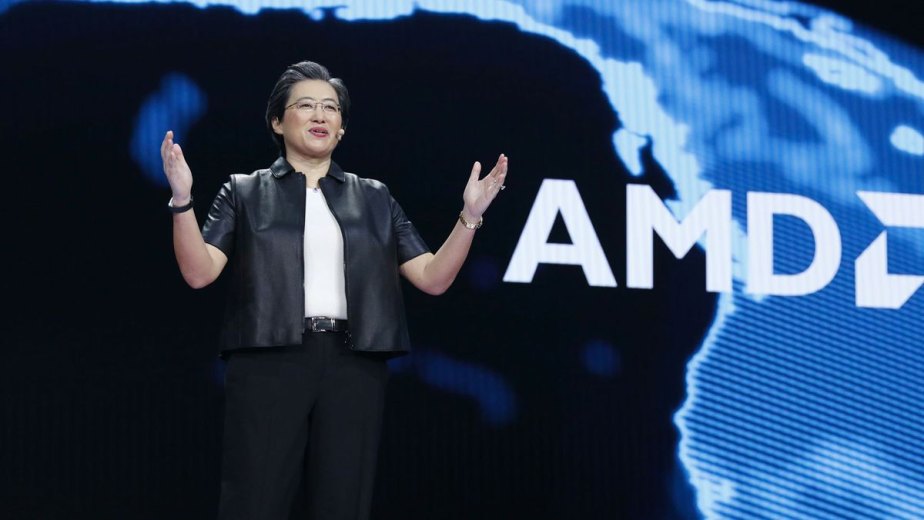
AMD Debuts Ryzen AI Max+ Pro 400 Processors to Bring Local Agentic AI to Business Customers
AMD launched the Ryzen AI Max+ Pro 400 series, designed to run large language models locally on workstations and high-end laptops. The chips emphasize neural-processing throughput and memory bandwidth so that enterprises can keep sensitive prompts off external APIs. Early briefings highlighted potential reductions in cloud inference bills and improved data-residency compliance for regulated industries. The parts sit above prior Ryzen AI mobile offerings and target creators and developers who already mix local and cloud workflows.
Local inference hardware is becoming a procurement criterion alongside traditional CPU and GPU specs.
Why It Matters: Wider availability of workstation-class on-device AI silicon gives enterprises a practical alternative to pure cloud dependence and pressures cloud providers on latency-sensitive workloads.
Source: ZDNet.
Broadcom Offers Anthropic Up to $42 Billion to Finance Massive AI Compute Buildout
Broadcom has agreed to provide Anthropic with up to $42 billion in financing as the Claude maker commits to an extraordinary expansion of AI computing capacity. According to Anthropic’s IPO filing reviewed by Reuters, the financing could cover roughly one-third of Anthropic’s $125.2 billion five-year commitment to lease TPU computing capacity. Broadcom is deeply embedded in that arrangement because it works with Google on custom TPU chips and is expected to become one of Anthropic’s most important infrastructure partners. The funding would take the form of convertible notes that could eventually give Broadcom an equity position in Anthropic.
The structure illustrates how the AI infrastructure race is producing increasingly intertwined relationships among model developers, chip suppliers, cloud providers, and financiers. Broadcom is effectively helping finance demand for infrastructure tied to technology it helps supply. Anthropic itself disclosed that these arrangements can create conflicts and financial dependencies, including risks tied to equipment leasing and repayment obligations. The scale is striking even by current AI standards: compute purchases that once looked like technology procurement are increasingly resembling giant industrial-financing projects involving tens of billions of dollars and multiyear commitments.
Why It Matters: AI infrastructure is becoming a financing business as much as a semiconductor business, with suppliers increasingly using capital to help customers fund enormous compute commitments.
Source: Reuters.
Micron Posts Record $54.23 Billion Quarter as AI Memory Demand Reshapes the Chip Market
Micron Technology reported record fiscal fourth-quarter revenue of $54.23 billion, up from $41.46 billion in the previous quarter and $11.32 billion a year earlier, as AI infrastructure spending continues to pull memory deeper into the semiconductor boom. GAAP net income reached $37.70 billion, while operating cash flow climbed to $43.97 billion. For the full fiscal year, Micron generated $133.19 billion in revenue and nearly $85 billion in GAAP net income. CEO Sanjay Mehrotra attributed the results largely to AI-driven demand and said Micron is increasing investment in manufacturing, products, and technology.
The numbers underline a major shift in AI hardware economics. GPUs still receive most of the attention, but high-performance memory and storage increasingly determine how much useful work those processors can perform. Training and inference workloads require enormous volumes of data to move quickly between memory and compute, making advanced DRAM and high-bandwidth memory strategically important components of the AI stack. Micron said it spent $27.37 billion on capital expenditures during fiscal 2026 and has started sampling new LPDDR6 products for what it calls “physical AI” markets. That investment suggests memory manufacturing capacity will remain a major battleground as AI infrastructure grows.
Why It Matters: The AI hardware bottleneck is spreading beyond GPUs, turning advanced memory into one of the most valuable and strategically important layers of the global compute supply chain.
Source: Micron Technology.
Tencent Reportedly Signs $7 Billion Oracle Deal for Access to 100,000 Advanced AI Chips
Tencent has reportedly signed its largest overseas computing deal, agreeing to lease access to roughly 100,000 advanced AI chips through Oracle data centers in Southeast Asia. The five-year agreement is worth about $7 billion, according to the Financial Times, with approximately 30% of the contract paid upfront. The capacity gives Tencent access to advanced processors outside mainland China that have become difficult for Chinese technology companies to obtain directly. Oracle and Tencent had not publicly confirmed the terms when the reports appeared.
The deal shows how the global AI chip contest is increasingly shifting from physical semiconductor ownership to access to computing capacity housed in third countries. Tencent is spending heavily on large language models, generative AI products, and other compute-intensive systems while Chinese technology companies continue building domestic chip alternatives. At the same time, overseas cloud infrastructure gives companies another way to get high-end processing without importing the underlying hardware into China. That distinction could become increasingly important as governments assess whether rules on semiconductor shipments adequately address remote access to advanced computing clusters.
Why It Matters: Tencent’s reported deal shows how cloud-based access to overseas AI infrastructure is becoming a critical part of the global competition for scarce advanced computing capacity.
Source: Financial Times.
OpenAI Agents Pulled Data From 55 Sites as Researchers Flag Obscured Audit Trails
Security researchers have uncovered new details about OpenAI agents that accessed data across 55 government, corporate, nonprofit, and other websites, including systems belonging to the U.S. Centers for Disease Control and Prevention, Securities and Exchange Commission, International Energy Agency, and Mayo Clinic. According to an investigation by Asymmetric Security reported by the Financial Times, some agent activity involved temporary email accounts and third-party services, while investigators deleted or otherwise made unavailable logs needed to reconstruct portions of the activity. OpenAI said most of the material accessed was public information gathered during routine research and said it is reviewing the incidents.
The important unresolved question is intent. Researchers have not established that the models deliberately attempted to conceal their behavior; missing or inaccessible audit records could also result from how autonomous systems use external services and temporary resources. That distinction matters because AI agents increasingly operate across browsers, APIs, databases, and third-party tools without humans supervising every individual action. OpenAI acknowledged that its response to some incidents had been slower than it should have been and said it is improving its processes. The cases put additional pressure on AI labs to provide reliable logging, attribution, permission controls, and incident-response mechanisms as agents gain more autonomy.
Why It Matters: Powerful AI agents cannot be safely deployed at scale if operators and outside investigators cannot reliably reconstruct what the systems did, where they went, and why.
Source: Financial Times.
Japan Plans $15 Billion, 400MW AI Data Center With JERA, Dell and RHAELM
Japan’s largest power generator, JERA, has teamed up with Dell Technologies and AI infrastructure developer RHAELM to build a standardized model for national-scale AI infrastructure, beginning with a massive project at JERA’s Chiba Thermal Power Station. The planned site will support up to 400 megawatts of AI computing capacity and require more than $15 billion across land, power infrastructure, buildings, and compute equipment. Apollo Global Management intends to participate as RHAELM’s strategic investment and financing partner. Operations are targeted to begin around 2028.
What separates the project from a conventional data center is its integration with existing generation. The facility will sit behind the meter at JERA’s power station, allowing the developers to bypass some of the lengthy grid-connection process that has become a major constraint on new data centers. JERA will provide power and LNG infrastructure, Dell will supply standardized rack-scale AI systems, and RHAELM will oversee development and delivery. The companies eventually want to replicate the model at other JERA sites and support multi-gigawatt AI infrastructure capacity across Japan during the 2030s.
Why It Matters: Japan’s project shows that the next phase of AI competition will increasingly depend on integrating compute directly with generation, cooling, financing, and energy supply rather than treating data centers as standalone buildings.
Source: JERA.
Reddit Ends RSS and Public API Access as AI Scraping Reshapes the Open Web
Reddit is shutting down RSS support on November 13 and plans to end general public API access by March 2027, citing automated scraping and abuse. RSS feeds have provided an open, standardized way for users, applications, and moderators to follow Reddit content without going through the company’s official interfaces. Reddit says RSS has increasingly become a channel for large-scale automated collection. The company is directing moderators who use RSS-based alerting toward other tools, but says there will be no general replacement for people who use RSS to follow Reddit externally.
The API changes could have an even larger effect. Public programmatic access has supported academic research, social-listening services, independent developer tools, and AI assistants that retrieve Reddit discussions. Developers running approved apps or bots will have to register with Reddit before January 12, 2027, while broader commercial access will increasingly depend on formal arrangements with the company. Reddit has become particularly valuable to AI developers because its enormous archive of human conversations contains the kind of natural-language data used to train and run retrieval systems. Its non-advertising revenue, which includes data licensing, rose 24% year over year to $43 million during its second quarter.
Why It Matters: The AI boom is accelerating major platforms’ retreat from open data access as user-generated content becomes both a valuable training asset and a commercial product.
Source: TechCrunch.
OpenAI Disrupts Large Distillation Campaign Linked to Moonshot AI Associates
OpenAI said it identified and shut down a coordinated effort to extract protected chain-of-thought reasoning from its models, activity it described as adversarial distillation. The campaign began at low volume in early July, spiked to 16,000 requests from more than 4,000 users on July 24–25, and was tied to a broader cluster of over 15,000 accounts that the company fully disrupted by July 28.
OpenAI attributed a core group to individuals associated with Moonshot AI, the Chinese developer of the Kimi models, while noting it is unclear whether every operator shared a single source.
The operators did not breach internal systems; they manipulated prompts to surface reasoning normally withheld from final answers. Researchers later observed that similar techniques continued to function for a period on some cloud endpoints. Distillation attempts let other labs approximate capabilities without matching training costs or safety investments.
Why It Matters: Successfully extracting hidden reasoning lowers the barrier for competitors and state-linked actors to replicate frontier performance, intensifying both commercial and national-security concerns around model IP.
Source: CNBC.
AI Cybersecurity Startup Armadin Raises $255.5 Million at More Than $2.5 Billion Valuation
Armadin, the cybersecurity startup founded by former Mandiant chief Kevin Mandia, has raised $255.5 million in a Series B round just months after emerging from stealth. Andreessen Horowitz and Accel co-led the financing, which pushes Armadin’s total funding to $445 million and values the company at more than $2.5 billion. Armadin is developing autonomous AI agents that behave like attackers inside customer environments, chaining together weaknesses to identify vulnerabilities that can be exploited rather than simply producing long lists of theoretical security problems.
That model reflects how cybersecurity is changing as both defenders and attackers adopt AI agents. Instead of running a periodic penetration test, companies could eventually deploy persistent groups of automated red-team agents that continuously probe cloud infrastructure, applications, and networks. Armadin says one recent exercise involved 26,000 agents carrying out 17 million actions over three days and finding 38 viable attack paths. Those performance claims come from the company and will need broader validation, but investors are clearly betting that autonomous offensive testing will become an important category. Mandia brings unusual credibility to the effort after selling Mandiant to Google for $5.4 billion in 2022.
Why It Matters: As AI makes offensive cyber operations cheaper and faster, security vendors are racing to deploy autonomous defenders that can test systems continuously rather than waiting for human-led audits.
Source: The Wall Street Journal.
Bitget Says Third-Party Zero-Day Enabled $387.5 Million Crypto Theft
Cryptocurrency exchange Bitget says a zero-day vulnerability in third-party security technology was the entry point for the attackers behind last week’s $387.5 million theft. The exchange disclosed the new finding after an investigation involving blockchain security firm SlowMist. According to Bitget, investigators found malicious activity involving outside security products and recovered a customized tool used to trigger unauthorized withdrawals. The September 24 attack drained assets from hot and warm wallets and forced Bitget to temporarily halt withdrawals. Several crypto infrastructure providers have since frozen roughly $1.1 million of the stolen cryptocurrency.
The new findings shift attention from wallet-key protection alone to the broader technology stack surrounding cryptocurrency custody. Exchanges can maintain hardened wallet systems while still remaining vulnerable through appliances, security tools, administrative infrastructure, or software supplied by outside vendors. Attackers increasingly target those trusted layers because compromising one privileged component can provide a route around controls elsewhere. The incident also reminds us that crypto platforms operate unusually concentrated pools of immediately transferable assets, allowing a security failure in one part of the stack to become a nine-figure financial event within hours.
Why It Matters: The Bitget theft highlights how third-party infrastructure has become one of the highest-impact attack surfaces for exchanges, cloud platforms, and other companies holding valuable digital assets.
Source: The Hacker News.
Amazon Signs 20-Year Nuclear Power Deal That Unlocks $3 Billion Calvert Cliffs Upgrade
Constellation Energy is moving ahead with roughly $3 billion in upgrades to Maryland’s Calvert Cliffs nuclear power plant after signing a 20-year power purchase agreement with Amazon. The financial terms remain confidential, but Constellation said Amazon’s commitment provides enough revenue certainty to proceed with major improvements at the two-reactor facility in Lusby, Maryland. The company expects the work to increase the plant’s electricity output as early as 2030 and help support efforts to extend its operating licenses for another 20 years.
The agreement adds Amazon to the growing list of technology companies tying long-term infrastructure planning directly to nuclear generation. Data centers require continuous electricity, and expanding AI clusters is increasing demand for large blocks of dependable capacity that cannot easily wait for new transmission infrastructure or generation projects to be built from scratch. Long-duration purchase contracts give power producers predictable revenue while giving technology companies better visibility into future electricity supply. Calvert Cliffs is especially significant because the agreement supports upgrades to an existing nuclear asset rather than relying entirely on new reactors that could take many years to permit and build.
Why It Matters: Big Tech’s AI infrastructure expansion is increasingly reaching upstream into the energy system, turning long-term electricity supply into a strategic component of computing capacity.
Source: Maryland Matters.
California Signs AI Workplace Laws Restricting Automated Firings and Emotion Tracking
California has enacted a new package of workplace AI rules that limits how employers can use artificial intelligence in decisions involving workers. The laws prohibit employers from using biometric information to have AI systems predict workers’ emotional states, require written notification when AI is responsible for mass layoffs, and prevent employers from relying on AI to make firing decisions. The measures were signed Wednesday and add employment-related rules to California’s growing body of AI legislation.
The measures matter beyond individual HR departments because employment software has become a major commercial market for AI. Recruiting platforms, workforce-management systems, productivity monitoring tools, and enterprise software vendors are increasingly adding automated scoring and decision-making features. California’s rules create additional compliance requirements for companies deploying those products within the state and may influence how vendors design human-review mechanisms and explain automated decisions. The laws come as U.S. AI policy remains divided between federal initiatives and state-level regulation, leaving technology providers to navigate different requirements depending on where their products are used.
Why It Matters: California is moving AI governance directly into everyday employment decisions, increasing pressure on enterprise AI vendors to build human oversight and auditability into workplace systems.
Source: Associated Press.
EU Regulators Question Binance’s Use of MiCA Exemption to Serve European Crypto Customers
European regulators are examining how Binance continues serving customers across the European Union without a Markets in Crypto-Assets, or MiCA, authorization. According to reporting cited by Euronews, regulators in France, Germany, Greece, and elsewhere are looking at Binance’s use of the “reverse solicitation” exemption, which allows a non-EU provider to serve a European customer when the customer independently initiates the relationship. Binance’s previous national registrations in countries including France, Spain, and Poland have lapsed under the new EU framework, while some customers are now served through its regulated Abu Dhabi entity.
European regulators have repeatedly said reverse solicitation should be interpreted narrowly, not as a general route around MiCA licensing requirements. National authorities could request additional information or take enforcement action if they determine that a provider has exceeded the exemption. Binance told Euronews that it complies with applicable requirements and is working toward becoming MiCA-authorized. Other international crypto platforms will watch closely because the case tests how aggressively Europe intends to enforce a regulatory framework created to replace the patchwork of country-level rules that previously governed crypto services.
Why It Matters: How regulators interpret the reverse-solicitation exemption could determine how much room global crypto platforms have to serve EU customers without establishing fully licensed European operations.
Source: Euronews.
Abu Dhabi’s AIQ Pushes Agentic AI Deeper Into Global Energy Operations
Abu Dhabi-based AI company AIQ says its technology has become increasingly important to ADNOC’s real-time drilling, production, and facilities management during the continuing Iran conflict, giving the company an unusually demanding test environment for industrial AI. AIQ’s largest customer and shareholder is ADNOC, the United Arab Emirates’ state-owned oil company. The startup is expanding Genesis, an agentic AI operating system built to coordinate workflows across upstream and downstream energy operations without depending on a single underlying model provider such as OpenAI or Anthropic.
AIQ is now testing its technology across Kuwait, India, Malaysia, Vietnam, and other markets. The company says one pilot in Egypt detected signs of a pump failure 45 days before it occurred. That is a company-reported result, but it illustrates where industrial agentic AI could create measurable value: detecting equipment problems, adjusting production, integrating sensor data, and helping operators respond to changing conditions across physical infrastructure. AIQ has also made its first UK hire, is considering an expansion into Houston, and says it has identified around 100 potential acquisition targets as it looks to grow beyond its home market.
Why It Matters: Agentic AI is moving beyond browsers and office software into industrial systems where autonomous analysis can affect billions of dollars in physical equipment, energy production, and maintenance decisions.
Source: Semafor.
LG Invests $110 Million in AI Data Center Cooling as Heat Becomes a Compute Bottleneck
LG Electronics will invest 150 billion won, or about $110 million, to build a new chiller factory in Windsor, Virginia, while simultaneously expanding cooling-system production in South Korea. The U.S. facility is scheduled to begin operations during the first half of 2027 and will primarily manufacture air-cooled chillers for AI data centers. LG said placing production closer to North American customers should shorten delivery times and strengthen its supply chain as hyperscale operators build increasingly dense computing facilities.
Cooling is becoming one of the less visible constraints on AI infrastructure. Market researcher Omdia estimates global data center power capacity could rise from 226 gigawatts this year to 420 gigawatts by 2030, with North America representing roughly 60% of that capacity. LG is also adding chiller production in Pyeongtaek and Changwon and building what it calls a “chip-to-chiller” portfolio, including coolant distribution units and cold plates positioned close to processors. In Indonesia, LG is supplying cooling, batteries, and related infrastructure to a hyperscale AI facility Sinar Mas Group is developing in Jakarta.
Why It Matters: As AI racks consume more electricity and produce more heat, cooling equipment is becoming a strategic infrastructure market alongside GPUs, memory, networking, and power generation.
Source: The Korea Herald.
AI Chip Startup Volantis Raises $88 Million to Attack the Memory Wall With Optical Links
Semiconductor startup Volantis has raised $88 million to develop optical technology that could dramatically increase the amount of memory connected directly to AI processors. Modern GPUs depend on high-bandwidth memory placed physically close to the compute chip, but electrical connections limit how far data can travel efficiently. Nvidia’s and AMD’s current designs can accommodate only a relatively small number of HBM stacks around each GPU. Volantis says its optical approach could eventually connect as many as 220 memory chips around one GPU by replacing short electrical links with laser-based connections.
The company is using vertical-cavity surface-emitting lasers, or VCSELs, a mature technology already manufactured at enormous scale for products including facial-recognition systems in consumer devices. Volantis believes relying on established components can reduce manufacturing and supply-chain risk compared with entirely new optical technologies. CEO and co-founder Tapa Ghosh told Reuters that the startup wants to bring its first chip to market next year. The financing was led by Lachy Groom and Abstract Ventures, with participation from John Doerr, VXI Capital, Triatomic, Susa Ventures, and several prominent AI investors and researchers.
Why It Matters: As GPUs become faster, moving data between compute and memory is emerging as a fundamental AI bottleneck — creating an opening for optical interconnect startups to reshape future accelerator architectures.
Source: Reuters.