Startup Funding News Today, September 23, 2026: TEKEVER, F13, Brahma AI, Noxtua, StandardX & More
 Nickie Louise
Posted On September 23, 2026

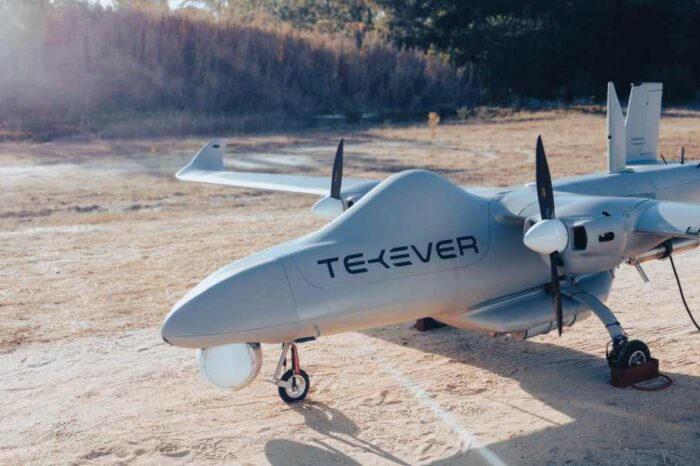
Europe’s defense-tech surge, enterprise AI specialization, and a fresh wave of capital into physical infrastructure are defining startup funding this morning. TEKEVER landed the day’s largest deal with a $580 million first close of its Series D at a $6.4 billion valuation, giving the European autonomous-systems company fresh firepower to expand manufacturing, make acquisitions, and accelerate AI-powered defense systems. Brahma AI followed with a $150 million preferred-share financing at a $2 billion post-money valuation, while Berlin legal-AI company Noxtua raised more than €100 million as 263-year-old publisher C.H.BECK became its majority shareholder.
The broader funding mix is unusually physical. Bengaluru electric-motorcycle maker Ultraviolette raised $85 million, Barcelona stroke-device company Anaconda Biomed closed $56 million, Indian ammunition manufacturer Hughes Precision secured more than ₹250 crore, and London’s StandardX raised £10 million to build accelerator-based infrastructure for scarce medical isotopes. At the earlier end of the market, investors backed German AI accounting startup mika, vector-graphics model developer F13, and Singapore physical-AI startup TacnIQ.ai.
Across the 10 selected transactions, companies disclosed $877.5 million in dollar-denominated financing, plus more than €106 million, £10 million, and more than ₹250 crore. The numbers require care: TEKEVER’s $580 million is its first Series D close; Hughes Precision’s ₹250-plus-crore transaction includes both primary and secondary capital; and TacnIQ has closed $1.5 million toward a planned $3 million pre-seed. Brahma AI has also received another $100 million of investor interest, but that potential upsizing is not counted as capital raised today.
Six of today’s 10 selected companies sit directly inside AI or AI-enabled systems, but the important story is where those bets are moving. Investors are financing autonomous defense hardware, enterprise audiovisual intelligence, curated legal data, tax workflows, specialized visual models, and tactile data for robots. The model layer still matters. Increasingly, though, the premium is attached to companies that own the customer workflow, proprietary data, physical hardware, manufacturing capability, regulatory pathway, or distribution channel around the model.
The Macro Environment: Capital Moves From AI Access to Strategic Control
TEKEVER captures the most important macro signal. Venture and growth investors are willing to deploy hundreds of millions of dollars into technology companies that combine AI with physical manufacturing and government procurement. Founded in Portugal and now headquartered in Britain, TEKEVER has moved beyond selling drones to autonomous surveillance systems that combine aircraft, software, AI, and intelligence services. Reuters reports that its systems have accumulated more than 50,000 operational flight hours in Ukraine since 2022, while Britain’s Ministry of Defence recently selected the company for the CORVUS surveillance program, worth up to £400 million over a decade.
That matters because defense tech is increasingly being valued on deployed capability rather than software potential alone. TEKEVER’s investors are not underwriting a future demonstration. They are financing manufacturing capacity, acquisitions, international expansion, and technology that has already operated in a war zone. The $6.4 billion valuation also shows how far European defense technology has moved from a niche VC category toward a market capable of attracting large institutional checks.
AI software is developing a parallel form of defensibility. Brahma AI is building around enterprise audiovisual content and relationships with companies such as Warner Bros., the NBA, and Mayo Clinic. Noxtua is combining AI with legal information controlled by established European publishers. mika is embedding models inside German accounting rules and human review. F13 is training specialized models around editable vector graphics rather than trying to compete as a general image generator. In each case, the investor thesis goes beyond access to a foundation model.
Physical technology is also attracting capital where supply itself is constrained. StandardX is addressing medical-isotope scarcity with accelerator hardware. Ultraviolette is financing batteries, power electronics, vehicle architecture, software, and manufacturing. Anaconda Biomed has moved far enough through development that its latest financing is tied to a 327-patient U.S. pivotal study. TacnIQ is creating the tactile interaction data that robot models cannot simply scrape from the public internet.
The common denominator is control over something difficult to reproduce. Today’s investor money is paying for battlefield experience, proprietary datasets, publisher relationships, clinical programs, specialized manufacturing, regulatory progress, and real-world machine data. The easier intelligence becomes to obtain, the more valuable those surrounding assets can become.
TEKEVER raises $580M to scale AI-powered autonomous defense systems
European autonomous-systems company TEKEVER raised $580 million in the first close of its Series D, led by UC Investments and Baillie Gifford, at a $6.4 billion valuation. Merlyn Advisors joined as a new strategic investor, while existing shareholders Crescent Cove, Ventura Capital, and Iberis Capital also participated. The company expects additional Series D closes as it brings in more strategic investors.
TEKEVER combines unmanned aircraft, software, sensors, and AI-based intelligence systems for defense and surveillance customers. The company plans to use the financing to deepen its international footprint, expand manufacturing and technology capacity, accelerate acquisitions, and advance autonomous systems.
The size of the round makes more sense against its operating track record. According to Reuters, TEKEVER has logged more than 50,000 operational flight hours in Ukraine since 2022. Britain recently selected the company for its CORVUS surveillance program, which could be worth up to £400 million over 10 years. That experience gives investors something many defense startups still lack: technology tested under real operating pressure and a route from wartime deployment into long-term procurement programs.
TEKEVER is also notable for what it says about European industrial policy. Governments want more sovereign defense capability, but they don’t have to finance every new supplier. Institutional capital is stepping in where battlefield validation, procurement demand, and AI autonomy begin to overlap.
Funding Details
Startup: TEKEVER
Investors: UC Investments, Baillie Gifford, Merlyn Advisors, Crescent Cove, Ventura Capital, Iberis Capital
Amount Raised: $580 million first close
Total Raised: Not disclosed on a fully comparable basis
Funding Stage: Series D
Funding Date: September 23, 2026
Headquarters: United Kingdom; founded in Portugal
Sector: Defense technology / autonomous systems / AI
Valuation: $6.4 billion
Brahma AI raises $150M at a $2B valuation to build enterprise audiovisual AI
Brahma AI raised $150 million through preferred shares, including a $100 million investment from Multiples Alternate Asset Management, at a $2 billion post-money valuation. The financing was released at 10:30 p.m. ET on September 22, placing it inside this report’s rolling window. Brahma also said it has received an additional $100 million of investor interest, but that potential capital has not yet been added to the completed round.
Brahma is building an enterprise platform around audiovisual content, spanning content intelligence, visual AI, digital humans, voice, localization, and multilingual workflows. Its customers include Warner Bros., the NBA, and Mayo Clinic, while strategic relationships include Google, Hakuhodo, and DNEG. Prime Focus will remain the company’s largest economic shareholder through DNEG, with approximately 66% ownership after dilution from the financing, employee options, and founder equity.
The investor bet is not simply that synthetic media will grow. Large companies already own huge archives of valuable audiovisual material and increasingly need to create, localize, manage, search, and govern that content across markets. Brahma’s opportunity is to sit between those corporate assets and multiple underlying AI models.
The company plans to spend the new money on R&D, international go-to-market operations, a larger Bay Area presence, and new products including interactive digital humans. At a $2 billion valuation, investors are pricing Brahma as infrastructure around enterprise content rather than another AI-media application.
Funding Details
Startup: Brahma AI
Investors: Multiples Alternate Asset Management and additional financial and strategic investors
Amount Raised: $150 million
Total Raised: Not disclosed
Funding Stage: Preferred-share growth financing; formal series label not disclosed
Funding Date: September 22, 2026, at 10:30 p.m. ET; September 23 dateline
Headquarters: Global operations spanning Los Angeles, London, and Mumbai
Sector: Enterprise AI / audiovisual content / digital humans
Valuation: $2 billion post-money
Noxtua raises more than €100M as C.H.BECK takes control of European legal AI
Berlin-based Noxtua closed a Series C of more than €100 million, with German legal publisher C.H.BECK becoming majority shareholder and Austrian publisher MANZ joining as a minority investor. C.H.BECK describes the transaction as the largest investment in the publisher’s history.
Noxtua builds legal AI for research, analysis, drafting, and professional workflows using curated legal material and European infrastructure. Its publisher partnerships give the company access to high-quality jurisdiction-specific information that general-purpose models do not automatically possess.
That makes the ownership change more strategically important than a conventional venture check. C.H.BECK and MANZ own publishing assets, legal databases, customer relationships, and editorial processes built over generations. Instead of watching AI companies intermediate those assets from outside, they are moving onto Noxtua’s cap table.
Noxtua says more than 30,000 legal professionals use its products. Founder and CEO Leif-Nissen Lundbæk told Tech.eu that the company’s team quadrupled in the past 12 months and revenue increased fivefold during the past four months. Those are company-reported growth figures, but they help explain why a traditional publisher was willing to take majority control.
Funding Details
Startup: Noxtua
Investors: C.H.BECK, MANZ
Amount Raised: More than €100 million
Total Raised: Not reliably disclosed in primary documentation
Funding Stage: Series C
Funding Date: September 23, 2026
Headquarters: Berlin, Germany
Sector: Legal AI/enterprise software
Valuation: Not disclosed
Ultraviolette raises $85M to scale electric motorcycles from India to global markets
Bengaluru-based Ultraviolette Automotive raised $85 million in Series E funding led by Yali Capital and TDK Ventures. Intel CEO and longtime semiconductor investor Lip-Bu Tan also invested personally and is joining the electric-vehicle company as an adviser.
Ultraviolette is unusual among venture-backed EV companies because it has built substantial portions of its technology stack internally, including battery systems, power electronics, vehicle architecture, and software. The company will use the new capital to expand production, develop its next-generation global EV platforms, and push further into international markets.
Manufacturing capacity is the near-term bottleneck. Ultraviolette recently announced plans for a new facility in Hosur, Tamil Nadu, with an initial annual capacity of 250,000 vehicles and room to scale to 500,000. Its existing Bengaluru-area facility can produce around 50,000 vehicles annually.
The investment also comes as Ultraviolette moves from being primarily an Indian premium-electric-motorcycle company toward a broader global mobility business. It is targeting the U.S. in 2027 and further expansion across Europe, Latin America, and Southeast Asia. The key question now is not whether it can design a high-performance EV; it is whether manufacturing, distribution, service, and pricing can scale internationally.
Funding Details
Startup: Ultraviolette Automotive
Investors: Yali Capital, TDK Ventures, Lip-Bu Tan, existing investors
Amount Raised: $85 million
Total Raised: Not disclosed in the current announcement
Funding Stage: Series E
Funding Date: September 23, 2026
Headquarters: Bengaluru, India
Sector: Electric mobility / EV hardware / automotive software
Valuation: Not disclosed
Anaconda Biomed raises $56M to advance stroke thrombectomy technology
Barcelona-based Anaconda Biomed closed a $56 million financing led by Omega Funds, joined by new investor Spain’s Co-investment Fund, or FOCO, which is managed by COFIDES. Existing backers Asabys, Ysios Capital, and CDTI’s Innvierte vehicle also participated.
Anaconda develops thrombectomy catheters designed to remove blood clots from patients suffering ischemic stroke. Its Funnel Catheter platform combines aspiration with flow arrest and flow reversal to capture clots and smaller embolic fragments before they obstruct additional vessels.
The new financing is tied to a defined clinical milestone: completing the ATHENA pivotal IDE study, a randomized 327-patient U.S. trial evaluating the ANA Funnel Catheter. The company will also fund product development and regulatory work for its wider neurovascular portfolio. Its ANA5 device already carries CE marking in Europe, while the Funnel Catheter remains investigational in the United States.
That makes this a fundamentally different risk profile from an AI software round. The value inflection points are clinical results, regulatory approval, manufacturing consistency, and physician adoption. Anaconda operates its own production facility near Barcelona, giving it control over manufacturing processes that could become economically meaningful if the U.S. study succeeds.
Funding Details
Startup: Anaconda Biomed
Investors: Omega Funds, FOCO/COFIDES, Asabys, Ysios Capital, CDTI/Innvierte
Amount Raised: $56 million
Total Raised: Close to $100 million reported, though the company did not provide a new cumulative figure
Funding Stage: Late-stage financing; formal round label not disclosed
Funding Date: September 23, 2026
Headquarters: Barcelona, Spain, with U.S. operations in Marin, California
Sector: Medtech / neurovascular devices/stroke treatment
Valuation: Not disclosed
Hughes Precision raises ₹250+ crore to expand India’s ammunition manufacturing base
Goa-based Hughes Precision Manufacturing completed an investment round exceeding ₹250 crore from a group of unnamed ultra-high-net-worth investors. Importantly, the transaction combines primary and secondary investment. The company did not disclose that split, so the full ₹250-plus-crore headline should not be interpreted as entirely new cash entering Hughes Precision’s balance sheet.
The primary capital will support a large manufacturing expansion. Hughes plans to increase small-caliber ammunition capacity from roughly 80 million rounds a year to 220 million and establish a dedicated facility for medium-caliber ammunition.
The financing arrives with an existing demand base. Hughes said in July that its order book had surpassed ₹1,000 crore, with roughly 60% coming from Indian government agencies and 40% from international customers, scheduled for delivery over two years. Customers include India’s armed forces, police, and paramilitary organizations. The company provides those order figures.
Like TEKEVER, Hughes reflects the growing overlap among venture-style private capital, national security priorities, and manufacturing. Defense companies cannot scale on software economics alone. Production lines, quality systems, export approvals, raw materials, and inventory all require capital before delivery revenue arrives.
Funding Details
Startup: Hughes Precision Manufacturing
Investors: Undisclosed group of ultra-high-net-worth individuals
Amount Raised: More than ₹250 crore, including primary and secondary investment
Total Raised: Not disclosed
Funding Stage: Growth financing
Funding Date: September 23, 2026
Headquarters: Goa, India
Sector: Defense technology/ammunition manufacturing
Valuation: Not disclosed
StandardX raises £10M to build a refinery for scarce medical isotopes
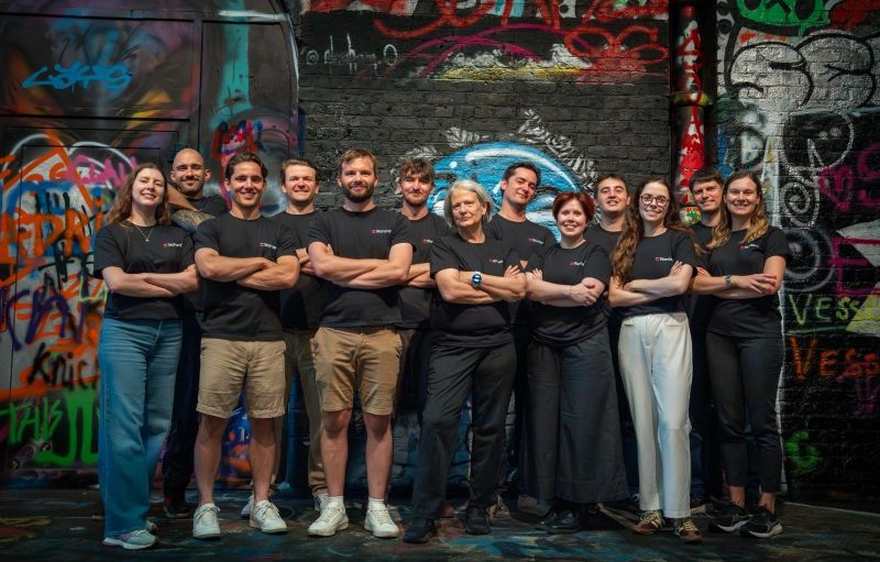
London-based StandardX raised £10 million in Seed funding, led by Vsquared Ventures and East X Ventures, with participation from firstminute capital, the UK Innovation and Science Seed Fund, Brevan Howard Macro Venture, and Geometry.
Founded in 2025, StandardX is building accelerator-based systems designed to manufacture several kinds of rare isotopes from a common industrial platform. Its first target is medicine, where isotope availability can limit cancer diagnostics, targeted therapies, and research.
This is a supply-chain bet disguised as a physics company. Radiopharmaceutical developers can create promising therapies, but those products cannot scale without reliable sources of the isotopes they consume. StandardX intends to supply its first medical isotopes to a research partner in 2027 and targets industrial-scale production beginning in 2029.
Longer term, the same accelerator platform is intended to produce materials for other advanced industries, including tritium for fusion. The Seed capital will fund StandardX’s first industrial site in London, its accelerator build, team expansion, and pilot isotope production.
Funding Details
Startup: StandardX
Investors: Vsquared Ventures, East X Ventures, firstminute capital, UKI2S, Brevan Howard Macro Venture, Geometry
Amount Raised: £10 million
Total Raised: £10 million disclosed
Funding Stage: Seed
Funding Date: September 23, 2026
Headquarters: London, United Kingdom
Sector: Deep tech / medical isotopes / nuclear technology
Valuation: Not disclosed
mika raises €6M to automate German accounting without removing human review
Berlin-based mika raised €6 million in Seed funding led by Smedvig Ventures. Wecken & Cie. participated alongside technology founders and angel investors, while existing backers Keen Venture Partners and Dutch Founders Fund increased their stakes. The financing follows an €800,000 pre-seed round from 2024.
mika is building an AI-native financial operating system for Germany’s GmbHs and UGs. Its general ledger reads receipts and payments, classifies transactions, and prepares bookkeeping, VAT returns, annual accounts, and tax filings.
The company’s approach is instructive because German tax is exactly the kind of workflow where complete autonomy can create more risk than value. Trained accountants review mika’s outputs and intervene in complex cases, while licensed advisers in the company’s network handle individual tax advice. The AI handles the repetitive work; human professionals retain responsibility where judgment or regulated advice matters.
mika says more than 750 businesses now use the service, up from around 400 at the beginning of 2026. It has also opened its financial data through the Model Context Protocol, letting customers query company information from tools such as ChatGPT or Claude.
Funding Details
Startup: mika
Investors: Smedvig Ventures, Wecken & Cie./Care4 AG, Keen Venture Partners, Dutch Founders Fund and angel investors
Amount Raised: €6 million
Total Raised: Approximately €6.8 million disclosed
Funding Stage: Seed
Funding Date: September 23, 2026
Headquarters: Berlin, Germany
Sector: Vertical AI/accounting/tax technology
Valuation: Not disclosed
F13 raises $5M to build AI that generates editable, data-accurate graphics
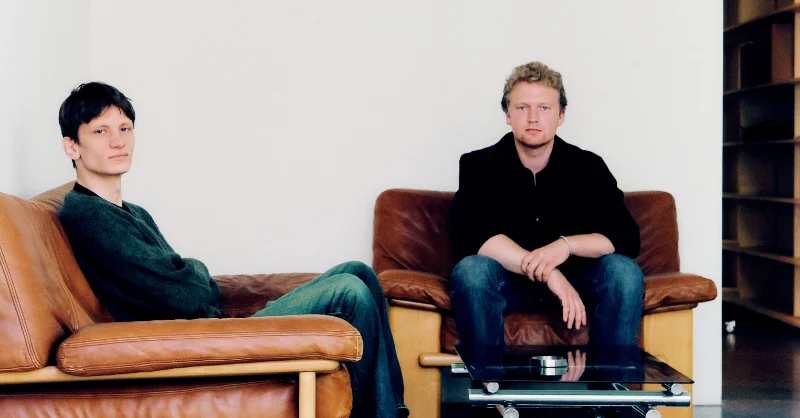
Berlin-based F13 emerged from stealth with $5 million in pre-seed funding led by Credo Ventures and Point Nine Capital. Angel investors including Carles Reina of Baobab Ventures and Jack Richardson of Mainframe also participated.
F13 is training foundation models specifically for vector graphics rather than pixel-based images. The company is targeting charts, scientific diagrams, maps, infographics, and other professional visuals where a plausible-looking image is not enough: the proportions and underlying data have to be correct.
That specialization is the investment thesis.
General image generators have become extraordinarily capable at creating pictures. Professional diagrams introduce a different requirement. A chart that looks convincing but misrepresents the underlying numbers is worse than useless, while a scientific graphic often needs to remain editable after generation. F13 outputs vector graphics so individual elements can be modified rather than requiring a complete regeneration.
The startup is currently in early access and plans to use the money for compute, training data, hiring, and the commercial launch of its first model. Its opportunity depends on whether specialized model architectures can create enough accuracy and workflow value to justify a separate product alongside rapidly improving general-purpose image systems.
Funding Details
Startup: F13
Investors: Credo Ventures, Point Nine Capital, Carles Reina, Jack Richardson
Amount Raised: $5 million
Total Raised: $5 million disclosed
Funding Stage: Pre-seed
Funding Date: September 23, 2026
Headquarters: Berlin, Germany
Sector: Generative AI/vector graphics/foundation models
Valuation: Not disclosed
TacnIQ.ai raises $1.5M to build the tactile-data layer for physical AI
Singapore-based TacnIQ.ai secured $1.5 million from In Group Holdings as the first disclosed capital toward a planned $3 million pre-seed round. Today’s funding total includes only the $1.5 million already secured.
TacnIQ is building foundation models for touch. Sensor-based data nodes collect physical interaction signals from commercial environments, giving the startup a training dataset for systems that need to understand pressure, contact, movement, and other information that cameras alone cannot capture.
The company says it has accumulated more than 5,000 hours of tactile-interaction data from experiments and real customer deployments and has paying customers across logistics, construction, e-commerce, hospitality, and healthcare. Those figures are company claims, but the data strategy explains why investors are interested.
Text models inherited a huge amount of internet data. Vision models inherited billions of images and videos. Robotics has no equivalent public corpus showing how a machine should physically interact with thousands of materials and objects. If robot adoption scales, creating and standardizing that interaction data could become its own infrastructure category.
Funding Details
Startup: TacnIQ.ai
Investors: In Group Holdings
Amount Raised: $1.5 million secured toward a planned $3 million pre-seed
Total Raised: $1.5 million currently disclosed
Funding Stage: Pre-seed
Funding Date: September 23, 2026 local time
Headquarters: Singapore, with U.S. operations
Sector: Physical AI/robotics / tactile intelligence
Valuation: Not disclosed
What Today’s Funding Activity Reveals
The first signal is capital concentration at the intersection of AI and strategic infrastructure. TEKEVER’s $580 million first close represents roughly two-thirds of today’s dollar-denominated financing. That does not mean venture markets suddenly became loose. It means institutions are willing to deploy very large amounts where they see a combination of government demand, physical assets, software, and defensible technology.
The second pattern is specialization inside AI. Brahma is not building a general chatbot; it is working on enterprise audiovisual content. Noxtua combines AI with curated European legal information. mika focuses on German accounting. F13 targets editable vector graphics. TacnIQ is training tactile models. The market is fragmenting into systems built around distinct data types and professional workflows.
Third, the strongest AI moats increasingly sit outside the model itself. Noxtua’s publisher relationships, Brahma’s enterprise content workflows, mika’s accounting logic, and TacnIQ’s interaction data will still matter even if foundation models become cheaper and more capable. This is an important shift for founders: access to intelligence is becoming an input; control over unique context is becoming the business.
Fourth, physical technology is absorbing larger pools of private capital. Ultraviolette has to finance factories and supply chains. Anaconda must pay for clinical studies and regulatory work. StandardX has to turn nuclear physics into repeatable industrial equipment. Hughes Precision must expand ammunition capacity. TEKEVER has to manufacture aircraft and scale autonomous systems. These companies do not have SaaS cost structures, and their financing requirements reflect that.
Fifth, strategic investors are taking positions that can change distribution, not simply capitalization. C.H.BECK becomes Noxtua’s majority owner and brings centuries of legal publishing assets. TDK brings deep hardware knowledge to Ultraviolette. UC Investments and Baillie Gifford are financing TEKEVER as it moves into larger sovereign procurement programs. In difficult technology markets, the right investor can remove customer, manufacturing, or institutional barriers that money alone cannot.
Finally, Europe is unusually prominent. TEKEVER, Noxtua, Anaconda, StandardX, mika, and F13 make up six of today’s 10 selected companies. More important than the count is what they are building: defense autonomy, sovereign legal AI, medtech, isotope infrastructure, regulated financial AI, and specialized foundation models. Europe’s strongest venture opportunities increasingly appear where regulation, industrial capacity, scientific depth, or national sovereignty create defensibility rather than simply friction.
Startup Funding Table
| Startup | Amount Raised | Sector | Funding Stage | Lead/Key Investors | Country |
|---|---|---|---|---|---|
| TEKEVER | $580M | Defense AI / autonomous systems | Series D first close | UC Investments, Baillie Gifford, Merlyn Advisors | UK / Portugal |
| Brahma AI | $150M | Enterprise AI / audiovisual infrastructure | Preferred-share growth financing | Multiples Alternate Asset Management | Global / US-UK-India operations |
| Noxtua | €100M+ | Legal AI | Series C | C.H.BECK, MANZ | Germany |
| Ultraviolette Automotive | $85M | Electric mobility / EV technology | Series E | Yali Capital, TDK Ventures, Lip-Bu Tan | India |
| Anaconda Biomed | $56M | Neurovascular medtech | Late-stage financing | Omega Funds, FOCO, Asabys, Ysios | Spain |
| Hughes Precision | ₹250Cr+ primary + secondary | Defense manufacturing | Growth financing | Undisclosed UHNIs | India |
| StandardX | £10M | Medical isotopes / deep tech | Seed | Vsquared Ventures, East X Ventures | UK |
| mika | €6M | AI accounting / tax | Seed | Smedvig Ventures, Wecken & Cie. | Germany |
| F13 | $5M | Generative AI/vector graphics | Pre-seed | Credo Ventures, Point Nine Capital | Germany |
| TacnIQ.ai | $1.5M secured | Physical AI / tactile intelligence | Pre-seed | In Group Holdings | Singapore |
Strategic Takeaways for Founders and Investors
- The infrastructure around AI may be more defensible than AI access itself. Noxtua owns publisher relationships, TacnIQ is accumulating touch data, Brahma sits inside enterprise audiovisual workflows, and mika embeds German accounting rules. Founders should ask what remains proprietary if competitors receive access to equally capable foundation models next year.
- Defense tech has crossed into institutional-scale private capital. TEKEVER’s $580 million financing is not a speculative Seed bet. Operational deployment, sovereign procurement, manufacturing, and AI are converging into companies that can absorb capital on an industrial scale.
- Vertical AI is increasingly about owning context. F13’s accuracy requirements, mika’s accounting rules, and Noxtua’s jurisdiction-specific legal sources illustrate why specialist products can remain valuable even as general models improve. The domain-specific information surrounding the model may be harder to commoditize than the model itself.
- Physical AI has a data problem that software AI did not. TacnIQ’s 5,000-plus hours of tactile interactions point toward a new infrastructure market. Robots need information about force, pressure, slippage, grip, and contact that the open internet never generated at scale.
- Manufacturing capacity is becoming part of venture strategy. Ultraviolette, Hughes Precision, StandardX, and TEKEVER all require physical production capacity. Investors evaluating these businesses need to think about yield, supply chains, working capital, equipment utilization, and customer qualification alongside software metrics.
- Regulatory milestones remain one of the clearest value-creation mechanisms in deep tech. Anaconda’s next major inflection point is its pivotal U.S. clinical study. StandardX needs to prove repeatable isotope production. Founders in these categories should raise capital against the next technical, clinical, or manufacturing de-risking event rather than copying SaaS fundraising playbooks.
- Strategic ownership can be more important than strategic investment. C.H.BECK taking majority control of Noxtua is a particularly interesting signal. Incumbents with proprietary information and distribution may increasingly choose to own AI platforms rather than merely license them and risk becoming downstream data suppliers.
Conclusion
Today’s funding cycle is led by a $580 million defense-tech round, but the deeper signal extends far beyond TEKEVER.
Brahma AI is financing enterprise content intelligence and digital humans. Noxtua is tying European legal AI directly to the publishers that own the underlying information. Ultraviolette is scaling batteries, vehicles, software, and factories. Anaconda is financing a pivotal medical-device study. StandardX is building production infrastructure for materials medicine cannot easily obtain. TacnIQ is creating a data layer for the sense robots are still missing.
The market is still betting heavily on AI, but it is getting much more selective about where the durable value sits.
Today’s strongest companies own more than intelligence. They own battlefield experience, clinical programs, proprietary data, industrial capacity, regulated workflows, trusted distribution, or physical interaction with the world.
As models become easier to access, venture capital is increasingly paying a premium for what can’t simply be copied or downloaded.