Venture Capital & Startup Funding Roundup, September 22, 2026: General Catalyst, Goldman Sachs, Greylock, M13, Y Combinator & More
 Nickie Louise
Posted On September 22, 2026

Venture capital today is clustering around a surprisingly consistent idea: the next layer of AI value is shifting away from the model itself and toward the systems that make AI usable, governable, trustworthy, and economically productive. Cybersecurity company Cyera pulled in another $400 million. Snorkel AI raised $350 million to supply increasingly specialized training data and reinforcement-learning environments. Heidi Health paired a $100 million equity round with a $240 million non-dilutive facility as clinical AI moves from transcription into healthcare workflows.
That pattern continues further down the funding stack. Go.AI is putting private AI infrastructure inside regulated institutions. Firecrawl is building the data-access layer agents need to interact with the web. Baselayer is attacking financial fraud. Sela is applying voice agents specifically to mortgage sales, while Teal Health and Ramona Optics show that investors are still willing to finance differentiated healthcare and life-science infrastructure outside the generative-AI rush. Axios’ deal reporting captures the unusually dense cluster of enterprise AI, security, fintech and healthcare rounds announced Tuesday.
Across the ten rounds selected below, the headline capital committed totals about $1.379 billion. That figure needs one qualification: $240 million of Heidi’s package is non-dilutive financing rather than equity, leaving roughly $1.139 billion of equity or equity-like venture/growth funding in the selected set. The three largest transactions, Cyera, Snorkel AI, and Heidi, account for about 79% of headline capital, or roughly three-quarters of the equity component. That concentration is the day’s clearest market signal: investors are writing very large checks where companies can demonstrate strategic control points, customer adoption or both.
The Macro Environment: Capital Is Paying for Control, Not Just Intelligence
The backdrop is not one of cheap money. The Federal Reserve raised its target range by 25 basis points on September 16 to 3.75%–4.00%, meaning venture investors are still competing against a meaningful cost of capital. That makes today’s nine-figure private rounds more revealing than they would be in a zero-rate environment: investors are reserving large checks for businesses they believe can either dominate a category or become infrastructure other businesses cannot easily remove.
Cyera is a good example of the first category. Goldman Sachs is putting $400 million into a company already valued at more than $12 billion, shortly after Cyera completed its $1 billion acquisition of non-human-identity specialist Oasis Security. The investment is less about financing basic product development than giving Cyera enough balance-sheet latitude to broaden its platform, pursue federal and overseas customers, make acquisitions, and choose its own timing for a future public offering. The Wall Street Journal reports that Cyera has raised $1.94 billion since June 2025 alone and has now landed its first customer spending more than $10 million annually.
Snorkel represents the second category: infrastructure underneath increasingly capable models. Its annualized revenue run-rate has risen from roughly $20 million a year ago to more than $350 million, according to Reuters, as frontier labs need harder training tasks, specialist-generated datasets and reinforcement-learning environments rather than commodity labeling. At a $3.5 billion valuation, the round prices Snorkel at roughly ten times its reported annualized revenue — a valuation that looks aggressive in ordinary software but much less unusual for a company growing at this speed and positioning itself directly in the frontier-model supply chain. We calculated that multiple from Reuters’ reported valuation and revenue figures.
Private and public capital are also beginning to meet around AI infrastructure. On the same day these venture rounds surfaced, data-center infrastructure provider Accelevation set U.S. IPO terms at $20 to $24 per share, implying a market capitalization of around $4.9 billion at the midpoint. That does not mean the public market is broadly open to every venture-backed software company. It suggests something narrower: businesses connected to AI’s physical, security, and operational requirements have a more credible path toward institutional-scale financing than undifferentiated application companies.
The implication for founders is important. Calling a product “AI-native” is not enough to command premium capital. Today’s stronger financings sit at specific bottlenecks: who can access sensitive data, where models run, how training data is generated, how clinical work is documented, how agents retrieve information, and how regulated transactions are verified. Investors appear increasingly willing to fund the companies that own those bottlenecks rather than another thin interface sitting on top of somebody else’s model.
The Top Funding Rounds
Cyera raises $400M to secure data and AI-agent access across the enterprise
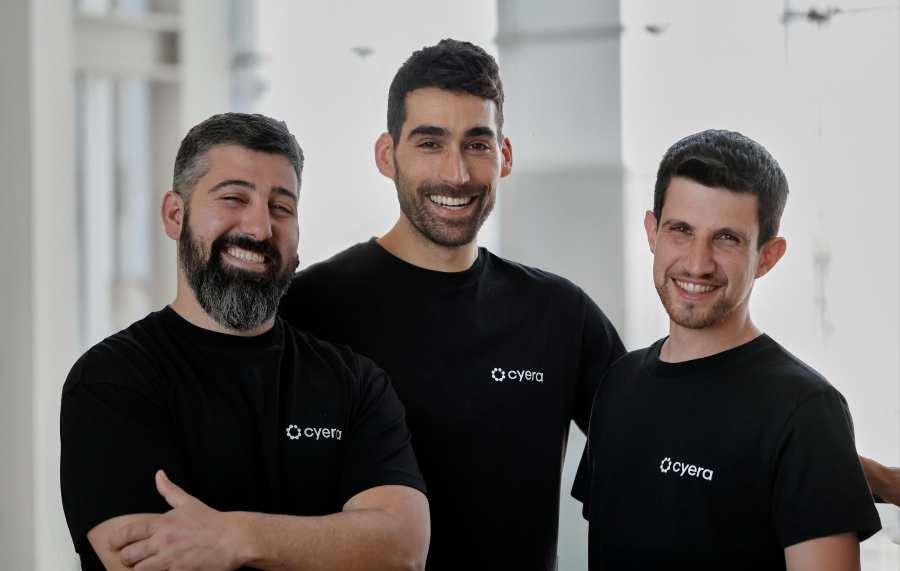
Cyera’s $400 million investment from Growth Equity at Goldman Sachs Alternatives extends the company’s Series G and comes only months after a $600 million Series G valued the New York cybersecurity company at $12 billion. Cyera says the new investment will support its AI-security roadmap, federal-market expansion and continued growth across Europe, the Middle East, Africa and Asia-Pacific.
The strategic premise has broadened substantially from classic data-security posture management. Enterprises deploying AI agents now have software identities that can call tools, query databases, and act on corporate information without constant human involvement. Cyera’s acquisition of Oasis Security brought non-human identity management into the same platform as data security, allowing the company to address both sides of the permission problem: where sensitive information sits and which human, machine or agent can reach it.
That is also why Goldman entering at this stage is notable. This is late-stage capital going into a company that already has the scale to contemplate an IPO, not a speculative bet on whether a category will exist. The Wall Street Journal reports that Cyera’s newest financing gives it additional freedom to invest in products and M&A while delaying a listing if private capital remains attractive. For competing data-security and identity vendors, that creates a well-funded consolidator with both an acquisition currency and a $12 billion-plus valuation benchmark.
Funding Details
Startup: Cyera
Investors: Growth Equity at Goldman Sachs Alternatives; existing Series G was led by Evolution Equity
Amount Raised: $400 million
Total Raised: Approximately $2.7 billion reported overall; $1.94 billion raised since June 2025
Funding Stage: Series G extension
Funding Date: September 22, 2026
Headquarters: New York, New York, U.S.
Sector: Cybersecurity, data security, AI-agent security, identity security
Snorkel AI raises $350M to become the data infrastructure behind frontier AI

Snorkel AI raised $350 million at a $3.5 billion valuation, co-led by Insight Partners and S32, with participation from Greylock and Wells Fargo. The valuation is almost three times the $1.3 billion figure attached to Snorkel’s $100 million financing in May 2025. More striking is the operating trajectory: Reuters reports annualized revenue above $350 million, versus roughly $20 million a year earlier.
The change is tied to a strategic pivot. Snorkel began as software for programmatic data labeling but has increasingly become a supplier of finished datasets and reinforcement-learning environments. Its network includes specialists in coding, law and medicine, while AI systems automate portions of quality assurance and data production. CEO Alex Ratner argues that increasingly capable models require data that is harder to source and judge, creating demand for human expertise combined with automated production rather than conventional annotation labor.
That places Snorkel in a market reshaped by Scale AI, Mercor, Surge AI and the frontier labs’ appetite for difficult training and evaluation data. Reuters notes that investor interest intensified after Meta’s 2025 purchase of a 49% stake in Scale AI for $14.3 billion. Snorkel’s answer is to sell the data product rather than bill customers for hours of human work — potentially giving it better operating leverage if it can preserve quality as volumes rise. The company says it expects to reach profitability this year, an unusually consequential detail for a company growing this quickly.
Funding Details
Startup: Snorkel AI
Investors: Insight Partners, S32, Addition, Greylock, Wells Fargo
Amount Raised: $350 million
Total Raised: Not disclosed in the current announcement
Funding Stage: Growth financing; series designation not disclosed
Funding Date: September 22, 2026; Reuters published the financing at 1:02 p.m. UTC
Headquarters: San Francisco, California, U.S.
Sector: AI training data, reinforcement learning, model evaluation infrastructure
Heidi Health raises $100M in equity and secures a $240M growth facility for clinical AI
Heidi Health’s financing is best understood as $100 million of Series C equity plus a $240 million non-dilutive growth facility, not a conventional $340 million venture round. Blackbird led the equity financing, with Phoenix Court and, according to Axios, Point72 Private Investments and Headline participating; General Catalyst led the $240 million financing component.
The Melbourne healthtech startup started with an AI medical scribe but is pushing toward a broader clinical-workflow platform. The Times reports that Heidi handles about 2.8 million patient interactions each week in 110 languages and has won a major NHS clinical documentation deployment spanning 15 trusts and integrated-care organizations, as well as more than 1,200 GP practices in England’s Midlands. That moves the thesis beyond whether clinicians will use an ambient scribe: the harder question is whether one vendor can become part of the operating layer of large health systems.
Valuation reporting differs slightly by outlet. The Times puts the latest valuation at about $900 million, while Australian coverage describes Heidi as reaching roughly the $1 billion or unicorn threshold. The discrepancy likely reflects rounding and reporting conventions, not two separate financings. The more important signal is the financing structure itself. Using $240 million of non-dilutive capital lets Heidi finance expansion without selling the same amount of ownership at today’s valuation — a playbook increasingly relevant to rapidly growing software companies with enough revenue visibility to support structured capital.
Funding Details
Startup: Heidi Health
Investors: Blackbird, Phoenix Court, Point72 Private Investments, Headline; General Catalyst led the non-dilutive facility
Amount Raised: $340 million package — $100 million equity plus $240 million non-dilutive financing
Total Raised: At least $436.6 million including financing facilities, according to The Times
Funding Stage: Series C plus growth financing facility
Funding Date: September 22, 2026
Headquarters: Melbourne, Australia
Sector: Healthtech, clinical AI, medical documentation and workflow automation
Go.AI raises $85M to bring private AI infrastructure inside regulated institutions
Chicago-based Go.AI raised an $85 million Series A led by Updata Partners, with existing investors GFT Ventures and LAUNCH participating. The financing puts the company’s total capital raised at roughly $90 million. Go.AI sells AI hardware appliances aimed particularly at banks and other regulated organizations that cannot casually move confidential data or sensitive workloads into external AI services.
That makes this an infrastructure bet rather than another model-company wager. Banks increasingly want access to generative AI while preserving control over data residency, audit trails, security, and deployment architecture. Go.AI is trying to occupy the gap between public AI APIs and a fully bespoke internal stack by packaging compute and software into systems that institutions can run under their own governance.
Competitive pressure will come from both directions: hyperscalers can offer private-cloud configurations, while server, chip, and enterprise-software companies can assemble their own on-premises AI stacks. Go.AI therefore has to win on deployment speed, regulatory fit, and operating simplicity rather than raw model capability. The size of the Series A suggests investors believe regulated AI deployment itself can become a meaningful product category.
Funding Details
Startup: Go.AI
Investors: Updata Partners, GFT Ventures, LAUNCH
Amount Raised: $85 million
Total Raised: Approximately $90 million
Funding Stage: Series A
Funding Date: September 22, 2026
Headquarters: Chicago, Illinois, U.S.
Sector: AI infrastructure, private AI, financial-services technology
Firecrawl raises $75M to build the web-data layer for AI agents
Firecrawl raised a $75 million Series B led by Smash Capital, with Altos Ventures, Nexus Venture Partners, Y Combinator, Freestyle, and Offline also participating. Axios describes the company as providing data infrastructure for AI agents — the layer that turns information on the open web into material software agents can retrieve and use programmatically.
That may sound like plumbing, but plumbing becomes more valuable as agents move beyond chat interfaces. An AI system asked to research companies, monitor competitors, source products, qualify leads, or execute workflows needs fresh external data in a predictable structure. Model vendors can improve reasoning, but they do not automatically solve crawling, extraction, website changes, access reliability or data preparation.
This is the deeper reason infrastructure investors continue financing companies around the model layer. As foundation models become easier to substitute, the differentiated asset can move to the systems that supply them with current information and connect them to real-world workflows. Firecrawl still faces a crowded field spanning web search, crawling, browser automation, and structured-data extraction, so its long-term position will depend on whether developers treat it as a default component rather than one interchangeable API among many.
Funding Details
Startup: Firecrawl
Investors: Smash Capital, Altos Ventures, Nexus Venture Partners, Y Combinator, Freestyle, Offline
Amount Raised: $75 million
Total Raised: Not disclosed in the reviewed announcement
Funding Stage: Series B
Funding Date: September 22, 2026
Headquarters: United States
Sector: Developer infrastructure, web data, AI-agent infrastructure
Baselayer raises $35M to make financial fraud detection an infrastructure layer
Baselayer raised $35 million in Series A financing led by M13, with Picus Capital, Afore Capital and Torch Capital participating. The company provides fraud-detection technology to banks and other financial institutions, a category gaining importance as automated account creation, synthetic identities and increasingly capable software systems make old verification processes harder to rely on.
Investors are effectively betting on a second-order effect of AI adoption. More automation doesn’t just create opportunities for productivity software; it increases the volume and sophistication of activity that financial institutions must authenticate. That creates demand for infrastructure that can assess counterparties and suspicious behavior without adding manual review to every transaction.
Baselayer’s challenge is that fraud, KYC, and identity verification already contain well-funded incumbents. Its opportunity is to build for a world in which the entity on the other side of a workflow may increasingly be software rather than a person. Even without assuming that every AI agent will need a separate financial identity, the sheer increase in machine-mediated transactions should raise the value of higher-frequency verification.
Funding Details
Startup: Baselayer
Investors: M13, Picus Capital, Afore Capital, Torch Capital
Amount Raised: $35 million
Total Raised: Not disclosed in the reviewed announcement
Funding Stage: Series A
Funding Date: September 22, 2026
Headquarters: United States; city not specified in the reviewed announcement
Sector: Fintech, fraud detection, financial infrastructure
Chamelio raises $26M to push AI deeper into corporate legal work
Chamelio raised $26 million in Series A financing led by Entrée Capital, joined by Work-Bench, Emerge Ventures and Bright Pixel Capital. The company is building an AI platform for in-house legal teams, placing it in one of the most heavily financed vertical-AI categories outside healthcare.
Legal software is an instructive test of where AI application companies can retain pricing power. General-purpose models can draft and summarize text increasingly well, which puts pressure on products whose only differentiation is a legal-themed interface. Defensibility has to come from workflow integration, permissioning, institutional knowledge, matter history, review systems and the ability to fit into how corporate legal departments actually operate.
That explains why specialist platforms can still command venture backing even as foundational capabilities improve. Legal departments do not buy model tokens; they buy reduced outside-counsel spend, faster contract and matter handling, and a defensible process for sensitive corporate work. Chamelio’s opportunity is therefore less about having a uniquely intelligent model and more about owning enough of the legal workflow that switching products becomes costly.
Funding Details
Startup: Chamelio
Investors: Entrée Capital, Work-Bench, Emerge Ventures, Bright Pixel Capital
Amount Raised: $26 million
Total Raised: Not disclosed in the reviewed announcement
Funding Stage: Series A
Funding Date: September 22, 2026
Headquarters: U.S./Israel operating footprint; exact primary headquarters was not clearly specified in the reviewed reporting
Sector: Legal technology, enterprise AI
Ramona Optics raises $25M to scale high-throughput microscopy
Durham, North Carolina-based Ramona Optics raised a $25 million Series A led by ARCH Venture Partners, with Stealthpoint Ventures and ND Capital participating. Founded in 2016 by two Caltech graduate students before relocating to Durham, the company makes advanced microscopes designed to increase the scale and speed of biological sample analysis.
This is one of the day’s more interesting non-generative-AI transactions because it addresses the physical side of biological data generation. Better computational biology does not remove the need to capture high-quality experimental information in the first place. If laboratories can image larger sample areas or run experiments faster, the downstream value flows into drug discovery, cellular biology and increasingly automated research workflows.
ARCH Venture Partners’ involvement is notable because the firm’s life-science investing history places a high bar on whether a scientific tool can become more than laboratory equipment. Ramona currently sells 4x and 10x microscopy systems, according to Axios, and plans to use the capital to expand international sales and engineering. The company has around 25 employees, meaning this round is financing commercial scaling rather than a large existing organization.
Funding Details
Startup: Ramona Optics
Investors: ARCH Venture Partners, Stealthpoint Ventures, ND Capital
Amount Raised: $25 million
Total Raised: Not disclosed in the reviewed reporting
Funding Stage: Series A
Funding Date: September 22, 2026
Headquarters: Durham, North Carolina, U.S.
Sector: Life-science tools, microscopy, laboratory infrastructure
Teal Health raises $22M to move cervical-cancer screening into the home
San Francisco-based Teal Health raised $22 million in Series A financing led by .406 Ventures, with Emerson Collective, Serena Ventures and Japan’s MPower Partners participating. Teal is developing a self-collection system for at-home HPV-based cervical-cancer screening, shifting a procedure historically associated with an in-clinic visit toward a consumer-accessible workflow.
The venture thesis is not simply “healthcare at home.” Screening businesses work only when the entire path — collection, laboratory processing, clinical interpretation, follow-up and payment — functions together. That creates more execution risk than a pure software product but also creates a stronger barrier if a company can integrate those pieces successfully.
For investors, Teal sits at the intersection of preventive health, diagnostics, and women’s health, where improved convenience could expand screening participation rather than merely shift existing demand from one provider to another. The presence of both U.S. and Japanese capital also suggests that self-collection workflows could travel internationally if regulatory and clinical pathways support them.
Funding Details
Startup: Teal Health
Investors: .406 Ventures, Emerson Collective, Serena Ventures, MPower Partners
Amount Raised: $22 million
Total Raised: Not disclosed in the reviewed announcement
Funding Stage: Series A
Funding Date: September 22, 2026
Headquarters: San Francisco, California, U.S.
Sector: Women’s health, diagnostics, at-home screening
Sela raises $21M to automate mortgage sales with specialized voice agents
San Francisco-based Sela raised $21 million across seed and Series A financing from Emergence Capital and Costanoa Ventures. The company builds voice agents designed specifically to automate mortgage sales calls rather than offering a horizontal voice-AI platform for every industry.
That focus is strategically significant. Voice generation is becoming cheaper and more widely available, so merely producing natural-sounding speech is unlikely to remain defensible. Vertical products instead need to understand industry terminology, connect with existing systems, handle escalation, operate within compliance requirements, and improve measurable conversion or labor economics.
Mortgages are an attractive but demanding proving ground: high customer value supports meaningful software pricing, while the regulated nature of lending raises the cost of inaccurate or uncontrolled automation. If Sela can demonstrate better conversion economics without increasing compliance risk, its moat becomes the mortgage-specific operating system around the voice model, not the underlying speech technology.
Funding Details
Startup: Sela
Investors: Emergence Capital, Costanoa Ventures
Amount Raised: $21 million
Total Raised: $21 million across the disclosed seed and Series A financings
Funding Stage: Seed and Series A
Funding Date: September 22, 2026
Headquarters: San Francisco, California, U.S.
Sector: Voice AI, mortgage technology, financial-services automation
What Today’s Funding Activity Reveals
The first pattern is capital concentration. Roughly four-fifths of the $1.379 billion in headline financing represented here went into Cyera, Snorkel, and Heidi. On an equity-only basis after stripping out Heidi’s $240 million non-dilutive facility, those three still account for roughly 75% of the selected capital. Investors are not spreading money evenly across the AI economy. They are concentrating it around companies with evidence of category leadership, unusually high growth, or strategically scarce infrastructure.
The second pattern is that AI infrastructure has expanded beyond GPUs and data centers. Today’s deals define infrastructure much more broadly: Snorkel supplies the training and evaluation data; Firecrawl supplies external information to agents; Go.AI supplies controlled deployment environments; Cyera controls sensitive-data access; Baselayer addresses trust and fraud. Taken together, these financings suggest the investable AI stack is moving outward from compute into governance, context, verification and deployment.
Third, vertical AI is being held to a different standard than it was two years ago. Heidi, Chamelio and Sela are not being financed merely because they insert a language model into healthcare, legal or lending workflows. Their investment cases increasingly depend on owning the surrounding process. In healthcare, that means integration with clinical systems and institutional deployment; in legal, it means privileged organizational context and workflow; in mortgages, it means compliance and conversion economics.
Fourth, cybersecurity is becoming a direct beneficiary of agent adoption rather than a separate technology category. Cyera’s strategy of combining data governance with non-human identity management reflects a broader issue: autonomous software can only become more useful by receiving more permissions. Every additional permission creates another security decision. The value of the agent and the value of controlling the agent may therefore rise together. Cyera’s $12 billion-plus valuation is one of the strongest private-market expressions of that thesis so far.
Finally, geography is more concentrated than the word “global” might imply in this particular 12-hour slice. The United States dominates the selected rounds, with Australia represented by Heidi and cross-border capital visible throughout the investor syndicates. That should not be read as evidence that European or emerging-market funding disappeared Tuesday: several sizable European and international deals surfaced in September 22 newsletters but traced back to September 21 or outside the strict cutoff and were therefore removed from this edition.
Comparative Funding Table
| Startup | Amount Raised | Sector | Funding Stage | Lead Investors | Country |
|---|---|---|---|---|---|
| Cyera | $400M | Cybersecurity / AI security | Series G extension | Goldman Sachs Alternatives | U.S. |
| Snorkel AI | $350M | AI data / RL infrastructure | Growth round | Insight Partners, S32 | U.S. |
| Heidi Health | $340M package ($100M equity + $240M facility) | Clinical AI | Series C + non-dilutive financing | Blackbird; General Catalyst on facility | Australia |
| Go.AI | $85M | Private AI infrastructure | Series A | Updata Partners | U.S. |
| Firecrawl | $75M | AI-agent / web-data infrastructure | Series B | Smash Capital | U.S. |
| Baselayer | $35M | Fraud / financial infrastructure | Series A | M13 | U.S. |
| Chamelio | $26M | Legal AI | Series A | Entrée Capital | U.S./Israel |
| Ramona Optics | $25M | Life-science tools | Series A | ARCH Venture Partners | U.S. |
| Teal Health | $22M | Women’s health/diagnostics | Series A | .406 Ventures | U.S. |
| Sela | $21M | Voice AI/mortgage tech | Seed + Series A | Emergence Capital, Costanoa | U.S. |
The table also shows why round size alone can mislead. Heidi’s headline $340 million is not economically equivalent to Snorkel’s $350 million financing because $240 million of Heidi’s package is non-dilutive. Likewise, Cyera’s $400 million arrives at a $12 billion-plus valuation and late-stage scale, while a $21 million check into Sela carries far more ownership and company-building significance at an earlier stage. Comparing venture rounds requires looking at capital structure, stage and strategic intent, not only the number in the headline.
Strategic Takeaways for Founders and Investors
For founders, the bar for “AI differentiation” is moving up quickly. Access to a capable model is becoming less persuasive as a fundraising story. Today’s financings reward companies that can explain what they control around the model: proprietary data production, regulated distribution, embedded workflow, identity and permissions, deployment architecture, physical instrumentation, or institutional relationships. Firecrawl, Snorkel, and Go.AI occupy different layers, but all three sell something the underlying model does not provide on its own.
The best vertical-AI businesses are becoming workflow businesses. Founders should therefore measure outcomes that buyers actually budget for: clinician hours returned, mortgage conversion rates, legal work brought in-house, fraud losses reduced or deployment time shortened. A company whose value proposition collapses when inference prices fall faces commoditization. A company whose product gets more valuable as models get cheaper has a much stronger economic position.
Treat security and governance as product surfaces, not compliance afterthoughts. Cyera’s financing shows how large the market can become when AI adoption creates a new class of access-control problem. For enterprise founders, the ability to explain what an agent can see, which tools it can call, and how its actions are audited may become part of the sales proposition rather than a box checked after deployment.
Capital structure is becoming part of competitive strategy. Heidi’s combination of $100 million in equity with a $240 million non-dilutive facility is especially instructive. Companies with substantial revenue and predictable expansion requirements do not always need to fund every growth dollar by selling shares. Debt, structured facilities and other non-dilutive instruments can preserve founder and employee ownership — provided the business has the cash-generation profile to carry the obligation.
Late-stage investors are paying for option value. Goldman Sachs’ investment in Cyera gives the company additional time before an IPO, more acquisition capacity and greater flexibility in deciding when to access public markets. For mature private companies, a strong balance sheet can therefore become competitive weaponry: it reduces pressure to list at an inconvenient moment and can turn the company into an acquirer while weaker competitors are still conserving cash.
Investors, meanwhile, need to distinguish real infrastructure from temporary abstraction layers. Some AI tooling categories will be absorbed by model providers, cloud platforms or larger enterprise-software vendors. The stronger bets are likely to be products whose value grows with AI usage but whose function is difficult for a model provider to internalize: access governance, specialized proprietary data, regulated deployment, physical data generation and deeply integrated industry workflows.
The biggest pricing risk is at the application layer. If two products use similar foundation models, operate on the same customer data and connect to the same systems, switching costs can deteriorate quickly. The financing environment is therefore increasingly rewarding companies that can answer a hard question with specificity: what becomes harder for a customer to replace as your company gets bigger?
Conclusion
September 22’s funding activity is not simply another day in which “AI got most of the money.” The more useful interpretation is that venture capital is becoming more discriminating about which parts of the AI economy deserve durable margins.
Cyera is being financed because autonomous software makes data and identity control harder. Snorkel is being financed because better models require harder-to-produce training and evaluation data. Go.AI is addressing institutions that cannot simply push sensitive workloads into public AI services. Firecrawl addresses the problem of giving agents dependable external information. Heidi, Chamelio and Sela are attempting to turn general AI capability into industry-specific operating systems. Meanwhile, Ramona Optics and Teal Health show that differentiated physical and healthcare products can still draw serious institutional capital without competing in the foundation-model race.
The day’s capital concentration matters just as much as the sector mix. With close to four-fifths of headline commitments going to three companies, the market is not behaving like an indiscriminate technology boom. It is behaving like a market willing to pay extraordinary prices for a small number of perceived control points while forcing everyone else to prove the economics at Series A and Series B.
That is the signal founders and investors should carry forward. As model intelligence becomes more abundant, scarcity migrates elsewhere: toward trusted data, permissioning, distribution, regulated deployment, specialized workflows, and physical systems that generate information the digital world cannot manufacture by itself. The next valuable startup may still use the same models as everyone else. What matters is whether it owns something around those models that everyone else still needs.