Startup Funding News Today, September 18, 2026: Arcos, Crusoe, dtcpay, EVAS Intelligence, Ryft & More
 Nickie Louise
Posted On September 18, 2026

Startup funding over the past day is being pulled toward a surprisingly consistent set of bottlenecks: AI compute, sovereign chips, power systems, optical interconnects, robotics data, quantum infrastructure, security, and regulated payments. The largest transaction is in a class of its own. Denver-based Crusoe closed the initial $3.9 billion Series F at a $30.9 billion post-money valuation, turning the AI infrastructure boom into what increasingly looks like industrial-scale project finance.
But Crusoe is only half the story. In China, EVAS Intelligence raised nearly RMB2 billion for RISC-V-based cloud AI chips at a reported post-money valuation approaching RMB15 billion. Qingdao-based Zhongke Guosheng added a RMB600 million Series C for domestically developed light gas turbines. Arclight Quantum raised more than RMB100 million from a China Mobile-backed fund, Xili Optoelectronics secured RMB100 million-scale financing for photonic chips used in high-speed AI data-center links, and Shutu Technology raised nearly RMB100 million for embodied-AI data and tactile intelligence.
Outside that cluster, Boston medical-device company AVAVA announced a $45 million package consisting of $30 million in equity and $15 million in debt, Manchester payments startup Ryft raised £20 million, Singapore’s dtcpay completed a Series A that now totals $25 million, and Munich security startup Arcos raised €5.5 million to protect infrastructure such as rail stations, substations and data centers.
The capital concentration is extreme. Crusoe alone contributes $3.9 billion. Outside that deal, today’s selected companies add roughly RMB 2.9 billion or more across five Chinese deep-tech rounds, £20 million at Ryft, AVAVA’s $45 million mixed financing, an estimated $15 million incremental extension that takes dtcpay’s Series A to $25 million, and €5.5 million at Arcos. That makes today’s market less a broad loosening of venture conditions than a collection of strong-conviction bets around scarce infrastructure and specialized operating layers.
Macro Environment: The AI Trade Is Shifting From Models to Infrastructure
The defining venture thesis this morning is no longer simply “AI will grow.” Investors increasingly appear to be asking which resource becomes scarce because AI grows.
Crusoe sits at the most capital-intensive end of that question. The company now spans power sourcing, data-center development, GPU infrastructure, cloud services and managed AI workloads. Crusoe says it has more than $140 billion in contracted value, over 6 gigawatts of contracted capacity and roughly 1 gigawatt operational. Those are company-reported figures, but they help explain why investors including Mubadala Capital, Atreides Management, Valor Equity Partners, Founders Fund, GIC, Nvidia, Qatar Investment Authority, Radical Ventures and TPG were willing to finance the business at a $30.9 billion valuation.
EVAS Intelligence, Xili Optoelectronics and Arclight Quantum attack scarcity from different directions. EVAS is trying to expand the available AI-compute base through a RISC-V architecture rather than relying on conventional proprietary instruction sets. Xili is working on the photonic links that move enormous quantities of data between processors. Arclight is building the software stack needed to translate quantum hardware into usable computation. All three reflect the same underlying bet: the next stage of computing will require new infrastructure below the application layer.
Physical systems are showing up for the same reason. Shutu is working on the data and tactile intelligence robots need to interact reliably with objects. Zhongke Guosheng is scaling 20–50 MW light gas turbines. Arcos is combining sensor feeds and security operations around physical infrastructure. These are markets where AI software eventually encounters harder constraints—electricity, touch, machinery, communications, safety, and real-world operating conditions.
Today’s payment rounds provide a useful contrast. Ryft and dtcpay are software businesses, but their defenses increasingly come from regulatory access and payment architecture rather than interface design. Ryft is expanding regulated multi-party payment infrastructure across Europe and the U.S. dtcpay is combining stablecoins with conventional payment rails under regulated licenses. As software agents become more capable of initiating transactions, the financial infrastructure sitting beneath those agents may become more valuable, not less.
The broader message is becoming difficult to ignore: model intelligence is spreading; the infrastructure required to make that intelligence economical, secure, compliant, and physically useful remains scarce.
Crusoe raises $3.9B to industrialize AI infrastructure
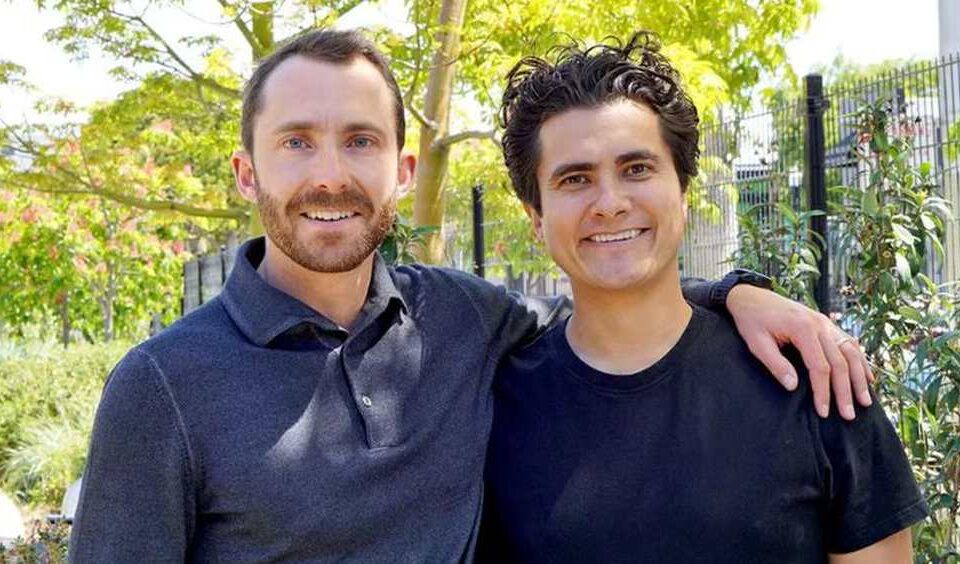
Denver-based Crusoe closed the initial $3.9 billion portion of its anticipated Series F at a $30.9 billion post-money valuation. Atreides Management, Mubadala Capital and Valor Equity Partners co-led the financing, with Founders Fund, GIC, Nvidia, Qatar Investment Authority, Radical Ventures, TPG and other investors participating. The company announced the financing on September 17 at 2:25 p.m. ET, putting it narrowly inside today’s rolling window.
Crusoe began in 2018 by using stranded and otherwise wasted energy for cryptocurrency computing. It has since repositioned itself around AI infrastructure, developing data centers, supplying GPU cloud capacity and building managed AI services.
The size of the new round shows how far that transition has gone.
AI infrastructure companies increasingly resemble energy and industrial businesses as much as software companies. Large data-center projects require land, electrical interconnections, generation capacity, cooling, construction, networking equipment, GPUs and years of committed capital before full utilization arrives.
Crusoe’s response is vertical integration. The company says it has more than $140 billion in contracted value across its platform and more than 6 GW of gross contracted capacity. The new financing will support additional AI campuses, modular Crusoe Spark facilities, and expansion of Crusoe Cloud. Those figures come from the company rather than independently audited disclosures, but they give investors something infrastructure financing needs: visibility into future demand.
The valuation still carries substantial execution risk. A $30.9 billion private valuation assumes that AI compute demand remains strong enough to absorb massive construction commitments and that Crusoe can convert contracted projects into profitable operating infrastructure. But the round signals something larger about venture markets: compute scarcity has become valuable enough to support financing once associated with telecom, energy or heavy industry rather than startups.
Funding Details
Startup: Crusoe
Investors: Atreides Management, Mubadala Capital, Valor Equity Partners, Founders Fund, GIC, Nvidia, Qatar Investment Authority, Radical Ventures, TPG and others
Amount Raised: $3.9 billion initial Series F close
Total Raised: Not disclosed in the current announcement
Funding Stage: Series F
Funding Date: September 17, 2026
Headquarters: Denver, Colorado
Sector: AI infrastructure/cloud computing/data centers
Valuation: $30.9 billion post-money
EVAS Intelligence raises nearly RMB2B to scale RISC-V cloud AI chips
Beijing-based EVAS Intelligence raised nearly RMB2 billion in a new financing at a reported post-money valuation approaching RMB15 billion. More than 20 investors participated, including Huatai Innovation, Eastern Bell Capital, SMIC-linked Zhongxin Juyuan, 9F Medical, Ren’ai Capital, Tongfu Microelectronics, Saiyi Industrial Fund, Heli Capital, Xinxin Financial Leasing, SAIC-backed Hengxu Capital and others.
The financing follows a RMB1.5 billion Series B earlier this year plus a strategic investment from China Mobile, giving EVAS an unusually fast fundraising cadence even by AI-chip standards. The company’s first Epoch processors are already in volume production, according to current reporting, and EVAS has built systems spanning chips, boards, servers, supernodes and clusters.
Its architectural bet is RISC-V.
RISC-V is an open instruction-set architecture that can be customized without the licensing model associated with proprietary architectures. EVAS combines it with its internally developed EVAMIND accelerator architecture to target cloud and data-center AI workloads.
The strategic appeal extends beyond chip performance. China wants greater control over the computing stack supporting domestic AI. An open instruction set gives chip designers another path to build processors, software and systems without depending entirely on architectures controlled elsewhere.
EVAS says its next-generation cloud chip has already taped out and delivers several times the compute and interconnect performance of its first generation. Its larger challenge will be software. AI chips compete as ecosystems, not isolated pieces of silicon. Developers need compilers, libraries, orchestration, networking, and tooling mature enough to make alternative accelerators economically worthwhile.
Funding Details
Startup: EVAS Intelligence
Investors: Huatai Innovation, Eastern Bell Capital, Zhongxin Juyuan, 9F Medical, Ren’ai Capital, Tongfu Microelectronics, Saiyi Industrial Fund, Heli Capital, Xinxin Financial Leasing, Hengxu Capital and others
Amount Raised: Nearly RMB 2 billion
Total Raised: Not disclosed
Funding Stage: New financing round; formal stage not disclosed
Funding Date: September 18, 2026
Headquarters: Beijing, China
Sector: AI semiconductors/cloud compute / AI infrastructure
Valuation: Approximately RMB15 billion post-money, according to current reporting
Zhongke Guosheng raises RMB600M to scale domestically developed light gas turbines
Qingdao-based Zhongke Guosheng completed a RMB600 million Series C co-led by Sequoia China and JIC Investment, with participation from investors including Walden-linked capital, China Merchants Capital, Guangzhou Industrial Investment and Chengdu Sci-Tech Innovation Investment Group. Existing shareholders, including CAS Investment and Shandong New Growth Drivers Fund, also increased their backing.
Zhongke Guosheng develops 20–50 MW light gas turbines, including its TG30 platform. The company says the TG30 has moved from engineering validation into batch-order production, with applications spanning electricity generation, oil and gas, metallurgy and chemicals.
The company is now building more than turbines. Its business includes complete machines, maintenance, parts, training and gas-turbine power-station engineering services.
That matters because industrial hardware often becomes more attractive economically once the manufacturer captures aftermarket revenue instead of relying entirely on equipment sales.
Public information disclosed earlier this year showed how quickly the commercialization curve is changing. The company reported six complete-engine orders and three overhaul orders for the TG30 during 2025, representing roughly RMB460 million in orders, while revenue moved above RMB100 million.
The broader investment case sits inside industrial sovereignty and growing demand for dispatchable power. AI data centers are intensifying global interest in firm electricity, though Zhongke Guosheng’s disclosed customer base remains primarily industrial. The Series C is therefore best read as a bet on domestic turbine capability and industrial power equipment rather than as an AI-data-center financing in disguise.
Funding Details
Startup: Zhongke Guosheng
Investors: Sequoia China, JIC Investment, China Merchants Capital, Guangzhou Industrial Investment, Chengdu Sci-Tech Innovation Investment Group, CAS Investment, Shandong New Growth Drivers Fund and others
Amount Raised: RMB 600 million
Total Raised: Not disclosed
Funding Stage: Series C
Funding Date: September 18, 2026
Headquarters: Qingdao, China
Sector: Energy infrastructure/gas turbines / advanced industrial equipment
Valuation: Not disclosed
AVAVA raises $45M to expand energy-based medical aesthetics hardware
Boston-based AVAVA raised a $45 million financing package led by Catalio Capital Management, comprising $30 million of equity and a $15 million debt facility. New and existing investors also participated. The company announced the transaction at 3:24 p.m. ET on September 17.
AVAVA develops energy-based medical-aesthetics devices around its Focal Point Technology, which is designed to concentrate energy in targeted regions while limiting exposure to surrounding tissue.
The company plans to use the financing to expand commercialization, develop additional products, and grow internationally.
AVAVA stands apart from today’s AI-heavy group, and that is precisely why the deal is useful. Venture funding has not disappeared from medical hardware simply because AI dominates capital markets. Investors will still back products where intellectual property, clinical evidence, regulatory pathways, and hardware engineering create defenses that software competitors cannot easily reproduce.
The financing structure is also notable. Catalio is supplying both equity and debt rather than forcing AVAVA to finance every stage of commercial expansion through ownership dilution. As medtech companies move from R&D into sales, manufacturing, and inventory, parts of the business can support debt even as product development remains an equity risk.
Funding Details
Startup: AVAVA
Investors: Catalio Capital Management and other new and existing investors
Amount Raised: $45 million — $30 million equity plus $15 million debt facility
Total Raised: Not disclosed
Funding Stage: Growth financing; formal equity round stage not disclosed
Funding Date: September 17, 2026
Headquarters: Boston, Massachusetts
Sector: Medical devices / medical aesthetics
Valuation: Not disclosed
Ryft raises £20M to challenge legacy multi-party payment infrastructure
Manchester-based Ryft raised £20 million in Series B funding led by Gresham House Ventures, with returning investors Pembroke VCT and Ingenii Capital participating. PXN Ventures joined through the Northern Powerhouse Investment Fund II.
Ryft builds payment infrastructure for marketplaces, software platforms and multi-location businesses that need to move one customer payment among several recipients. The company handles merchant onboarding, split payments, recurring billing, payouts and increasingly cross-border settlement.
That sounds like plumbing because it is—and payments plumbing can become extremely valuable once customers build their businesses around it.
Ryft says processing volume tripled over the past year and that more than 6,500 businesses now use the platform. It has partnerships with Global Payments, Visa, Mastercard, American Express and Nuvei. The company recently added FX conversion and payouts across more than 35 currencies.
The new capital will push Ryft into continental Europe and the United States. The company has applied to the Malta Financial Services Authority for a full EU payments license that, if granted, could be passported across the European Economic Area.
The agent-economy angle is worth watching. As software agents begin buying goods, allocating spending or initiating transactions, payment systems will still have to know who is authorized, how funds should be divided, which rules apply and where the money settles. The interface may become conversational; the underlying financial logic does not disappear.
Funding Details
Startup: Ryft
Investors: Gresham House Ventures, Pembroke VCT, Ingenii Capital, PXN Ventures / Northern Powerhouse Investment Fund II
Amount Raised: £20 million
Total Raised: Not disclosed
Funding Stage: Series B
Funding Date: September 18, 2026
Headquarters: Manchester, United Kingdom
Sector: Fintech/payment infrastructure / embedded payments
Valuation: Not disclosed
dtcpay extends Series A to $25M as SBI backs regulated stablecoin payments
Singapore-based dtcpay completed a Series A that now totals $25 million, adding Japan’s SBI Group as a strategic investor through SBI Ventures Asset and the SBI-NTU-Kyobo Digital Innovation Fund. Genedant Capital and existing investor Kwee Liong Tek also participated. Vertex Ventures Southeast Asia & India led the first tranche earlier this year.
There is an important accounting distinction here.
The $25 million is the full Series A, not $25 million of entirely new September capital. The initial tranche was approximately $10 million, so the current extension appears to add roughly $15 million, based on the two disclosed totals. dtcpay has not broken down how that incremental capital is allocated among SBI, Genedant, Kwee or other participants.
dtcpay provides infrastructure allowing businesses and individuals to accept, hold, convert and transact in stablecoins alongside conventional currencies. It operates as a Major Payment Institution regulated by the Monetary Authority of Singapore and has been building merchant payment tools, point-of-sale stablecoin acceptance and card products through a Visa partnership.
SBI’s participation may matter more than the check itself.
Stablecoins are increasingly moving from crypto trading infrastructure toward regulated cross-border payment rails. A Japanese financial group investing directly into a Singapore-regulated operator creates opportunities around institutional distribution and payment corridors between two large Asian financial markets.
The risk remains regulation. Stablecoin economics depend heavily on how jurisdictions treat reserves, settlement, consumer protection, and intermediaries. That makes regulatory access one of dtcpay’s most valuable assets.
Funding Details
Startup: dtcpay
Investors: SBI Group, Vertex Ventures Southeast Asia & India, Genedant Capital, Kwee Liong Tek
Amount Raised: Approximately $15 million incremental extension; Series A now totals $25 million
Total Raised: At least $41.5 million across the disclosed $16.5 million pre-Series A and $25 million Series A
Funding Stage: Series A extension/completion
Funding Date: September 18, 2026
Headquarters: Singapore
Sector: Fintech/stablecoin payments/payment infrastructure
Valuation: Not disclosed
Arclight Quantum raises more than RMB 100M as China Mobile backs quantum software
Beijing-based Arclight Quantum raised more than RMB100 million in strategic financing from the China Mobile Chain-Leader Fund. The company will use the investment for quantum-plus-AI research, hiring, and joint work around distributed quantum chips and new control architectures.
Founded in 2020, Arclight develops a full-stack quantum software system intended to work across multiple quantum-computing hardware architectures.
Its products span chip-design tools, control software, error correction, development environments and cloud applications. The team also leads work associated with China’s national Quantum Communication and Quantum Computing research program.
That broad hardware compatibility matters because quantum computing remains fragmented across superconducting, photonic, trapped-ion, and other technical approaches. The ultimate hardware winner is uncertain. Software that can run across several architectures may offer a way to participate in the market without betting entirely on one physical implementation.
China Mobile brings another dimension. Telecom operators already own large computing networks, cloud infrastructure, and enterprise relationships. A strategic telecom investor therefore has potential value beyond financing if quantum computing moves toward distributed access through conventional cloud and network infrastructure.
The timeline remains long. Quantum startups still face difficult questions around error correction, useful workloads, and economics compared with classical computing. But the size and source of Arclight’s financing show that quantum software is increasingly being treated as strategic infrastructure rather than laboratory tooling.
Funding Details
Startup: Arclight Quantum
Investors: China Mobile Chain-Leader Fund
Amount Raised: More than RMB 100 million
Total Raised: Not disclosed
Funding Stage: Strategic financing
Funding Date: September 18, 2026
Headquarters: Beijing, China
Sector: Quantum computing / quantum software / AI infrastructure
Valuation: Not disclosed
Xili Optoelectronics raises RMB100M-scale financing for AI data-center photonics
Hangzhou-based Xili Optoelectronics completed an RMB100 million-scale Pre-Series A led by Futeng Capital. Shanghai Future Industry Fund, Cornerstone Capital, Greater Bay Area Fund, Skyline Capital, Shenzhen Industrial Investment and listed technology company Zhiwei Intelligent also participated.
Xili develops thin-film lithium niobate photonic chips for high-speed optical interconnects.
The company is working across multi-wavelength comb sources, high-speed electro-optic modulators, coherent IQ modulators and photonic-engine integration. Its roadmap targets data-center links ranging from single-lane 400G into 1.6T and 3.2T systems.
That places Xili inside one of AI infrastructure’s least visible constraints.
A cluster can contain thousands or tens of thousands of accelerators, but those processors are valuable only if data can move among them quickly enough. As accelerator performance increases, interconnect bandwidth and energy consumption increasingly affect the entire system’s performance.
Optics are therefore becoming part of the AI-compute race.
Thin-film lithium niobate offers high electro-optic response speeds, low optical loss, and relatively low drive voltage, making it a candidate for links where conventional interconnect technologies begin to struggle with bandwidth density and energy consumption. Xili will use the financing to advance wafer-level processes, verify mass production, and build partnerships with optical-module manufacturers, communications vendors, and AI data-center suppliers.
The key word is verification. A promising photonic design is very different from a chip that can be fabricated repeatedly at commercial yield. Investors are financing Xili before that manufacturing question is fully resolved.
Funding Details
Startup: Xili Optoelectronics
Investors: Futeng Capital, Shanghai Future Industry Fund, Cornerstone Capital, Greater Bay Area Fund, Skyline Capital, Shenzhen Industrial Investment, Zhiwei Intelligent
Amount Raised: RMB 100 million-scale; exact amount not disclosed
Total Raised: Not disclosed
Funding Stage: Pre-Series A
Funding Date: September 18, 2026
Headquarters: Hangzhou, China
Sector: Photonics/semiconductors / AI data-center infrastructure
Valuation: Not disclosed
Shutu Technology raises nearly RMB100M to build data and touch infrastructure for robots
Shenzhen-based Shutu Technology raised nearly RMB100 million in Pre-Series A financing, co-led by CDH Baifu and Kunpeng Fund, with Guangzhou Industrial Investment and Yihe Capital also participating. Existing investor Trend Capital increased its backing. The financing is the company’s third round within roughly one month.
Shutu is building two infrastructure layers for embodied AI.
SynaData converts human behavior into structured data that can train robot models. SynaTac targets tactile intelligence—the data and systems robots need to understand contact, force, and physical interaction.
This distinction matters in robotics.
Internet-scale AI benefited from an enormous supply of text, images and video. Robots do not have an equivalent ready-made dataset showing exactly how hands should grasp slippery objects, how much force to apply to fragile materials, or how contact changes during manipulation.
Those interactions have to be generated, captured, and standardized.
Shutu says its data products already serve more than 60% of China’s embodied-AI unicorns valued above RMB10 billion, and that leading manufacturers have made batch purchases. Those are company-reported figures, but they explain investor interest in the infrastructure layer.
The investment thesis is similar to the picks-and-shovels case around AI chips. Investors don’t have to know which humanoid company will eventually dominate if many robot developers need higher-quality behavior and tactile data to improve their systems.
Funding Details
Startup: Shutu Technology
Investors: CDH Baifu, Kunpeng Fund, Guangzhou Industrial Investment, Yihe Capital, Trend Capital
Amount Raised: Nearly RMB 100 million
Total Raised: Not disclosed
Funding Stage: Pre-Series A
Funding Date: September 18, 2026
Headquarters: Shenzhen, China
Sector: Robotics infrastructure / embodied AI/training data / tactile intelligence
Valuation: Not disclosed
Arcos raises €5.5M to protect Europe’s physical infrastructure with software and sensors

Munich-based Arcos raised €5.5 million in Seed funding from High-Tech Gründerfonds, Bayern Kapital, Pact, Haufe, Robin Capital and strategic angel investors. The financing was distributed publicly on September 18.
Arcos is building an integrated system for physical security operations.
Its platform brings signals from cameras, alarms and other connected sensors into one operating layer where incidents can be detected, assessed, escalated and documented. Target environments include commercial property, construction sites, railway stations, electrical substations and data centers.
The problem resembles what software observability companies solved for computer infrastructure: operators increasingly have more sensors and alerts than people can monitor.
Arcos combines software with its own control-center infrastructure, giving the company direct feedback from live security operations rather than relying entirely on customers to translate events into product requirements.
That could become particularly valuable around European critical infrastructure. Rail, electricity, telecommunications and data-center assets are deploying more connected security systems while operators face rising concerns around sabotage, theft and physical intrusion.
The capital will support additional hiring in Germany, product development and eventual expansion into other European markets. The long-term opportunity depends on whether Arcos can turn operational security data into better automation without creating a system customers view as another source of alerts.
Funding Details
Startup: Arcos
Investors: High-Tech Gründerfonds, Bayern Kapital, Pact, Haufe, Robin Capital and strategic angels
Amount Raised: €5.5 million
Total Raised: Not disclosed
Funding Stage: Seed
Funding Date: September 18, 2026
Headquarters: Munich, Germany
Sector: Security technology / critical infrastructure / physical security software
Valuation: Not disclosed
What Today’s Funding Activity Reveals
The first signal is extreme capital concentration without broad venture-market looseness. Crusoe’s $3.9 billion check makes today’s headline numbers enormous, but the remaining nine rounds are orders of magnitude smaller. That fits the increasingly barbell-shaped private market: very large pools of capital for companies perceived to own strategic infrastructure, alongside far more selective early-stage financing elsewhere.
The second pattern is the spread of AI investment below the model layer. EVAS builds compute. Xili moves data between compute devices. Shutu supplies robot-training and tactile data. Arcos protects physical infrastructure. Crusoe supplies the facilities and electricity around compute. None depends on having the best chatbot.
Third, industrial policy and venture capital are becoming increasingly intertwined. EVAS sits inside China’s push for independent AI computing. Arclight is backed by a China Mobile-linked fund. Zhongke Guosheng is scaling domestically developed turbine technology. Xili’s investor group includes regional and state-backed industrial capital. Arcos is backed partly by public-sector-linked German investment funds. These financings are about financial returns, but they also sit inside national concerns over compute, energy, communications and infrastructure security.
Fourth, physical AI is creating opportunities far beyond humanoid-robot brands. Shutu is a good example. If robots need better tactile and behavioral training data, the infrastructure to create that data can become valuable whether one manufacturer or another wins. Xili presents a similar structure inside AI data centers: investors can bet on optical bandwidth without choosing which foundation-model company wins.
Fifth, payments continue to reward regulatory depth. Ryft’s value rises as it gains licenses and supports increasingly complicated multi-party transactions. dtcpay’s value depends partly on its regulated position between stablecoins and the traditional financial system. In both cases, technical capability alone is insufficient. Compliance, banking partnerships and institutional trust are part of the product.
Finally, today’s selection shows why capital type matters. AVAVA’s $45 million headline contains $15 million of debt. dtcpay’s $25 million Series A includes an earlier approximately $10 million tranche rather than representing $25 million of entirely new September capital. Treating every headline funding number as fresh equity would materially overstate today’s actual venture deployment.
Comparative Funding Table
| Startup | Amount Raised | Sector | Funding Stage | Lead/Key Investors | Country |
|---|---|---|---|---|---|
| Crusoe | $3.9B | AI infrastructure/data centers | Series F | Atreides, Mubadala Capital, Valor Equity Partners + others | U.S. |
| EVAS Intelligence | Nearly RMB2B | AI semiconductors / RISC-V compute | New round | Huatai Innovation, Eastern Bell, Zhongxin Juyuan + others | China |
| Zhongke Guosheng | RMB600M | Gas turbines/energy infrastructure | Series C | Sequoia China, JIC Investment + others | China |
| AVAVA | $30M equity + $15M debt | Medical devices/aesthetics | Growth financing | Catalio Capital Management | U.S. |
| Ryft | £20M | Payments infrastructure | Series B | Gresham House, Pembroke VCT, Ingenii, PXN Ventures | UK |
| dtcpay | ~ $15M incremental; Series A now $25M | Stablecoin payments | Series A extension | SBI Group, Vertex Ventures SEA & India, Genedant | Singapore |
| Arclight Quantum | >RMB100M | Quantum software/computing | Strategic | China Mobile Chain-Leader Fund | China |
| Xili Optoelectronics | RMB100M-scale | Photonics / AI interconnects | Pre-Series A | Futeng Capital + strategic/state-linked funds | China |
| Shutu Technology | Nearly RMB100M | Robotics data / tactile AI | Pre-Series A | CDH Baifu, Kunpeng Fund + others | China |
| Arcos | €5.5M | Critical-infrastructure security | Seed | HTGF, Bayern Kapital, Pact, Haufe, Robin Capital | Germany |
Strategic Takeaways for Founders and Investors
Own the bottleneck created by somebody else’s growth. Crusoe benefits when model developers need more compute. Xili benefits when AI clusters need more optical bandwidth. Shutu benefits when robot builders need interaction data. These positions are attractive because the startup doesn’t necessarily have to win the end-user market to capture value.
The model is increasingly an input, not a moat. Today’s strongest technical rounds cluster around resources that foundation models cannot generate on demand: electrical infrastructure, silicon architectures, photonic manufacturing, robot interaction data, regulated payment access and physical-security operations. Founders building AI applications should ask what remains proprietary if every competitor gets access to an equally capable model next year.
Strategic capital matters most when it removes an operating constraint. China Mobile’s investment in Arclight can connect quantum technology with a national computing and telecom ecosystem. SBI’s involvement can help dtcpay build institutional bridges into Japanese finance. Industrial investors around EVAS and Xili can support semiconductor manufacturing and customers. The best strategic investor brings distribution, manufacturing capacity, regulatory access or customers—not merely a recognizable logo.
Hardware founders are now being judged on manufacturability as much as research. EVAS has moved into volume chip deliveries. Zhongke Guosheng says its TG30 has entered batch production. Xili’s next challenge is wafer-level mass-production verification. Venture investors are increasingly financing the transition from engineering prototype to repeatable manufacturing, where yield, reliability and supply-chain execution decide whether technical advantages become businesses.
Physical AI needs its own data supply chain. Shutu illustrates a structural difference between software AI and robotics. The internet provided enormous text and image datasets almost by accident. High-quality contact, force, and manipulation data does not exist at comparable scale. Companies that can create, standardize, and deliver that data could become infrastructure providers for an entire robotics sector.
Regulation can create distribution, not just cost. Ryft’s European licensing strategy and dtcpay’s MAS-regulated status show why compliance can become a commercial advantage. Once customers rely on a financial provider to manage regulated money movement across markets, switching is considerably harder than changing a generic software application.
Match financing to the risk being financed. AVAVA’s combination of equity and debt is a useful model. Equity suits product development and uncertain commercial growth; debt may be cheaper for working capital or expansion where repayment visibility is stronger. Founders who finance predictable assets entirely with equity can unnecessarily surrender ownership.
Conclusion
September 18’s funding cycle starts with an extraordinary $3.9 billion Crusoe round, but the more interesting message lies beneath the headline number.
EVAS Intelligence is raising nearly RMB2 billion to push RISC-V deeper into AI data centers. Xili is working on the photonic links those data centers need. Shutu is creating the data robots need to learn physical interaction. Arclight Quantum is building software for a computing architecture still moving from research toward industry. Zhongke Guosheng is investing in turbines. Arcos is protecting the infrastructure those systems depend on. Ryft and dtcpay are rebuilding financial rails for increasingly automated commerce.
These companies look very different, yet the investment logic is remarkably similar.
The next scarcity created by AI may matter more than AI itself.
Compute, electricity, bandwidth, trusted data, physical interaction, regulatory permission, and secure infrastructure cannot be generated simply by calling a better model.
That is where much of today’s capital is going—and where investors increasingly believe durable value will accumulate.