Zuckerberg, Musk and Jensen Huang Reportedly Lobbied Trump to Halt Industry-Funded AI Regulator Plan
 Daniel Levi
Posted On September 17, 2026

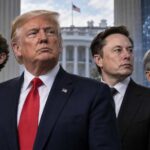
Mark Zuckerberg, Elon Musk and Jensen Huang reportedly went straight to President Donald Trump to oppose a proposal for a new industry-funded AI watchdog, adding another fault line to a growing battle over who should police the companies building the most capable artificial intelligence systems.
The Meta, SpaceXAI and Nvidia chiefs spoke with Trump separately in recent weeks and raised concerns about the proposed oversight body, the Wall Street Journal reported, citing people familiar with the discussions. Trump did not agree to establish the group, a decision that reportedly frustrated some White House officials.
The proposal came from Google DeepMind CEO Demis Hassabis, who has been pressing for a U.S.-led AI standards organization funded by the industry and modeled in part on the Financial Industry Regulatory Authority, or FINRA, the private organization that oversees U.S. brokerage firms under government supervision.
“The proposal for a FINRA-style AI regulatory and standards body came from Google’s Chief Scientist Demis Hassabis, who also chairs the tech giant’s DeepMind AI unit,” Forbes reported.
Hassabis has called for an independent body that can test frontier AI models before release, with technical experts examining systems for dangerous cyber, biological, and deceptive capabilities. His proposal envisioned representation from industry, government, independent researchers and the open-source community.
The fight is about who controls AI oversight
The resistance from Zuckerberg, Musk and Huang reportedly centered in part on concerns that such a structure could concentrate influence around OpenAI, Anthropic and Google, three companies already sitting near the center of the frontier AI debate.
That turns the regulatory fight into something more complicated than Silicon Valley opposing Washington.
Some AI leaders are calling for stronger coordination and outside scrutiny. Others argue that a formal oversight structure could create its own concentration of influence, letting incumbent labs shape standards that competitors would then have to follow.
That disagreement has become increasingly public.
Zuckerberg said this week that AI companies have strong incentives to build safe systems and argued that each lab can determine its own pace. He has supported independent evaluators and advisers but pushed back against calls for a coordinated slowdown across the industry.
Huang took an even clearer position at Salesforce’s Dreamforce conference Tuesday.
“We don’t need any new laws. We don’t need new regulations,” Huang said, arguing that companies should hold products back when they are not confident in their safety. He described the idea that the industry must choose between speed and safety as a “false choice.”
Jensen Huang: “Safety is paramount. In a lot of ways, it’s job one. However, safety is an engineering problem… If we’re not confident about the safety of the products — like all companies, like you and I, all the companies here — if you build a product or a service and you’re…
— David Sacks (@DavidSacks) September 16, 2026
Musk’s position has been less straightforward. He has criticized some warnings about catastrophic AI risk, yet recently backed Anthropic CEO Dario Amodei after Amodei called for greater caution around frontier model development. The wider debate now includes OpenAI CEO Sam Altman and other technology executives who have backed stronger safety mechanisms or coordination.
AI safety is becoming a battle over market structure
The dispute lands at an unusually sensitive moment for the AI industry. Researchers and executives are openly debating model behavior, autonomous agents, cybersecurity threats and whether existing safeguards can keep pace with increasingly capable systems. Reuters reported this week that AI leaders remain split over whether companies, independent organizations or governments should take the lead.
The Trump administration has leaned toward a lighter regulatory approach and has repeatedly linked AI policy to competition with China. Yet parts of the administration continue discussing AI risks. Treasury Secretary Scott Bessent said this week that the United States is open to talks with China about “shared risks” from artificial intelligence.
That leaves Washington facing a question Silicon Valley has yet to settle itself.
The debate is no longer just about whether advanced AI needs oversight. It is increasingly about who gets a seat at the table, who writes the standards, and whether rules meant to make AI safer could give some of the industry’s biggest players an advantage over everyone else.