Startup Funding News Today, September 17, 2026: Creem, D-Robotics, syte, Treble, Tusk IC & More
 Nickie Louise
Posted On September 17, 2026

Today’s funding activity looks less like a software boom and more like the supply chain for AI’s next phase. D-Robotics closed a $400 million Series C for robot chips and development infrastructure, Iceland’s Treble raised $18 million to simulate sound for physical AI, and Belgian semiconductor startup Tusk IC secured €15 million to move satellite-antenna chips from prototypes into mass production. Around them, investors backed real-estate AI, hospital agents, agent-native billing, gas-turbine propulsion, land-based aquaculture and food-material science.
The 10 selected deals represent more than half a billion dollars in approximate equivalent financing, although that figure should not be treated as a pure venture-equity total. Facilo’s ¥6.4 billion package includes ¥3.9 billion of equity, ¥1.8 billion of debt, and a ¥700 million credit line; ARK’s ¥1.3 billion Series A also combines equity with bank lending. UK reporting on MicroLub additionally varies between £7 million and £7.5 million, though multiple sources put the dollar value at about $10 million.
D-Robotics accounts for roughly three-quarters of the headline capital value, but the smaller rounds may be more revealing about where early-stage conviction is forming. Investors are financing robot compute, synthetic sensor data, satellite communications silicon, domain-specific AI, regulated healthcare workflows, specialized industrial hardware and businesses whose physical infrastructure cannot be reproduced with another model API.
The Macro Environment: Venture Capital Is Buying Real-World Execution
For much of the generative-AI cycle, capital concentrated around models, GPUs, and applications built directly on top of them. Today’s rounds suggest investors are spreading further through the stack into the technologies that determine whether AI can function reliably in the physical and operating world.
D-Robotics is perhaps the clearest example. The company supplies Sunrise computing chips, developer kits and software infrastructure for robots rather than trying to win the end market with one humanoid. Its Sunrise chips have passed 8 million cumulative shipments, while the newer S600 embodied-AI processor has been adopted by more than 20 robotics customers, according to the company. That creates exposure to many robot categories at once: humanoids, industrial machines, logistics robots, and consumer systems.
Treble and Tusk IC show the same investment logic at very different layers. Robots and voice-enabled devices need to understand sound under messy real-world acoustic conditions; Treble generates simulated acoustic environments and synthetic audio so developers do not have to record every scenario physically. Satellite terminals, meanwhile, need chips that can steer antenna beams electronically as constellations move across the sky. Tusk IC is now financing the transition from roughly hundred-unit prototype production toward millions of chips.
The software side is becoming more vertical at the same time. Facilo is embedding AI across Japanese real-estate brokerage and acquiring Corabit to add automated property valuation. syte is applying AI to land-use, zoning and development analysis. Health Force is automating insurance and regulatory workflows inside hospitals. Creem is building the financial infrastructure that lets AI-native software companies—and potentially their own agents—manage billing, tax and revenue splits. These companies are valuable less because they possess unique access to intelligence than because they sit inside specific operating systems customers already depend on.
Capital structure is also becoming more sophisticated. Facilo is mixing equity, term debt, and a credit line while pursuing M&A. ARK is financing aquaculture technology and physical farms with equity plus bank loans. That is a healthier fit for businesses in which some risks belong to venture investors, and others can eventually be financed against assets, facilities or predictable cash flows.
D-Robotics raises $400M to build the compute-and-software backbone for robots
China’s D-Robotics closed a $400 million Series C funding round to build the infrastructure backbone for robots. The company’s own release did not identify individual investors, describing a strategic investment from a major global internet company alongside institutional investors and returning shareholders. Chinese reporting identifies Mirae Asset as lead investor, with Meituan, Hefei State-owned Capital Investment, Nanshan Zhixin Investment and other government-backed and institutional investors participating.
The company is pursuing a picks-and-shovels position in physical AI. D-Robotics sells Sunrise computing chips and development infrastructure used by robotics companies rather than building a single robot category itself. The new funding will expand its chip family across different performance levels and finance a software platform spanning data collection, model training, simulation, verification and deployment.
The commercial indicators explain the size of the check. D-Robotics says first-half 2026 revenue grew several times year over year, cumulative Sunrise chip shipments exceeded 8 million units, and its embodied-AI business has entered mass production. The Sunrise S600, released in November 2025, has been adopted by more than 20 embodied-AI companies, including UBTECH, Fourier and Astribot. Those figures are company-reported, but they indicate that investors are financing existing deployment momentum rather than a laboratory-only robotics thesis.
The strategic angle is equally important. The robotics market remains highly fragmented: different companies may win in humanoids, logistics, consumer robots, and industrial machines. Supplying compute and software across those categories lets D-Robotics benefit from category growth without predicting a single hardware winner.
Funding Details
Startup: D-Robotics
Investors: Mirae Asset reported as lead; Meituan, Hefei State-owned Capital Investment, Nanshan Zhixin Investment, and others; existing shareholders also participated
Amount Raised: $400 million
Total Raised: Not disclosed
Funding Stage: Series C
Funding Date: September 17, 2026
Headquarters: Shenzhen, China
Sector: Robotics infrastructure / AI chips / physical AI
Valuation: Not disclosed
Facilo raises ¥6.4B financing package to turn real-estate brokerage into an AI workflow
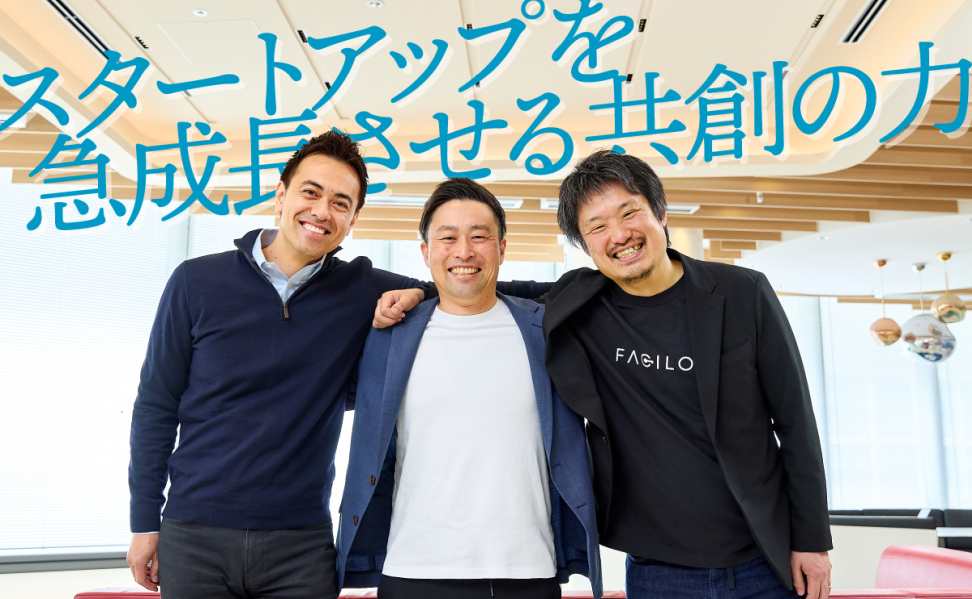
Tokyo-based Facilo has raised a ¥6.4 billion Series B financing package. The package includes ¥3.9 billion in equity, ¥1.8 billion of debt, and a ¥700 million credit facility, bringing cumulative financing to about ¥8.3 billion. Globis Capital Partners led the equity financing.
Existing and new investors include Coral Capital, Angel Bridge, Spiral Innovation Partners, DBJ Capital, Dentsu Ventures, i-nest capital, MUFG Capital and forStartups Capital. The mix tells part of the story: Facilo is no longer financing one property-tech product. It is trying to assemble a wider operating platform for residential brokerage.
The company simultaneously announced that it has brought Corabit, developer of the HowMa AI property-valuation service, into the group. Facilo is also launching AI-powered CRM, conversion and property-research tools. The strategy resembles vertical software consolidation: own the workflow, add adjacent products, connect the data and remove the need for brokers to jump among disconnected SaaS products.
Facilo says its platform is now deployed across 2,300 brokerage offices and used by more than 13,000 sales professionals. That installed base gives the company something new AI entrants often lack—distribution into the exact workflow it wants to automate.
The financing structure is also worth noting. Using debt and a credit line alongside equity gives Facilo more room to pursue acquisitions without asking venture shareholders to finance every predictable corporate expense with highly dilutive capital.
Funding Details
Startup: Facilo
Investors: Globis Capital Partners, Coral Capital, Angel Bridge, Spiral Innovation Partners, DBJ Capital, Dentsu Ventures, i-nest capital, MUFG Capital, forStartups Capital and others
Amount Raised: ¥6.4 billion total package: ¥3.9B equity, ¥1.8B debt, ¥700M credit line
Total Raised: Approximately ¥8.3 billion
Funding Stage: Series B plus debt financing
Funding Date: September 17, 2026
Headquarters: Tokyo, Japan
Sector: Proptech / enterprise AI / real-estate software
Valuation: Not disclosed
Treble raises $18M in funding to give physical AI a synthetic acoustic world

Reykjavík-based Treble Technologies raised $18 million, roughly €15 million, in a Series A-2 round led by Paladin Capital Group. Existing investors KOMPAS VC, Frumtak Ventures and the European Innovation Council Fund also participated, taking total funding to €36 million.
Treble develops cloud software for acoustic simulation, sound digital twins and synthetic audio generation. Engineers can model how sound moves through a room, vehicle, device or other physical environment before building and testing everything in the real world.
That becomes especially relevant as robots, wearables, vehicles and smart devices use audio as another sensor. Vision systems can determine what is directly visible; acoustic systems can identify speech, alarms, impacts or events occurring outside a camera’s field of view. Training those systems requires data across thousands of combinations of rooms, background noises, microphone placements and reverberation conditions.
Treble is therefore selling simulated experience. The company argues that developers can generate labeled acoustic datasets digitally rather than repeatedly recording physical environments, shortening development cycles for sound-enabled AI products. Customers and collaborators have included Amazon and Logitech.
The investment reflects a broader expansion of physical AI beyond robot limbs and computer vision. Machines that operate around people will increasingly need several sensory systems at once, creating specialist infrastructure markets around audio, touch, motion and spatial perception.
Funding Details
Startup: Treble Technologies
Investors: Paladin Capital Group, KOMPAS VC, Frumtak Ventures, European Innovation Council Fund
Amount Raised: $18 million / approximately €15 million
Total Raised: €36 million
Funding Stage: Series A-2
Funding Date: September 17, 2026
Headquarters: Reykjavík, Iceland
Sector: Physical AI / acoustic simulation / synthetic data
Valuation: Not disclosed
Tusk IC raises €15M in funding to mass-produce satellite-antenna chips
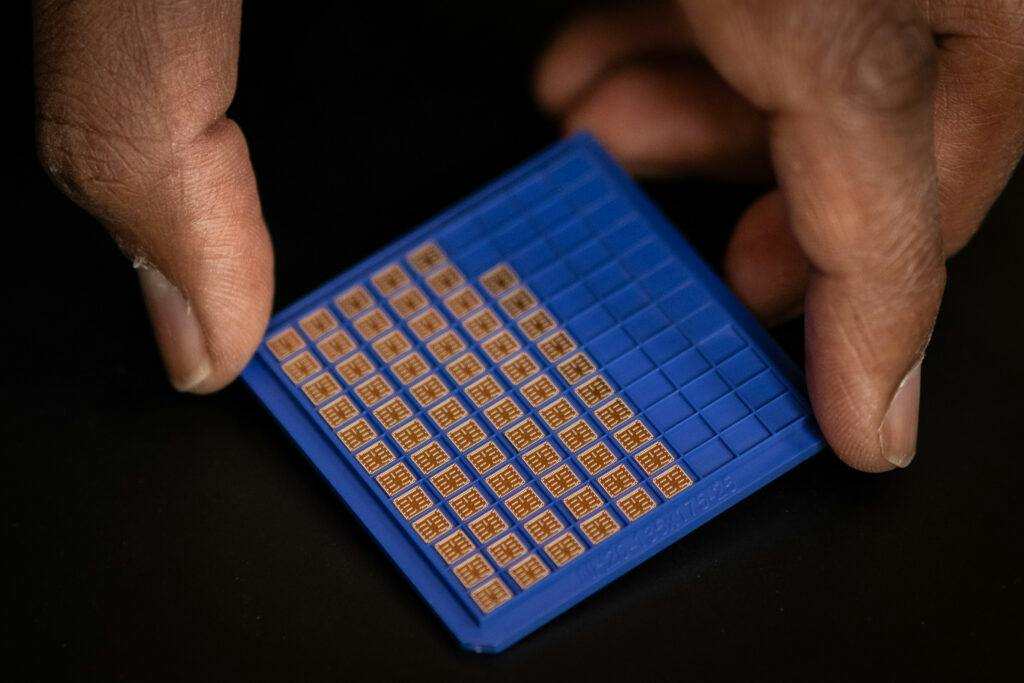
Antwerp-based semiconductor startup Tusk IC raised €15 million in Series A funding led by Matterwave Ventures, Forward.one and the Flanders Future Tech Fund, with existing investors and the Schaubroeck family also participating.
Tusk designs beamformer chips for electronically steered Ka-band satellite antennas. Rather than physically rotating a dish toward a satellite, these antennas control many small antenna elements electronically, allowing them to track low- and medium-Earth-orbit satellites while the terminal itself may be moving.
The company has produced around a hundred prototype chips so far. The Series A finances the much harder step: moving into production volumes potentially measured in millions. That requires process tuning, testing programs, packaging, assembly and quality control capable of maintaining performance across normal manufacturing variation.
Tusk says it is already working with a major satellite-communications equipment manufacturer to integrate its chips into a new electronically steered antenna.
The broader bet is that satellite broadband will move from specialized terminals aboard aircraft and ships to a larger connectivity market. If electronically steered antennas become cheaper, flatter and easier to manufacture, terminal economics could become almost as important to satellite broadband adoption as the satellites themselves.
Funding Details
Startup: Tusk IC
Investors: Matterwave Ventures, Forward.one, Flanders Future Tech Fund, existing investors, Schaubroeck family
Amount Raised: €15 million
Total Raised: Not disclosed
Funding Stage: Series A
Funding Date: September 17, 2026
Headquarters: Antwerp, Belgium
Sector: Semiconductors/satellite communications / RF chips
Valuation: Not disclosed
MicroLub raises about $10M in funding to replace fat with protein-and-water microgels
University of Leeds spinout MicroLub raised approximately $10 million in a round led by Northern Gritstone, with existing investors including NPIF II–PXN Equity Finance participating. UK sources differ slightly on the sterling amount, reporting either £7 million or £7.5 million, so the dollar figure is the cleaner common reference.
MicroLub is commercializing food-science research based on microscopic gels made primarily from protein and water. The particles replicate some of the lubrication and mouthfeel normally provided by fats, potentially allowing manufacturers to reduce fat while preserving texture.
That may sound far removed from AI and robotics, but the investment is tied to a major shift in the food market. Demand for higher-protein, lower-calorie products has increased alongside the growth of GLP-1 weight-loss drugs and broader interest in metabolic health. Food manufacturers therefore face a formulation problem: reducing calories is easy if consumers are willing to sacrifice taste and texture; doing both simultaneously is harder.
MicroLub says its technology can reduce fat and calories by as much as 75% in some applications while increasing protein content. Those are company claims and will ultimately need to survive large-scale manufacturing, shelf-life, sensory testing and customer economics. The startup has moved beyond laboratory research into industrial-scale manufacturing and trials with food and ingredient companies.
The next test is commercial conversion. The new money will help MicroLub expand into the U.S. and Asia and move current manufacturer trials toward paid agreements.
Funding Details
Startup: MicroLub
Investors: Northern Gritstone, NPIF II–PXN Equity Finance and existing investors
Amount Raised: About $10 million; UK reports range from £7 million to £7.5 million
Total Raised: Approximately $14.5 million reported
Funding Stage: Not disclosed
Funding Date: September 17, 2026
Headquarters: Leeds, United Kingdom
Sector: Food technology / advanced ingredients/materials science
Valuation: Not disclosed
ARK raises ¥1.3B in funding to scale modular land-based aquaculture
Japan’s ARK raised approximately ¥1.3 billion in Series A financing, combining venture equity and bank loans. Lead equity investors include UntroD Capital Japan, Beyond Next Ventures and BP Capital, alongside strategic investors including Shizuoka Gas, KOBASHI Holdings and others. Resona Bank led the lending side, joined by Hokkoku Bank and Japan Finance Corporation.
ARK is developing modular closed recirculating aquaculture systems, or RAS, designed to raise seafood on land while continuously filtering and reusing water. The company also operates farming activities around the systems rather than selling equipment alone.
The physical economics make ARK interesting. Global seafood demand is rising, while wild fish stocks, water availability, and long supply chains put pressure on conventional production. Land-based aquaculture moves production closer to consumers and gives operators more control over water quality, disease, and environmental conditions, but it brings high equipment and energy costs.
ARK plans to use the new financing to improve its systems, develop additional farms and hire for international expansion. The company has already been selected for Japanese government-supported demonstration projects in the UAE and Indonesia, signaling that its growth thesis extends beyond the domestic market.
Blended financing makes sense for this kind of company. Venture capital can absorb uncertain technology and expansion risk, while debt suits parts of the business involving equipment and facilities with more predictable economic lives.
Funding Details
Startup: ARK
Investors: UntroD Capital Japan, Beyond Next Ventures, BP Capital, Shizuoka Gas, KOBASHI Holdings and others; debt from Resona Bank, Hokkoku Bank and Japan Finance Corporation
Amount Raised: Approximately ¥1.3 billion, including equity and bank lending
Total Raised: Not disclosed
Funding Stage: Series A
Funding Date: September 17, 2026
Headquarters: Hiratsuka, Kanagawa, Japan
Sector: Aquaculture/climate technology/food infrastructure
Valuation: Not disclosed
syte raises €9M to automate the decisions that happen before construction starts
Münster-based syte raised €9 million in Series A funding, led by amberra, the venture studio of Germany’s cooperative banking group Volksbanken Raiffeisenbanken. NRW.BANK joined as a new investor, while existing backers, including companies linked to the Schwarz Group, High-Tech Gründerfonds, vent.io, and Vantage Value, also participated.
syte uses AI and property data to answer questions that typically consume large amounts of manual research at the beginning of a real-estate project: what can be built on a site, which zoning and planning restrictions apply, whether renovation makes economic sense and what financing or subsidy programs may be available.
The company says its platform now covers more than 62 million parcels across Germany, serves more than 200 customers and has doubled annual recurring revenue over the past year. Those figures come from syte.
The investor group has a strong distribution angle. Amberra sits inside Germany’s cooperative banking ecosystem, and several cooperative banks already use syte in property sales and customer advisory work. That gives the startup access to financial institutions that regularly evaluate exactly the properties its software analyzes.
The new capital will fund European expansion and deeper automation of early planning. If syte becomes a common data layer connecting developers, lenders, and brokers before capital is committed to a project, its role could extend beyond property analytics into the decision infrastructure around development itself.
Funding Details
Startup: syte
Investors: amberra, NRW.BANK, HTGF, Schwarz Group-related investors, vent.io, Vantage Value
Amount Raised: €9 million
Total Raised: Approximately €17 million reported
Funding Stage: Series A
Funding Date: September 17, 2026
Headquarters: Münster, Germany
Sector: Proptech / real-estate AI/construction planning
Valuation: Not disclosed
Creem raises €5M to build billing rails for AI-native software
Tallinn-based fintech startup Creem raised €5 million in Seed funding led by Inovo VC, with existing investors Practica Capital and Antler participating alongside angels including Bolt founder Markus Villig and founders and executives from Ready Player Me, Voi and Viktor.com. The round brings total funding to approximately €6.8 million.
Creem handles billing, payments, tax, affiliate management, revenue splits and pricing for software companies. Its latest product direction is aimed particularly at smaller AI-native teams whose products may use consumption-based, outcome-based or other pricing models that do not fit neatly into old subscription billing.
The agent angle is more interesting than simply calling the product “AI billing.” Creem does not want customers to adopt a Creem-branded agent. Instead, its infrastructure can be reached through APIs, command-line interfaces and the Model Context Protocol, allowing a customer’s own AI agents to manage stores and financial operations.
That could matter as agents begin purchasing software or completing business transactions on behalf of people and companies. The financial infrastructure still needs deterministic rules around tax, permissions, payouts and accounting even when the buyer or operator is a machine.
Creem says annual recurring revenue has passed €2 million while its team has expanded to roughly 15 people. Those are company figures, but they provide more commercial evidence than many Seed-stage agent startups currently possess.
Funding Details
Startup: Creem
Investors: Inovo VC, Practica Capital, Antler and angel investors
Amount Raised: €5 million
Total Raised: Approximately €6.8 million
Funding Stage: Seed
Funding Date: September 17, 2026
Headquarters: Tallinn, Estonia
Sector: Fintech infrastructure/billing / AI-agent commerce
Valuation: Not disclosed
DheyaTech raises $4.5 million to commercialize indigenous micro gas turbines
Bengaluru-based DheyaTech raised ₹43 crore, roughly $4.5 million, in a round led by Avaana Capital, with existing investor and manufacturing partner Unimech Aerospace and Manufacturing participating.
The company develops small gas-turbine engines spanning approximately 20 kgf to 400 kgf of thrust for advanced aerial platforms and energy applications. Its engineering work also includes hydrogen-compatible propulsion and power-generation systems.
The financing is small next to D-Robotics, but the strategic value is unusually high. Gas-turbine engineering requires expertise across aerodynamics, high-temperature materials, rotating machinery, combustion, controls and manufacturing. Few countries possess indigenous design and production capability across even small turbine classes.
DheyaTech says its engines are entering commercial deployment, with flight trials targeted for the fourth quarter of 2026 and orders already received from Indian and overseas OEMs. Those are company statements; successful trials, certification and reliable production remain the tests that will determine whether the technology moves from strategic promise into an enduring aerospace business.
The startup says it is also the first private Indian company pursuing independent airworthiness certification for its gas-turbine engines under CEMILAC-DRDO. The capital will fund production expansion, an integrated engine-testing facility and customer deployments.
Funding Details
Startup: DheyaTech
Investors: Avaana Capital, Unimech Aerospace and Manufacturing
Amount Raised: ₹43 crore / approximately $4.5 million
Total Raised: Not disclosed
Funding Stage: Pre-Series A in secondary reporting
Funding Date: September 17, 2026
Headquarters: Bengaluru, India
Sector: Aerospace/defense technology / propulsion / energy
Valuation: Not disclosed
Health Force raises €4.2M to automate hospital back-office workflows
Barcelona-based Health Force raised €4.2 million in Seed funding led by LUMO Labs, with Step Venture, Next Tier Ventures, Target Global and Calm/Storm participating.
Health Force builds AI agents that work inside hospital administrative systems. Current deployments cover prior-authorization checks, insurance claims, regulatory reporting, and related operational processes.
That is a useful place to apply agents because hospitals face staff shortages while much of their administrative work still requires employees to copy information among old systems, interpret documentation, and follow deterministic rules.
Health Force says its agents now handle work associated with more than 200,000 patient cases per year across organizations including Humanitas and Gruppo San Donato in Italy. The company reports that three out of four cases in certain workflows can be completed without staff intervention, while exceptions are prepared for human review. Those performance figures come from the company and hospital deployments rather than independent studies.
The cross-border element is the harder part. European healthcare differs by language, insurer, regulation, and hospital system. Health Force’s strategy is to maintain one underlying platform while configuring agents for different national processes—from hospital-insurance workflows in Italy to quality reporting in Portugal, with planned expansion into Germany, France, and Spain.
If it can do that reliably, the regulatory fragmentation that makes European healthtech difficult could become part of the company’s defense.
Funding Details
Startup: Health Force
Investors: LUMO Labs, Step Venture, Next Tier Ventures, Target Global, Calm/Storm
Amount Raised: €4.2 million
Total Raised: Not disclosed
Funding Stage: Seed
Funding Date: September 17, 2026
Headquarters: Barcelona, Spain
Sector: Healthcare AI/hospital automation
Valuation: Not disclosed
What Today’s Funding Activity Reveals
The most obvious signal is capital concentration. D-Robotics’ $400 million financing dwarfs every other selected transaction. Today’s aggregate funding total therefore should not be interpreted as broad-based exuberance across venture markets. Investors are still willing to write extremely large checks, but only where they believe a company may control an infrastructure layer with many downstream customers.
The second pattern is the widening definition of physical AI. Treble does not manufacture robots, but acoustic data can become a sensor input for them. Tusk does not operate satellite networks, but its beamforming chips can determine the economics of terminals connecting to those networks. DheyaTech is not conventionally classified as AI at all, yet autonomous aerial systems still need propulsion. The physical-AI economy may create substantial companies around components and infrastructure long before general-purpose robots become commonplace.
Third, vertical software is moving from giving advice to doing work. Facilo is extending from communication into CRM, valuation, and research. Health Force’s agents execute hospital administrative processes. Creem wants machine customers to operate billing systems directly. syte automates decisions that precede real-estate investment. The value proposition is shifting from “here is information” toward “here is a completed piece of the workflow.”
Fourth, strategic distribution appears repeatedly. Facilo already reaches thousands of brokerage offices. syte has banking-sector investors whose institutions use property intelligence. Health Force is deployed within hospital groups. Creem has existing revenue among AI-native software companies. These startups don’t rely entirely on technological differentiation; they embed themselves where buying decisions and operational data already exist.
Fifth, physical businesses are using multiple forms of capital instead of forcing everything into venture equity. Facilo’s financing package includes debt and a credit facility. ARK combines equity with bank loans. That matters because some startup expenses represent technology risk while others represent equipment, facilities or working capital. Financing both with common equity can become unnecessarily expensive for founders.
Finally, today’s freshness audit shows why announcement-date verification matters. AnyCasting appeared in September 17 funding coverage, but the underlying KRW7.5 billion investment was completed across June and July. Arcee AI, Hang Ten Systems, and EnduroSat also remain fresh in search results despite announcement times before the 16-hour cutoff. A daily intelligence product has to distinguish new coverage from new capital.
Top Ten Funding Table
| Startup | Amount Raised | Sector | Funding Stage | Lead/Key Investors | Country |
|---|---|---|---|---|---|
| D-Robotics | $400M | Robotics infrastructure / AI chips | Series C | Mirae Asset, Meituan, state-backed investors + existing shareholders | China |
| Facilo | ¥6.4B package | Proptech / enterprise AI | Series B + debt | Globis Capital Partners, Coral Capital, Angel Bridge + others | Japan |
| Treble Technologies | $18M | Physical AI / acoustic simulation | Series A-2 | Paladin Capital, KOMPAS VC, Frumtak, EIC Fund | Iceland |
| Tusk IC | €15M | Semiconductors/satellite communications | Series A | Matterwave Ventures, Forward.one, Flanders Future Tech Fund | Belgium |
| MicroLub | ~$10M | Foodtech / advanced ingredients | Not disclosed | Northern Gritstone, NPIF II–PXN Equity Finance | UK |
| ARK | ¥1.3B package | Aquaculture/food infrastructure | Series A | UntroD, Beyond Next Ventures, BP Capital + lenders | Japan |
| syte | €9M | Proptech / real-estate AI | Series A | amberra, NRW.BANK, HTGF + others | Germany |
| Creem | €5M | Fintech infrastructure / AI billing | Seed | Inovo VC, Practica Capital, Antler | Estonia |
| DheyaTech | ₹43Cr | Aerospace/propulsion/defense tech | Pre-Series A reported | Avaana Capital, Unimech Aerospace | India |
| Health Force | €4.2M | Healthcare AI/hospital automation | Seed | LUMO Labs, Step Venture, Target Global + others | Spain |
Strategic Takeaways for Founders and Investors
- Infrastructure can be a better way to bet on a crowded technology category than choosing an end-product winner. D-Robotics can supply multiple robot makers. Treble can serve many voice-enabled machines. Tusk can sell into multiple satellite terminal platforms. In emerging markets with uncertain winners, horizontal infrastructure spreads product risk.
- Distribution is becoming as valuable as model capability. Facilo’s 2,300 brokerage locations, Health Force’s hospital deployments, and syte’s banking relationships provide channels a new competitor cannot reproduce merely by licensing a better foundation model.
- AI pricing should increasingly connect to completed work. Health Force automates insurance processes, syte accelerates property evaluation, and Creem supports usage and outcome-based billing. Products tied directly to measurable transactions, labor savings, or revenue have a clearer route to budget than generalized AI assistance.
- Physical startups should separate technological risk from asset financing. ARK and Facilo show why founders should consider debt, credit facilities, and other non-dilutive or less-dilutive capital once parts of the business become predictable. Equity is most valuable when reserved for uncertain company-building and technology risk.
- Components can capture large value in physical AI. Not every robotics founder needs to build a humanoid. Sensors, simulation, chips, actuators, audio systems, propulsion, connectors, and manufacturing tools can become large markets because many downstream platforms need them.
- Strategic independence is attracting capital outside the U.S. DheyaTech’s turbine work reflects India’s desire for domestic propulsion capability. Tusk sits within Europe’s semiconductor and satellite ecosystem. D-Robotics is expanding China’s robotics-compute stack. Deep-tech investing is increasingly inseparable from questions of industrial capacity and technological autonomy.
- The smaller rounds are worth watching precisely because leadership is not settled. A $400 million Series C tells us investors already see scale. A €5 million Seed or €4.2 million Seed tells us where investors think a category may be forming before the dominant company is obvious.
Conclusion
Today’s startup funding activity does not point to a retreat from AI. It points to a more demanding definition of what counts as an investable AI business.
D-Robotics is raising $400 million because robot makers need computing and development infrastructure. Treble is creating synthetic acoustic environments because machines have to understand more than images. Tusk IC is taking satellite chips into volume manufacturing. Facilo, syte and Health Force are embedding intelligence inside workflows where customers already spend money. Creem is preparing financial infrastructure for software increasingly operated by agents. DheyaTech and ARK remind us that some of the most defensible companies will still depend on turbines, tanks, factories and physics.
The common thread is execution.
As intelligence becomes cheaper and more widely available, venture capital is assigning more value to the systems that can turn that intelligence into reliable action: chips, specialized data, embedded workflows, distribution networks, regulatory knowledge and physical infrastructure.
The models may keep getting easier to access. The ability to make them useful in the real economy is not.