Venture Capital & Startup Funding Roundup, September 16, 2026: Andreessen Horowitz, Index Ventures, M12, Vista Equity & More
 Nickie Louise
Posted On September 16, 2026

Venture capital is not moving evenly today. It is clustering around businesses that control a scarce input, remove an expensive operational bottleneck, or sit close enough to a measurable economic outcome that investors can underwrite something more tangible than AI adoption curves. The strongest examples range from Impulse Space’s orbital infrastructure and Arcee AI’s open-weight models to Rune’s power-linked compute, Noetive’s industrial world models, and Sling Therapeutics’ late-stage biotech program.
Another signal is buried in the round sizes. Investors are still willing to back unusually young companies aggressively when the founders, technical thesis, or target market justify it: Hang Ten Systems raised $85 million in seed financing within weeks, while Noetive emerged from stealth with a $41 million seed round. At the other end of the spectrum, Impulse Space added $308 million to an already enormous Series D, valuing it at $5.4 billion. This is less a return to indiscriminate risk-taking than a concentration of money around perceived category control points.
The Macro Environment: Scarcity Is Beating Cheap Capital
Today’s financing activity landed against a less forgiving monetary backdrop. The Federal Reserve raised rates by 25 basis points, taking the target range to 3.75%–4.00%; contemporary reporting described it as the first increase since 2023. Higher rates ordinarily raise the return investors demand from long-duration private assets, making distant cash flows less attractive. Yet the rounds below show that the adjustment is not stopping venture deployment. It is making investors more selective about where duration risk is worth taking.
That selectivity is producing a barbell. On one side are companies with visible technical or commercial de-risking: Sling has a late-stage drug candidate, while Impulse Space has booked missions and a growing commercial and government backlog. On the other side are very young companies receiving large checks because investors believe the founding team or technical architecture can establish an early lead: Hang Ten and Noetive are the clearest cases.
AI itself is also fragmenting into investable layers. Arcee is attacking the model layer with open-weight models; Hang Ten is focused on enterprise implementation and software modernization; Noetive wants models that understand physical operations; Rune is tying compute directly to underused renewable generation; Integral and Footprint are applying automation to regulated professional work; Ferry is turning AI from an information interface into software that actually completes healthcare-administration tasks. Investors are therefore financing not one “AI trade,” but a chain of constraints from power and models through workflow integration and distribution.
The public-private connection is particularly visible in space. Reuters reported Impulse’s new valuation alongside renewed investor appetite for the sector following SpaceX’s recent public-market milestone, while Impulse moved from a reported $4.26 billion valuation in June to $5.4 billion in the extension announced today—roughly a 27% increase in three months. That is the type of repricing private investors are willing to accept when a sector acquires a stronger public benchmark and a company can point to booked demand rather than just technological promise.
The outlier is also informative. Sling Therapeutics is not an AI company. Its $123 million Series C shows biotech can still compete for large checks when capital is tied to a discrete clinical milestone and a potentially differentiated product profile. In a market dominated by AI narratives, clinical de-risking remains one of the few other mechanisms that can attract nine-figure private rounds.
Top Ten Funding Rounds
Impulse Space raises $308M funding to scale orbital logistics
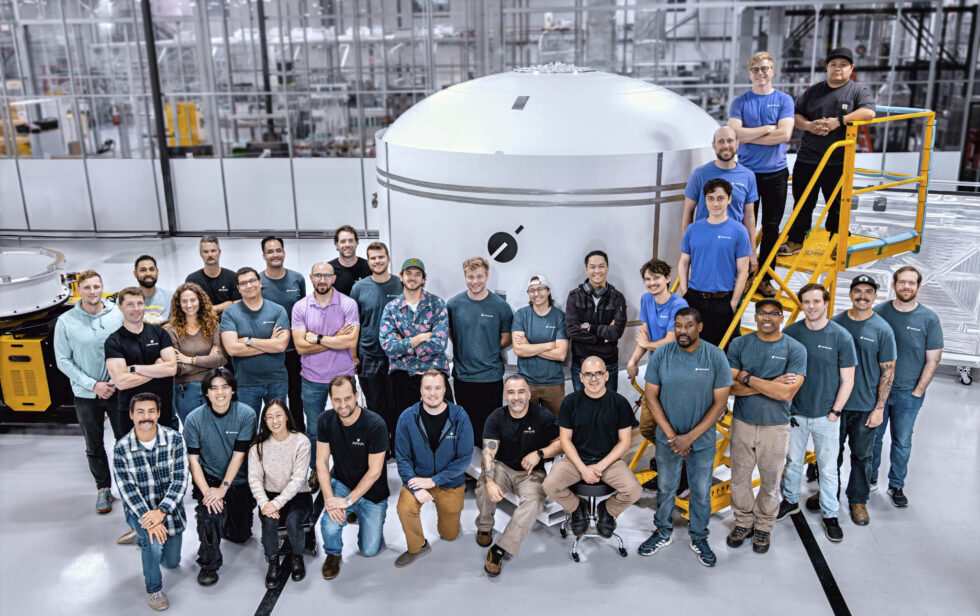
Impulse Space, founded by former SpaceX propulsion executive Tom Mueller, builds spacecraft that move satellites and other payloads after launch. The company added $308 million to its Series D, taking the round to $808 million and valuing Impulse at $5.4 billion. Reuters reported that the capital will primarily support hiring and manufacturing as the company works through a growing backlog of commercial and government missions.
The financing matters because orbital transportation is moving from an accessory to the launch business into its own infrastructure category. Launch providers can put a payload into orbit, but satellites increasingly need propulsion, orbit changes, hosted transport, and more flexible deployment once they are there. Impulse’s Caravan and Helios systems target that layer. The company’s Caravan 2 and Caravan 3 Helios rideshare missions scheduled for 2028 are already sold out, according to Reuters, giving investors unusually concrete demand visibility for a space startup.
The valuation signal is equally notable. The new $5.4 billion figure is about 27% above the $4.26 billion valuation attached to the initial $500 million Series D financing in June. Investors are effectively paying up in the same round as demand expands—a rare vote of confidence in an environment where the cost of capital has risen.
Funding Details
Startup: Impulse Space
Investors: Investor names were not disclosed in the Reuters report reviewed
Amount Raised: $308 million extension
Total Raised: Lifetime total not disclosed in the cited report; Series D now totals $808 million
Funding Stage: Series D extension
Funding Date: September 16, 2026
Headquarters: Redondo Beach, California
Sector: Space infrastructure / orbital transportation
Arcee AI raises at least $150M to compete in open-weight AI models
Arcee AI has raised a Series B at a $1 billion pre-money valuation, with Fortune reporting that the company declined to disclose the round size, but a person familiar with the transaction put it at at least $150 million. Vista Equity Partners, Cambium Capital, and Emergence Capital led the financing, joined by Microsoft’s M12, AI10 Ventures, Hitachi, IAG, P7, and Wipro.
The company’s bet is unusually direct: rather than build another application on top of someone else’s foundation model, Arcee is training its own open-weight models. Founder Mark McQuade told Fortune that Arcee spent roughly $20 million training four models, including its 400-billion-parameter Trinity Large. For investors, that cost profile is the story. If capable open-weight systems can be trained for tens of millions rather than billions, the model layer may support more independent suppliers than the scale economics of OpenAI, Anthropic, and the largest technology companies would otherwise suggest.
There is a geopolitical angle as well. Fortune framed Arcee’s strategy against strong Chinese open-weight models and noted that the company is expanding work with the U.S. Department of Energy. That means Arcee is selling investors not only on model performance, but on the strategic value of a competitive U.S.-based open-model ecosystem. The risk is obvious: open models improve quickly, switching costs can be low, and large incumbents can subsidize training. Arcee therefore has to turn training efficiency into sustained distribution and enterprise adoption rather than a one-time benchmarking advantage.
Funding Details
Startup: Arcee AI
Investors: Vista Equity Partners, Cambium Capital, Emergence Capital, M12, AI10 Ventures, Hitachi, IAG, P7, Wipro
Amount Raised: At least $150 million reported; exact amount not disclosed by the company
Total Raised: Not disclosed in the reviewed report
Funding Stage: Series B
Funding Date: September 16, 2026
Headquarters: United States; city not confirmed in the funding report reviewed
Sector: Foundation models/enterprise AI
Sling Therapeutics raises $123M to advance an oral treatment for thyroid eye disease
Sling Therapeutics raised a $123 million Series C led by Forbion, with TPG Life Sciences Innovations and Sectoral Asset Management participating. The capital will support late-stage development of linsitinib, Sling’s oral candidate for thyroid eye disease, or TED.
The attraction here is clinical differentiation rather than software-style growth. Reuters reported that, if approved, linsitinib could become the first oral drug for TED, offering a different treatment format from Amgen’s Tepezza and Viridian Therapeutics’ Lumvoa. Sling has also reported positive trial results on the key measure of eye bulging, alongside a safety profile that investors evidently judged strong enough to finance the next stage.
For venture investors, this is a milestone-financing thesis: a nine-figure check can make sense when the next dollars are intended to convert clinical evidence into a registrational or commercialization event. Unlike an AI round where competitive advantage can deteriorate quickly as models improve, late-stage biotech value can increase sharply when a drug clears clinical and regulatory gates. The trade-off is binary risk—the science still has to hold up.
Funding Details
Startup: Sling Therapeutics
Investors: Forbion, TPG Life Sciences Innovations, Sectoral Asset Management
Amount Raised: $123 million
Total Raised: Not disclosed in the reviewed Reuters report
Funding Stage: Series C
Funding Date: September 16, 2026
Headquarters: Ann Arbor, Michigan
Sector: Biotechnology/ophthalmology
Hang Ten Systems raises $53M to industrialize enterprise AI deployment
Hang Ten Systems raised an additional $53 million in a seed extension, just weeks after closing an initial $32 million seed round, bringing total funding to $85 million. Xora Innovation, Temasek’s early-stage investment platform, led the extension. Mayfield participated alongside Aramco Ventures and individual technology executives including Intel CEO Lip-Bu Tan, Micron CEO Sanjay Mehrotra, and Yahoo co-founder Jerry Yang.
Founded in May by former Infosys chief executive Vishal Sikka, Hang Ten is targeting large enterprises that want to deploy AI while also rebuilding older software systems. TechCrunch reported that its target customers are typically companies with more than $10 billion in revenue. That puts Hang Ten in an interesting competitive position: it sits between software vendors, AI coding companies, and traditional systems integrators.
The round says as much about investor behavior as it does about Hang Ten. $85 million is an extraordinary amount of capitalization for a seed-stage company. Investors are effectively underwriting founder pedigree, access to large-enterprise buyers, and the belief that AI implementation inside major corporations will become a very large services-plus-software market. The danger is that implementation businesses can become labor-intensive. Hang Ten’s long-term economics will depend on how much of its knowledge gets converted into reusable software rather than bespoke consulting.
Funding Details
Startup: Hang Ten Systems
Investors: Xora Innovation, Mayfield, Aramco Ventures, Lip-Bu Tan, Sanjay Mehrotra, Jerry Yang and others
Amount Raised: $53 million extension
Total Raised: $85 million
Funding Stage: Seed extension
Funding Date: September 16, 2026
Headquarters: United States
Sector: Enterprise AI/software modernization
Noetive raises $41M to build world models for physical industry
Noetive emerged from stealth with a $41 million seed round led by Eclipse, joined by Craft Ventures, Westly Group, and angel investors including Meta CTO Andrew Bosworth and Airbnb CTO Ahmed Al-Dahle. Amir Frenkel, formerly vice president of generative AI at Meta, and former Netlify product vice president Dan Barak founded the company.
Noetive is targeting a weakness in language-centric AI: factories, warehouses, construction sites, and other physical environments are governed by spatial relationships, machine states, sensor readings, production constraints, and time-dependent processes that don’t naturally reduce to text. Noetive is developing a world model and a sensing system intended to understand those environments while integrating with the software companies already use.
Early customer data turns the thesis from an interesting research idea into an investable operational claim. The Wall Street Journal reported that food manufacturer Steuben Foods used Noetive to optimize weekly production schedules and saw line capacity improve by roughly 10% to 15%. That kind of measurable capacity gain is important because industrial AI ultimately competes against capital expenditure: if software can extract more throughput from existing equipment, buyers can justify meaningful spending without waiting for an entirely new generation of autonomous factories.
Funding Details
Startup: Noetive
Investors: Eclipse, Craft Ventures, Westly Group, Andrew Bosworth, Ahmed Al-Dahle, and others
Amount Raised: $41 million
Total Raised: $41 million, publicly disclosed in the seed financing
Funding Stage: Seed
Funding Date: September 16, 2026
Headquarters: United States; specific city not confirmed in the reviewed report
Sector: Physical AI / industrial automation
Rune raises $40M to put AI compute next to underused renewable power
Rune raised a $40 million Series A led by Spark Capital, with participation from Union Square Ventures, Lowercarbon Capital, Activate Capital, Committed Capital, Timeless Partners, and Logos Fund. The Mountain View company is developing RELIC, a modular computing system designed for deployment directly at renewable-energy generation sites.
The economic insight is straightforward: one of the hardest constraints in AI is no longer just buying processors; it is finding electricity, grid capacity, land, interconnection, and cooling quickly enough to operate them. At the same time, solar and other renewable projects can produce power that is curtailed or economically unattractive to export during certain periods. Rune wants compute to move toward available power rather than forcing every megawatt through a congested grid into a conventional data center.
That makes Rune part compute company, part energy-infrastructure company. Its site says it has more than 80 MW of contracted power, a pipeline above 1 GW, more than 40,000 fleet operating hours, and a 99.5% service-level record. Those metrics will matter more than model benchmarks because the investment case rests on whether distributed compute can operate reliably enough for commercial AI workloads. If it can, energy geography starts becoming a competitive variable in AI infrastructure.
Funding Details
Startup: Rune
Investors: Spark Capital, Union Square Ventures, Lowercarbon Capital, Activate Capital, Committed Capital, Timeless Partners, Logos Fund
Amount Raised: $40 million
Total Raised: Not disclosed in the reviewed sources
Funding Stage: Series A
Funding Date: September 16, 2026
Headquarters: Mountain View, California
Sector: AI compute / energy infrastructure
Footprint raises $25M to automate financial-crime compliance
Footprint announced a $25 million Series B to expand Percy, its AI operating system for financial-crime compliance, along with an underlying system it calls Trust Fabric. The company said it intends to expand engineering and sales as banks and fintech companies look for ways to reduce the manual work involved in compliance investigations.
Financial-crime operations are a natural test for enterprise AI because the buyer’s problem is expensive, repetitive, document-heavy, and tightly governed. A useful system has to do more than generate text: it must gather evidence, preserve decision history, apply policy consistently, and produce an audit trail that compliance teams can defend. Footprint’s pitch is that previous investigations should become reusable institutional knowledge, not isolated analyst work.
This category also illustrates why regulated workflows may retain stronger defensibility than generic AI assistants. Model capability can be purchased from multiple providers; integrations, permission structures, proprietary compliance history, and customer trust are harder to substitute. The investor roster was not exposed in the accessible announcement excerpts I could verify during the research window, so I am leaving that field undisclosed rather than filling it with an unconfirmed secondary attribution.
Funding Details
Startup: Footprint
Investors: Not confirmed in the accessible announcement excerpts reviewed
Amount Raised: $25 million
Total Raised: Not disclosed in the reviewed sources
Funding Stage: Series B
Funding Date: September 16, 2026
Headquarters: United States
Sector: Regtech / financial-crime compliance
Integral raises €18M to build an AI-native accounting firm
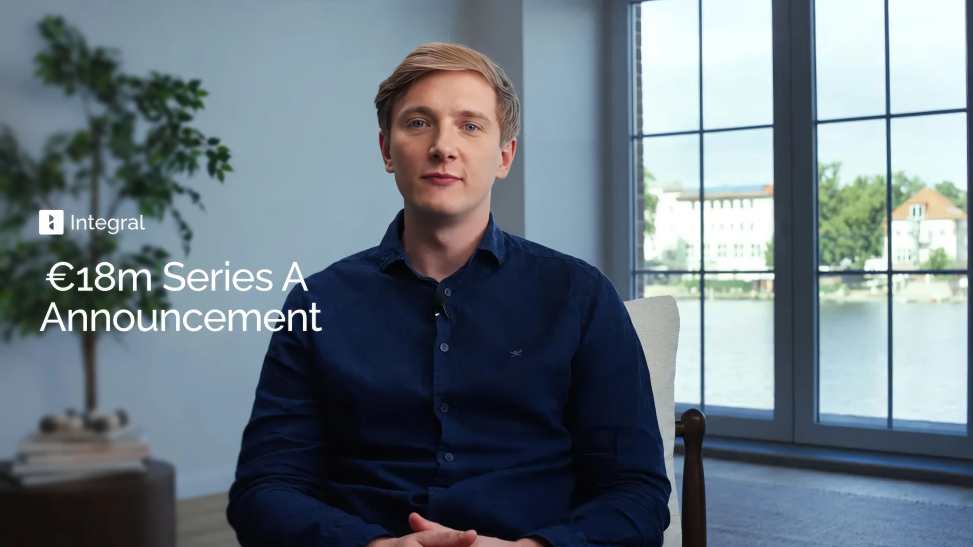
Berlin-based Integral raised an €18 million Series A, co-led by Mosaic Ventures and Reid Hoffman, with Cherry Ventures, General Catalyst, and Puzzle Ventures participating. The round takes Integral’s total funding above €30 million.
The interesting part is what Integral is not building. It is not simply selling an AI copilot to accountants. It combines software agents with licensed professionals and delivers accounting, tax, and payroll services directly to small and mid-sized businesses in Germany. Its affiliated licensed firm, Integral Tax, uses the platform while professionals review and sign off on the final work.
That is a meaningful shift in the software business model. Traditional SaaS improves an incumbent service provider’s productivity and charges for the tool. Integral wants to capture more service revenue by using automation to increase how many clients each licensed professional can handle. Germany’s shortages of accounting and tax professionals give that model a demand-side tailwind. The strategic question is whether AI lets software companies absorb service-industry revenue pools without inheriting service-industry margins.
Funding Details
Startup: Integral
Investors: Mosaic Ventures, Reid Hoffman, Cherry Ventures, General Catalyst, Puzzle Ventures
Amount Raised: €18 million
Total Raised: More than €30 million
Funding Stage: Series A
Funding Date: September 16, 2026
Headquarters: Berlin, Germany
Sector: Accounting technology/fintech/enterprise AI
ETFBOOK raises $13M to expand the data layer behind ETF markets
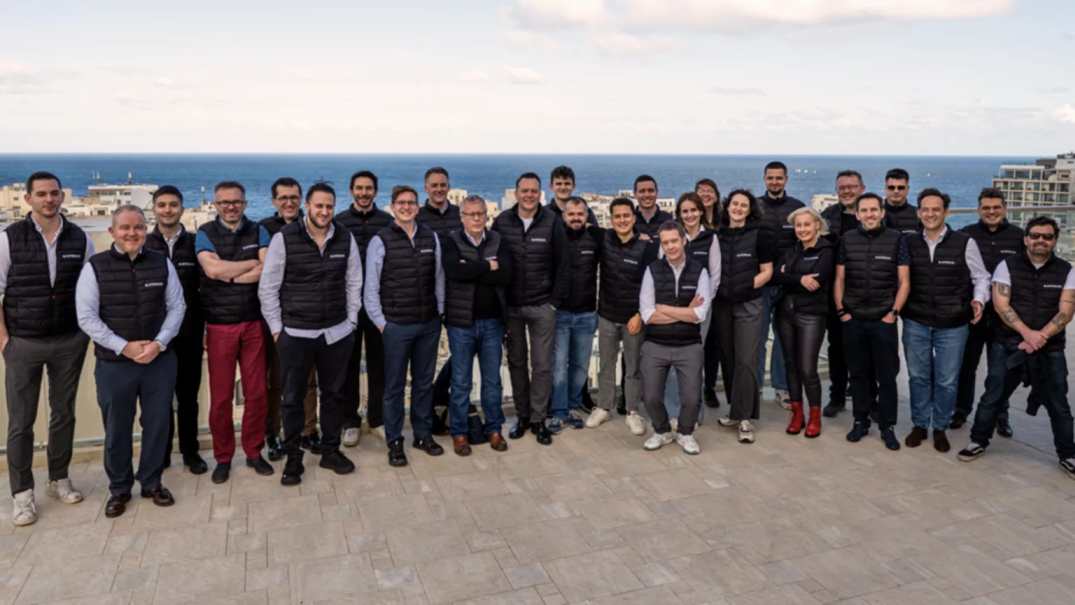
Zurich-based ETFBOOK raised $13 million in a funding round led by Expedition Growth Capital, with existing investor BlackFin Capital Partners participating. The company provides exchange-traded-fund data and analytics and plans to use the funding to expand in the Americas and Asia-Pacific.
ETF infrastructure is less fashionable than generative AI, which is precisely why the deal is useful in a daily funding sample. Exchange-traded products continue to create increasingly complex data requirements around composition, reference data, analysis, distribution, and institutional workflows. An independent data supplier can become sticky when customers build trading, research, or operational processes around its feeds.
The financing also offers one of the few non-U.S. examples among the largest verifiable rounds in this 12-hour window. Expedition’s participation alongside existing investor BlackFin suggests a scaling thesis rather than a speculative technology bet: broaden geographic distribution and deepen the data product as ETF markets expand. Unlike many AI companies in this report, ETFBOOK does not have to prove that a new software behavior exists; it has to capture a larger share of an already institutionalized market.
Funding Details
Startup: ETFBOOK
Investors: Expedition Growth Capital, BlackFin Capital Partners
Amount Raised: $13 million
Total Raised: Not disclosed in the reviewed sources
Funding Stage: Growth financing; formal series designation not disclosed in reviewed sources
Funding Date: September 16, 2026
Headquarters: Zurich, Switzerland
Sector: Financial data / ETF analytics
Ferry Health raises $9M to turn healthcare administration into an AI-executed workflow
Ferry Health launched from stealth with $9 million in seed financing from Andreessen Horowitz, Index Ventures, Avid Ventures, Layout Ventures, SV Angel, BoxGroup, Asymmetric Capital, and several angels. Founded in 2024 by Mehul Mehta, Keyur Mehta, and Andrew Buie, the San Francisco company is building an AI assistant that does healthcare-administration work for patients rather than merely telling them what to do.
Its first use case is finding and scheduling medical care. Ferry identifies in-network providers, checks details such as specialty fit and insurance acceptance, contacts offices, confirms availability, and books appointments. The company says more than one million patients can already access Ferry through partnerships with health systems, insurers, digital-health companies, and care-navigation platforms, with plans to expand that reach substantially this year.
That workflow is strategically interesting because healthcare includes a lot of low-value coordination work that still requires real-world interaction: phone calls, outdated directories, insurance rules, referrals, imaging, and follow-up. General-purpose chatbots can explain those tasks; Ferry is trying to execute them. The defensibility test is whether the company builds proprietary operational data and distribution through healthcare partners before general AI agents can do the same work reliably.
Funding Details
Startup: Ferry Health
Investors: Andreessen Horowitz, Index Ventures, Avid Ventures, Layout Ventures, SV Angel, BoxGroup, Asymmetric Capital, and angel investors
Amount Raised: $9 million
Total Raised: $9 million publicly disclosed
Funding Stage: Seed
Funding Date: September 16, 2026
Headquarters: San Francisco, California
Sector: Healthtech / healthcare AI agents
What Today’s Funding Activity Reveals
AI capital is moving toward constraints, not generic interfaces. Arcee targets model economics; Rune targets electricity and compute placement; Noetive targets the missing physical-world representation layer; Hang Ten targets the gap between AI capability and enterprise implementation. Even Ferry and Footprint are not primarily selling conversational interfaces—they are selling execution inside workflows where a completed task has economic value.
Physical systems are receiving software-style venture conviction. Impulse, Rune, and Noetive all interact with real infrastructure: spacecraft, electricity generation and computing equipment, factories and sensors. That is significant because these businesses face capital, deployment, reliability, and sometimes manufacturing risk that pure SaaS companies avoid. Investors appear increasingly willing to tolerate those risks when physical scarcity itself creates a barrier to entry.
The seed market is splitting into two very different products. Traditional seed rounds still exist, but Hang Ten’s $85 million accumulated seed financing and Noetive’s $41 million seed round resemble the capitalization once associated with later stages. These are effectively “company formation plus category capture” financings: investors are supplying enough capital up front to hire elite technical teams, build expensive systems, and pursue major customers before competitors can establish themselves. The cost is much higher dilution and a much higher performance bar from day one.
Regulated services are emerging as an attractive AI wedge. Integral, Footprint, Ferry, and Sling operate in accounting, financial compliance, healthcare administration, and drug development. The first three use AI to attack work where trust, auditability, licenses, integrations, and human review matter; Sling shows the parallel attraction of hard clinical milestones. These markets move more slowly than consumer software, but once a vendor is embedded, switching can be painful, and the economic value of successful automation is easier to measure.
The geographic concentration is striking. Eight of the ten selected rounds are U.S.-headquartered or U.S.-based companies, with Germany’s Integral and Switzerland’s ETFBOOK representing Europe. That is not the result of imposing a U.S. filter: the search covered global announcements. Within the strict 12-hour window and significance criteria, however, the largest verifiable financings skewed heavily toward U.S. companies. The implication is not that Europe lacks startups; it is that very large same-day private checks remain disproportionately concentrated in the U.S. market.
Comparative Funding Table
| Startup | Amount Raised | Sector | Funding Stage | Lead Investors | Country |
|---|---|---|---|---|---|
| Impulse Space | $308M | Space infrastructure | Series D extension | Not disclosed in reviewed report | United States |
| Arcee AI | $150M+ reported | Foundation models / AI | Series B | Vista Equity Partners, Cambium Capital, Emergence Capital | United States |
| Sling Therapeutics | $123M | Biotechnology | Series C | Forbion | United States |
| Hang Ten Systems | $53M | Enterprise AI | Seed extension | Xora Innovation | United States |
| Noetive | $41M | Physical AI / industrial automation | Seed | Eclipse | United States |
| Rune | $40M | AI compute / energy infrastructure | Series A | Spark Capital | United States |
| Footprint | $25M | Regtech / financial-crime compliance | Series B | Not confirmed in reviewed sources | United States |
| Integral | €18M | AI accounting/fintech | Series A | Mosaic Ventures, Reid Hoffman | Germany |
| ETFBOOK | $13M | Financial data / ETF analytics | Growth financing | Expedition Growth Capital | Switzerland |
| Ferry Health | $9M | Healthtech / AI agents | Seed | Lead not formally specified; a16z and Index among backers | United States |
Round amounts, stages, investors, and locations are compiled from Reuters, Fortune, TechCrunch, The Wall Street Journal, company announcements, and specialist European funding reporting.
Strategic Takeaways for Founders and Investors
For founders, the clearest message is that “AI company” is no longer an adequate category description. The rounds attracting serious capital today explain what constraint they remove. Rune has power. Noetive has physical-world understanding. Hang Ten has enterprise implementation. Footprint has financial-crime operations. Ferry has healthcare coordination. Arcee has model economics. A fundraising story becomes more credible when the founder can translate AI capability into a unit of scarce capacity, labor saved, throughput increased, risk reduced, or revenue captured.
For investors, the seed-stage lesson is almost the opposite of conventional capital efficiency. In strategically contested markets, some firms are deliberately overcapitalizing early. A $41 million Noetive seed or $85 million of accumulated seed capital at Hang Ten is intended to buy recruiting power, customer access, technical scope, and speed. That strategy can work when the category rewards an early technical lead, but it removes the option of growing quietly: the company needs outcomes consistent with a much later-stage valuation trajectory almost immediately.
At the same time, Arcee offers a different definition of capital efficiency. Fortune reported that roughly $20 million funded the training of four models, including a 400-billion-parameter system. If smaller labs keep narrowing the cost gap at the foundation-model layer, the investment case for simply owning another model weakens. Defensibility then shifts toward proprietary training methods, enterprise distribution, specialized data, inference economics, customer integration, or strategic positioning.
Application founders should take the commoditization threat seriously. Ferry’s moat cannot simply be that an LLM can make a phone call. Integral’s cannot simply be automated bookkeeping. Footprint’s cannot simply be AI-generated compliance analysis. Their stronger potential defenses are embedded distribution, transaction history, regulatory workflows, integrations, proprietary operational data, and the authority to actually complete a job. Those are assets that do not improve automatically every time a foundation-model provider releases a new model.
Infrastructure founders, meanwhile, have an unusual opening. The AI buildout is exposing shortages that software alone cannot remove: generation capacity, grid interconnections, orbital transport, industrial sensing, compute availability, and specialist labor. Companies addressing those bottlenecks may require more capital and longer deployment cycles, but they can also gain stronger pricing power if demand grows faster than supply. Rune and Impulse Space are the clearest examples in today’s group.
Finally, today’s rounds argue against assuming that higher interest rates will shut down venture activity uniformly. The Fed has increased the hurdle rate, but private investors are still writing large checks where they believe scarcity, clinical progress, infrastructure demand, or category control can outweigh the higher discount rate. What is likely to suffer more is the middle: companies with meaningful burn but no scarce asset, proprietary distribution, hard technical advantage, or measurable customer economics.
Conclusion
Today’s funding activity is not a story of capital suddenly becoming easy again. It is a story of capital becoming more opinionated. Investors are paying for orbital capacity, efficient open-weight models, late-stage clinical evidence, enterprise deployment expertise, physical-world AI, access to power, regulated workflow control, and specialized financial data. Even where the underlying technology is AI, the check is increasingly tied to something AI cannot cheaply commoditize on its own.
That is the more durable message for founders. The next phase of venture investing appears less interested in who can add intelligence to a product and more interested in who controls the bottleneck around that intelligence: the power, the data, the workflow, the customer relationship, the regulatory permission, the physical system, or the distribution channel. In a higher-rate market, those control points give investors something to underwrite beyond growth projections—and today’s biggest rounds show they are willing to pay heavily when they believe one is real.