Dreamforce 2026: What Does Salesforce Become in the AI Era?
 Daniel Levi
Posted On September 10, 2026

Claudeforce, Headless 360 and Salesforce’s agent push all point to a company loosening the link between its platform and its traditional interface. Former Salesforce VP of Engineering Yoav Kolodner says the harder question is what happens once agents and business users can act on the systems underneath.
Salesforce heads into Dreamforce 2026 in an unusual position. AI is no longer simply another capability to add to CRM. It is forcing the company to rethink where Salesforce itself sits in the way people work.
For most of Salesforce’s history, using the platform meant going into Salesforce. The company is now loosening that assumption. In April, Salesforce introduced Headless 360, a strategy that exposes Salesforce capabilities through APIs, Model Context Protocol tools, and command-line interfaces so agents and applications can use them without relying on the traditional browser experience. Salesforce co-founder Parker Harris framed the shift with a blunt question: why should users need to log into Salesforce at all?
In August, Salesforce pushed the idea further through Claudeforce, its expanded partnership with Anthropic. The first Salesforce-in-Claude integration ships with 37 prebuilt sales skills and is designed to let Claude reason over live Salesforce context, update records and take governed actions from inside Claude. In other words, Salesforce is increasingly comfortable letting work happen in another company’s interface while its data, workflows, and business logic remain underneath.
At the same time, Salesforce is continuing to build its own agent layer through Agentforce. These strategies span several layers: Salesforce is building its own agents while also making the underlying platform available to third-party agents and interfaces. Taken together, they point to a broader effort to keep Salesforce central, regardless of which agent or interface the user chooses.
From application to underlying capability
That may be the more important Dreamforce question this year. Salesforce is not simply trying to make CRM more intelligent. It is increasingly positioning itself across several layers of the post-AI enterprise stack.
Yoav Kolodner has seen that problem from both sides. Before becoming co-founder and CEO of enterprise AI startup Tribal, he served as VP of Engineering at Salesforce. He believes opening enterprise systems to agents solves only part of the problem. Access gets easier; making changes safely inside a system shaped by years of permissions, automations, integrations, and undocumented business logic does not.
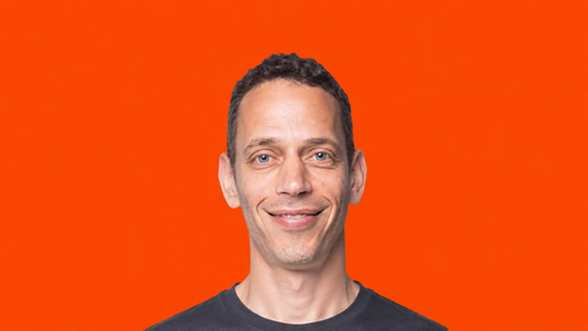
Tribal co-founder and CEO Yoav Kolodner
“The biggest bottleneck in enterprise software is not a shortage of ideas. It is everything that has to happen between an idea and production,” said Kolodner. “Campfire addresses what comes next: how enterprises decide what automations, objects, and AI applications to build, bring the right people into that decision, and move safely into production.”
Kolodner has made a similar argument in his own writing about Headless 360: Salesforce may have solved much of the access problem, but enterprises still have to decide what an agent should be allowed to call, what an existing workflow assumes about human oversight, and what needs to change before any of it reaches production.
The governance problem underneath the agent boom
That issue becomes more important as Salesforce makes more of the platform callable by agents. An enterprise system is not a clean codebase. It is an accumulation of decisions: who can see what, which automation fires when a field changes, which integration depends on an object, which approval chain exists for regulatory reasons, and which workaround became mission-critical five years after somebody built it.
AI can make it dramatically easier to generate an application or propose a change. It does not automatically make those accumulated constraints disappear. The post-AI version of Salesforce therefore has to answer two questions at once: how to make the platform easier for agents to use, and how to preserve enough context and control for enterprises to let those agents act.
That is also the problem Kolodner is now building around at Tribal, which raised a $10 million seed round led by Team8 earlier this year.
Its new Campfire product is designed to bring business users, architects, security teams, and Salesforce administrators into the same build process. Business teams can define what they want changed, while technical owners can see dependencies, permissions and risks before the change is pushed toward production. Underneath it is Tribal’s Metadata Fabric, which maps the existing Salesforce environment so the system is not reasoning from a blank slate.
The company’s broader Salesforce platform is built around the same premise: AI applications and agents should be deployed inside existing enterprise infrastructure rather than treated as if every company were starting from scratch.
Campfire is one startup’s answer, not a blueprint for where Salesforce itself will land. But it is a useful example of the second-order market that Salesforce’s agent strategy is creating. Once access to the platform becomes easier, the harder commercial problem may shift toward context, architecture, permissions, and governance.
What to watch at Dreamforce
Salesforce’s latest numbers suggest the agent push is already more than a positioning exercise. In its fiscal 2027 second-quarter results, the company said Agentforce annual recurring revenue exceeded $1.5 billion, up more than 240% year over year. Salesforce now includes several AI offerings, Slackbot and Headless 360, in that Agentforce ARR definition, which itself says something about how broadly the company is beginning to define the agentic layer.
So the question at Dreamforce is probably not whether Salesforce believes in agents. It is what Salesforce wants to remain indispensable for once agents become the layer employees actually interact with.
Claudeforce suggests Salesforce is comfortable with Claude becoming a place where work happens. Headless 360 suggests the company wants Salesforce capabilities to be callable from almost anywhere. Agentforce gives Salesforce its own answer at the agent layer. Data, permissions, workflows, business logic, and governance increasingly look like the connective tissue across all three.
That is why governance may matter more than it sounds. If Salesforce becomes less of a destination and more of an underlying enterprise capability layer, the platform’s value will depend not only on how easily agents can reach it, but on whether companies trust what those agents can do once they get there.
Dreamforce 2026 should offer a clearer view of how Salesforce intends to balance those roles: application, agent platform, system of record, and enterprise control layer. As agents increasingly become the interface through which employees work, the more interesting question may be which parts of Salesforce become even more foundational underneath them.