AI startup Manus resumes independent operations after China kills Meta’s $2 billion deal
 Daniel Levi
Posted On September 1, 2026
Daniel Levi
Posted On September 1, 2026
AI agent startup Manus is officially independent again, closing an extraordinary chapter in which Meta bought the company for roughly $2 billion, began integrating its technology, and then dismantled the deal after Chinese regulators ordered the transaction reversed.
The Singapore-based startup said Tuesday that its founding team has resumed running Manus as an “independent agent lab,” more than four months after China’s foreign-investment security reviewers blocked Meta’s investment and ordered the companies to unwind the acquisition.
“The Chinese-founded artificial intelligence start-up Manus announced on Tuesday that it had formally resumed independent operations, more than four months after Beijing blocked its US$2 billion acquisition by Meta Platforms,” South China Morning Post reported.
For Manus, the announcement marks a return to its pre-Meta structure. For the broader AI industry, the story is far bigger. A startup went from a roughly $500 million valuation to a multibillion-dollar Big Tech exit in months, only to have Beijing effectively claw back that exit.
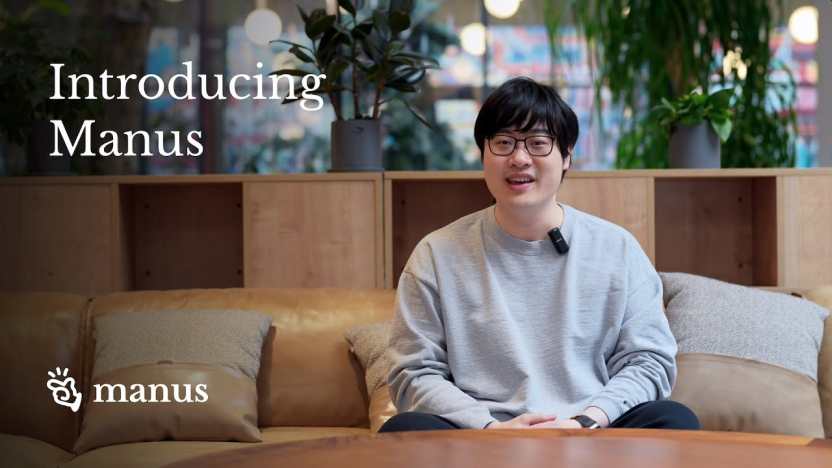
Manus said founders Xiao Hong and Zhang Tao, along with chief scientist Ji Yichao, remain in charge. The company plans to continue building general-purpose AI agents capable of researching the web, producing reports, and carrying out multi-step tasks.
“Manus has formally resumed independent operations. Our founding team will continue to lead the company, with a relentless commitment to product innovation and advancing general AI agents for our users worldwide,” Manus said in a blog post.

Image credit: Manus
The separation came with a cost for some users. Manus previously asked customers in certain regions to back up data created on or after December 29, 2025, the date Meta announced the acquisition. Some data from that period was deleted as the companies separated their systems to meet regulatory requirements. Manus has kept a restoration portal open for affected users and has not announced a deadline.
From $500 million startup to $2 billion Meta deal and back again
Manus burst onto the AI scene in March 2025 with a pitch that arrived at exactly the right moment: instead of another chatbot waiting for prompts, its agent could plan tasks, browse websites, conduct research, and return completed work.
The product emerged from Beijing-founded Butterfly Effect, also known as Monica. The company later shifted its headquarters and core engineering operations to Singapore. Benchmark led a $75 million funding round in April 2025 that valued Manus at about $500 million. Tencent, ZhenFund, and HSG were among its other investors.
Then Meta arrived.
Meta acquired Manus on December 29, 2025, for $2 billion. Meta planned to continue offering Manus while bringing its agent technology into Meta AI and WhatsApp business products.
The relationship barely had time to settle.
On April 27, China’s foreign-investment security review mechanism, housed within the National Development and Reform Commission, prohibited the investment and ordered the transaction revoked over concerns tied to the transfer of Chinese technology.
The intervention challenged an assumption increasingly common among Chinese-founded technology startups: moving headquarters and key operations to Singapore could create enough separation from China to pursue Western capital and acquisitions.
Manus showed where that assumption can break.
By June, Meta and Manus were pulling apart operations that had already begun coming together. Bloomberg reported that data sharing stopped, Manus employees lost access to Meta’s internal systems, and Meta workers were barred from using Manus for internal projects.
The split became more visible in August when Manus removed language from its website saying it had been part of Meta. Tuesday’s announcement completes that operational separation.
A warning for cross-border AI deals
The unanswered question now concerns ownership.
Benchmark had already received proceeds from the Meta acquisition, according to earlier Wall Street Journal reporting. The Financial Times reported in July that Tencent was discussing becoming Manus’s largest shareholder through a buyback valued at roughly the same $2 billion Meta paid. Manus did not provide an ownership update in Tuesday’s announcement.
That leaves one of the strangest financial reversals of the AI boom unfinished on paper, even as Manus moves forward operationally.
Meta wanted Manus for an obvious reason. AI agents are moving beyond answering questions and into software that can perform work across websites and applications. Buying Manus offered Meta a shortcut to a working agent product with considerable attention already behind it.
Beijing saw something different: Chinese-developed AI technology moving offshore before landing inside one of America’s largest technology companies.
That collision may prove more consequential than the acquisition itself.
The Manus case tells Chinese-founded AI startups that relocating overseas may not put their intellectual property beyond Beijing’s reach. It tells American acquirers that closing a transaction may not settle the regulatory question. Investors now have another risk to price into any AI company whose technology, founders, or intellectual property crosses the U.S.-China divide.
A second problem regulators cannot easily reverse remains. Meta employees had months of exposure to Manus before the separation. Regulators can disconnect systems, return ownership, and revoke data access. Knowledge gained during an integration cannot simply be deleted.
Manus now gets something few startups ever experience: life after being acquired.
Whether that becomes a second act or a prolonged regulatory hangover will depend partly on who finances the newly independent company and how much freedom it has to operate across markets.
The $2 billion acquisition is gone. Manus is still here.
Why It Matters
The Manus reversal redraws the risk map for cross-border AI deals. Chinese-founded startups can no longer assume an overseas headquarters creates a clean path to a U.S. Big Tech exit, and American buyers now have evidence that Beijing may reach across borders to unwind an AI acquisition after it has already closed.
Manus Founder