Prevalent AI raises $22M to fix the enterprise data problem holding back AI agents
 Daniel Levi
Posted On August 19, 2026
Daniel Levi
Posted On August 19, 2026
Enterprises are racing to deploy AI agents, but many are discovering an uncomfortable problem: their AI is being asked to make decisions using data scattered across thousands of systems that were never built to work together. Prevalent AI thinks fixing that foundation could become a major business, and it just raised $22 million to prove it at a much larger scale.
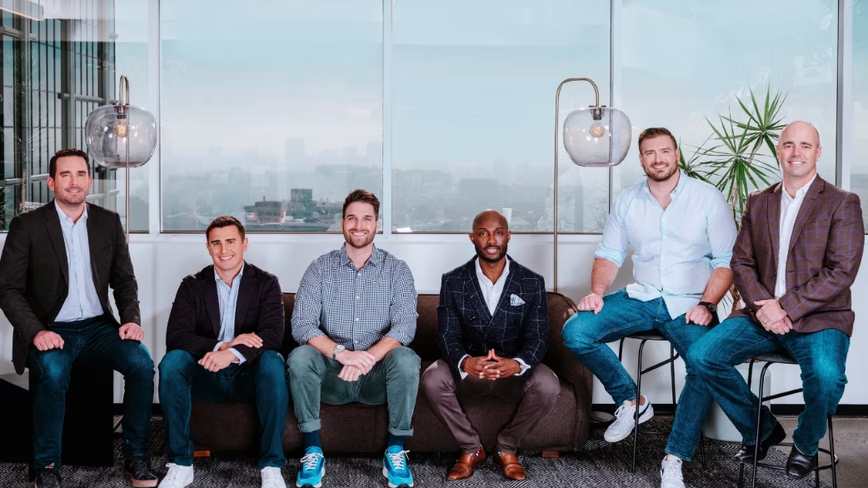
The London-based cybersecurity and enterprise AI company announced Wednesday that it secured a $22 million growth investment from Los Angeles-based Integrity Growth Partners (IGP). The financing is Prevalent AI’s first primary institutional funding in its nine-year history.
Prevalent AI Raises $22M After Bootstrapping for 9 Years as ARR More Than Doubles
That history makes the round unusual in an AI market where startups often raise large sums before reaching meaningful revenue. Prevalent AI says it has been profitable since landing its first customer and spent nearly a decade growing without primary external capital. The company says its annual recurring revenue has more than doubled over the past 12 months.
Prevalent AI was founded in 2017 by Paul Stokes, Arun Raj, Sir Iain Lobban, former director of Britain’s GCHQ, and Andrew France, a former GCHQ deputy director for cyber defense operations who also co-founded Darktrace. The founding team brings deep cybersecurity and intelligence experience.
The company’s roots are in cybersecurity, where fragmented enterprise data can make it difficult for security teams to see which assets exist, who has access to them, which controls are active, and how those pieces connect.
Prevalent AI built a data fabric that pulls information from hundreds of enterprise sources, cleans and connects it, then organizes those relationships into a continuously updated sovereign knowledge graph. The company says major banks, telecommunications companies, insurers, and critical infrastructure organizations already use its technology.
Now the rise of AI agents is making the same data problem relevant far beyond security.
AI agents have a context problem
An AI agent can reason over the information it receives, but sophisticated models cannot compensate for missing, stale, or contradictory enterprise data. Give an agent the wrong picture of a company’s systems, identities or controls, and it can make the wrong decision much faster than a human employee.
“Large enterprises do not have a shortage of tools or data. They have a shortage of context,” said Paul Stokes, Co-Founder & CEO of Prevalent AI. “Security teams are being asked to make decisions across thousands of systems, controls, identities, and data sources that were never designed to work together.”
That distinction sits at the center of Prevalent AI’s bet. Companies have spent years accumulating databases, SaaS applications, security products and internal systems. Generative AI has created a new interface for using that information, but it has not automatically connected the information underneath.
The stakes are rising as businesses move from chatbots that answer questions to agents that can take action. Gartner has predicted that more than 40% of agentic AI projects will be canceled by the end of 2027, citing rising costs, unclear business value, and inadequate risk controls.
Prevalent AI wants its knowledge graph to serve as a trusted context layer between enterprise systems and the humans or AI agents making decisions from their data.
The company says the approach has produced measurable results in cybersecurity. One global insurer reduced the time required to generate executive security reports by 95%, according to Prevalent AI. An international banking group improved its incident detection by more than 80%.
The new capital will fund Prevalent AI’s U.S. push, build out its global sales, marketing, customer success and partnership teams, and extend its technology beyond cybersecurity into broader enterprise risk applications.
IGP Managing Partner and co-founder Ryan Anderson said the investor was attracted to a company that had built its technology with unusual capital discipline.
“Paul, Arun, and the team have built something rare: genuinely differentiated, AI-native technology that the most sophisticated enterprises in the world rely on, all while maintaining remarkable capital discipline,” Anderson said.
The larger question is whether enterprise AI’s next bottleneck is less about building smarter models and more about giving those models reliable information about the organizations where they operate.
Prevalent AI has spent nine years working on that problem. Its first $22 million in primary funding bets that the AI agent boom has made the problem much bigger.