$21 billion AI chip startup Etched takes on Nvidia, poaches its engineers and lands Jane Street
 Daniel Levi
Posted On August 18, 2026
Daniel Levi
Posted On August 18, 2026

Etched is starting to look like something Nvidia has rarely faced during the AI boom: a young chip startup with billions in backing, veteran Nvidia engineers on its payroll, more than $1 billion in orders, and a major Wall Street firm willing to become its first customer.
The semiconductor startup, founded by Harvard dropouts, has reached a reported valuation of roughly $21 billion after raising nearly $2 billion. Etched has begun shipping its first chips and signed quantitative trading giant Jane Street as the first customer for its AI computing systems, according to The Wall Street Journal.
That is a striking position for a company founded in 2022 by Gavin Uberti and Chris Zhu, who left Harvard to pursue an idea that runs against decades of semiconductor conventional wisdom. Chip startups are expensive, manufacturing takes time, and a promising design can still fail once it meets the realities of fabrication, packaging, memory, servers, cooling, and data centers.

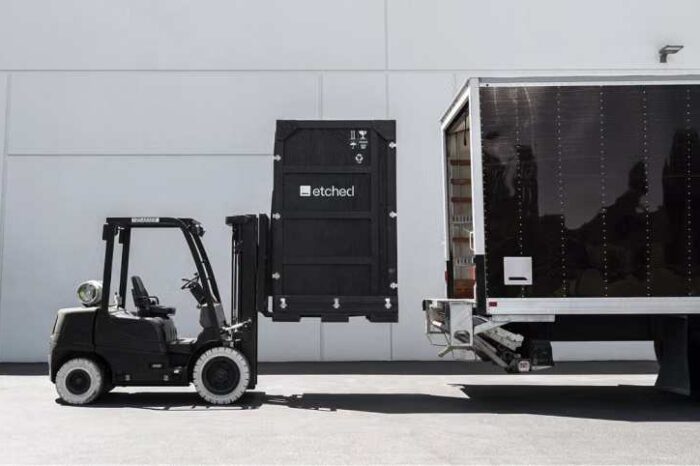
Image credit: Etched
Investors once had a simple warning for young founders entering this business: don’t bet on inexperienced teams.
“Don’t back the kids in chips,” Sonya Huang, a general partner at Sequoia Capital, told the Journal. Sequoia led Etched’s $300 million Series C round.
The kids are now hiring the veterans.
Around 15% of Etched’s roughly 400 employees previously worked at Nvidia. The startup has also recruited from other established semiconductor companies, bringing decades of chip and systems experience to a company whose founders are still in their 20s.
“Although its co-founders may be Johnny-come-latelies, Etched has plenty of chip-industry expertise in its ranks. Around 15% of its roughly 400 employees previously worked at Nvidia, and it has recruited aggressively from the market-leader, as well as from other established semiconductor firms,” the Wall Street Journal reported.
One of those hires was Brian Loiler, a systems engineer who spent nearly 23 years at Nvidia before joining Etched in 2024. Loiler has since helped recruit roughly a dozen Nvidia engineers, some of whom rejected attractive counteroffers to stay, according to the Journal.
The talent migration matters for a simple reason. Etched isn’t trying to build another AI software wrapper. It is trying to compete at one of the hardest layers of the AI stack.
Etched is betting the next AI chip war will be fought over inference
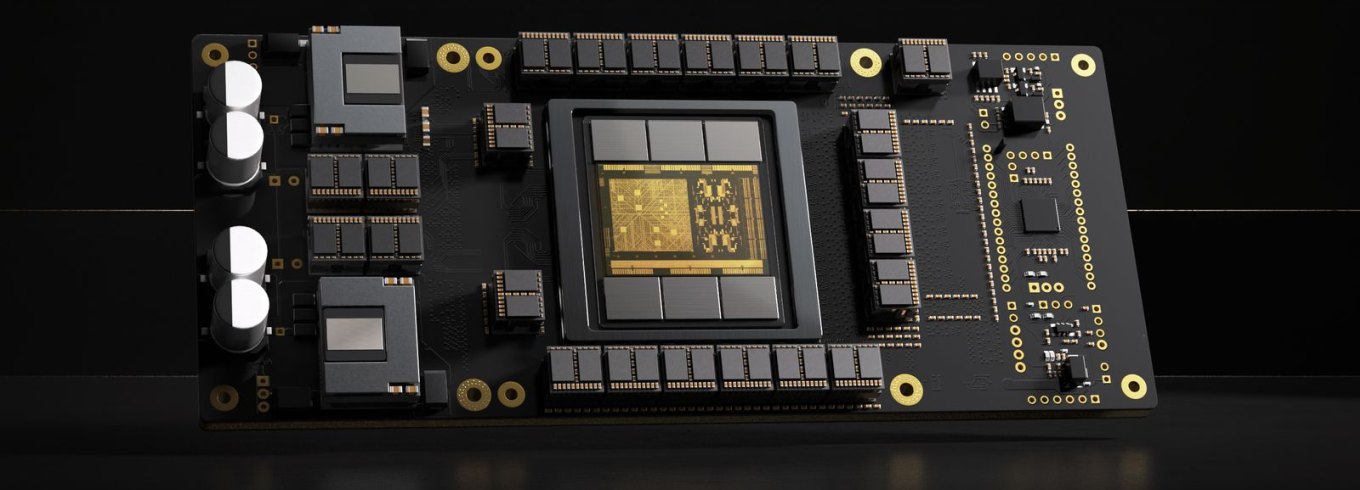
Etched’s bet centers on Sohu, a custom processor built for transformer models, the architecture behind systems such as ChatGPT, Claude and Gemini.
Rather than designing a general-purpose GPU that can handle many types of computing workloads, Etched is stripping away functions it believes transformer inference doesn’t need. The goal is a processor that devotes more silicon to the calculations used when AI models generate answers.
That distinction is becoming more significant as AI spending shifts beyond training giant models and into serving them to hundreds of millions of users.
Training happens periodically. Inference happens every time someone asks an AI assistant a question, generates an image, calls an AI API, or runs an AI agent. At enough scale, the cost of those individual requests becomes a major infrastructure expense.
Etched is betting specialization can bring that cost down.
The company appears to be moving unusually fast for a semiconductor startup. Etched says it took just 44 days after receiving test chips from Taiwan Semiconductor Manufacturing Company to run inference workloads. That process can often take months.
It has even built a small data center inside its San Jose office to test complete systems rather than chips alone. Etched is selling server racks packed with its processors, pushing the company closer to the full AI infrastructure stack customers actually deploy.
Jane Street now provides an important real-world test.
The secretive quantitative trading firm operates some of the most demanding computing infrastructure in finance, where latency and computational efficiency can translate directly into money. Landing Jane Street doesn’t prove Etched can challenge Nvidia at scale, but it gives the startup something far more meaningful than another benchmark: a sophisticated customer willing to deploy its hardware.
TechStartups reported in July that Etched raised $300 million at a $10.3 billion valuation. Its reported valuation has since climbed to roughly $21 billion, an extraordinary increase for a company whose first processor is just reaching customers.
Nvidia remains enormously difficult to displace. Its advantage extends far beyond GPUs to CUDA software, networking, developer tools and years of deployment experience across hyperscale data centers. Etched still has to prove it can manufacture reliably, secure enough supply, support customers and keep pace as AI architectures change.
Yet the more interesting question may no longer be whether a startup can build an AI chip.
Etched is testing whether the enormous growth of inference has created enough room for specialized chips to win workloads that once defaulted almost automatically to Nvidia.
Why It Matters
Etched’s rise suggests the AI chip market may be entering a new phase. Nvidia built its dominance around general-purpose GPUs and an enormous software ecosystem. Etched is betting that AI inference is becoming big enough for purpose-built silicon to carve out its own market. If customers such as Jane Street can run transformer workloads faster or more cheaply on specialized hardware, Nvidia’s next major competitive threat may come from chips built to do fewer things, not more.

Etched Founders