Legal AI startup Legora seeks $10 billion valuation, nearly doubling its worth in just four months
 Daniel Levi
Posted On August 13, 2026
Daniel Levi
Posted On August 13, 2026
Swedish legal AI startup Legora is seeking a valuation of at least $10 billion in early fundraising talks, potentially nearly doubling its $5.6 billion valuation from just four months ago and putting another European AI company into decacorn territory.
The discussions remain in the early stages and could involve both new capital and the sale of existing shares, according to people familiar with the financing. One investor said the valuation could reach $11 billion to $12 billion, though the terms could still change. Legora declined to comment.
“Legal AI start-up Legora seeks funds at more than $10bn valuation. Swedish company was valued at $5.6bn only four months ago as interest in artificial intelligence tools for professional services soars,” The Financial Times reported.
The numbers tell a striking story about how quickly investor expectations around legal AI have changed.
TechStartups reported in December 2025 that Legora was in advanced talks to raise more than $100 million at a valuation of roughly $1.7 billion, with Bessemer Venture Partners leading the deal, citing Bloomberg. Legora was valued at $5.6 billion four months ago. Now investors are discussing a figure north of $10 billion.
That puts the three-year-old company among Europe’s most valuable AI startups and underscores the rush to back software that can turn generative AI into something professionals use every day.
Legora is chasing one of AI’s biggest professional markets
Founded in 2023 by Max Junestrand and Sigge Labor out of the Stockholm School of Economics’ Business Lab incubator, Legora has focused on a straightforward problem: lawyers spend enormous amounts of time reading, comparing, researching, and drafting documents.
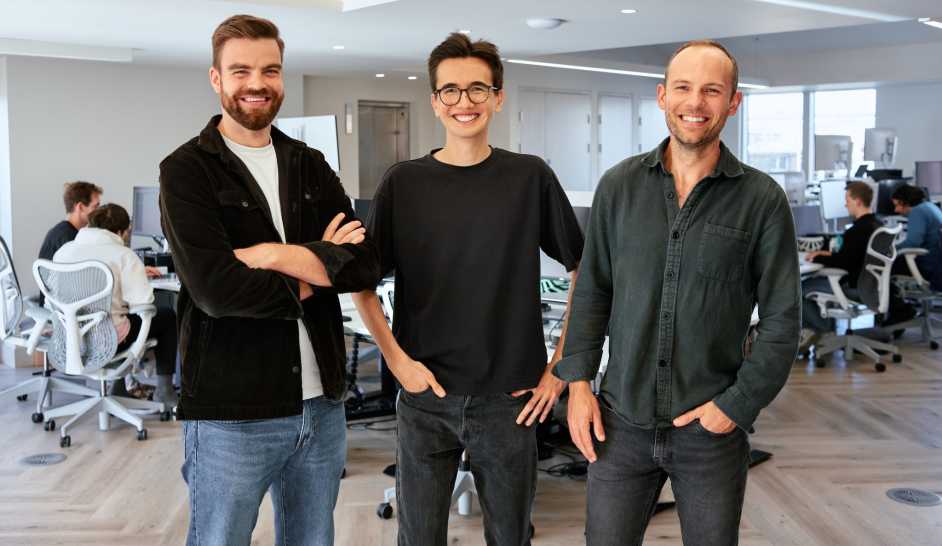
Legora Founders
Legora wants AI to take more of that workload without removing lawyers from the decision-making process.
Its platform helps law firms and in-house legal teams review and draft documents, conduct due diligence, research legal questions and track regulations. Customers include Linklaters, Deloitte and Heineken.
The software includes Tabular Review, which organizes documents into interactive grids; Reason Together, which lets lawyers work across multilingual case materials with cited responses; Draft Smarter, which integrates AI assistance into Microsoft Word; and Research Deeper, which searches across legal databases.
Legora’s pitch arrives at a moment when law firms are deciding how much of their AI infrastructure they want to own. Kirkland & Ellis, the world’s largest law firm by revenue, said in May that it plans to build its own AI platform rather than depend entirely on products available to competitors. The firm has partnered with technology companies including Palantir.
Junestrand rejects the idea that law firms need to choose one path.
He told the Financial Times in June that he did not see it as “a buy or a build” decision and argued that firms should simply “utilize the best stuff that exists”.
Legora faces formidable competition. Its biggest rival, U.S.-based Harvey, is reportedly seeking new funding at a valuation of around $15 billion. The two companies are becoming a high-profile test of whether specialized AI platforms can build lasting businesses atop increasingly capable foundation models.
Legora’s $150 million in recurring revenue changes the conversation
Legora’s valuation surge is not being driven by AI enthusiasm alone.
The company increased annual recurring revenue by 50% quarter over quarter to $150 million in the second quarter of 2026. Its customer base grew 25% in three months to roughly 1,500 law firms and in-house legal teams. Legora now plans to more than double its workforce from 700 employees to 1,500 by year-end.
At a $10 billion valuation, investors would be valuing Legora at roughly 67 times its current ARR. At $12 billion, that climbs to about 80 times. Those are aggressive multiples and leave little room for a slowdown, but the growth rate helps explain why investors are willing to have the conversation.
Legora’s rise is part of something bigger happening in Sweden.
Lovable, the Stockholm startup that lets users build software through natural-language prompts, raised $400 million this week at a $13.3 billion valuation. Major Silicon Valley firms, including Sequoia Capital and Andreessen Horowitz, have been spending more time in Stockholm in search of AI investments.
“There are suddenly a lot of Swedish decacorns [start-ups valued at more than $10bn]. It is one of the hottest places in Europe right now,” one Swedish investor told the Financial Times.
Legora already counts Benchmark, Accel, Bessemer Venture Partners, ICONIQ and General Catalyst among its backers. A new round above $10 billion would put it in rare company and strengthen Junestrand’s effort to build Legora into a European AI champion.
The bigger question is whether its extraordinary valuation curve can keep pace with the underlying business. Going from discussions around $1.7 billion late last year to potentially $10 billion or more today is remarkable. Turning that investor enthusiasm into a durable legal technology company will be the harder part.