Google backs Proxima Fusion in $468M funding round to build Europe’s first commercial fusion power plant
 Daniel Levi
Posted On July 7, 2026
Daniel Levi
Posted On July 7, 2026

Google is placing another major bet on nuclear fusion, joining a €411 million ($468 million) funding round for German startup Proxima Fusion as Europe pushes to secure a place in the global race to commercialize fusion energy.
The investment gives Proxima Fusion fresh capital to build what it hopes will become Europe’s first commercial fusion power plant, putting the Munich startup in direct competition with heavily funded U.S. rivals backed by some of Silicon Valley’s biggest names. The financing values Proxima at $2.7 billion and signals that investors still see fusion as one of the few technologies capable of reshaping the future of electricity, even if commercial deployment remains years away.
The funding marks another milestone for Proxima, which just a year ago closed a €130 million Series A round, roughly $148 million, to advance its stellarator-based fusion reactor technology. That financing, led by Balderton Capital and Cherry Ventures, established the company as Europe’s leading fusion startup. Since then, Proxima has focused on turning decades of European scientific research into a commercially viable energy company.
Fusion has attracted governments, researchers, and investors for decades. Unlike today’s nuclear power plants, which generate electricity through fission by splitting atoms, fusion works by combining hydrogen atoms into helium, releasing enormous amounts of energy in the process. Scientists have long viewed fusion as a potential source of clean, abundant electricity with minimal long-lived radioactive waste, though turning laboratory successes into commercial power plants remains one of engineering’s toughest challenges.
Europe’s biggest fusion startup lands Google backing in $468M funding round
The latest round was led by XTX Ventures and East X Ventures, with Google and German energy company RWE participating as strategic investors. Existing backers Plural, UVC Partners, Balderton Capital, and Cherry Ventures returned to support the company.
Google’s investment reflects its growing interest in securing future energy supplies for the massive computing infrastructure needed to support artificial intelligence and cloud services. The company has steadily increased its exposure to fusion technology over the past several years.
Founded in 2023, Proxima Fusion emerged from Europe’s leading fusion research community. The startup was created by scientists and engineers from the Max Planck Institute for Plasma Physics, MIT, and X, Google’s former moonshot lab. CEO Francesco Sciortino previously conducted fusion research at both MIT and the Max Planck Institute, giving the company deep technical roots in one of the world’s most advanced stellarator research programs.

Proxima Fusion team (Credit: Proxima Fusion)
In June 2025, Google signed an electricity purchase agreement with U.S.-based Commonwealth Fusion Systems that would allow the tech giant to buy electricity once the company’s first commercial fusion plant begins operating. Google has also invested in Commonwealth Fusion Systems, making Proxima its latest fusion bet.
At the time, Google described fusion as a technology with enormous long-term potential.
“Fusion holds huge potential as an energy source of the future: it’s clean, abundant and inherently safe, and it can be built just about anywhere,” the company said in a blog post.
Google tempered that optimism with a reality check, adding that commercializing fusion remains “immensely challenging, and success is not guaranteed.”
For Proxima, the financing comes as Europe tries to narrow the gap with American and Chinese fusion programs.
“Europe is racing with the United States and China to get to the first fusion power plant,” Francesco Sciortino, cofounder and CEO, said in a statement.
“Proxima’s financing demonstrates that Europe can not only invent breakthrough technologies, but also build globally competitive companies around them,” he added.
“Investors recognize both the urgency and the opportunity of what we’re doing and are backing us to develop a generational energy technology company.”
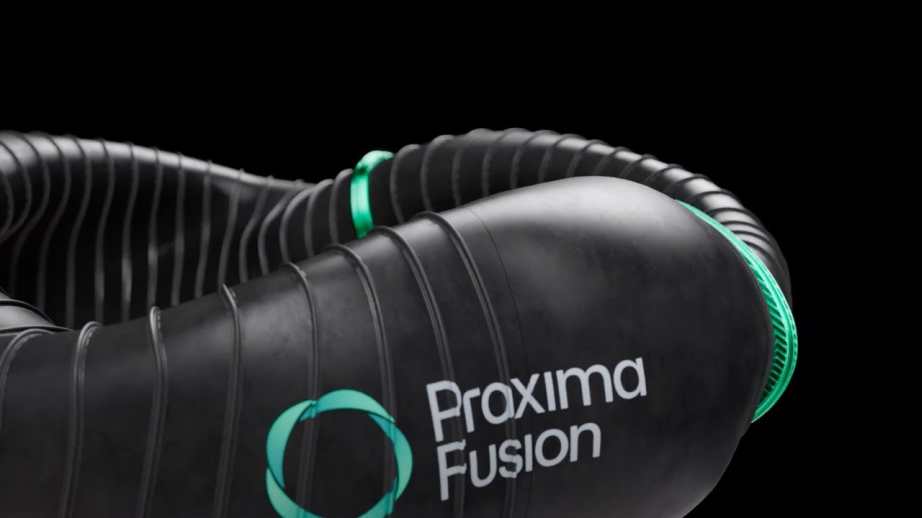
Proxima is betting on a reactor design known as a stellarator, a less common alternative to the tokamak systems used by many fusion developers. Stellarators rely on intricately shaped magnetic fields to confine superheated plasma, an approach researchers believe could offer greater stability during continuous operation. The tradeoff is that stellarators are significantly more difficult to design and manufacture.
The company’s roadmap calls for a fusion demonstrator in the early 2030s, serving as the final proof of concept before construction of a commercial power plant later in the decade.
The new funding will help Proxima expand production of high-temperature superconducting cables and magnets, two technologies viewed as central to making commercial stellarators practical. The company plans to grow its engineering, manufacturing, and operations teams as development moves forward.
Even with Europe’s largest fusion funding round, Proxima still trails leading American competitors in total capital raised. Commonwealth Fusion Systems has secured roughly $2.9 billion to date, following an additional $863 million raised last year, according to Dealroom. Sam Altman-backed Helion Energy raised $465 million last month, bringing its total funding to about $1.5 billion.
The growing investment flowing into fusion startups reflects a broader shift across the energy industry. AI data centers, electrification, and rising electricity demand have renewed interest in technologies capable of delivering massive amounts of carbon-free electricity around the clock. Fusion remains one of the industry’s biggest long-term bets, with billions of dollars flowing into companies racing to solve one of science’s oldest and most difficult engineering problems.