Ford rehires 350 veteran engineers after AI fails to match human expertise
 Daniel Levi
Posted On June 29, 2026
Daniel Levi
Posted On June 29, 2026
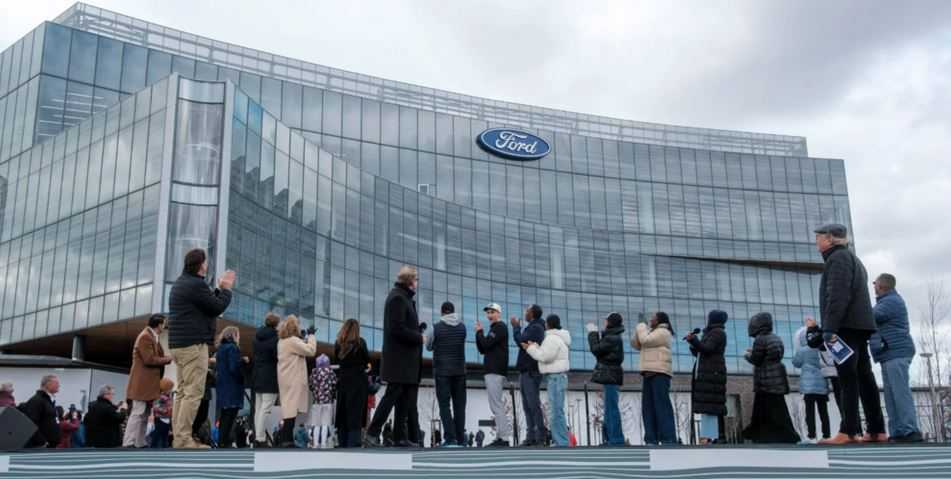
For the past few years, the AI industry has repeated a bold promise: machines will replace much of the work once reserved for highly experienced professionals. Ford Motor Company just delivered a reality check.
After investing heavily in AI-powered quality systems and automated inspections, the automaker discovered that software alone couldn’t replicate decades of engineering experience. Its answer wasn’t to abandon AI. It was to bring human expertise back into the center of the process.
According to Bloomberg, Ford hired, promoted, or rehired about 350 veteran technical specialists, many of them retired employees or engineers from key suppliers, to address the pitfalls of automated systems over the last three years. Their job was simple on paper but difficult in practice: find the quality problems AI kept missing, teach younger engineers what years of experience had taught them, and help improve the AI systems themselves.
“Artificial intelligence is a fantastic tool, but it’s only as good as the information you use to train it,” Charles Poon, vice president of vehicle hardware engineering, told Bloomberg.
The strategy paid off.
Ford now ranks as the highest-performing mainstream automaker in the latest J.D. Power Initial Quality Study, its best showing in 16 years. The improvement comes after years of recalls, warranty costs, and manufacturing headaches that had become one of the company’s biggest financial burdens.
The turnaround offers something much bigger than an automotive success story. It highlights one of the clearest examples yet of where AI still depends on human judgment.
Ford’s Quality Problems Had Become Expensive
Quality has been one of Ford’s toughest business challenges in recent years.
The company issued 152 recalls during 2025 alone, according to public records, driving billions of dollars in warranty claims, repair costs, and reputational damage. Just a few years ago, Ford ranked near the bottom of J.D. Power’s Initial Quality Study among major automakers.
For a company that builds millions of vehicles each year, quality problems extend far beyond fixing defective parts. Every recall can disrupt manufacturing, strain supplier relationships, increase dealer service costs, frustrate customers, and weigh on future sales.
Ford executives knew incremental improvements would not be enough.
The company needed to rethink how it identified problems before vehicles reached customers.
AI Looked Like the Obvious Answer
Like many manufacturers, Ford expanded its use of artificial intelligence and automated inspection systems across its engineering and production processes.
The goal made sense.
AI can analyze massive amounts of manufacturing data far faster than people. Computer vision systems can inspect parts continuously without fatigue. Machine learning models can identify patterns across millions of production records. Automation promises consistency, speed, and lower operating costs.
Many companies viewed AI as the next major step in manufacturing quality control.
Ford did too.
The company expected AI systems trained on engineering requirements and production data to identify defects early, thereby reducing recalls and improving product quality.
That expectation turned out to be too optimistic.
Persistent Quality Woes: The Missing Ingredient Was Experience
Ford executives later acknowledged that something important had been left out.
Charles Poon, Ford’s vice president of vehicle hardware engineering, explained where the company misjudged AI’s capabilities.
“Mistakenly, we thought that by just introducing artificial intelligence and ingesting the design requirements that we had, that that would produce a high-quality product.”
The statement captures one of the biggest challenges facing AI across many industries.
Engineering documents explain how a product should be built.
They rarely capture everything that experienced engineers know after decades of solving real-world failures.
Veteran engineers develop instincts that are difficult to document. They recognize unusual vibration patterns, understand which materials tend to wear unexpectedly, notice small design decisions that create larger problems years later, and identify interactions between systems that may never appear during computer simulations.
Much of that knowledge exists in experience rather than documentation.
Once experienced engineers retire, companies can lose decades of accumulated lessons unless those lessons are intentionally passed to the next generation.
AI can only learn from the information available to it.
Knowledge that was never documented cannot easily be used as training data.
Ford Brought Back ‘Gray Beard’ Engineers to Address AI Shortfalls
Rather than treating AI as the replacement for human expertise, Ford shifted its strategy.
The company began bringing back veteran technical specialists, many of whom had spent decades inside Ford or its supplier network.
Internally, these engineers became known as “gray beard” engineers, a nickname that reflects years of experience rather than age alone.
“Over the last three years, Ford says it has hired 350 veteran engineers, many of them former employees and others from suppliers, to help address seemingly intractable quality woes that have cost the automaker billions. The result: Ford is the top mainstream brand in the latest JD Power Initial Quality Survey, released Thursday,” Bloomberg reported.
These engineers now lead mandatory design reviews, examine components before they enter production, mentor younger engineers, and help improve the AI models that support Ford’s quality systems.
Chief Operating Officer Kumar Galhotra described their mission simply.
“We brought back technical specialists, and they hunt for failure points before a part ever reaches the plant floor.”
That work begins long before a vehicle reaches an assembly line.
Engineers review designs, evaluate manufacturing processes, identify weak points, and challenge assumptions that software may overlook.
Instead of replacing AI, they make it more effective.
The AI Push and Its Shortcomings
Ford’s experience does not suggest AI lacks value.
Far from it.
The company continues using internally developed AI systems, including AiTriz and MAIVs, to inspect components, analyze manufacturing data, and support engineering teams.
The difference lies in how those tools are used.
AI performs exceptionally well at repetitive inspections, large-scale pattern recognition, and processing enormous volumes of information.
Human engineers contribute something entirely different.
They question unexpected results.
They recognize unusual combinations of events.
They apply lessons learned years earlier to problems that may appear unrelated.
They know when the data itself may be incomplete.
That combination proved far more effective than relying on either humans or AI alone.
The Financial Results Are Showing Up
Ford says the quality improvements are already reducing costs.
Chief Executive Officer Jim Farley recently said those gains are “contributing to literally hundreds and hundreds of millions of dollars of a tailwind for Ford on cost.”
The latest J.D. Power Initial Quality Study suggests those operational changes are reaching customers.
Ford finished as the highest-ranked mainstream brand, trailing only luxury brands Porsche and Genesis overall. It marked Ford’s strongest quality ranking in more than a decade.
Older vehicle programs still account for many recall statistics since recalls often emerge years after vehicles enter the market.
Ford says its newest vehicle platforms are performing significantly better.
A Lesson for Every Company Racing to Deploy AI
Ford’s experience reaches far beyond the automotive industry.
Manufacturing, aerospace, semiconductor design, healthcare, energy, construction, cybersecurity, and many other industries depend heavily on professionals whose expertise comes from years of solving difficult problems rather than reading manuals.
That kind of knowledge is often called tacit knowledge. It develops through repeated experience, observation, failure, and judgment. It rarely fits neatly inside databases or engineering documents.
AI continues to improve at processing explicit knowledge, the information that can be written down, measured, labeled, and stored.
Tacit knowledge remains much harder to replicate.
That distinction helps explain why many organizations are discovering that AI works best alongside experienced professionals instead of replacing them.
Ford’s quality turnaround reinforces that lesson.
The company didn’t reject artificial intelligence.
It changed its role.
AI became a tool guided by engineers rather than a substitute for them.
As businesses across nearly every industry search for the right balance between automation and human expertise, Ford’s experience offers a reminder that technology often delivers its best results when paired with the people whose knowledge cannot simply be uploaded into a machine.