Google stock drops 7% as loss of top AI talent to OpenAI and Anthropic deepens investor concerns
 Nickie Louise
Posted On June 22, 2026
Nickie Louise
Posted On June 22, 2026
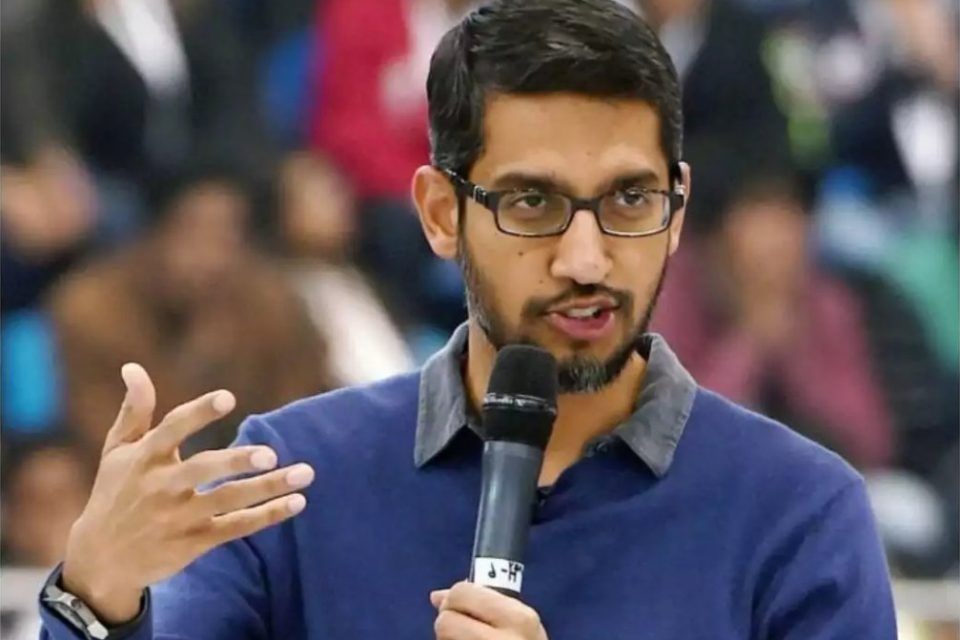
Google’s AI spending spree was supposed to reassure Wall Street that the company could keep its edge in the race against OpenAI, Anthropic, and Microsoft. Instead, investors got a very different signal this week: two of the company’s most prominent AI researchers are heading for the exits, and the stock is paying the price.
Alphabet shares fell about 7% on Monday, putting the stock on track for its worst day in roughly a year, after Google lost two high-profile AI leaders to rivals in the span of a few days.
“Shares of parent company Alphabet slid 7% on Monday morning, underperforming both the Nasdaq and the rest of their megacap peers,” CNBC reported.
The selloff landed at an awkward moment for the company. Google has spent months pitching itself as one of the few players with the talent, infrastructure, and distribution to compete at the top of the AI market. Losing senior researchers to OpenAI and Anthropic threatens that story at the exact moment investors are asking whether all that spending will produce a durable return.

Google’s AI Brain Drain Sparks Selloff as Alphabet Shares Slide 7%
The first blow came last week, when Noam Shazeer, Google’s vice president of engineering and co-lead of the Gemini AI models, said he was leaving to join OpenAI. Shazeer is not just another senior executive changing jobs. He is one of the most influential researchers in modern AI, best known as a co-author of the 2017 “Attention Is All You Need” paper that introduced the transformer architecture behind today’s large language models. His exit is especially striking given that Google recently worked to bring him back. In August 2024, the company struck a deal with Character.AI, the startup Shazeer co-founded after leaving Google in 2021, and brought him back into its DeepMind organization.
“The brain drain concerns began last week when Google’s vice president of engineering and a co-lead of its Gemini AI models, Noam Shazeer, announced Wednesday that he was leaving the company to join rival OpenAI. Shazeer’s departure came less than two years after he returned to Google.”
Then came a second departure. John Jumper, a DeepMind vice president and engineering fellow who shared the 2024 Nobel Prize in Chemistry for his work on AlphaFold, announced Friday that he was leaving Google DeepMind for Anthropic after nearly nine years at the company. Jumper is one of the most respected scientific minds inside Google’s AI organization. AlphaFold, the protein-structure prediction system he helped build, has been used to predict more than 200 million protein structures and is widely viewed as one of the clearest examples of AI producing real scientific value beyond chatbots and consumer tools.
On their own, executive exits do not usually erase hundreds of billions of dollars in market value. What spooked investors is what these departures may signal. Google has been trying to convince the market that it can win the AI race through scale: more compute, more products, more distribution, and deeper integration across search, cloud, Android, and productivity software. But the AI race is not being judged only by who has the biggest infrastructure budget. It is being judged by who can keep the people capable of building the next breakthrough.
That concern has been building for months. OpenAI, Anthropic, and Meta have all been aggressively recruiting top researchers as the fight for frontier AI talent turns into one of the defining battles in tech. When a company loses one well-known researcher, it can be dismissed as a normal industry reshuffle. Losing two prominent figures in the same week, including one of the co-leads behind Gemini and one of the scientists most closely associated with AlphaFold, is harder for investors to shrug off.
The timing makes the market reaction even more painful for Google. Just weeks ago, the company used its annual I/O developer conference to show off a new wave of AI products, including updates to Gemini and a broader push into AI agents. The message was straightforward: Google has the research, products, and distribution to remain one of the few companies capable of shaping the next phase of AI. Monday’s selloff suggests investors are no longer judging Google only on product launches. They are watching to see whether the company can hold on to the people behind those products.
There is a second layer to the anxiety. Alphabet has been spending heavily to build out its AI stack, from chips and data centers to models and cloud infrastructure. That spending has been easier to defend when investors believed Google could turn its research leadership into a long-term moat. If top talent starts walking out the door, the market begins asking a harder question: is Google building an enduring AI advantage, or simply spending enormous sums to keep up in a market where models are becoming cheaper, more interchangeable, and more widely available?
That concern got another push over the weekend when Microsoft CEO Satya Nadella, speaking to The Wall Street Journal, argued that the AI market is becoming commoditized and warned against dependence on a handful of “AI giants.” Nadella’s comments were not aimed solely at Google, but they landed at a moment when investors were already reassessing what massive AI infrastructure spending will actually buy. For Alphabet, the worry is no longer just whether Gemini can compete with ChatGPT or Claude. It is whether the company can protect margins and defend its position if the market starts treating frontier models more like commodities than crown jewels.
Monday’s pressure on the stock was compounded by reports of service disruptions affecting Gmail and YouTube, adding a layer of operational frustration to an already ugly trading day. Those outages were not the core reason the stock sold off, but they did little to calm nerves around a company already facing questions about execution, focus, and whether its AI strategy is starting to look more expensive than convincing.
Google still has enormous advantages. It has world-class researchers, massive distribution through search and Android, a fast-growing cloud business, custom silicon, and a user base measured in billions. None of that disappears because two researchers left in the same week. But markets tend to punish any sign that an incumbent may be losing its grip on the next platform shift, and AI is increasingly being treated as exactly that.
For Alphabet, this is what makes Monday more than just a bad trading session. Investors are no longer asking whether Google is in the AI race. They know it is. The question now is whether one of the richest and most technically sophisticated companies in the world can keep the people it needs to win it.