Coram AI raises $35M to bring autonomous AI agents to physical security
 Daniel Levi
Posted On June 11, 2026
Daniel Levi
Posted On June 11, 2026
Most security cameras are little more than digital witnesses. They record what happened, store the footage, and wait for someone to review it later.
Coram AI wants to change that.
The startup, founded by former self-driving car engineers from Lyft and Zoox, has raised $35 million in Series B funding to bring AI-powered investigations and automated security workflows to schools, hospitals, factories, churches, and large enterprises. The round was co-led by Ansa Capital and Battery Ventures, with participation from UP.Partners, 8VC, and Mosaic Ventures.
The new funding brings Coram’s total capital raised to $66 million.
The investment comes as organizations face a growing challenge: more security systems, more data, and fewer people available to monitor it all. Security teams often work across disconnected tools, piecing together footage, access logs, visitor records, and incident reports manually after something goes wrong.
Coram’s approach is different. The company uses AI to connect those systems into a single platform that can search, analyze, and investigate events across an organization without requiring customers to replace existing cameras or infrastructure.
The market appears to be responding.
Since raising its $13.8 million Series A last year, Coram says revenue has grown fourfold, and its customer base has tripled. More than 1,500 sites across the United States and Canada now use the platform, including Fortune 500 companies, school districts, healthcare providers, manufacturers, municipalities, and nonprofit organizations.
Customers include 1-800-GOT-JUNK?, Hershey’s Ice Cream, World YMCA, and Lakepointe Church.
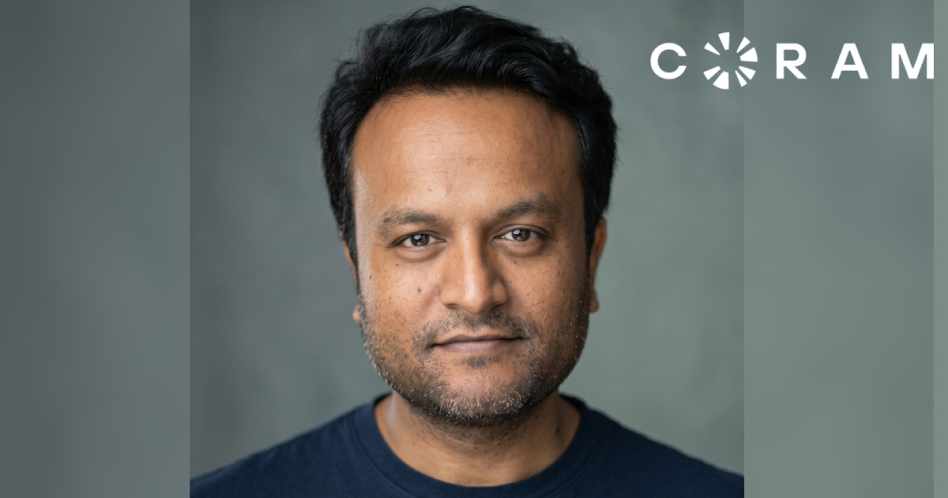
Coram was founded by Ashesh Jain and Peter Ondruska, two AI researchers who spent years building systems that helped autonomous vehicles interpret their surroundings and avoid accidents. Jain previously led autonomy efforts at Lyft’s self-driving division and held engineering leadership roles at Zoox. Ondruska led AI research at Lyft and later joined Toyota’s Woven division after Toyota acquired Lyft’s self-driving technology in 2021.
The founders saw an opportunity to apply the same AI techniques used in autonomous vehicles to physical security, an industry that has largely relied on monitoring and recording tools for decades.
“Most security systems just record what happened. Only later, after a manual search, might you find the incident,” said Ashesh Jain, co-founder and CEO of Coram AI. “We spent years building AI that helps cars read a scene and act before someone gets hurt. The same approach protects the places people live and work: catch risks earlier, and keep schools, hospitals, and workplaces safer instead of just documenting what went wrong.”
Investors see physical security as one of the next large industries likely to be reshaped by AI.
“Physical security is one of the largest industries yet to be transformed by modern AI,” said Allan Jean-Baptiste, co-founder and managing partner at Ansa Capital and Coram board member. “Coram’s founders bring a rare combination of frontier AI expertise and deep conviction about where the market is headed. Their rapid growth demonstrates that organizations are looking for more than cameras and monitoring tools. They want intelligence that helps them operate more safely, efficiently, and proactively.”
Battery Ventures partner Marcus Ryu pointed to the company’s use of first-party operational data as a key differentiator.
“Coram AI’s hardware-enabled software anchors intelligence in first-party data to deliver capabilities far beyond what traditional security systems can offer,” said Ryu. “We’re enthusiastic to deepen our partnership with the Coram team with this Series B investment.”
From Video Search to AI Investigations
Alongside the funding announcement, Coram unveiled a new capability called Deep Investigation.
The feature moves beyond simple video search. Instead of asking security personnel to sift through hours of footage, the system can analyze video feeds, access-control records, and visitor activity across locations and time periods, and then generate answers with supporting evidence.
The concept mirrors the shift seen in software development, where AI coding assistants have taken on tasks that once required hours of manual work. Coram is betting the same model can apply to physical security investigations.
The goal is straightforward: help one security professional investigate more incidents, respond faster, and oversee larger environments without adding staff.
Customer feedback suggests the technology is already finding practical applications.
Hershey’s Ice Cream uses Coram across its facilities, which produce millions of gallons of ice cream annually for nationwide distribution.
“Coram’s AI capabilities mean there is no live person required to watch footage all day. The system works in the background, so our staff can focus on their actual jobs,” said IT director Stephen Hoffer.
“It’s one of the best investments we’ve made in food safety and employee safety across our properties,” added Zach Waite, the company’s VP of production development.
Lakepointe Church, which operates eight campuses in the Dallas area and serves more than 30,000 congregants, uses the platform to support security operations across its locations.
“I would recommend Coram because we have seen great benefits in the features of AI with their system, also the ease of deployment, as well as just the overall gain and efficiency from a technology standpoint,” said director of information technology Bill Crowsey.
For Coram, the funding marks another step in a broader effort to bring AI into an industry that has traditionally relied on human monitoring and manual investigations. The company’s growth suggests many organizations are looking for security systems that do more than record events after the fact.
They want systems that can help explain what happened and surface answers before security teams start searching.