It’s Monday, June 8, 2026, and today’s tech story is bigger than another AI product launch. The race has moved into factories, cars, chips, batteries, phones, and national infrastructure. Nvidia is tightening its grip on the AI supply chain in Asia, Uber is bringing robotaxis closer to European riders, Apple faces a defining Siri moment at WWDC, and governments are turning up the pressure on Big Tech.
The age of physical AI is no longer a promise of the future. It is arriving on factory floors, inside autonomous vehicles, and across national computing networks. Nvidia is wiring Asia’s largest technology companies into a new generation of AI factories and robotics systems, hyperscalers are pouring hundreds of billions into next-generation infrastructure, and Apple is preparing its most consequential AI update yet as it attempts to redefine Siri for the AI era.
Taken together, today’s developments point to a larger shift: AI is moving beyond chatbots and into the physical economy, where the next battle will be fought over infrastructure, energy, robotics, and control of the world’s computing resources.
Here are the top technology news stories making waves today, from AI breakthroughs and startup IPOs to the global chip wars and frontier infrastructure reshaping tomorrow’s economy.
Technology News Today
Nvidia Expands AI Empire With Major South Korea Infrastructure Deals
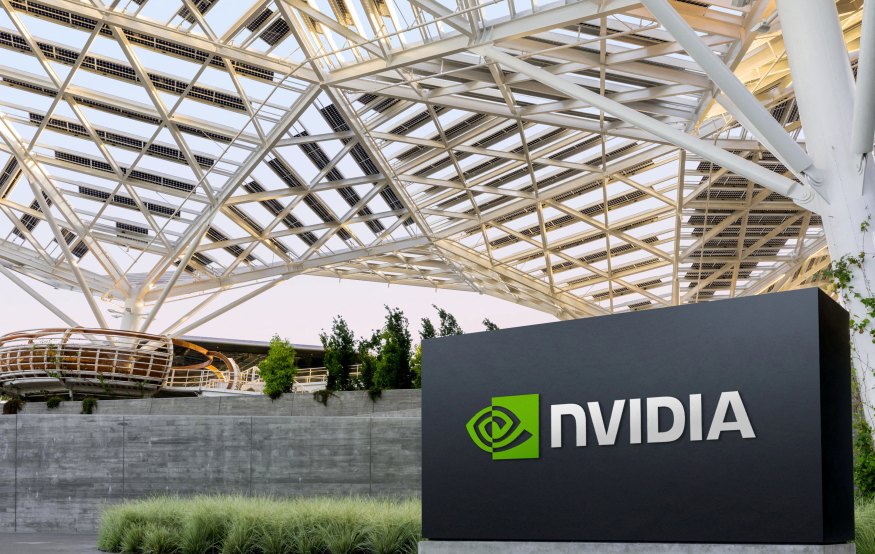
Nvidia announced a series of strategic agreements with some of South Korea’s largest technology companies, including SK Hynix, SK Telecom, Naver, Hyundai, LG, and Doosan. The partnerships span AI memory chips, AI cloud infrastructure, robotics, autonomous mobility, and next-generation data centers. Nvidia CEO Jensen Huang personally visited South Korea to advance the deals.
A key component is a multi-year collaboration with SK Hynix to develop advanced memory technologies for Nvidia’s future AI systems. SK Telecom also plans to build gigawatt-scale AI cloud infrastructure powered by Nvidia technology, with deployment expected to begin in 2027. South Korea’s government is simultaneously accelerating its national AI strategy with plans to acquire thousands of GPUs for sovereign AI projects.
Why It Matters: Nvidia is no longer simply selling chips. It is helping nations build AI infrastructure at scale.
Source: Reuters, Wall Street Journal.
AI PCs Expected to Reach Mainstream Status by 2027
Lenovo CFO Winston Cheng stated that AI-enabled PCs will become mainstream by 2027, supported by continued heavy spending from companies and governments worldwide. The company credits its global manufacturing network and supply chain resilience for helping it navigate tariffs and component shortages. Cheng expects the AI cycle to have further room to run as on-device processing becomes standard.
This timeline aligns with broader industry shifts toward edge AI, reducing latency and cloud dependency for everyday tasks. Lenovo’s position as a major PC maker gives it unique insight into adoption curves.
Why It Matters: Lenovo’s forecast signals the rapid move of AI capabilities from data centers to consumer and enterprise devices, expanding the addressable market for AI hardware.
Source: CNBC.
OpenAI Advances Plans for ‘Super App’ with Revamped ChatGPT and AI Agents
OpenAI is preparing a major update to ChatGPT that will function as a “super app” featuring built-in coding tools and AI agents capable of complex, multi-step tasks. The rollout is expected in the coming weeks and builds on recent product momentum. The company continues iterating on agentic capabilities while navigating industry-wide cost pressures.
The super app approach aims to consolidate AI tools into a single, powerful interface for developers and enterprises. It reflects OpenAI’s strategy to move beyond chat to actionable, autonomous workflows.
Why It Matters: OpenAI’s super app ambitions could accelerate enterprise adoption of agentic AI, setting new standards for integrated AI platforms and productivity tools.
Source: TechCrunch.
Uber Opens Sign-Ups for AI Robotaxi Service in London
Uber opened public registrations for its upcoming robotaxi service in London in partnership with Wayve. The service is expected to launch within months, pending final regulatory approvals. Riders will be matched with autonomous vehicles powered by Wayve’s AI driving system.
Initially, safety operators will remain behind the wheel, but the long-term goal is fully driverless service. The move represents one of the most significant autonomous vehicle deployments in Europe and gives Wayve an opportunity to showcase its end-to-end AI driving approach in one of the world’s most challenging urban environments.
Why It Matters: The robotaxi race is expanding beyond the U.S. and China into major European cities.
Source: Reuters.
Apple Faces Defining AI Test at WWDC 2026
All eyes are on Apple as the company unveils what analysts describe as a critical overhaul of Siri and its broader AI strategy. Investors have grown increasingly impatient as competitors, including OpenAI, Google, Anthropic, and Microsoft, accelerate their AI rollouts.
Apple’s AI ambitions now appear to be centered on transforming Siri into a context-aware assistant capable of handling complex tasks across apps and devices. Analysts increasingly view Siri as the centerpiece of Apple’s AI future, making WWDC one of the company’s most important developer conferences in years.
Why It Matters: Apple’s AI execution could influence the next billion-user AI platform.
Source: MarketWatch.
South Korea Accelerates Sovereign AI Push
South Korea’s new government is aggressively investing in AI infrastructure and national AI capabilities. Alongside Nvidia’s partnerships, the country plans major GPU acquisitions and expanded AI cloud deployments as part of a broader effort to compete with the United States and China in artificial intelligence.
The strategy reflects a growing global trend toward “AI sovereignty,” where governments seek local control over computing infrastructure, AI models, and critical technology supply chains. Nations increasingly view AI as a strategic national asset rather than merely a commercial technology.
Why It Matters: AI is becoming a geopolitical infrastructure race.
Source: Wall Street Journal, Reuters.
Nvidia and LG Launch Global AI Factory Initiative
Nvidia and LG Group announced plans to build what they describe as a global AI factory supporting robotics, autonomous driving systems, GPU cloud services, and industrial AI deployments. The partnership combines Nvidia’s AI infrastructure with LG’s manufacturing and electronics expertise.
The announcement reflects a broader shift toward “AI factories,” where computing infrastructure becomes an industrial production system for training, deploying, and operating AI applications across sectors. Nvidia has increasingly positioned AI factories as the next evolution of data centers.
Why It Matters: AI factories may become as strategically important as traditional manufacturing plants.
Source: Times of India, Nvidia.
UK Government Pressures Apple and Google Over Child Safety
Prime Minister Keir Starmer warned technology companies that they could face legal consequences if stronger protections for children are not implemented on smartphones and online platforms. The proposals include measures aimed at limiting the creation and sharing of harmful content involving minors.
The initiative has triggered debate among child safety groups, privacy advocates, and technology companies over how far governments should go in requiring device-level protections and content monitoring.
Why It Matters: Governments are increasingly demanding direct accountability from platform and device makers.
Source: The Guardian.
AI Infrastructure Spending Continues to Reshape Asia
Nvidia’s latest announcements reveal how AI demand is transforming Asia’s technology landscape. Beyond chips, companies are investing heavily in power systems, networking, memory, cloud infrastructure, and robotics to support AI workloads.
The deals also underscore the growing importance of advanced memory suppliers such as SK Hynix, which have become critical bottlenecks in the AI supply chain. As AI models become larger and more complex, memory technology is becoming just as important as computing power.
Why It Matters: The AI boom is creating winners far beyond model developers.
Source: Reuters, Wall Street Journal.
Global AI Data Center Market Poised for Explosive Semiconductor Demand
AI data centers are driving unprecedented semiconductor consumption, with chips representing the majority of rack value and capital spending. Projections show annual semiconductor revenue from AI data centers will surpass $1.2 trillion by 2028, fueled by logic, memory, and networking components. The ecosystem is expanding rapidly to support training and inference workloads.
Sustained growth requires resilient global supply chains and continued innovation in power, memory and connectivity technologies. Disruptions anywhere in the stack could slow AI progress.
Why It Matters: The semiconductor ecosystem’s central role in AI infrastructure ensures massive ongoing investment and positions chipmakers as key beneficiaries of the technology megatrend.
Source: Semiconductor Industry Association.
London Emerges as Europe’s Autonomous Vehicle Testbed
The upcoming Uber-Wayve launch highlights London’s growing role as a center for autonomous vehicle innovation. Unlike many self-driving programs that depend heavily on detailed mapping, Wayve’s system relies on end-to-end AI learning from real-world driving data.
The company’s approach has attracted significant investor attention because it could potentially scale more efficiently across cities and countries. If successful, London could become one of the first major European markets with large-scale public access to autonomous ride services.
Why It Matters: Europe may finally be entering the commercial robotaxi era.
Source: Reuters.
AI Memory Becomes the Next Strategic Battleground
One of the less-discussed aspects of Nvidia’s visit to South Korea was the emphasis on next-generation memory technology. AI systems increasingly require enormous memory capacity and bandwidth, creating strategic importance for suppliers such as SK Hynix.
As AI infrastructure spending rises globally, shortages in advanced memory technologies could become a major constraint on future AI deployment. Industry leaders increasingly view memory as a critical competitive advantage rather than a commodity component.
Why It Matters: The future AI race may be constrained as much by memory as by GPUs.
Source: Reuters, The Information.
Chinese AI Startup StepFun Set to File for Hong Kong IPO
Shanghai-based AI model developer StepFun is preparing to file for a Hong Kong listing as early as Monday, with key investors targeting a valuation of up to $12 billion. The move is the latest by a Chinese AI company seeking a Hong Kong IPO amid improving market conditions and regulatory clarity. StepFun joins a growing cohort of domestic AI firms pursuing overseas listings.
Hong Kong’s listing pathway offers access to global capital while allowing continued operations in China’s AI ecosystem. The filing underscores confidence in Chinese AI technology on the international stage.
Why It Matters: StepFun’s IPO highlights the maturing Chinese AI startup scene and could open new funding avenues for Asia-based frontier tech companies.
Source: WSJ.
NVIDIA Unveils Cosmos 3 as Foundation Model for Physical AI Breakthroughs
NVIDIA introduced Cosmos 3, a state-of-the-art generative world foundation model designed specifically for physical AI applications. Trained on physics-based data rather than text, Cosmos 3 enables autonomous systems to understand, simulate, and act in real-world environments with native capabilities for reasoning and action generation. The model includes advanced tokenizers, guardrails, and accelerated data-processing frameworks to accelerate the development of robotics and embodied AI. It builds on NVIDIA’s broader push into physical AI, including Isaac GR00T and world models for robot simulation.
The announcement highlights the shift from language-based AI to systems capable of real-time interaction with the physical world, such as factory robots or autonomous vehicles. Developers gain open tools for training and evaluation, positioning Cosmos 3 as infrastructure for the next wave of AI beyond cloud inference.
This launch addresses the limitations of current generative AI by focusing on physics and action, opening new frontiers in robotics and edge computing. It reinforces NVIDIA’s leadership in the expanding physical AI market while encouraging ecosystem-wide innovation.
Why It Matters: Cosmos 3 represents physical AI’s GPT moment, providing the foundational models needed to move AI from digital tasks to real-world robotics and automation at scale.
Source: NVIDIA Blog.
Amazon, Alphabet, and Microsoft Accelerate Custom AI Chip Development
Amazon, Alphabet, and Microsoft are rapidly advancing in-house AI processors while still buying large volumes of NVIDIA GPUs. Amazon’s Graviton, Trainium and Nitro chips have reached a $20 billion annual revenue run rate, with CEO Andy Jassy noting potential for a $50 billion stand-alone business.
Alphabet’s eighth-generation TPUs are now offered via cloud partnerships, including a $5 billion joint venture with Blackstone to rent capacity to third parties such as Anthropic and Meta. Microsoft has deployed its second-generation Maia 200 accelerator for Copilot and OpenAI workloads, though most Azure AI still runs on NVIDIA hardware. The three companies collectively plan $725 billion in capital expenditures for 2026, much of it tied to custom silicon.
Custom chips allow hyperscalers to optimize costs and performance for their specific workloads, reducing long-term dependence on third-party suppliers. This trend intensifies competition in the AI infrastructure market and pressures NVIDIA’s pricing power even as overall demand remains strong.
Why It Matters: Hyperscalers’ aggressive push into custom chips diversifies the AI silicon ecosystem and could reshape margins and innovation leadership among Big Tech and semiconductor vendors.
Source: The Motley Fool.
Big Tech’s Next Phase Centers on Physical AI
Several Nvidia partnerships announced in South Korea focus on robotics, autonomous systems, industrial automation, and physical AI applications. Collaborations with Hyundai, LG, and Doosan indicate that AI’s next growth wave is moving beyond chatbots and software into machines that interact with the physical world.
Physical AI encompasses robots, self-driving vehicles, industrial automation systems, and intelligent machines capable of perceiving and acting in real environments. Many industry leaders now view this sector as the next trillion-dollar opportunity following generative AI.
Why It Matters: The AI story is rapidly shifting from digital assistants to autonomous machines.
Source: Reuters, Times of India.
Trending Now