Anthropic engineers embedded at NSA to deploy Mythos for cyberattacks despite ongoing Pentagon dispute, FT reports
 Nickie Louise
Posted On June 5, 2026
Nickie Louise
Posted On June 5, 2026
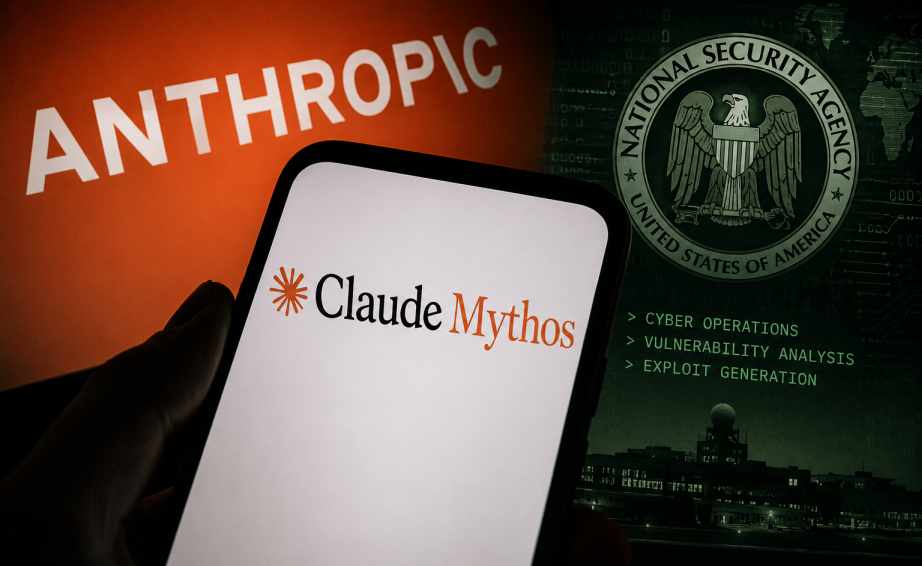
In February, Anthropic was at odds with the Department of War over how its AI technology should be used. Now, the Financial Times reports that the company is helping the National Security Agency deploy Mythos, a powerful AI model built to identify software vulnerabilities and support cyber operations.
According to the report, Anthropic has embedded engineers at the NSA to assist with the deployment, a move that highlights the growing role of frontier AI in national security and raises fresh questions about where the company draws the line on government use of its technology.
“Anthropic assists US security agency’s use of Mythos for cyber attacks,” The Financial Times wrote in a post on X.
Anthropic assists US security agency’s use of Mythos for cyber attacks https://t.co/LWmG5SM3tk
— Financial Times (@FT) June 4, 2026
The arrangement marks a significant step in the U.S. government’s adoption of advanced AI for cybersecurity and intelligence work. It comes at a time when Anthropic remains engaged in a legal battle over restrictions tied to its earlier AI systems.
Mythos Emerges as One of the Most Closely Guarded AI Models
Anthropic introduced Mythos, sometimes referred to as Claude Mythos Preview, in a limited release through its Project Glasswing initiative in April. The company chose not to make the model publicly available, citing its ability to identify and exploit software vulnerabilities at a level that raised security concerns.
Internal evaluations reportedly showed Mythos outperforming earlier models across a range of cybersecurity tasks. The system could discover previously unknown vulnerabilities, generate working exploits, and chain together multiple attack paths. According to the Financial Times, Anthropic employees without formal security backgrounds were able to obtain complete exploit chains after giving the model broad instructions to search for weaknesses overnight.
Those capabilities stem from advances in coding, reasoning, and long-horizon planning. The same skills that make AI useful for software development can make it highly effective at finding flaws in complex systems.
One source familiar with the NSA’s use of Mythos told the Financial Times, “The best way to build a good defence is to build a good attack.”
The report says the model is being used to simulate sophisticated intrusions and evaluate vulnerabilities that could be exploited by foreign adversaries.
Access to Mythos remains tightly controlled. Anthropic has reportedly granted access to only a small group of trusted U.S. organizations and select allied institutions, including the U.K.’s AI Security Institute. The limited rollout has given security teams an opportunity to study vulnerabilities identified by the model before wider access becomes available.
A Pentagon Dispute That Never Fully Went Away
The NSA deployment arrives against the backdrop of an ongoing conflict between Anthropic and the Department of Defense.
The disagreement began earlier this year after Anthropic refused to remove safeguards that restrict certain military uses of its models. The company has maintained that its AI systems should not be used for fully autonomous lethal weapons or large-scale domestic surveillance.
That position triggered a broader confrontation with the Pentagon. In March, then-Defense Secretary Pete Hegseth designated Anthropic a “supply chain risk,” marking an extraordinary move against one of the country’s leading AI companies. The Trump administration directed federal agencies to stop using Anthropic tools, and the Defense Department moved to restrict the use of Claude within military programs.
Anthropic responded with a lawsuit, arguing that the government’s actions were retaliatory and exceeded its legal authority.
Court rulings have been mixed. A federal judge in San Francisco temporarily blocked enforcement of the restrictions. The U.S. Court of Appeals for the D.C. Circuit later declined to halt the ruling and heard additional arguments in May. The legal fight remains unresolved.
Yet the Financial Times report suggests cooperation between Anthropic and the NSA has continued throughout the dispute.
Earlier reporting from Axios revealed that the NSA had already been testing Mythos Preview for vulnerability scanning. Sources cited by Axios indicated the model’s use may have extended beyond a single agency.
The Growing Role of AI in Cyber Conflict
The Mythos deployment underscores a broader shift underway across governments and intelligence agencies.
AI models are no longer being evaluated solely as productivity tools. They are increasingly viewed as strategic assets capable of identifying vulnerabilities, accelerating cyber research, and assisting national security operations.
That reality places companies such as Anthropic in a difficult position. The same technology that strengthens defensive security can also be used for offensive purposes. Drawing clear boundaries around acceptable use becomes harder as models gain new capabilities.
The full scope of the NSA’s use of Mythos remains unknown. Intelligence agencies rarely disclose operational details, leaving outsiders to assess developments through limited public reporting.
What is clear is that Anthropic’s relationship with the U.S. national security establishment has entered a new phase. A company that spent much of the year fighting government restrictions on its AI technology is now reportedly helping deploy one of the most powerful cybersecurity models ever developed inside one of America’s most secretive intelligence agencies.
Neither Anthropic nor the NSA publicly commented on the latest report.
Trending Now