Amazon unveils Proteus, an AI warehouse robot that understands spoken commands as part of its $11.6B European expansion
 Daniel Levi
Posted On June 4, 2026
Daniel Levi
Posted On June 4, 2026
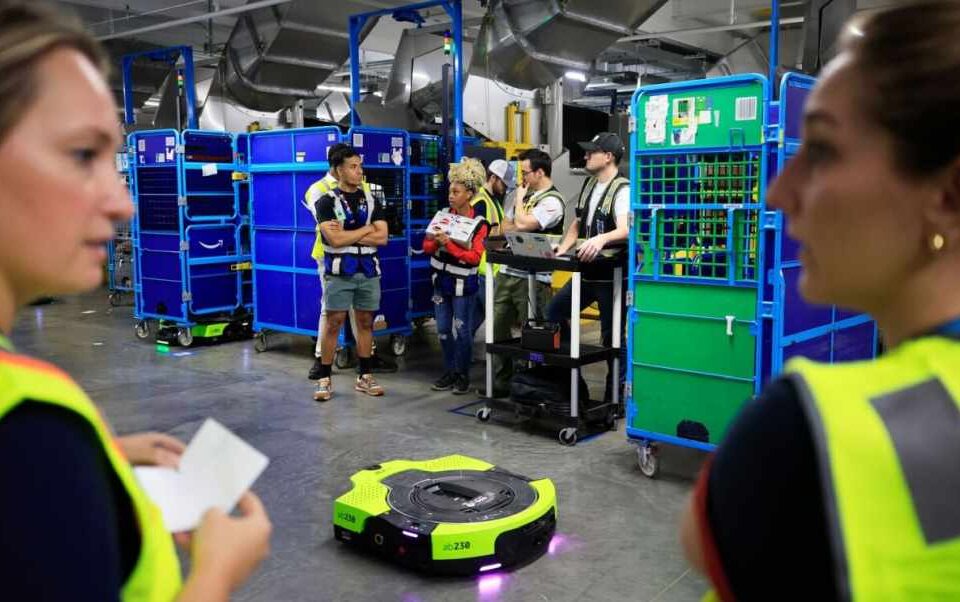
Amazon wants warehouse workers to stop programming robots and start talking to them.
At an event near London on Thursday, the e-commerce giant introduced an upgraded version of Proteus, its autonomous warehouse robot, capable of responding to employees’ conversational instructions. The move marks a new phase in Amazon’s push to weave artificial intelligence deeper into its logistics network as the company pours €10 billion ($11.6 billion) into expanding and modernizing its European fulfillment operations.
The announcement came at Amazon’s “Delivering the Future” event at its Dartford fulfillment center east of London, where the company showcased several new robotics systems intended to speed up deliveries, improve warehouse efficiency, and support its growing same-day and grocery businesses.
“Amazon introduced the next-generation Proteus at its Delivering the Future event in London today. The new technology builds on the original autonomous robot and expands what’s possible in scope, capability, and how it can assist employees with their daily tasks,” the company said in a news release.
Amazon Proteus: A next-gen AI warehouse robot that plans tasks, routes, and takes orders from workers
The new Proteus stands out from earlier versions in one important way: workers no longer need to rely on predefined instructions for every task.
“You tell it what needs to be done. It figures out the priority, the route, the timing,” said Scott Dresser, vice president of Amazon Robotics.
That shift brings warehouse automation closer to the kind of natural-language interactions that have become common with AI assistants such as ChatGPT, Claude, and Amazon’s own Alexa. Instead of receiving narrowly defined commands, the robot can interpret a request and determine how to complete the job on its own.
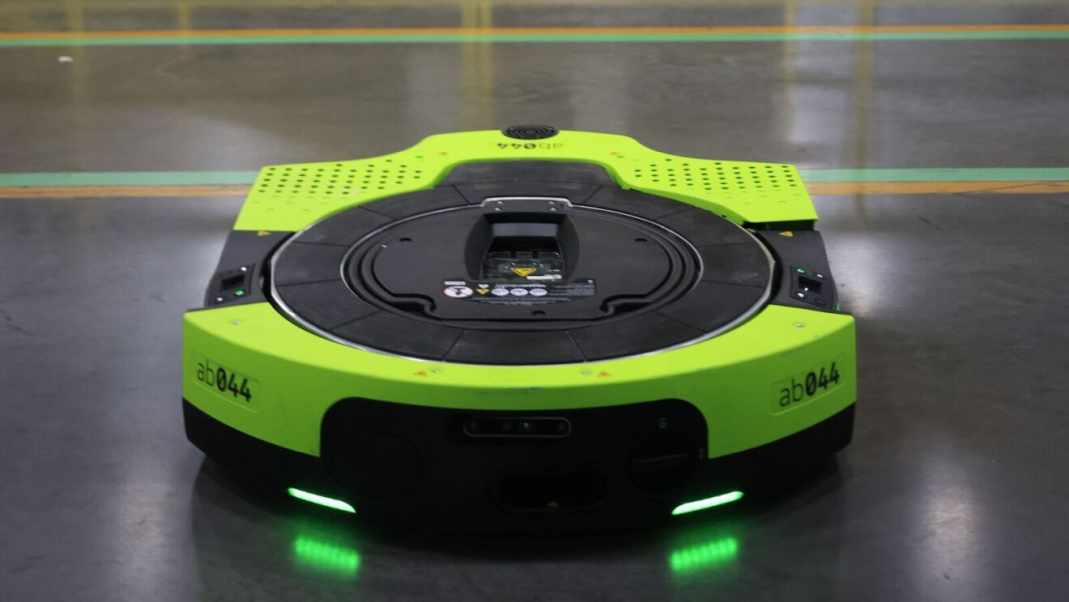
Proteus is already operating at 25 Amazon facilities across the United States, where it primarily moves heavy carts in dock areas. The current version can transport carts weighing nearly 400 kilograms, or about 882 pounds. The next-generation model is expected to arrive at European sites in the first half of 2027 and will be able to move across warehouse floors rather than remain limited to specific zones.
The upgraded robot was not the only machine on display.
Amazon introduced STARK, a robotic tote-handling system that was first tested in Barcelona. The company plans to deploy STARK across 15 European facilities by 2027. Amazon also highlighted Vulcan, a warehouse robot equipped with a sense of touch that allows it to handle items more precisely than traditional robotic systems, Reuters reported.
The robotics announcements arrive as Amazon continues reshaping its logistics network around speed.
The company said it will open more than 25 new same-day delivery sites across Europe this year, including locations in the United Kingdom and Germany. Amazon Now, its ultra-fast delivery service for everyday essentials, is expanding to Manchester and Birmingham after earlier launches in other markets.
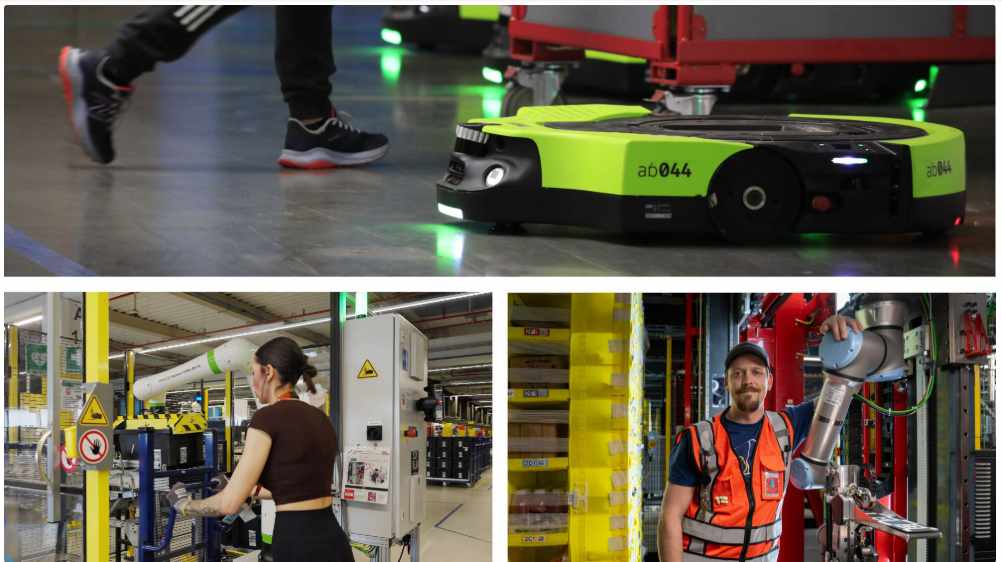
Credit: Amazon
Fresh grocery delivery remains another major focus. Amazon said same-day grocery delivery is now available in more than 2,300 cities across the United States and parts of Tokyo. The service is expected to reach additional locations in Japan, Britain, and other countries over the coming months.
Artificial intelligence is becoming a bigger part of Amazon’s consumer strategy, too. The company said Alexa+, its next-generation AI assistant, will launch in 10 additional countries in 2027, extending Amazon’s efforts to deploy generative AI across its consumer products and business operations.
The latest robotics push comes at a time when major technology companies are spending heavily on AI infrastructure. In February, Amazon forecast more than $200 billion in capital expenditures this year, a jump of over 50% from the previous year. The spending reflects a broader race across the tech industry to build data centers, deploy AI systems, and modernize operations with automation.
For Amazon, warehouses have become one of the most visible testing grounds for that strategy.
The company’s newest robots are no longer focused solely on moving products from one location to another. They are increasingly being built to interpret instructions, make decisions, and coordinate work with human employees. Thursday’s demonstration offered a glimpse of what Amazon believes the next generation of fulfillment centers will look like: facilities where workers simply describe a task and AI-powered machines figure out the rest.