Venture Capital & Startup Funding Roundup, June 3, 2026
 Nickie Louise
Posted On June 3, 2026
Nickie Louise
Posted On June 3, 2026
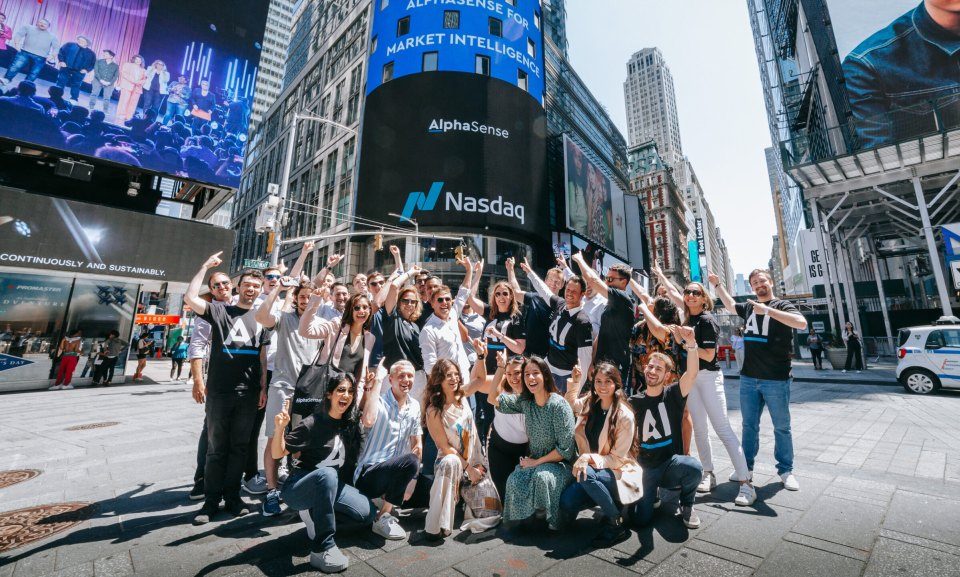
It’s Wednesday, June 3, 2026, and the flow of venture capital remains highly selective despite a steady stream of funding announcements. This was not a broad-based funding day. It was a concentrated one. Within the past 12 hours, the biggest checks went to companies sitting close to the infrastructure of decision-making, compute, observability, and hard operational bottlenecks: AlphaSense in enterprise market intelligence, Oxford Quantum Circuits in quantum infrastructure, and Coralogix in observability for AI-era software systems.
Together, those three deals accounted for the overwhelming share of disclosed capital in this window, and they tell a familiar 2026 story: investors are still writing large checks, but they are doing so selectively and with a strong bias toward platforms that already look embedded in serious workflows.
The second signal is that “AI funding” increasingly means something narrower and more demanding than it did a year ago. The rounds below are not mostly bets on generic assistants. They are bets on proprietary data, regulated workflows, cloud resilience, scientific measurement, payments rails, and compute systems that enterprises or governments can actually deploy. AlphaSense is pairing domain-specific content with agentic workflows; Coralogix is positioning itself as the monitoring layer for autonomous software; Apoha is trying to create a new scientific data class; Terra AI is attacking subsurface uncertainty in mining and energy; Arpio is selling recovery for AI-native cloud environments.
That matters because the broader venture market remains concentrated. Crunchbase reports that global startup funding reached $92 billion in May, the second-highest monthly total on record, and that Q1 2026 reached $300 billion globally, with AI accounting for 80% of that quarterly total. Today’s deal flow fits that pattern on a smaller scale: capital remains abundant for the right companies, but it is clustering around businesses that can demonstrate enterprise adoption, strategic relevance, or infrastructure-level defensibility.
The Macro Environment: Capital Is Crowding Into Applied Intelligence and Hard Infrastructure
The cleanest way to read today’s funding tape is this: the venture is moving down the stack and closer to the budget owner. Investors still love AI, but they are rewarding businesses that sit near revenue, compliance, uptime, regulatory complexity, or scarce technical infrastructure. That is why AlphaSense’s round is attached to more than $600 million in ARR and a strategic partnership with Accenture, why Coralogix is selling observability for increasingly autonomous software systems, and why Forage, a SNAP and EBT infrastructure company, can attract a serious Series B at a time when plenty of consumer fintech stories still struggle to stand out.
The bigger background is extreme capital concentration. Crunchbase says Q1 2026 startup investment hit an all-time high of $300 billion, with U.S.-based companies taking 83% of global venture funding and late-stage deals accounting for most of the surge. May then remained near-record, driven again by giant AI rounds. In other words, the market is not short of money; it is short of tolerance for weak differentiation. Today’s list reflects that. The biggest checks went to companies that can plausibly become part of enterprise or national infrastructure, while smaller rounds clustered around founders addressing very specific operational pain points.
Investor psychology has shifted with that concentration. The market is rewarding evidence over possibility. AlphaSense’s valuation expansion came with ARR scale and enterprise penetration. Coralogix’s new round followed more than 60% revenue growth and a growing base of seven-figure customers. Lassie is already operating inside 700-plus practices. Uncover is already profitable. The message is clear: proof of usage now matters at least as much as category narrative.
There is also a public-private market connection worth noticing. Late-stage private companies are increasingly financing for optionality rather than survival. Reuters reported that AlphaSense’s new funding comes amid IPO discussions, while Coralogix said it did not raise capital because it needed runway and is working toward profitability with the discipline of a public company. That is a very different tone from the defensive fundraising cycles of 2022 and 2023. The private market is behaving as though the exit window is not fully open, but visible enough to justify aggressive positioning.
Funding Rounds
AlphaSense raises $350 million to turn market intelligence into enterprise AI infrastructure
AlphaSense closed a $350 million funding round that values the company at $7.5 billion, nearly double its previous $4 billion valuation, and brings total funding to well over $1 billion. The company also said it exceeded $600 million in annual recurring revenue in Q1 2026, up from $500 million in October 2025. That is the kind of revenue base that changes how investors underwrite a late-stage software company: not as a speculative AI story, but as a scaled platform with real enterprise density. The round was led by Vitruvian Partners, Accenture Ventures, and J.P. Morgan Asset Management, with additional participation from D. E. Shaw Ventures, Pinegrove Opportunity Partners, CapitalG, Goldman Sachs Alternatives, and Viking Global.
What investors are really paying for here is not just search over documents. AlphaSense says its platform spans more than 500 million business documents and serves more than 7,000 global enterprises, including over 70% of the S&P 500. Accenture is also becoming its first strategic channel partner to help embed AlphaSense into agentic enterprise workflows. That matters because one of the most durable themes in enterprise AI right now is that general-purpose models are becoming cheaper and more interchangeable, while trusted data, workflow integration, and domain-specific distribution are becoming more valuable. AlphaSense sits on the right side of that trade.
For founders, the lesson is straightforward. Markets will still pay premium late-stage prices for AI companies, but only when the product is tied to proprietary content, obvious enterprise spend, and measurable workflow ownership. For investors, AlphaSense is a reminder that “AI application” can still be a large outcome category when the application is embedded in high-stakes decision-making rather than casual productivity.
Funding Details
Startup: AlphaSense
Investors: Vitruvian Partners, Accenture Ventures, J.P. Morgan Asset Management, D. E. Shaw Ventures, Pinegrove Opportunity Partners, CapitalG, Goldman Sachs Alternatives, Viking Global Investors
Amount Raised: $350 million
Total Raised: Well over $1 billion
Funding Stage: Undisclosed growth round
Funding Date: June 3, 2026
Headquarters: New York, New York, USA
Sector: Enterprise AI/market intelligence/workflow automation
Valuation Context: $7.5 billion
Oxford Quantum Circuits raises £260 million to scale quantum computing infrastructure globally
Oxford Quantum Circuits closed an oversubscribed £260 million Series C, or about $350 million, in what the company calls Europe’s largest-ever private funding round for a quantum computing company. Bullhound Capital led the round, with participation from the British Business Bank, Fynveur, COFIDES, RCM Private Markets Fund, Alpha Edison, Fulcrum Asset Management, Pentland Ventures, Magdalen College Oxford, Adaptive Capital Partners, Firgun Ventures, 18 West, Oxford Capital, and existing investors including Oxford Science Enterprises, SBI, Chevron Technology Ventures, UTEC, and OTIF Ventures. The sheer breadth of that investor roster matters almost as much as the size of the check: venture, strategic, and institutional capital converging around a single compute thesis.
OQC says it builds and operates superconducting quantum computers designed for data-center deployment and already has systems running in the UK, U.S., Japan, and Spain. Sifted also notes that the company’s customer demand is being pulled by finance, defense, and security use cases, where data handling and trusted infrastructure matter as much as raw performance. That is the deeper story here. Quantum funding in 2026 is no longer framed solely as a scientific wager. It is being framed as a strategic infrastructure buildout with sovereign implications, and buyers are beginning to plan around real deployments rather than abstract future capabilities.
For the UK and Europe, this round also has geopolitical weight. Crunchbase reported that the U.K. was the third-largest national venture market in Q1 2026, but still far behind the U.S. OQC’s raise is a case study in how Europe can still command global capital when the company sits at the intersection of frontier science, enterprise use, and national capability.
Funding Details
Startup: Oxford Quantum Circuits
Investors: Bullhound Capital, British Business Bank, Fynveur, COFIDES, RCM Private Markets Fund, Alpha Edison, Fulcrum Asset Management, Pentland Ventures, Magdalen College Oxford, Adaptive Capital Partners, Firgun Ventures, 18 West, Oxford Capital, Oxford Science Enterprises, SBI, Chevron Technology Ventures, UTEC, OTIF Ventures
Amount Raised: £260 million
Total Raised: Not disclosed in the Series C announcement
Funding Stage: Series C
Funding Date: June 3, 2026
Headquarters: United Kingdom
Sector: Quantum computing / advanced compute infrastructure
Coralogix raises $200 million to become the observability layer for AI agents
Coralogix announced a $200 million Series F round co-led by Advent, CPP Investments, and Greenfield, with participation from Brighton Park Capital, bringing total funding to $550 million. TechCrunch reported the raise values the company at $1.6 billion post-money. The round came just 11 months after its $115 million Series E, which is a fast cadence even by current infrastructure standards and says a lot about how investors see the observability market in the age of autonomous systems.
The company’s pitch is well timed. Coralogix collects and analyzes logs, metrics, and traces so engineering teams can identify outages, investigate incidents, and keep increasingly complex systems running. As AI agents move from demo to production, that capability becomes more central, not less. TechCrunch reported that Coralogix now serves more than 5,000 customers worldwide, has about 30 customers spending more than $1 million annually, and grew revenue by more than 60% over the past year. Observability used to be a technical necessity. In the AI era, it is edging closer to a control system for software that acts on its own.
This is one of the most important strategic messages in today’s roundup. AI does not just create demand for model vendors and app builders. It also expands the market for the tools that monitor, debug, govern, and secure machine-generated decisions. For operators, that means reliability tooling is moving from “supporting software spend” to “core software spend.”
Funding Details
Startup: Coralogix
Investors: Advent, CPP Investments, Greenfield, Brighton Park Capital
Amount Raised: $200 million
Total Raised: $550 million
Funding Stage: Series F
Funding Date: June 3, 2026
Headquarters: Boston, Massachusetts, USA
Sector: Observability/enterprise infrastructure / AI operations
Valuation Context: $1.6 billion post-money
Forage raises $40 million to modernize SNAP and EBT payments
Forage announced a $40 million Series B led by Mouro Capital, with participation from Nyca Partners, PayPal Ventures, Long Journey Ventures, Intuit Ventures, NextLadder Ventures, Pivotal Ventures, and FJ Labs. The company is building financial infrastructure for benefits payments, helping retailers accept programs such as SNAP, WIC, and HSA/FSA, while also launching a consumer app for balance checks and grocery savings. Its technology is already used at more than 100,000 stores in all 50 states, including Dollar General, Gopuff, Save A Lot, DoorDash, and Uber Eats.
This round matters because it shows that venture is still willing to fund regulated rails when the pain point is structurally important and the compliance burden keeps copycats away. The Wall Street Journal reported the new round values Forage at $225 million. That is not a frothy multiple for a company trying to digitize a giant, underserved payment ecosystem used by roughly 40 million Americans. The better way to read this deal is as a bet on government-linked financial infrastructure with consumer distribution attached. That combination can become sticky, hard to replicate, and resistant to changes in AI fashion.
For founders, Forage is a useful counterexample to the idea that the market only cares about generative AI. It cares about software that sits within real-money flows, especially where the buyer cannot tolerate downtime, compliance failures, or fragmented integration. AI may help, but the fundable wedge here is infrastructure.
Funding Details
Startup: Forage
Investors: Mouro Capital, Nyca Partners, PayPal Ventures, Long Journey Ventures, Intuit Ventures, NextLadder Ventures, Pivotal Ventures, FJ Labs
Amount Raised: $40 million
Total Raised: At least $62 million publicly disclosed
Funding Stage: Series B
Funding Date: June 3, 2026
Headquarters: San Francisco, California, USA
Sector: Fintech infrastructure/benefits payments/commerce rails
Valuation Context: $225 million, per The Wall Street Journal
Apoha raises $36 million to build a scientific data layer for how matter behaves
Apoha emerged from stealth with a $36 million Series A led by Singular, with participation from Draper Associates and follow-on backing from Redalpine, Seedcamp, Wilbe, and Nucleus, alongside support from Innovate UK. Coverage from Fortune, TNW, and Startup.eu describes Apoha as a London- and San Francisco-based deep tech company building a new scientific data layer that models how molecules and materials behave under real-world conditions, rather than only what they are or what they look like.
That point is not academic. Apoha’s thesis is that modern AI still lacks high-quality empirical data on behavior in physical systems, which is why drug candidates fail late, food formulations disappoint in the market, and physical-world AI still struggles to reason about matter. Its platform, including a product called VIBE, is meant to generate that missing measurement layer. Investors care because this is the kind of data moat that cannot be scraped from the web or reproduced by a model wrapper with a good prompt library. If the thesis works, Apoha could sit inside biotech, materials science, food, and physical AI all at once.
In a market full of companies claiming to apply AI to science, Apoha is a reminder that the highest-value businesses may be the ones producing new machine-readable data, not just new interfaces to existing models. That is a much harder company to build. It may also be much more durable.
Funding Details
Startup: Apoha
Investors: Singular, Draper Associates, Redalpine, Seedcamp, Wilbe, Nucleus, Innovate UK
Amount Raised: $36 million
Total Raised: Not disclosed
Funding Stage: Series A
Funding Date: June 3, 2026
Headquarters: London, United Kingdom, and San Francisco, California, USA
Sector: AI biotech/materials science/frontier data infrastructure
Lassie raises $35 million to automate the busywork inside small businesses
Lassie announced a $35 million Series A led by Andreessen Horowitz, bringing total capital raised to $47 million. The company says it is building autonomous systems for small businesses, with an initial focus on healthcare practices. Its software enters insurance portals, pulls reimbursements, reconciles them, updates the system of record, and verifies funds in the bank. Lassie says it already operates in more than 700 practices across 49 states and provides over 250,000 hours of labor annually.
This is a revealing round because it captures where enterprise and SMB AI are heading next. The first wave of AI software sold summarization and drafting. The next wave is selling execution. Investors are underwriting a future in which the most valuable software does not just recommend actions; it also performs repetitive work across messy, legacy systems. That is especially compelling in verticals such as healthcare administration, where the staff shortage is real, labor is expensive, and the cost of delay lands directly on revenue collection.
For founders, Lassie reinforces that the best vertical AI stories do not sound like generic productivity. They sound like a clear before-and-after in labor hours, payment timing, or workflow completion. That is the kind of value proposition capital still responds to quickly.
Funding Details
Startup: Lassie
Investors: Andreessen Horowitz, Night Capital, Rahul Vohra, Zach Perret, Taavet Hinrikus, Gokul Rajaram, Brian Balfour
Amount Raised: $35 million
Total Raised: $47 million
Funding Stage: Series A
Funding Date: June 3, 2026
Headquarters: San Francisco, California, USA
Sector: Vertical AI / SMB software/healthcare administration automation
Terra AI raises $20 million in funding to shorten the path from subsurface uncertainty to resource development
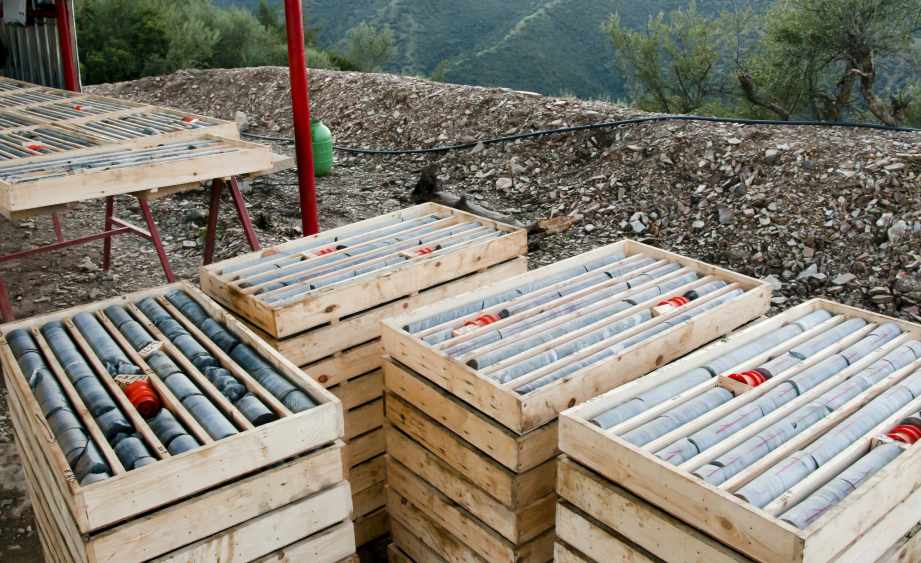
Terra AI raised a $20 million Series A led by Khosla Ventures, with a strategic investment from BHP Ventures. The Palo Alto company says it uses AI to integrate exploration datasets and generate millions of geological models, helping teams evaluate uncertainty, improve drill targeting, and assess project economics faster. Terra says it has already shown traction across copper, gold, rare earth, and reservoir projects and is extending the same platform into carbon storage and enhanced geothermal applications.
Why does this deal matter? Because it sits squarely at the intersection of AI, critical minerals, and energy infrastructure. Terra notes that new discoveries typically take an average of 17 years to move to production. That is an enormous time and capital burden, and one of the clearest reasons the energy transition and industrial supply chains keep running into bottlenecks. When Khosla and BHP write checks into this category, they are not funding a nicer mapping interface. They are funding the possibility that AI can compress a long, expensive industrial cycle that directly affects copper supply, carbon storage deployment, and geothermal buildout.
This is also a useful example of how strategic capital is behaving in 2026. BHP’s presence alongside Khosla suggests the distance between venture-scale software and industrial deployment is narrowing in categories where the data problem is large and customer urgency is obvious.
Funding Details
Startup: Terra AI
Investors: Khosla Ventures, BHP Ventures
Amount Raised: $20 million
Total Raised: Not disclosed
Funding Stage: Series A
Funding Date: June 3, 2026
Headquarters: Palo Alto, California, USA
Sector: Industrial AI / critical minerals/energy infrastructure/carbon storage
Uncover raises $16 million to make marketing mix modeling usable at a multinational scale
Uncover announced a $16 million Series A led by Cloud9 Capital, with participation from ABSeed Ventures and Endeavor. The São Paulo-based company says it is already profitable and works with brands including Unilever, Burger King, Reckitt, Vivo, and Bradesco. It is also a Meridian-certified partner working with Google’s open-source marketing mix modeling framework, and it says its platform has helped optimize more than $6 billion in media investments.
The deal is important because it speaks to a quieter but meaningful shift in software buying: measurement is back. As privacy changes, signal loss, and fragmented digital channels have made legacy attribution harder, marketers are leaning back into MMM and incrementality analysis. Uncover’s pitch is that this should be software infrastructure, not a one-off consulting engagement. That is attractive to investors because always-on measurement platforms are easier to scale, easier to price as recurring software, and harder to displace once budget planning starts flowing through them.
There is also a regional signal here. Latin American software companies still have to work harder than their U.S. peers for global recognition, but this round shows that profitable, infrastructure-like businesses from the region can use home-market traction as a launchpad into the U.S. If that pattern continues, it will be one of the more important geographic stories in growth software over the next two years.
Funding Details
Startup: Uncover
Investors: Cloud9 Capital, ABSeed Ventures, Endeavor
Amount Raised: $16 million
Total Raised: Not disclosed
Funding Stage: Series A
Funding Date: June 3, 2026
Headquarters: São Paulo, Brazil
Sector: Marketing measurement/enterprise analytics / SaaS infrastructure
Arpio raises $15 million to automate disaster recovery for AI-native cloud environments
Arpio announced a $15 million Series A co-led by S3 Ventures and Paladin Capital Group, with participation from Draper Associates, Uncorrelated, Valor Ventures, CreativeCo Capital, and Lookout Ventures. The Durham company provides cloud-native disaster recovery and resilience automation for enterprises running on AWS and Azure, and says the new capital will help it expand into Google Cloud and other AI-native services.
This is more important than the headline amount suggests. AI adoption is pushing more business logic into cloud environments that are harder to test, recover, and secure. Arpio’s pitch is that recovery must be automated, validated, and near-instantaneous, especially as ransomware and cloud outages remain persistent threats. That makes cloud resilience look less like insurance and more like a core operating requirement. Paladin’s involvement sharpens that point: security investors increasingly see resilience and cybersecurity as one budget, not two.
For founders in infrastructure software, Arpio is a reminder that the market still pays for painful failure points. If your product meaningfully lowers downtime, compliance risk, or operational exposure in AI-heavy systems, you are in a part of the stack investors still take seriously.
Funding Details
Startup: Arpio
Investors: S3 Ventures, Paladin Capital Group, Draper Associates, Uncorrelated, Valor Ventures, CreativeCo Capital, Lookout Ventures
Amount Raised: $15 million
Total Raised: Not disclosed
Funding Stage: Series A
Funding Date: June 3, 2026
Headquarters: Durham, North Carolina, USA
Sector: Cloud resilience/cybersecurity/enterprise infrastructure
Paypercut raises €5 million to unify payments across Central and Eastern Europe
Paypercut announced a €5 million seed round co-led by Concentric, Passion Capital, and Araya Ventures, bringing total funding to €7 million. The Sofia-based fintech says it offers merchants a single integration to accept payments across Central and Eastern Europe, spanning card payments, local methods, BNPL, payment links, QR codes, billing, payouts, and settlements. It says the business has grown from a BNPL aggregator into a full payments platform with more than 200 active merchants across eight CEE markets.
This is the smallest round in today’s top 10, but it is strategically worth including. Regional fragmentation remains one of the most fundable fintech pain points, since a startup can address it through infrastructure rather than marketing spend. Paypercut says part of the new capital will support an Irish EMI license application, and it is also building stablecoin-based transfer rails for high-friction non-euro corridors in CEE. That is not a speculative crypto pitch; it is an attempt to reduce time and FX costs within a region where cross-border commerce remains unnecessarily difficult.
The broader message is that seed capital has not disappeared for fintech. It has just become choosier. The winners are the companies solving obvious, costly plumbing problems in markets that bigger incumbents still treat as too fragmented to serve well.
Funding Details
Startup: Paypercut
Investors: Concentric, Passion Capital, Araya Ventures, SMOK Ventures, Portfolio Ventures, BrightCap Ventures, BlackWood, SABAH.fund, MFG Invest, Main Set, Matt Doka
Amount Raised: €5 million
Total Raised: €7 million
Funding Stage: Seed
Funding Date: June 3, 2026
Headquarters: Sofia, Bulgaria
Sector: Payments infrastructure/fintech / cross-border commerce
What Today’s Funding Activity Reveals
The first pattern is concentration. The biggest checks in this 12-hour window went to a small set of companies that already sit near enterprise or national infrastructure: AlphaSense in market intelligence, OQC in compute, and Coralogix in observability. That echoes Crunchbase’s broader read on 2026 so far: capital is abundant at the top end, but concentrated, with AI-heavy and late-stage deals taking a disproportionate share of total venture flow.
The second pattern is that applied AI is outranking generic AI. AlphaSense, Coralogix, Lassie, Terra AI, Uncover, and Arpio are all selling into a specific operational choke point: research, monitoring, back-office execution, subsurface uncertainty, media measurement, or recovery. Even Apoha’s science angle follows the same logic, as it aims to create proprietary physical-world data that other models lack. Investors are funding AI when it comes with workflow ownership, not just model access.
The third pattern is strategic capital’s return. Accenture is not a passive name in AlphaSense’s cap table; it is a distribution partner. BHP is not a tourist in Terra AI’s round; it is a direct industrial signal. The British Business Bank- and Chevron-backed capital appears in OQC. PayPal Ventures appears in Forage. This is what founder-friendly capital looks like in 2026 when the company enters a market incumbents care deeply about: venture money comes with channel, validation, or sector pull.
The fourth pattern is geographic and more nuanced than a simple “U.S. dominance” story. Q1 data show the U.S. captured 83% of global venture funding, and today’s largest rounds still went to U.S.- or U.K.-based companies. But the window also includes meaningful rounds from Brazil and Bulgaria, and the investor thesis behind both is regional infrastructure rather than local novelty. That matters. When capital travels internationally in this market, it increasingly flows to companies that can resolve structural regional frictions and then export that know-how.
Comparative Funding Table
| Startup | Amount Raised | Sector | Funding Stage | Lead Investors | Country |
|---|---|---|---|---|---|
| AlphaSense | $350M | Enterprise AI/market intelligence | Undisclosed growth round | Vitruvian Partners; Accenture Ventures; J.P. Morgan Asset Management | U.S. |
| Oxford Quantum Circuits | £260M | Quantum computing infrastructure | Series C | Bullhound Capital | U.K. |
| Coralogix | $200M | Observability / AI operations | Series F | Advent; CPP Investments; Greenfield | U.S. |
| Forage | $40M | Fintech infrastructure/benefits payments | Series B | Mouro Capital | U.S. |
| Apoha | $36M | AI biotech/materials science | Series A | Singular | U.K. / U.S. |
| Lassie | $35M | Vertical AI / SMB automation | Series A | Andreessen Horowitz | U.S. |
| Terra AI | $20M | Industrial AI/mining/energy | Series A | Khosla Ventures | U.S. |
| Uncover | $16M | Marketing measurement / enterprise analytics | Series A | Cloud9 Capital | Brazil |
| Arpio | $15M | Cloud resilience/cybersecurity | Series A | S3 Ventures; Paladin Capital Group | U.S. |
| Paypercut | €5M | Payments infrastructure / cross-border commerce | Seed | Concentric; Passion Capital; Araya Ventures | Bulgaria |
Strategic Takeaways for Founders and Investors
Founders should take away one blunt lesson from this batch of deals: “we use AI” is no longer enough. The companies that got funded attached AI to a hard business problem with near-term budget ownership. AlphaSense sits inside executive decision-making. Coralogix stands between enterprises and system failure. Lassie converts administrative labor into measurable savings. Terra AI shortens a capital-heavy industrial timeline. If your startup does not clearly improve revenue velocity, cost structure, reliability, compliance, or capital allocation, raising capital will only get harder.
Investors, meanwhile, are prioritizing defensibility that survives model commoditization. In today’s list, that defensibility comes from proprietary content and workflow integration at AlphaSense, telemetry and enterprise embedment at Coralogix, new scientific measurement at Apoha, regulated payment infrastructure at Forage and Paypercut, and cloud recovery plumbing at Arpio. These are not businesses that win because they have access to a foundation model. They win because they own data, distribution, compliance, or mission-critical execution.
There is also a timing signal for both founders and funds. Crunchbase says early-stage funding in Q1 2026 rose 41% year over year, and seed funding rose 31%, but seed deal counts fell 30%. That means money is still available earlier in the company life cycle, but the bar for conviction is higher, and the market is rewarding fewer stories with bigger checks. Regional infrastructure plays, such as Paypercut, can still raise. But they do it by showing a sharply defined wedge, not by pitching a broad future platform on day one.
Finally, strategic capital is becoming more important again. BHP in Terra AI, Accenture in AlphaSense, PayPal Ventures in Forage, and the British Business Bank in OQC all point to the same conclusion: founders in sectors tied to regulated markets, supply chains, or national capability should think earlier about strategic alignment. In 2026, distribution and validation are increasingly arriving in the same round as money.
Conclusion
Today’s funding tape did not reward novelty for its own sake. It rewarded deployment, defensibility, and operational relevance. The largest rounds went to companies turning AI into decision infrastructure, quantum into deployed compute, and observability into a control layer for autonomous systems. The smaller but still meaningful rounds went to founders modernizing regulated payments, compressing exploration timelines, rebuilding marketing measurement, and automating cloud recovery. That is a healthier signal than a day dominated by thin consumer narratives.
The direction of travel is becoming harder to miss. Venture capital is still flowing aggressively, but it is flowing toward software and deeptech businesses that can carry real economic weight: systems that help enterprises decide faster, operate with less risk, manage scarce physical resources, or build defensible data advantages. Founders who can show that kind of weight will still find money. Everyone else is selling into a market that has become much less patient.
Open Questions and Limitations
This report uses a cutoff of approximately 4:15 p.m. Eastern on June 3, 2026, and includes funding rounds announced during the preceding 12 hours. Where exact announcement times were unavailable, we relied on official company releases and the earliest reputable coverage to determine eligibility.
Several companies did not disclose valuation or lifetime funding totals in the primary materials available here, including OQC, Terra AI, Uncover, Arpio, and Apoha. Those figures are marked as not disclosed rather than estimated.
Trending Now