Venture Capital & Startup Funding Roundup, June 2, 2026
 Nickie Louise
Posted On June 2, 2026
Nickie Louise
Posted On June 2, 2026
Venture capital did not spend this cycle chasing lightweight software abstractions. In the past 12 hours, the biggest startup checks went to orbital logistics, defense manufacturing, male contraception, fleet electrification, composite supply chains, and clinically anchored healthcare automation. That mix matters. It suggests investors are paying for bottlenecks in the physical economy and in regulated end markets, not for novelty alone.
AI is still everywhere in today’s slate, but mostly as an embedded layer rather than the product story by itself. Adaptive uses it to rewire home-health operations, Subtle Medical applies it to scan speed and image quality, Findigs turns it into rental decisioning, and Waypoint uses it to design cell therapies. The pattern is clear: general-purpose AI is no longer enough to attract serious capital unless it is tied to workflow control, reimbursement leverage, or measurable operating outcomes.
The other backdrop is capital intensity. Alphabet’s planned $80 billion stock raise to fund AI build-out, plus Anthropic’s confidential IPO filing, show that the public market is also moving toward bigger infrastructure and compute commitments. Private investors appear to be responding by placing larger bets on startups that either sell into that build-out or fix adjacent constraints that hyperscalers and incumbents do not solve well on their own.
The Macro Environment: Capital Moves to the Constraint Layer
Today’s funding set reads like a portfolio of chokepoints. Impulse is addressing movement after launch, Mach is scaling dual-use manufacturing capacity, Highland is financing fleet electrification and charging, and Layup is compressing lead times for a strategic materials category that aerospace and defense teams still struggle to source quickly. These are not “nice-to-have” upgrades. They sit in the part of the stack where delays, downtime, or supply scarcity directly destroy margin and slow deployment.
Healthcare money followed a similar logic. Contraline is pushing a program into late-stage development in a category that has been underfunded for decades; Subtle is squeezing more throughput from installed imaging hardware; Adaptive is using AI to absorb administrative waste in home health; Advanced NanoTherapies is backing a differentiated vascular device platform, and Waypoint is pairing AI discovery with a path to faster clinical validation. These are companies asking investors to fund assets that can change unit economics or clinical practice, not just user interfaces.
Investor psychology also looks more disciplined than frothy. Several of the companies on today’s list came to market with evidence that lowers the “science project” discount: Impulse has flown three missions and says it has hundreds of millions of dollars in customer contracts, Highland emphasizes long-term contracted deployments, Adaptive says it has already delivered more than 100,000 visits, Findigs says its platform covers more than 400,000 units, and Subtle says its software is deployed on more than 1,300 scanners. The message is that capital is available, but increasingly after some form of commercial proof.
The public-private relationship matters here. Big public AI names are absorbing unprecedented sums, but that does not crowd out startups. It creates adjacent markets for companies that improve utilization, reduce deployment friction, expand energy capacity, or make regulated services more operationally scalable. In other words, the public market may be getting more concentrated, but the private market is still finding room in the inefficiencies that concentration creates.
The Top Funding Rounds
Impulse Space raises $500 million to build in-space mobility infrastructure

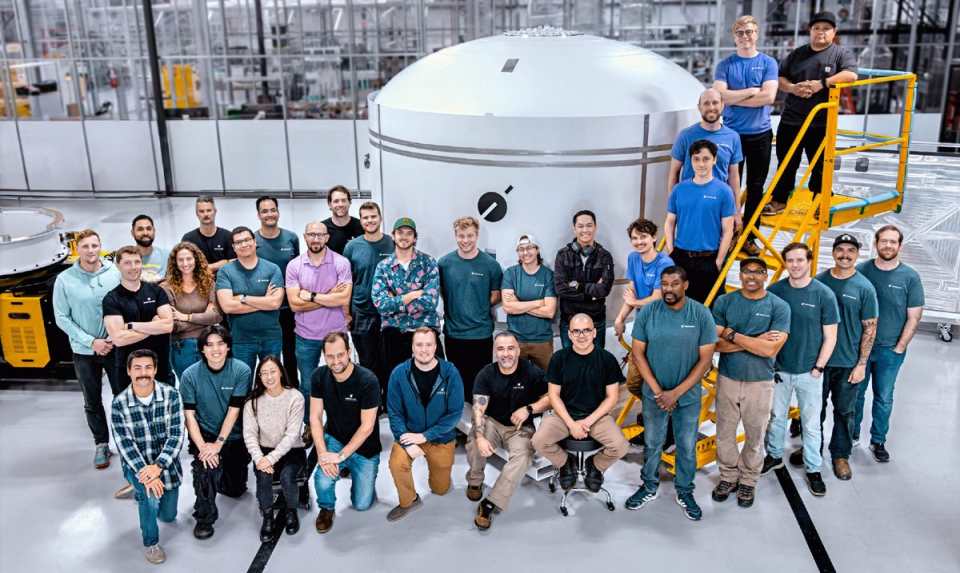
Impulse Space is one of the clearest examples of venture capital moving beyond launch and into what comes after: orbital maneuvering, payload repositioning, and payload delivery. The company says its $500 million Series D will fund hiring and manufacturing growth as it scales up production of vehicles, propulsion systems, and operational infrastructure for post-launch mobility. Reuters reported the round values the company at $4.26 billion, while the company said the financing brings total capital raised to more than $1 billion.
Why investors care is straightforward. Launch is no longer the only bottleneck in the commercial space economy. Impulse argues the next strategic layer is mobility after launch, and it has enough traction to make that thesis legible: three missions flown, Mira already operational, Helios slated for 2027, and hundreds of millions of dollars in customer contracts. This is less a speculative space bet than a wager that “space trucking” becomes foundational infrastructure across commercial, civil, and defense demand.
Funding Details
Startup: Impulse Space
Investors: 137 Ventures, BANNER VC, Founders Fund, Lux Capital, Linse Capital
Amount Raised: $500 million
Total Raised: More than $1 billion
Stage: Series D
Date: June 2, 2026
Headquarters: Redondo Beach, California, United States
Sector: Space Infrastructure, Aerospace & Defense, In-Space Mobility
Mach Industries raises $300 million to scale defense manufacturing and unmanned systems
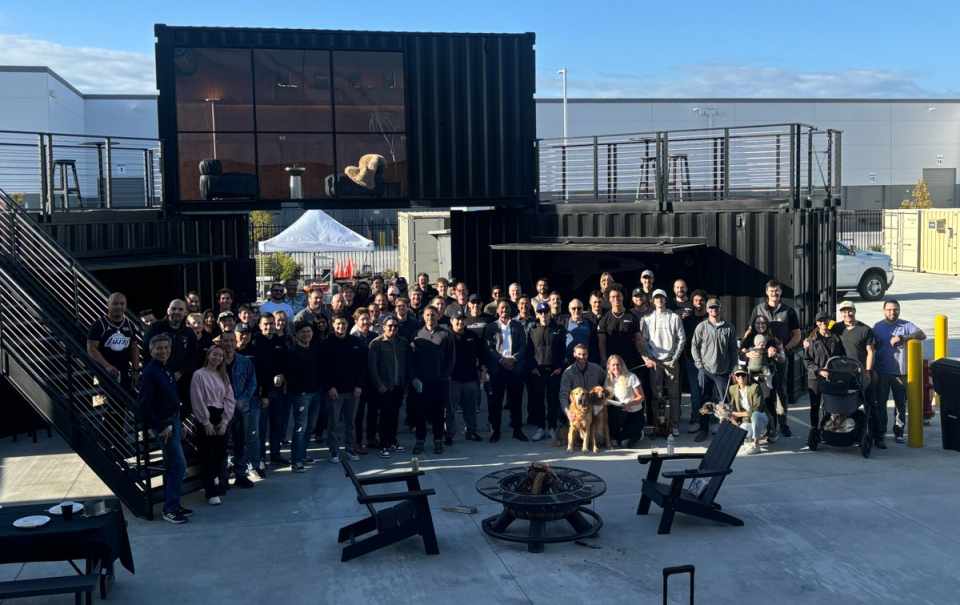
Mach Industries framed its round not as a milestone for valuation optics but as fuel for execution: government contracts, talent, product development, and expansion of Forge, its manufacturing network. The company said Infinite Capital and Ribbit Capital led the $300 million Series C funding, valuing Mach at $1.8 billion, with continued backing from Bedrock Capital, Sequoia Capital, and Khosla Ventures.
The deeper signal is that defense-tech investors are moving from prototype enthusiasm to production urgency. Mach is talking explicitly about execution, manufacturing scale, and battlefield timelines. That fits the current dual-use market, where capital is flowing toward companies that can supply allied governments with systems at industrial speed rather than laboratory pace. The valuation jump also suggests that investors increasingly view defense manufacturing as a software-plus-factory business, not merely a hardware niche.
Funding Details
Startup: Mach Industries
Investors: Infinite Capital, Ribbit Capital, Bedrock Capital, Sequoia Capital, Khosla Ventures
Amount Raised: $300 million
Total Raised: Not publicly disclosed
Stage: Series C
Date: June 2, 2026
Headquarters: Huntington Beach, California, United States
Sector: Defense Technology, Autonomous Systems, Advanced Manufacturing
Contraline raises $92.5 million to push male contraception into late-stage development
Contraline’s Series B is one of the most strategically interesting healthcare financings of the day. The company said BVF Partners and RA Capital co-led a $92.5 million round to advance NES/T Gel, a once-daily hormonal, reversible male contraceptive, into late-stage development. Contraline said the program recently completed a global Phase 2b trial enrolling 462 couples and that Phase 3 is expected to begin in 2027.
Investors are not just funding a clinical program; they are backing a category reset. Male contraception has long been treated as a large theoretical market with poor commercial follow-through. Contraline’s pitch is that the market is large enough, the clinical data is strong enough, and the policy and cultural moment is different enough to justify a major late-stage push. If the company is right, this would be one of the rarer biotech bets where the differentiator is not a narrower biomarker population but a meaningfully broader consumer health market.
Funding Details
Startup: Contraline
Investors: BVF Partners, RA Capital Management, GV, Lumira Ventures, Invus, and other new and existing investors
Amount Raised: $92.5 million
Total Raised: Not publicly disclosed
Stage: Series B
Date: June 2, 2026
Headquarters: Charlottesville, Virginia, United States
Sector: Biotech, Reproductive Health, Men’s Health
Highland Electric Fleets raises $75 million to expand electric fleet and charging deployments
Highland Electric Fleets announced a $75 million preferred equity commitment from Galvanize and affiliates, bringing total preferred equity commitments to $150 million. The company said the capital will support deployment of electric school buses and charging infrastructure, expansion in key markets, and development of projects that integrate charging with on-site energy resources.
This is not a classic venture round, but it belongs in today’s top 10 because it reflects where climate capital is maturing. Highland’s model is built around long-term service agreements and asset-backed deployment, which makes the financing look more like infrastructure growth capital than a speculative clean-tech venture. That is important. Investors still want climate exposure, but many are now gravitating toward structures that integrate hardware, financing, and recurring revenue.
Funding Details
Startup: Highland Electric Fleets
Investors: Galvanize and affiliates; prior preferred equity from Aiga Capital Partners
Amount Raised: $75 million
Total Raised: $150 million in preferred equity commitments
Stage: Preferred Equity Commitment / Growth Capital
Date: June 2, 2026
Headquarters: Beverly, Massachusetts, United States
Sector: Fleet Electrification, Energy Infrastructure, Climate Tech
Adaptive Innovations raises $50 million to build an AI-native home healthcare provider
Adaptive emerged from stealth, saying it has delivered more than 100,000 visits, partnered with more than 500 referring healthcare organizations, and cut clinician documentation time by roughly 80%. The company said it raised a $50 million Series A on top of a $10 million seed, with Felicis and Bain Capital Ventures leading and Optum Ventures among the participants.
This is a reminder that some of the most compelling AI businesses are not software vendors selling into healthcare; they are healthcare operators rebuilt around software. Home health is a category where administrative overhead constrains supply, and Adaptive’s thesis is that AI can turn rejected referrals into served patients by changing the economics of coordination. Investors appear to believe that the biggest defensibility in care delivery may come from owning both the workflow engine and the service line.
Funding Details
Startup: Adaptive Innovations
Investors: Felicis, Bain Capital Ventures, Optum Ventures, Sunflower Capital, Conviction, BoxGroup, SV Angels, Dorm Room Fund, Constellation, and other angels
Amount Raised: $50 million
Total Raised: $60 million
Stage: Series A
Date: June 2, 2026
Headquarters: New York City and Dallas, United States
Sector: Healthcare AI, Home Health, Care Delivery Infrastructure
Layup Parts raises $42 million to speed up composite part manufacturing for aerospace and defense
Layup Parts said it raised a $42 million Series A led by Marlinspike, with Cerberus Ventures, Pinegrove Venture Partners, Founders Fund, and Lux Capital participating. TechCrunch reported that the startup is trying to make ordering custom carbon-fiber and fiberglass parts radically faster, reducing some order-to-manufacture cycles from weeks to hours. The company is based in Huntington Beach and previously raised a $9 million seed, implying roughly $51 million in total disclosed capital.
This round matters because it sits right in the middle of a deeper industrial bottleneck. Everyone talks about reviving manufacturing, but composite supply chains remain fragmented, manual, and hard to scale. Layup’s pitch is that software-driven process compression can turn a specialist craft into something much closer to a programmable supply platform. The investor list also says something: Founders Fund and Lux are again backing an industrial problem that sits adjacent to defense and aerospace demand, not consumer hype.
Funding Details
Startup: Layup Parts
Investors: Marlinspike, Cerberus Ventures, Pinegrove Venture Partners, Founders Fund, Lux Capital
Amount Raised: $42 million
Total Raised: $51 million
Stage: Series A
Date: June 2, 2026
Headquarters: Huntington Beach, California, United States
Sector: Industrial Automation, Composite Manufacturing, Defense Supply Chain
Subtle Medical raises $33 million to expand AI-powered medical imaging
Subtle Medical said it secured $33 million in growth capital, anchored by a Series C financing led by funds managed by Morgan Stanley Expansion Capital. Shinhan Venture Investment joined existing investors Fusion Fund, EnvisionX, BRV, and Samsung Ventures. The company said total capital raised now stands at $86 million and that its software is deployed on more than 1,300 scanners globally.
The company’s story is appealing because it is not asking hospitals to rip out installed hardware. Subtle is selling software that helps providers increase throughput and improve image quality from equipment they already own, with the company saying its products can reduce scan times by up to 80%. In a health system that does not like big capex surprises, that is a very different value proposition from buying another machine. Investors are effectively betting that intelligence layered onto constrained physical assets will sell faster than new assets themselves.
Funding Details
Startup: Subtle Medical
Investors: Morgan Stanley Expansion Capital, Shinhan Venture Investment, Fusion Fund, EnvisionX, BRV, Samsung Ventures
Amount Raised: $33 million
Total Raised: $86 million
Stage: Series C / Growth Capital
Date: June 2, 2026
Headquarters: Menlo Park, California, United States
Sector: Healthcare AI, Medical Imaging, Enterprise Software
Findigs raises $32 million to automate leasing decisioning and revenue protection
Findigs announced a $32 million Series C led by RPM Ventures’ Marc Weiser, with Nyca Partners, Frontier Venture Capital, and Western Technology Investment participating. The company said total funding now stands at $80 million, and that the new capital will fund product development, affordable-housing capabilities, and Rent Guarantee products. The company says its decisioning platform now covers more than 400,000 units.
This is the day’s clearest application-layer software winner, but even here the pitch is not “AI for AI’s sake.” Findigs is selling a metric-driven promise to landlords and operators: higher-quality occupancy, lower delinquency, fewer evictions, and faster decisions. That matters because today’s venture market still funds software, but mostly when it ties product usage to hard commercial outcomes. Findigs’ framing around NOI and revenue quality is exactly the language growth investors want to hear in a higher-discipline environment.
Funding Details
Startup: Findigs
Investors: RPM Ventures, Nyca Partners, Frontier Venture Capital, Western Technology Investment
Amount Raised: $32 million
Total Raised: $80 million
Stage: Series C
Date: June 2, 2026
Headquarters: New York, New York, United States
Sector: Proptech, AI, Leasing Infrastructure
Advanced NanoTherapies raises more than $31 million to advance a dual-drug vascular therapy platform
Advanced NanoTherapies said it closed an oversubscribed Series B financing totaling more than $31 million. The round was co-led by an undisclosed strategic investor and S3 Ventures, with participation from the T45 Fund and other new and existing investors. The company is developing SirPlux Duo, a nanoparticle-coated balloon that combines paclitaxel and sirolimus for vascular treatment.
In a market where device companies often struggle to look venture-scale, Advanced NanoTherapies has positioned itself around category creation. It is not merely about bringing another balloon to market; it is about establishing a differentiated platform in drug-coated balloon therapy with a dual-drug, nanoparticle-delivery approach. That makes the round strategically meaningful even without a disclosed valuation, particularly because a strategic investor helped lead it.
Funding Details
Startup: Advanced NanoTherapies
Investors: Undisclosed strategic investor, S3 Ventures, T45 Fund, and other new and existing investors
Amount Raised: More than $31 million
Total Raised: At least $47.5 million based on previously disclosed financings
Stage: Series B
Date: June 2, 2026
Headquarters: Santa Clara, California, United States
Sector: Medtech, Cardiovascular Devices, Nanotechnology
Waypoint Bio raises $20 million to bring AI-designed cell therapies toward the clinic
Waypoint Bio announced a $20 million Series A led by Amplify Partners, with General Catalyst, Time BioVentures, Mitsui Global Investments, Lux Capital, and existing investor Hummingbird Ventures participating. The company said the financing will support the progress of WAY-103 into an investigator-initiated trial beginning in late 2026, while also expanding its AI and spatial biology platform.
The attraction here is not generic “AI for drug discovery.” Waypoint is trying to integrate AI design, spatially informed pooled screening, and clinical execution into a single feedback loop for in vivo CAR-T therapies in solid tumors. That matters because investors have grown more skeptical of discovery platforms that generate hypotheses faster than they generate human data. Waypoint’s emphasis on clinical entry, including in China later this year, is a sign that speed to translational proof is becoming as important as model sophistication.
Funding Details
Startup: Waypoint Bio
Investors: Amplify Partners, General Catalyst, Time BioVentures, Mitsui Global Investments, Lux Capital, Hummingbird Ventures
Amount Raised: $20 million
Total Raised: Not publicly disclosed
Stage: Series A
Date: June 2, 2026
Headquarters: New York, New York, United States
Sector: Biotech, AI Drug Discovery, Cell Therapy
What Today’s Funding Activity Reveals
The clearest pattern is physicality. Even when AI shows up, it is usually attached to hardware, logistics, healthcare delivery, or regulated clinical development. Impulse, Mach, Highland, Layup, and Advanced NanoTherapies all sit in markets where atoms matter as much as software. Adaptive, Subtle, and Waypoint show a parallel trend in health: AI gets funded when it changes care delivery, scan throughput, or therapy design, not when it remains a loosely defined productivity layer.
The second pattern is investor concentration around defensibility. Founders Fund appears in both Impulse and Layup. Lux Capital appears in both as well. In healthcare, specialist capital is doing the heavy lifting: RA Capital and BVF in Contraline, Morgan Stanley Expansion Capital in Subtle, and Amplify Partners in Waypoint. That suggests generalist enthusiasm still exists, but expertise and pattern recognition remain decisive where the science, hardware, or deployment mechanics are harder to underwrite.
The third pattern is geographic. A global scan of the last 12 hours of announcements still produced a U.S.-dominated final 10. That does not mean funding outside the U.S. disappeared; it means the largest same-day disclosures in this window clustered around American startups, American press wires, and U.S.-based investors. For founders elsewhere, that is a reminder that geography still shapes visibility, syndication speed, and media capture even in an increasingly global capital market.
Comparative Funding Table
| Startup | Amount Raised | Sector | Funding Stage | Lead Investors | Country |
|---|---|---|---|---|---|
| Impulse Space | $500M | Space Infrastructure | Series D | 137 Ventures, BANNER VC | United States |
| Mach Industries | $300M | Defense Technology | Series C | Infinite Capital, Ribbit Capital | United States |
| Contraline | $92.5M | Biotech | Series B | BVF Partners, RA Capital Management | United States |
| Highland Electric Fleets | $75M | Climate Tech, Energy Infrastructure | Preferred Equity Commitment | Galvanize | United States |
| Adaptive Innovations | $50M | Healthcare AI | Series A | Felicis, Bain Capital Ventures | United States |
| Layup Parts | $42M | Industrial Automation, Defense Supply Chain | Series A | Marlinspike | United States |
| Subtle Medical | $33M | Healthcare AI, Medical Imaging | Series C / Growth Capital | Morgan Stanley Expansion Capital | United States |
| Findigs | $32M | Proptech, AI | Series C | RPM Ventures | United States |
| Advanced NanoTherapies | More than $31M | Medtech | Series B | Undisclosed strategic investor, S3 Ventures | United States |
| Waypoint Bio | $20M | Biotech, AI Drug Discovery | Series A | Amplify Partners | United States |
Table data compiled from company announcements and reporting on the rounds above.
Strategic Takeaways for Founders and Investors
For founders, the lesson is that capital is still abundant when the story is tied to a painful constraint. The most successful raises today did not pitch “better AI” in the abstract. They pitched faster launches after launch, faster factory throughput, faster leasing decisions, faster scans, lower admin cost per home-health visit, or a clearer route through clinical development. Founders chasing large rounds should pay attention to that framing. Investors are rewarding businesses that clearly describe where time, money, or capacity is currently being lost.
For investors, today’s market reinforces that defensibility is moving back toward execution systems. That can mean propulsion and manufacturing in space, supply chain speed in composites, or proprietary clinical and operational data in healthcare. It also means the best AI opportunities may look less like foundation-model challengers and more like category operators that own a workflow, a regulated process, or a mission-critical asset base.
For both sides of the table, pricing power increasingly comes from integration. Highland mixes vehicles, charging, software, and service agreements. Adaptive combines clinicians with an AI operating layer. Findigs is expanding from screening into rent guarantees. Investors appear to be rewarding companies that can widen from a feature into a stack, because stacks defend margins better than point tools once markets mature.
There is also a warning embedded in today’s deal flow. Generic AI may be in danger of becoming commoditized faster than founders expected. The money is still moving, but it is moving toward AI connected to proprietary data exhaust, installed systems, or physical deployments. Founders building in AI should assume that distribution, workflow ownership, and domain depth matter more now than model access alone.
Conclusion
Today’s venture tape points to a market that is getting more selective without becoming timid. The largest and most strategically interesting rounds were not spread evenly across startup categories. They concentrated in areas where software meets scarce infrastructure, where factories meet policy, and where healthcare meets measurable outcomes. That is not a retreat from innovation. It is a more specific definition of what innovation is worth paying for.
If there is one durable insight from this 12-hour window, it is that capital remains willing to be bold when the company is close to a binding constraint. Space mobility, defense production, fleet electrification, home-health coordination, and translational biotech all share that trait. Founders should read that as an invitation to solve hard problems with clear economics. Investors should read it as a reminder that the next outsized returns may come not from the loudest story, but from the company that makes a bottleneck disappear.
Open Questions and Limitations
This roundup is limited to rounds announced in roughly the last 12 hours as of late afternoon on June 2 in America/New_York. A few high-profile financings reported today were excluded because the underlying companies or outlets indicated that the rounds had already been announced. One notable example is Focused Energy’s $240 million Series A, which TechCrunch reported on June 2 but described as having been announced the prior week.
Several privately held companies also did not disclose valuation or cumulative capital raised in the materials reviewed, including Mach Industries and Waypoint Bio. Where totals were not clearly disclosed, this report either left them undisclosed or used previously disclosed financings only when those amounts were directly traceable to company materials.
Trending Now