Nvidia picks Chinese startup Unitree for its first humanoid robot AI platform as physical AI race heats up
 Daniel Levi
Posted On June 1, 2026
Daniel Levi
Posted On June 1, 2026
Nvidia is making a bigger push into humanoid robotics. The company has selected Chinese robotics startup Unitree for the first humanoid robot system it plans to sell to researchers at institutions ranging from Stanford University to ETH Zurich, the company announced Monday at its GTC event in Taipei.
For years, Nvidia supplied the chips behind the AI boom. Now it is setting its sights on the next phase of artificial intelligence: machines that can move, interact, and work in the physical world.
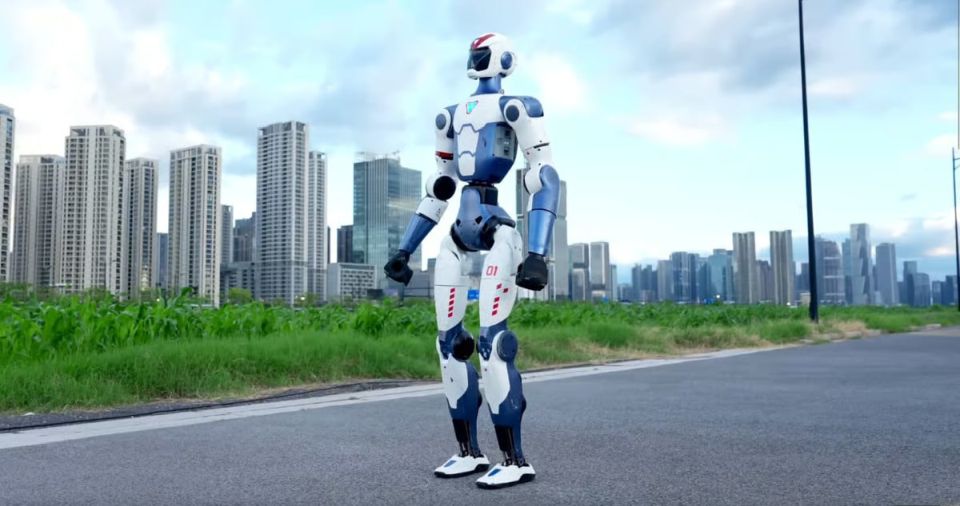
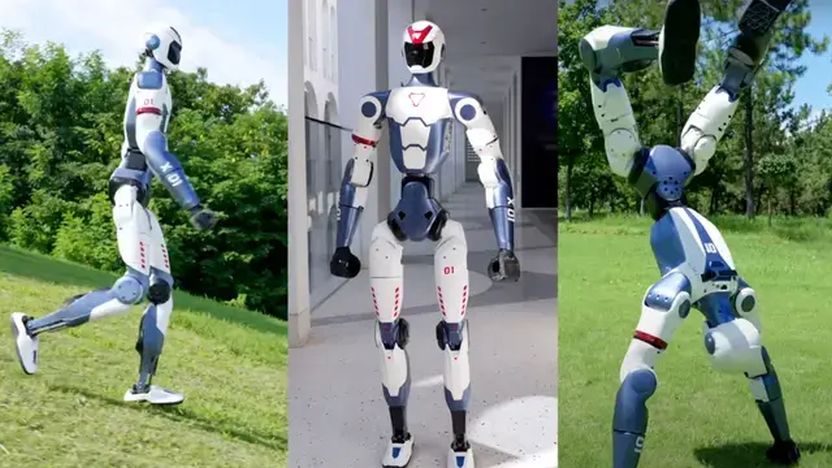
The new system pairs Unitree’s H2 humanoid robot with Nvidia’s Jetson Thor computing platform, bringing together AI models, simulation software, and robotics hardware in a package aimed at researchers and universities.
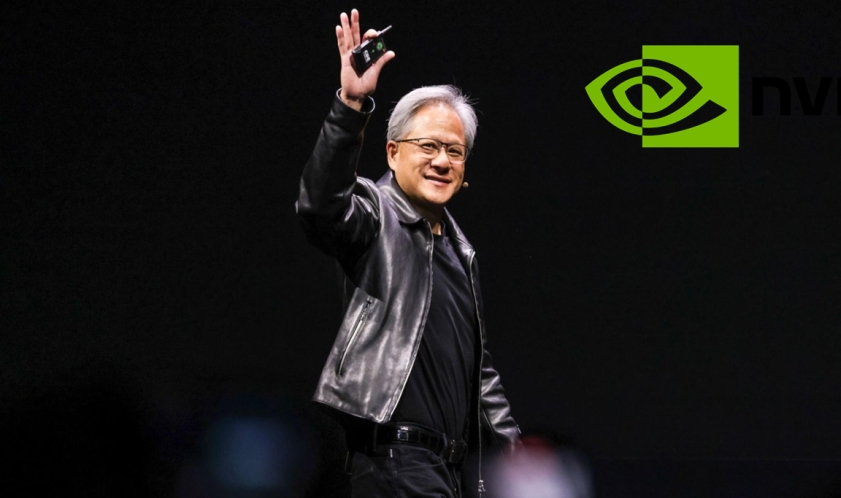
The announcement offers a glimpse into Nvidia’s next major bet. After becoming the dominant force behind generative AI infrastructure, the company is increasingly focused on what CEO Jensen Huang calls “physical AI,” a category that combines artificial intelligence with machines capable of interacting with the physical world, CNBC reported.
The new platform centers on Unitree’s nearly six-foot-tall H2 humanoid robot. The machine runs on Nvidia’s Jetson Thor hardware, which includes Blackwell GPUs that can process AI workloads directly on the robot. Nvidia’s Isaac GR00T humanoid AI models, simulation tools, and software stack are bundled into the system. Mechanical hands are supplied by Singapore-based Sharpa.
From AI Chips to Humanoid Robots
Speaking during his keynote presentation, Huang described the project as an effort to lower the barriers that have historically limited humanoid robotics research.
“Today, we’re announcing the Nvidia Isaac Root, a reference humanoid robot, all fully integrated, 25 degrees of freedom on each hand made by Sharpa, 31 degrees of freedom on the robot, six feet, 150 pounds, just like me,” Huang said.
“This platform runs the new Thor, and our entire software stack, data generation stack, data simulation stack, the runtime, all integrated into a robot that is designed for everyone to use,” he added.
“We built this for higher education and university researchers, because for them to build this is insanely hard to do.”
Why Nvidia Is Betting Big on Physical AI
The strategy mirrors Nvidia’s playbook in AI computing. CUDA became a foundational software layer for AI developers over the past decade. Nvidia appears to be pursuing a similar position in robotics by offering researchers a ready-made platform that combines hardware, software, simulation, and AI models.
Several research institutions have already signed on. According to Nvidia, the H2 Plus platform will be used by the Stanford Robotics Center, ETH Zurich, UC San Diego’s Advanced Robotics and Controls Laboratory, and Seattle-based Ai2. No Chinese research institutions were included in the initial group.
The announcement arrives at a pivotal moment for Unitree. The Chinese startup is seeking to raise 4.2 billion yuan, roughly $620 million, through a proposed listing on Shanghai’s STAR Market. The exchange is scheduled to review the company’s IPO application this week.
Unitree’s filing highlights how global demand for humanoid robots is beginning to take shape. More than 40% of the company’s revenue already comes from customers outside China, according to disclosures tied to the IPO process.
Rev Lebaredian, Nvidia’s vice president of physical AI simulation, said the upgraded H2 Plus humanoid robot will be available in October and can be purchased by anyone.
“It’s a move taking frontier humanoid research out of the hands of only the world’s largest tech companies and AI unicorns, and putting it in reach of every lab,” he said.
Humanoid robots remain in the early stages of commercialization. Companies such as Unitree and Norway-backed startup 1X are racing to build general-purpose machines capable of operating in human environments. Most deployments today remain limited to industrial settings and warehouses, where tasks are more controlled and safety risks are easier to manage.
Homes present a different challenge. Privacy concerns, safety requirements, reliability issues, and cost continue to impede mainstream adoption.
Still, Nvidia’s move signals where the company believes AI is headed next.
Huang has repeatedly argued that the next wave of AI growth will come from machines that can perceive, reason, and act in the physical world. Last month, he told investors that robotics could become one of Nvidia’s largest opportunities over the next five years. He has previously estimated that the physical AI market could eventually be worth tens of trillions of dollars.
For Nvidia, humanoid robots are no longer a research project on the horizon. They are becoming part of the company’s strategy today.