Venture Capital & Startup Funding Roundup, May 28, 2026
 Nickie Louise
Posted On May 28, 2026
Nickie Louise
Posted On May 28, 2026
The money is still going to AI, but today’s funding tells a more specific story than “AI is hot.” In the past 12 hours, the strongest signal was capital flowing toward companies that sit inside expensive, regulated, or operationally painful workflows: tax compliance, insurance, banking operations, oncology coordination, and investment-research data. Anthropic’s enormous Series H understandably dominates the headline count, but the rest of the day’s activity says the real fight has shifted from making models to owning the work those models can safely automate.
The second signal is concentration. Private markets are still willing to finance category leaders at eye-watering valuations, but only where buyers are already pulling product into production. Anthropic tied its new round directly to compute expansion and enterprise demand; Garner tied its financing to measurable healthcare spend reduction; and Daloopa tied its round to the need for auditable financial data in AI workflows. That is a different market from the 2021 era of broad thematic spraying. This one is narrower, more operational, and more impatient about proof.
The geographic spread also matters. This is a global brief by mandate, yet the capital in this window still skews heavily toward U.S.-based companies and U.S.-selling software infrastructure, with Dublin-based Fonoa the standout non-U.S. entry. That tells founders something uncomfortable but useful: even when startup funding is “global,” the fastest-moving capital is still clustering around companies that can sell into American enterprise budgets, healthcare systems, defense buyers, or hyperscaler-driven compute demand.
The Macro Environment: AI Moves From Model Builders to Workflow Owners
Crunchbase’s early read on the year already showed how extreme the capital concentration had become: global startup funding hit roughly $300 billion in the first quarter of 2026, with late-stage financings accounting for the overwhelming share of dollars. The day’s announcements fit that pattern almost perfectly. One giant round at the frontier-lab level set the tone, while the rest of the market funded companies trying to become the system-of-record layer beneath AI-driven work.
That matters because it changes how investors are underwriting risk. The winning pitch is no longer “we apply AI to X.” It is “we control the data, compliance trail, or operational choke point around X.” Fonoa is pairing fresh capital with a PwC platform acquisition to become tax infrastructure. Daloopa is selling source-linked financial data for AI agents. Saris is automating lender workflows inside the banking stack. Triomics is converting oncology records into usable, explainable actions inside clinical workflows. These are not generic software claims; they are ownership claims on bottlenecks.
There is also a public-market subtext to the day. Anthropic’s round looks less like a normal growth financing and more like a private-market balance-sheet build ahead of a likely IPO, with the company explicitly tying the raise to compute, partnerships, and scaled enterprise use of Claude. When private companies can raise tens of billions before listing, the public/private boundary starts to shift: venture capital behaves more like strategic capital allocation for industrial-scale infrastructure than classic startup finance.
Outside the mega-round, valuation signals remain aggressive, with investors believing speed compounds into market control. Corgi doubled its valuation to $2.6 billion only weeks after its prior round, and Garner’s move from a $1.35 billion valuation in February to $2.74 billion now shows how quickly buyers will reward strong revenue and distribution signals in markets with hard ROI. That does not mean every startup benefits. It means a narrower set of companies is pulling further away from the pack.
Today’s Funding Rounds
Anthropic raises $65 billion to finance compute, enterprise adoption, and an IPO-ready balance sheet

Anthropic founders
Anthropic, the company behind Claude, has climbed past OpenAI to become the world’s most valuable AI startup after announcing a staggering $65 billion Series H financing round, valuing the company at $965 billion.
Anthropic’s Series H is not just the largest round in today’s window. It is one of the clearest examples yet of frontier AI becoming an industrial-capex story. The company said the financing will fund safety and interpretability research, expand compute, and scale the products and partnerships behind Claude. That framing matters. This is not money raised to “find product-market fit.” It is money raised because product-market fit has already been established, and the next bottleneck is infrastructure.
Investors are backing Anthropic because it has managed to combine three things that rarely come together at this scale: enterprise adoption, premium pricing, and a credible compute supply chain. The company said run-rate revenue crossed $47 billion earlier this month, and both its February Series G and today’s Series H emphasized enterprise workloads, coding, and deep platform partnerships across Amazon, Google, and Microsoft channels. In practical terms, this is venture capital behaving like strategic industrial finance for a software company that increasingly looks like a future public utility for AI work.
Funding Details: Startup: Anthropic. Investors: Altimeter Capital, Dragoneer, Greenoaks, Sequoia Capital, Capital Group, Coatue, D1 Capital Partners, GIC, ICONIQ, XN, and a long list of institutional and strategic backers, including Micron, Samsung, and SK hynix. Amount Raised: $65 billion. Total Raised: At least $95 billion since February 2026’s Series G; Anthropic’s lifetime total is not fully laid out in the Series H announcement. Funding Stage: Series H. Funding Date: May 28, 2026. Headquarters: San Francisco, California. Sector: Frontier AI.
Fonoa raises $110 million to turn tax compliance into AI-native infrastructure
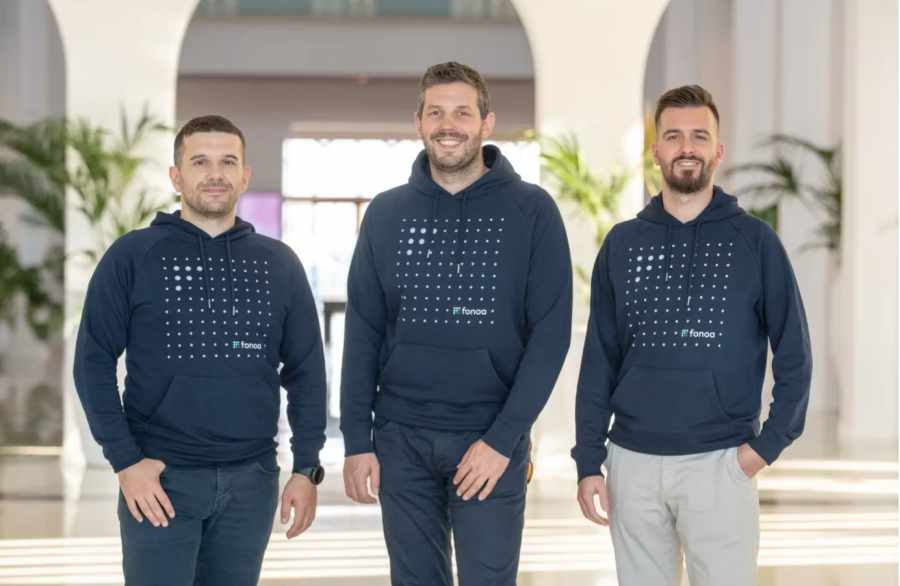
Fonoa’s round stands out because it pairs financing with an acquisition. The company is buying PwC’s Indirect Tax Edge platform while raising a $110 million Series C funding, a classic move by a company trying to become the operating layer for a complex function rather than just another point solution. Tax is one of the last major corporate systems still held together by fragmented tools and manual reconciliation. That makes it a real target for AI, but only if the company controls the workflow and the data model.
This is why investors care. Fonoa already supports tax determination across more than 190 jurisdictions and works with customers including Canva, Uber, Netflix, Nebius, and Booking.com. With the Edge acquisition, it is pushing beyond calculation and e-invoicing into the full indirect-tax lifecycle. That is a much stronger strategic position than selling a narrow automation product. It also shows where enterprise AI spending is going: toward boring, painful, global back-office systems that sit close to money movement and regulatory risk. Founders should pay attention to that. The high-multiple opportunity is often not in the visible interface layer, but in the compliance rails beneath it.
Corgi raises $106 million to expand AI-driven commercial insurance infrastructure
Corgi’s new Series B1 is one of the most revealing valuation stories of the day. The company announced a $106 million round at a $2.6 billion valuation only weeks after reporting a $160 million raise at a $1.3 billion valuation. That is an unusually sharp step-up even by current private-market standards, and it suggests investors are treating Corgi less like an insurtech distributor and more like a modern insurance infrastructure company with embedded underwriting and claims capabilities.
Why investors care is straightforward: insurance remains deeply manual, heavily regulated, and ill-suited to startups and newer categories of risk, including AI-related exposures. Corgi says it is building a full-stack platform rather than a broker overlay, and it said the new money will fund expansion into new commercial lines. The strategic wrinkle is that insurance is capital-intensive, which is why investors may tolerate rapid follow-on raises. The caution, however, is equally obvious. When valuations double in three weeks, scrutiny from LPs and later-stage buyers tends to follow. Today’s round is both a bullish operating signal and a reminder that venture markups are outpacing exit reality.
Garner Health raises $100 million to bring hard ROI to employer healthcare
Garner’s Series E is a clean example of how enterprise AI is being financed outside pure software infrastructure. The company helps employers and health plans steer patients toward higher-quality providers using large-scale healthcare data and incentive design. That sounds softer than a model or developer-tools story, but the business pitch is unusually concrete: Garner says its employer customers see an average 12% reduction in annual healthcare spend, and the company now works with almost 800 customers.
Investors are chasing two things here. First, healthcare remains one of the biggest cost pools in the economy, so even modest optimization is valuable. Second, Garner is not using AI as a vague personalization layer; it is using it to make physician-quality measurable and operational within benefit design. That makes the product harder to dismiss as a thin wrapper. The round also carries a strong valuation signal. Garner moved from a $1.35 billion valuation in February to $2.74 billion today, which tells you investors will still pay up aggressively in healthtech when data advantage, distribution, and revenue growth are already visible.
Observable Space raises $90 million to build vertically integrated orbital sensing and communications systems
Observable Space is one of the more strategically important rounds in the set because it blends commercial space infrastructure with defense-adjacent demand. The company was formed by merging telescope maker PlaneWave Instruments with space-data-application company OurSky, and its pitch is unusually direct: combine hardware and software so operators can get real-time insight into what is happening in orbit. That makes it relevant not only to commercial communications and sensing, but also to military space situational awareness.
The investor list reinforces that reading. Lux Capital led a $90 million Series A that was co-led by Upfront Ventures, Detroit Venture Partners, Island Green Capital, and RTX Ventures. Payload also reported that the company won a Space Force IDIQ contract worth up to $94 million, with $22 million already awarded in initial task orders. That combination matters. Venture investors are not only backing a concept; they are backing a company with early signs of procurement traction in a sector where technical capability and government demand can reinforce each other. Space, in other words, is once again being financed through dual-use logic rather than pure launch optimism.
Funding Details
- Startup: Observable Space
- Investors: Lux Capital, Upfront Ventures, Detroit Venture Partners, Island Green Capital, RTX Ventures, BRV Capital Management, and Fathom Fund
- Amount Raised: $90 million
- Total Raised: Not disclosed in the announcement reviewed for this report
- Funding Stage: Series A
- Funding Date: May 28, 2026
- Headquarters: U.S. operations in Los Angeles, California, and Michigan
- Sector: Space infrastructure
Reactor raises $59 million to build the infrastructure layer for real-time AI worlds
Reactor’s emergence from stealth matters because it sits one layer below the consumer AI demos that get most of the attention. The company is not pitching itself as a model lab. It is pitching itself as the infrastructure layer that makes real-time generative video and “world models” usable for developers at production scale. That is a meaningful distinction. As model capabilities improve, the companies that manage latency, orchestration, distribution, and developer access may capture disproportionate value.
There is also a talent signal here. Reactor was co-founded by the former technical leads on Apple Vision Pro, and its investors include Lightspeed, WndrCo, Amplify Partners, Sky9 Capital, FPV Ventures, and other backers, with AWS as a strategic cloud partner. That mix tells you how investors see the opportunity: less as “another generative video company” and more as a picks-and-shovels platform for the next wave of interactive media, robotics, and physical-AI applications. If world models become a real software category, the companies that abstract deployment complexity away from developers could become the toll collectors.
Funding Details
- Startup: Reactor
- Investors: Lightspeed Venture Partners, WndrCo, Amplify Partners, Sky9 Capital, FPV Ventures, Abstract Ventures, and additional investors
- Amount Raised: $59 million
- Total Raised: $59 million disclosed
- Funding Stage: Undisclosed venture round
- Funding Date: May 28, 2026
- Headquarters: San Francisco, California
- Sector: AI infrastructure and developer tools
Daloopa raises $47 million to become the audit layer behind AI finance
Daloopa’s new Series C is one of the cleanest examples of where enterprise AI spending is going in finance. The company is not selling chat for finance teams. It is selling source-linked, structured financial data that AI systems can actually trust. That sounds incremental until you consider the alternative: web-scraped, inconsistent, low-auditability inputs used in workflows where modeling errors can move real money. In that setting, the data layer is the product.
What makes the round strategically important is its timing. Daloopa said the money will help it expand as firms move AI from experimentation into production. It also highlighted connectors to ChatGPT, Claude, Perplexity, and Rogo, as well as cloud-native delivery via Snowflake, Databricks, and AWS. This is a strong signal that the next stage of financial AI will look less like standalone copilots and more like embedded, verifiable workflows plugged into the tools analysts already use. Investors, including Brighton Park Capital and Squarepoint, are effectively betting that in finance, trust will sit upstream of interface polish.
Funding Details
- Startup: Daloopa
- Investors: Brighton Park Capital, Squarepoint Capital, Touring Capital, and Nexus Venture Partners
- Amount Raised: $47 million
- Total Raised: Over $100 million
- Funding Stage: Series C
- Funding Date: May 28, 2026
- Headquarters: New York, New York
- Sector: Financial data infrastructure
Saris raises $28.8 million to automate bank and credit-union workflows with AI agents
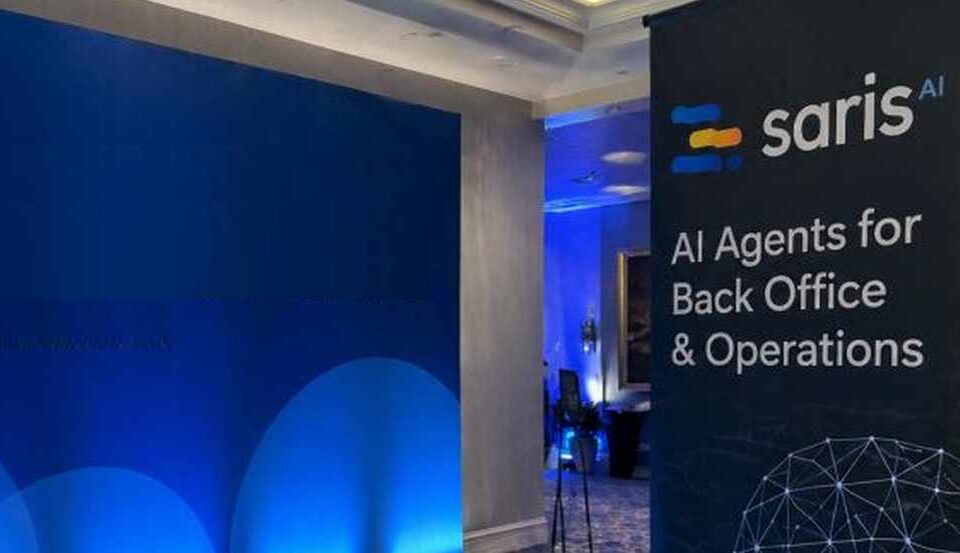
Saris, an AI startup that builds agentic workflow software for banks and credit unions, announced Thursday it has raised $28.8 million in Series A funding led by 8VC. The round included participation from Audacious Ventures, Homebrew, Btech Consortium, and Service Ventures.
Saris may not be the largest round of the day, but it is one of the more instructive. The company is applying agentic workflow automation to banks and credit unions, where back-office modernization has often lagged because institutions are boxed in by legacy core systems, regulatory oversight, and small IT team realities. Saris is going after that exact pain point rather than trying to replace the whole bank stack. That is usually the smarter wedge.
The metrics in the release explain why 8VC led the Series A. Saris says its workflows can automate up to 70% of consumer, mortgage, and commercial-lending tasks and reduce costs by up to 35%, while integrating with partners such as Fiserv, Encompass, and MeridianLink. Investors are increasingly rewarding this type of enterprise AI pitch: not open-ended transformation, but measurable throughput gains inside ugly, incumbent-heavy workflows. For founders, that is the lesson. Better to automate a painful slice of regulated work than to promise to reinvent the whole category in one shot.
Funding Details
- Startup: Saris
- Investors: 8VC, Audacious Ventures, Homebrew, Btech Consortium, and Service Ventures
- Amount Raised: $28.8 million
- Total Raised: Not disclosed in the announcement reviewed for this report
- Funding Stage: Series A
- Funding Date: May 28, 2026
- Headquarters: San Francisco, California
- Sector: Banking software and workflow automation
Countable Labs raises $26 million to push single-molecule PCR into clinical and industrial workflows
Countable Labs is a reminder that not every important round in an AI-heavy market needs to be explicitly AI-branded. The company is building Countable PCR, a single-molecule PCR technology that it says improves on digital PCR by delivering higher sensitivity and precision without the usual statistical correction and calibration complexity. In a market full of software raises, this is deep life-sciences infrastructure: a tools company trying to change what labs can measure in the first place.
That matters because clinical and biotech tooling tends to get financed only when investors believe the platform can support multiple high-value applications. Countable says the round will support cell and gene therapy, minimal residual disease testing, biomarker validation, vaccine quality control, and the broader commercialization of molecular diagnostics. ARCH Venture Partners leading, with F-Prime and Primer participating, reinforces the point. This is a classic platform-to-applications financing in biotech: back the underlying measurement breakthrough first, then expand into a stack of markets that all need the same core technical advantage.
Funding Details
- Startup: Countable Labs
- Investors: ARCH Venture Partners, F-Prime Capital, and Primer Ventures
- Amount Raised: $26 million
- Total Raised: Not disclosed in the announcement reviewed for this report
- Funding Stage: Undisclosed financing round
- Funding Date: May 28, 2026
- Headquarters: Palo Alto, California
- Sector: Genomics and molecular diagnostics
Triomics raises $22 million to bring oncology-specific AI into care delivery and clinical research

The New York-based oncology AI startup Triomics said Thursday that it has raised $22 million in Series B funding led by Battery Ventures, with participation from existing investors Nexus Venture Partners, Lightspeed, and Y Combinator, as well as strategic backers Oncology Ventures and Precision Health Informatics, a wholly owned subsidiary of Texas Oncology. The latest round brings Triomics’ total funding to more than $36 million.
Triomics builds AI software designed to help cancer centers organize and operationalize complex clinical information for both patient care and research workflows. The company says the new funding will help expand adoption across health systems, oncology networks, and life sciences organizations.
The fresh capital will also go toward growing Triomics’ AI, engineering, and forward-deployed teams, while advancing its AI agents focused on clinical care and oncology research.
Triomics is another deal that fits the day’s deeper pattern: investors funding AI only where it is tied to hard domain complexity and verifiable outcomes. Oncology is exactly that kind of market. Patient histories are messy, longitudinal, and full of narrative-heavy documents that clinicians and research coordinators still process manually. Triomics is building AI agents that read the full oncology record and turn unstructured information into source-backed, explainable outputs inside care and trial workflows. That is a much stronger value proposition than summarization alone.
The company says it is already working with organizations including Memorial Sloan Kettering, MD Anderson, Yale Cancer Center, Smilow, Mount Sinai, and Texas Oncology. It also claims to have published results showing improved trial matching and enrollment, alongside materially lower chart-review time. Investors are paying for that mix of clinical credibility and operational leverage. Just as important, the company serves both provider workflows and life-sciences trial operations, giving it two revenue streams instead of one. In a healthcare market that often punishes narrow products, that optionality matters.
What Today’s Funding Activity Reveals
The clearest pattern is that AI capital is moving down-stack into ownership of messy work. Anthropic and Reactor sit closer to the model and infrastructure layers, while most of the rest of the list operates in regulated enterprise workflows: tax, healthcare, insurance, finance, and banking. Investors are telling founders that the best way to defend an AI business is to own the operating context around models, not just the model interface itself.
Healthcare and finance-adjacent software were especially dense. Garner, Countable Labs, and Triomics show three very different ways money is flowing into healthcare: cost navigation, measurement technology, and clinical workflow AI. Fonoa, Daloopa, and Saris show the finance side of the same thesis: workflows that are slow, manual, hard to audit, and expensive to get wrong. These are attractive markets because customers already understand the pain and can often justify purchases in labor savings, better outcomes, or lower error rates.
Investor behavior also looks disciplined in a specific way. Brand-name firms are still writing large checks, but the companies getting funded mostly have one or more of the following: real enterprise customers, embedded compliance or data advantages, procurement traction, or measurable ROI. Even Observable Space, the round that looks most like classic deep-tech speculation at first glance, came with a Space Force contract signal. The market is not “risk-off.” It is “proof-first.”
Finally, valuation inflation remains alive, but it is selective. Anthropic, Corgi, and Garner all posted valuation signals that would have looked extreme even a year ago. The lesson is not that everything is repricing upward. It is that a narrow group of companies with strong momentum is pulling capital into fewer, larger, and faster follow-on rounds, while the rest of the market still has to earn every dollar.
Comparative Funding Table
| Startup | Amount Raised | Sector | Funding Stage | Lead Investors | Country |
|---|---|---|---|---|---|
| Anthropic | $65B | Frontier AI | Series H | Altimeter, Dragoneer, Greenoaks, Sequoia | United States |
| Fonoa | $110M | Tax infrastructure | Series C | Headline | Ireland |
| Corgi | $106M | Insurance infrastructure | Series B1 | TCV | United States |
| Garner Health | $100M | Healthcare technology | Series E | Index Ventures | United States |
| Observable Space | $90M | Space infrastructure | Series A | Lux Capital and co-leads Upfront Ventures, Detroit Venture Partners, Island Green Capital, RTX Ventures | United States |
| Reactor | $59M | AI infrastructure | Undisclosed | Lightspeed Venture Partners | United States |
| Daloopa | $47M | Financial data infrastructure | Series C | Brighton Park Capital | United States |
| Saris | $28.8M | Banking workflow automation | Series A | 8VC | United States |
| Countable Labs | $26M | Genomics and diagnostics | Undisclosed | ARCH Venture Partners | United States |
| Triomics | $22M | Oncology AI | Series B | Battery Ventures | United States |
Strategic Takeaways for Founders and Investors
The first takeaway for founders is simple: sell AI where the cost of delay, error, or compliance failure is already painfully obvious. Tax, insurance, banking operations, oncology coordination, and healthcare spend all fit that profile. The companies that won today were not pitching novelty. They were pitching relief from expensive friction.
The second takeaway is that defensibility increasingly comes from auditability and workflow control, not chatbot fluency. Daloopa’s source-linked data, Fonoa’s full tax-lifecycle stack, Triomics’ explainable oncology outputs, and Garner’s quality-and-incentive engine all point in the same direction. If your AI product cannot show its work, fit into procurement, and survive compliance review, it will struggle to justify premium pricing.
For investors, today’s window reinforces a capital-allocation rule that looks increasingly durable in 2026: the highest-conviction bets are either at the frontier-lab scale or in domain-specific infrastructure that becomes hard to dislodge once embedded. Reactor, Fonoa, Daloopa, and Saris all fit that pattern in different ways. The weaker position is the middle one: generic AI applications without proprietary context, procurement hooks, or a defensible data layer.
There is also a warning inside today’s optimism. Rapid valuation jumps can be rational when demand is real, but they can also compress future upside if execution slips. Corgi’s step-up, Garner’s repricing, and Anthropic’s near-trillion-dollar valuation show how quickly the market is rewarding momentum. That creates opportunity for leaders, but it also raises the bar for what comes next: growth has to remain visible, margins have to improve, and IPO windows have to stay open.
Conclusion
Today’s funding activity was not a random mix of rounds. It was a map of where venture capital sees durable value in mid-2026: frontier model scale at the very top, and workflow ownership everywhere else. The money went to companies trying to become the infrastructure beneath intelligent work — the tax system, the data layer, the underwriting stack, the oncology co-pilot, the banking back office, the orbital sensing platform. That is a more mature, more demanding venture market than the one founders got used to in earlier AI cycles.
If there is one market-level insight worth carrying forward, it is this: capital is no longer chasing AI as a category. It is chasing control of expensive decisions. The founders who win from here will be the ones who can prove their software not only generates output but also moves money, reduces labor, speeds approval, improves outcomes, or secures infrastructure in ways customers can measure. That is where check sizes are increasing, and the next set of category leaders is being financed.
Open questions and limitations
This roundup was built strictly from funding announcements and reputable reporting published within the past 12 hours at the time of review. A few larger rounds visible elsewhere on May 28 fell outside that cutoff and were intentionally excluded. Some companies in this window did not disclose cumulative funding, valuation, or an exact round label; where that was the case, the report notes the omission rather than guessing.
Trending Now

Top Tech News Today, May 5, 2026