Venture Capital & Startup Funding Roundup, May 27, 2026
 Nickie Louise
Posted On May 27, 2026
Nickie Louise
Posted On May 27, 2026

It’s Tuesday, May 26, 2026. The last 12 hours did not look like a broad rebound in startup financing. They looked like a market that is still intensely selective, still tilted toward large conviction bets, and still obsessed with the same underlying question: where are the bottlenecks in the AI economy, and who is building the tools to relieve them? In this window, the biggest check went to Cognition’s AI coding stack, but the more revealing action sat beneath that headline — financing for inference efficiency, enterprise buying infrastructure, fusion power, binary-level software verification, warehouse-grade spatial intelligence, and cancer diagnostics.
What investors are signaling is not “AI at any price.” It is something narrower and more mature: capital is flowing to companies that either monetize proven enterprise demand, reduce compute costs, harden the software supply chain, or solve expensive operational pain points in healthcare and industry. Even the biotech rounds in this batch are milestone-oriented rather than speculative science bets, with ClearNote pushing early cancer detection toward wider commercialization and Secretome moving a defined Duchenne-associated cardiomyopathy program forward with specialist backing.
The other signal is who is writing checks. This window is full of corporate and quasi-strategic capital: Dexcom, Blue Cross Blue Shield of Alabama, Amgen Ventures, AMD Ventures, CoreWeave, NVentures, Rockwell Automation’s venture arm, the NATO Innovation Fund, and U.S. Innovative Technology Fund. That matters. When buyers, channel partners, government-adjacent funds, and infrastructure incumbents show up on cap tables, the round serves as both financing and market validation.
The Macro Environment: Capital Chases Bottlenecks
The broader venture backdrop helps explain why today’s funding mix looks the way it does. Crunchbase reported that global venture funding hit $300 billion in the first quarter of 2026, with AI companies taking $242 billion, or 80% of the total. Just four companies — OpenAI, Anthropic, xAI, and Waymo — accounted for nearly 65% of all global venture investment in the quarter. That is not a diversified market. It is a concentrated one, and it encourages investors below the mega-round tier to back the picks, shovels, controls, and trust layers sitting around the AI buildout rather than chase generic application exposure.
Public markets are reinforcing that behavior. Reuters reported today that AI-related capital expenditure is expected to reach roughly $800 billion this year and $1.12 trillion in 2027, while Alphabet, Microsoft, and Meta have all signaled extraordinary spending levels to keep up in cloud and AI infrastructure. Alphabet’s Google Cloud revenue rose 63% to $20 billion in Q1, and the company lifted its 2026 capex forecast to $180 billion-$190 billion. Microsoft said its capital outlay is heading toward $190 billion, and Meta raised its own 2026 capex guide to $125 billion-$145 billion. When the public market leaders spend like this, private investors follow the supply chain and the efficiency stack.
That is why rounds like Tensormesh, Capchase, RevEng.AI, and Slamcore matter beyond their headline amounts. Tensormesh promises to reduce redundant GPU work. Capchase helps vendors close expensive enterprise deals when buyer budgets are under pressure. RevEng.AI addresses a risk created by AI-generated code and opaque third-party software. Slamcore turns manual industrial fleets into machine-vision data systems without forcing customers to rewire facilities. These are not vanity products. They are attempts to make AI deployment cheaper, faster, safer, or easier to buy.
The early-stage picture is also tougher than the raw dollar totals suggest. Crunchbase noted yesterday that seed rounds are getting larger, but companies are taking longer to reach Series A and a smaller share is making it there at all; the bar for a credible Series A in AI now often looks more like $2 million to $4 million in ARR than the lower thresholds that once worked. That helps explain why today’s financings skew toward companies with visible commercial traction, sponsorship by specialist investors, or strategic distribution partners.
Funding Rounds in Focus
Cognition raises more than $1 billion to turn AI coding into enterprise operating infrastructure
Cognition, the company behind Devin and Windsurf, announced that it has raised more than $1 billion at a $26 billion valuation, led by Lux Capital, General Catalyst, and 8VC, with participation from a long list of existing investors and new backers including Ribbit Capital, Atreides, and Layer Global. The company said enterprise usage has grown more than 10x since the start of the year and that run-rate revenue has reached $492 million, while TechCrunch reported the round at a $25 billion pre-money valuation.
Why investors care is straightforward: this is no longer a pure model demo story. Cognition is selling into major enterprises, government customers, global systems integrators, and banks, and doing so at a pace that suggests AI coding is shifting from developer experimentation to budgeted platform spending. In the current market, that distinction matters. Investors are still willing to write huge checks for AI, but only when there is evidence that adoption is broad, recurring, and embedded in real software-delivery workflows. Cognition’s customer list and revenue trajectory make it one of the clearest examples of that threshold being met.
The strategic implication is that AI developer tooling is becoming a control point, not just a feature. If a platform can own the workflow from code generation to testing, review, and multi-agent execution, it occupies a much more durable position than a single model wrapper. That is why this round matters beyond its size: it suggests the market is starting to reward operational depth and enterprise distribution in AI coding, not merely novelty.
Funding Details
Capchase secures more than $200 million to turn vendor financing into a software layer for enterprise sales
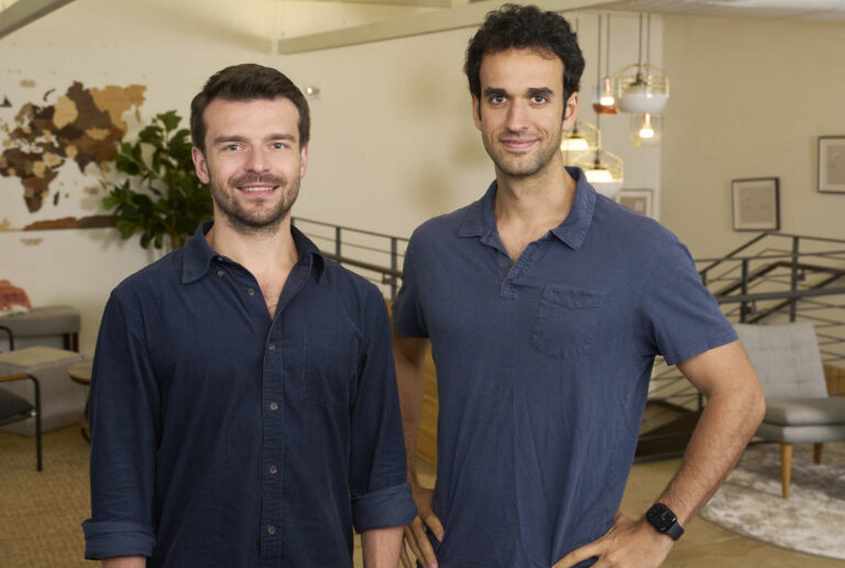
Capchase announced more than $200 million in incremental funding to scale its vendor-financing infrastructure, while Crunchbase reported that the package consists of $26 million in equity and a $174 million credit facility. The equity was led by 01 Advisors with participation from Caffeinated Capital, Thomvest Ventures, Scifi VC, Bling Capital, Invesco, and others. Capchase says it embeds financing directly into enterprise sales tools and can decide 97% of lending applications in under 30 seconds.
This round is one of the most revealing in the batch because it says something sharp about enterprise demand right now: even when software budgets and infrastructure needs remain high, buyers want flexible payment terms, and CFOs want to preserve cash. Capchase is betting that financing is no longer an adjacent service; it is part of closing the deal. That is especially relevant in a market where expensive cybersecurity, hardware, and software contracts increasingly collide with tighter procurement controls.
For founders, the lesson is that workflow control can matter as much as the underlying product. Capchase is not winning by inventing demand for financing. It is winning by collapsing the friction around it. In a rate-sensitive enterprise market, that can be a stronger wedge than yet another software feature. For investors, it is also a sign that blended capital structures — debt plus software-led origination — are becoming more attractive where repayment visibility is better than in consumer fintech.
Funding Details
Startup: Capchase
Investors: 01 Advisors, Caffeinated Capital, Thomvest Ventures, Scifi VC, Bling Capital, Invesco, and others
Amount Raised: More than $200 million
Total Raised: Not disclosed in the current announcement
Funding Stage: Debt and equity growth financing
Funding Date: May 27, 2026
Headquarters: New York, United States
Sector: Fintech/enterprise sales infrastructure
Thea Energy raises $100 million to build scalable fusion power plants
Thea Energy announced an oversubscribed $100 million Series B led by Thomas Tull’s U.S. Innovative Technology Fund, with participation from General Innovation Capital Partners, Linse Capital, Calm Ventures, Climate Capital, Divergent Capital, Emerald Technology Ventures, Gaingels, Idemitsu Kosan, Overlay Capital, Timescale Ventures, Whatif Ventures, and existing backers including Hitachi Ventures and Lowercarbon Capital. The company said the capital will expand magnet manufacturing, add a second Northern New Jersey facility, and fund siting and construction work for Eos, its large-scale integrated stellarator. TechCrunch reported that the round brings total private investment to $130 million.
This is not just a climate-tech round. It is an energy-infrastructure and national-capacity round landed in the middle of an AI power buildout. Reuters noted today that AI capex is on track to reach roughly $800 billion this year, and hyperscalers continue to spend at rates that are changing the economics of power, cooling, and grid access. In that setting, fusion startups are no longer pitched solely as decarbonization stories; they are increasingly framed as long-duration solutions to industrial- and compute-scale energy demand.
Thea’s pitch is unusually manufacturing-driven. Instead of treating fusion as a heroic physics exercise alone, it seeks to simplify stellarator design by shifting complexity from bespoke 3D magnet fabrication to software-defined control. That does not make the company low-risk, but it does give investors a cleaner argument for why this architecture might be easier to build, iterate on, and maintain than rival approaches. In a sector where engineering elegance has often lost to manufacturing pain, that distinction is what made this round one of the day’s most strategically important.
Funding Details
Startup: Thea Energy
Investors: U.S. Innovative Technology Fund, General Innovation Capital Partners, Linse Capital, Calm Ventures, Climate Capital, Divergent Capital, Emerald Technology Ventures, Gaingels, Idemitsu Kosan, Overlay Capital, Timescale Ventures, Whatif Ventures, and existing investors including Hitachi Ventures and Lowercarbon Capital
Amount Raised: $100 million
Total Raised: $130 million in private investment
Funding Stage: Series B
Funding Date: May 27, 2026
Headquarters: Kearny, United States
Sector: Fusion energy/energy infrastructure
ClearNote Health secures $52 million in funding to scale early cancer detection

ClearNote Health announced the close of a $52 million Series D financing to support commercial expansion, clinical study execution, operational scale-up, and product development across its Avantect early cancer detection tests and Virtuoso epigenomics platform. The round was led by founding investor Mattias Westman and an unnamed global long-only active manager, with participation from Sandy Weill, co-founder Stephen Quake, a Seattle-based family office, and other U.S. and international institutional investors. The company said total funding now exceeds $185 million.
This round matters because early cancer detection remains one of the hardest areas in diagnostics to finance credibly. ClearNote is not selling a vague AI-meets-biology ambition; it is trying to commercialize blood-based tests in high-risk populations and has already secured inclusion for its multi-cancer detection test in the National Cancer Institute’s Vanguard Study. That does not eliminate clinical or reimbursement risk, but it does move the company into a more serious tier of validation.
Investors also appear to be rewarding a structure they can underwrite: a diagnostics company with a clear commercial product line, a known scientific founder lineage from Stanford, and an AI-plus-bioinformatics platform that can serve both testing and drug-development use cases. In a cautious private market, that combination — clinical relevance plus platform optionality — is far more financeable than broad platform claims with no near-term path to revenue.
Funding Details
Startup: ClearNote Health
Investors: Mattias Westman, an unnamed global long-only active manager, Sandy Weill, Stephen Quake, a Seattle-based family office, and other institutional investors
Amount Raised: $52 million
Total Raised: More than $185 million
Funding Stage: Series D
Funding Date: May 27, 2026
Headquarters: San Diego, United States
Sector: Biotechnology/oncology diagnostics
Secretome Therapeutics raises $30 million in funding to move a focused Duchenne cardiomyopathy program forward
Secretome Therapeutics announced a $30 million Series A financing from RA Capital Management, which was the sole investor in the round. The company said the capital will support operations and continued development of STM-01, its neonatal cardiac progenitor-cell-derived therapy for Duchenne muscular dystrophy-associated cardiomyopathy and other rare cardiomyopathies, with the goal of advancing toward pivotal Phase 2 and Phase 3 development.
There are two notable signals here. First, specialist life sciences capital is still willing to move decisively when the thesis is narrow, the disease burden is clear, and the medical need is not in doubt. Second, sole-investor rounds from firms like RA Capital can be a powerful market signal because they compress diligence, governance, and milestone-setting into a tighter package than a broad syndicate often can.
From a strategic standpoint, this is a reminder that biotech financing is not dead; it is just more focused. Today’s market rewards programs that can tell investors exactly what inflection point the new money is meant to reach. Secretome’s pitch is not platform sprawl. It is one lead program, one defined patient problem, and one highly experienced healthcare investor willing to fund the next leg.
Funding Details
Startup: Secretome Therapeutics
Investors: RA Capital Management
Amount Raised: $30 million
Total Raised: Not disclosed beyond the current round
Funding Stage: Series A
Funding Date: May 27, 2026
Headquarters: Plano, United States
Sector: Biotechnology/cell therapy
Ember LifeSciences boosts its Series A to $27 million to modernize pharmaceutical cold-chain logistics
Ember LifeSciences announced new strategic investments from Amgen Ventures and TDF Ventures, bringing its Series A funding to $27 million. The company tied the financing to broader commercial rollout of Ember Cube 2, its reusable, modular cold-chain platform for biopharma distribution, and said its existing customers and investors include CVS Health, Cardinal Health, Chartwell, and USADA. The company did not disclose the exact incremental amount added in today’s extension.
This is one of the more understated yet interesting rounds in the window because it targets a pain point that will become more valuable as biologics, cell therapies, and temperature-sensitive medicines capture a larger share of healthcare spending. Investors are not funding a consumer gadget spinoff here; they are funding logistics infrastructure for a market that loses billions annually to temperature excursions. The fact that Amgen’s venture arm is participating sharpens the message: pharma buyers want more control over distribution reliability.
For founders, Ember is a useful case study in how strategic capital thinks. If your product reduces waste, delivery risk, or compliance exposure within a large regulated supply chain, your buyer may also become your investor. That is often a stronger validation signal than a generalist fund leading the round.
Funding Details
Startup: Ember LifeSciences
Investors: Amgen Ventures, TDF Ventures; prior Series A led by Sea Court Capital
Amount Raised: Series A now totals $27 million
Total Raised: $27 million in Series A funding disclosed to date
Funding Stage: Strategic Series A extension
Funding Date: May 27, 2026
Headquarters: Los Angeles, United States
Sector: Healthcare logistics / cold-chain infrastructure
Signos raises $20 million in funding to push glucose biosensing deeper into weight management
Signos announced a $20 million funding round with investment from GV, Dexcom, and Blue Cross Blue Shield of Alabama. The company positions itself as the maker of the first FDA-cleared, over-the-counter glucose monitoring system for weight management, and said Dexcom will distribute the Signos system through Stelo.com. Signos also said it has grown 10-fold over the past six months.
This round sits at the intersection of consumer health, payer economics, and medical-device distribution. The core thesis is that the GLP-1 market does not end at the point of prescription. Signos is selling a data layer that can help users maintain outcomes and enable payers and partners to think about metabolic health with greater visibility. Dexcom’s participation matters because it is both a validation of the product category and a distribution unlock. Blue Cross Blue Shield of Alabama’s involvement matters because it hints that payers see weight-management infrastructure as a cost-control tool, not just a wellness perk.
Investors are effectively betting that continuous glucose monitoring can become part of a broader stack of behaviors and outcomes for non-diabetic populations. If that thesis works, Signos is not just a subscription app. It serves as a category bridge among consumer engagement, device distribution, and payer reimbursement logic.
Funding Details
Startup: Signos
Investors: GV, Dexcom, Blue Cross Blue Shield of Alabama
Amount Raised: $20 million
Total Raised: Not disclosed in the current announcement
Funding Stage: Funding round; stage not disclosed
Funding Date: May 27, 2026
Headquarters: Palo Alto, United States
Sector: Healthtech / metabolic care
Tensormesh raises $20 million to cut inference waste before enterprises buy more GPUs
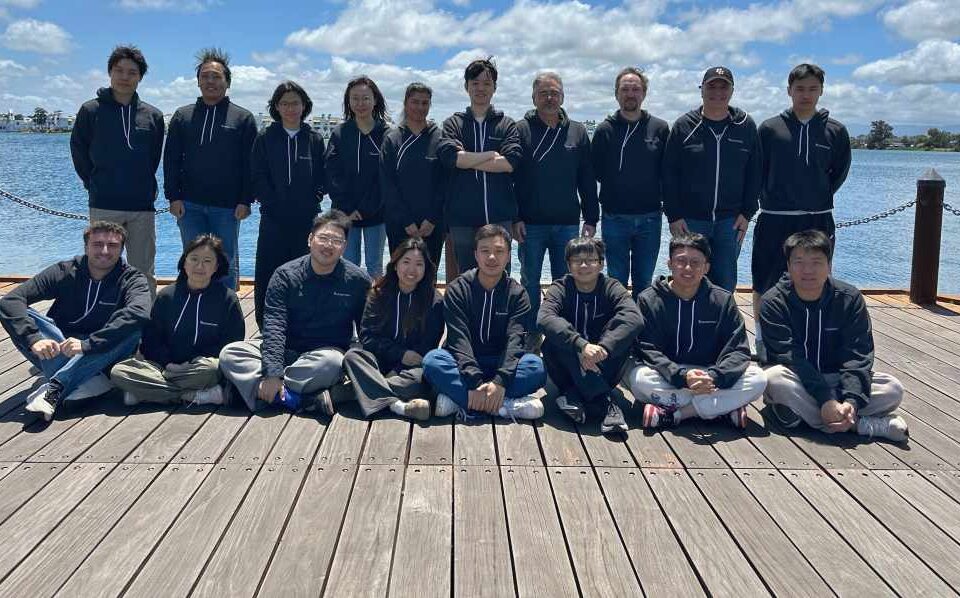
Tensormesh announced $20 million in new funding from AMD Ventures, CoreWeave, NVentures, Valley Capital Partners, and Laude Ventures, extending its seed round and bringing total funding to $24.5 million. The company says its inference platform uses KV caching to store and reuse computed results, which it claims can reduce latency and GPU spend by up to 10x. The simultaneous launch of Tensormesh Inference into general availability makes the round more than a financing event; it is also a commercial go-to-market signal.
This is a textbook “AI second-order” investment. Instead of funding yet another application built on costly inference, investors are backing software that tries to shrink the cost base of inference itself. That matters in a market where hyperscalers and cloud providers are spending at historic levels on compute. When AMD, CoreWeave, and NVIDIA’s venture arm all appear in the same round, the message is clear: performance-per-dollar is now a board-level issue across the stack.
The strategic implication for founders is blunt. If your AI company can save GPU cycles rather than merely consume them, financing gets easier. Infrastructure buyers increasingly want software leverage before they commit to more capex. Tensormesh is selling that leverage.
Funding Details
Startup: Tensormesh
Investors: AMD Ventures, CoreWeave, NVentures, Valley Capital Partners, Laude Ventures
Amount Raised: $20 million
Total Raised: $24.5 million
Funding Stage: Seed extension
Funding Date: May 27, 2026
Headquarters: San Francisco, United States
Sector: AI infrastructure / inference optimization
RevEng.AI raises $15 million to verify AI-generated software at the binary level
RevEng.AI announced a $15 million Series A led by the NATO Innovation Fund, with participation from Sands Capital, In-Q-Tel, IQ Capital, and Episode One. SecurityWeek reported that the round brings total funding to $19.5 million and described the company as London-based. RevEng says its platform analyzes compiled software binaries without needing access to source code, aiming to detect hidden vulnerabilities, backdoors, malicious functionality, and suspicious changes before software is deployed.
This is arguably the most geopolitically telling round in the batch. When NATO’s innovation arm and In-Q-Tel both show up in a software-security financing round, the market is saying that software integrity is now as much a state-capacity issue as an enterprise IT problem. The rise of AI-generated code increases output, but it also increases verification pressure. RevEng’s bet is that the only thing that ultimately matters is the binary artifact that runs in production.
That framing matters for founders in cybersecurity. The next wave of security spending is shifting away from generic posture management and toward systems that can verify trust at deployment time, across closed-source and third-party software, as well as internally built code. In that sense, RevEng is not merely a security tool. It is part of the control plane for AI-era software supply chains.
Funding Details
Startup: RevEng.AI
Investors: NATO Innovation Fund, Sands Capital, In-Q-Tel, IQ Capital, Episode One
Amount Raised: $15 million
Total Raised: $19.5 million
Funding Stage: Series A
Funding Date: May 27, 2026
Headquarters: London, United Kingdom
Sector: Cybersecurity/software supply chain security
Slamcore raises $14 million to make warehouses safer and more machine-readable
Slamcore announced a $14 million funding round backed by ROKStar Ventures, a subsidiary of Rockwell Automation, as well as Toyota Ventures, Interwoven Ventures, MMC Ventures, Amadeus Capital Partners, and IP Group. The company said total funding has now reached $40 million and that its products are deployed across more than 30 facilities in Europe and North America. Slamcore uses stereo cameras and visual AI to track industrial vehicles without GPS, beacons, or facility modifications.
This is a physical-AI round disguised as industrial software. Yes, the immediate value proposition is safety and fleet visibility on factory and warehouse floors. But the longer-term investor appeal is the data. Every deployment teaches the system how real facilities behave, how vehicles move, and where the edge cases sit. In a market racing to build physical AI, those operating datasets are valuable because they are hard to fake and expensive to gather.
Rockwell and Toyota’s presence also matters because it ties Slamcore to industrial incumbents that understand how hard these selling environments are. That kind of backing can accelerate real-world adoption far more effectively than a slide deck on the robotics market size. In today’s market, investor appetite is strongest where there is a clear line from product to deployment to defensible data. Slamcore fits that pattern well.
Funding Details
Startup: Slamcore
Investors: ROKStar Ventures, Toyota Ventures, Interwoven Ventures, MMC Ventures, Amadeus Capital Partners, IP Group
Amount Raised: $14 million
Total Raised: $40 million
Funding Stage: Funding round; stage not disclosed
Funding Date: May 27, 2026
Headquarters: London, United Kingdom
Sector: Robotics / industrial spatial intelligence
What Today’s Funding Activity Reveals
The clearest pattern is that capital is moving toward force multipliers rather than broad optimism. The winners in this window either help enterprises produce software faster, buy technology more easily, run AI more cheaply, secure code more confidently, or operate physical and healthcare systems with less waste and more visibility. That is a more disciplined market than the one that backed generic AI wrappers two years ago, and it is more consistent with the broader concentration patterns Crunchbase has documented through 2026.
A second pattern is investor specialization. Corporate and strategic investors are not showing up as decorative logos. They are acting as proxies for demand. Dexcom validates distribution. Amgen validates pharma cold-chain pain. CoreWeave, AMD, and NVentures validate inference efficiency as a real infrastructure problem. Rockwell validates warehouse deployment demand. NATO Innovation Fund and In-Q-Tel validate that software verification has crossed into national-security territory.
The geographic picture is also telling. Despite the user’s request for a global scan, the most material disclosed rounds in this 12-hour window are overwhelmingly U.S.-based, with the U.K. contributing two meaningful rounds in cyber and industrial spatial intelligence. That lines up with Crunchbase’s finding that U.S.-based companies captured 83% of global venture funding in Q1 2026. In other words, even when the themes are global, the dollar gravity is still heavily American.
Finally, today’s mix reinforces a barbell market. At one end sit outsized late-stage AI rounds like Cognition, justified by visible revenue and enterprise penetration. At the other end sit focused growth or early-stage financings where the company can point to a specific bottleneck and a specific milestone the new money will address. The hollow middle — companies without extreme scale or sharpened milestone clarity — remains the hardest place to raise.
Comparative Funding Table
| Startup | Amount Raised | Sector | Funding Stage | Lead Investors | Country |
|---|---|---|---|---|---|
| Cognition | Over $1B | AI developer tools/enterprise software | Late-stage venture | Lux Capital, General Catalyst, 8VC | United States |
| Capchase | $200M+ | Fintech/enterprise sales infrastructure | Debt + equity growth financing | 01 Advisors | United States |
| Thea Energy | $100M | Fusion energy/energy infrastructure | Series B | U.S. Innovative Technology Fund | United States |
| ClearNote Health | $52M | Biotechnology/oncology diagnostics | Series D | Mattias Westman; unnamed global long-only manager | United States |
| Secretome Therapeutics | $30M | Biotechnology/cell therapy | Series A | RA Capital Management | United States |
| Ember LifeSciences | Series A now totals $27M | Healthcare logistics / cold-chain infrastructure | Strategic Series A extension | Amgen Ventures, TDF Ventures | United States |
| Signos | $20M | Healthtech / metabolic care | Stage not disclosed | GV, Dexcom, BCBS of Alabama | United States |
| Tensormesh | $20M | AI infrastructure/inference optimization | Seed extension | AMD Ventures, CoreWeave, NVentures | United States |
| RevEng.AI | $15M | Cybersecurity/software supply chain security | Series A | NATO Innovation Fund | United Kingdom |
| Slamcore | $14M | Robotics / industrial spatial intelligence | Stage not disclosed | ROKStar Ventures | United Kingdom |
Strategic Takeaways for Founders and Investors
For founders, the strongest message from today’s activity is that the market is rewarding companies that solve an obvious economic pain point created by the new AI buildout. If you can lower inference cost, reduce procurement friction, improve distribution reliability, verify software integrity, or attach to a regulated workflow with a budget already in place, you are operating in a much healthier financing lane than founders selling generalized productivity claims.
Another lesson is that strategic validation is becoming almost as important as the cash itself. The best cap tables in this window are not just full of famous funds; they are full of companies and institutions that could buy the product, distribute it, regulate around it, or otherwise shape adoption. Founders should treat customer-investor overlap as a strategic asset, not a side effect. In this market, it can materially improve diligence, shorten cycles, and make a future round easier to price.
For investors, this batch reinforces two practical rules. First, the highest-confidence opportunities often sit one layer beneath the obvious hype cycle: not the biggest model, but the tooling that makes model deployment cheaper or safer. Second, companies that can point to hard evidence of adoption still command premium pricing, as Cognition’s financing shows. But for everyone else, valuation discipline is back, and the bar to prove commercial momentum remains high.
There is also a financing-structure takeaway. Not every attractive company will be best funded through plain-vanilla equity. Capchase’s mix of equity and warehouse financing shows that investors are increasingly willing to tailor capital to the business’s cash-flow profile and risk profile. As private markets become more selective and IPO timing stays uncertain, expect more companies to use blended structures, extensions, and specialist-led rounds rather than force neat category labels onto deals that do not fit them.
Conclusion
If there is one throughline in today’s funding window, it is that venture capital is still willing to move aggressively — but mostly where a startup can explain, in plain economic terms, why it belongs inside the AI, healthcare, industrial, or energy spending stack that is already underway. The market is not spraying money evenly. It is funding chokepoints.
That makes this a more serious market than the raw headline totals suggest. The mega-round at the top proves that late-stage capital will still pay extraordinary prices for growth and distribution. The remaining rounds show where the next tier of conviction sits: infrastructure efficiency, regulated healthcare workflows, industrial data capture, and trust layers for AI-built software. Those are not side stories. They are the operating system of the next startup cycle.
Open questions and limitations
This roundup applies a strict “announced within the past 12 hours” filter and excludes fresh coverage of financings that were first disclosed earlier, even when a new investor announcement appeared today. That is why previously announced rounds such as Scout Space, Cogent Security, and C2i Semiconductors are not included here despite same-day surface activity in the wires. Also, Ember LifeSciences disclosed that its Series A now totals $27 million, but did not disclose the exact incremental amount added in today’s extension, making its headline amount less directly comparable to the other rounds above.