Honeywell-backed Quantinuum files for IPO at $12.7B valuation as quantum race heats up
 Daniel Levi
Posted On May 26, 2026
Daniel Levi
Posted On May 26, 2026
Quantum computing startups have spent years promising a future that always seemed just out of reach. Now Wall Street is starting to place billion-dollar bets that the future may finally be getting closer.
Quantinuum, the quantum computing company backed by Honeywell, filed for a U.S. IPO on Tuesday, targeting a valuation of up to $12.7 billion. The company plans to raise up to $1.05 billion by selling roughly 21 million shares priced between $45 and $50 each.
The IPO lands at a moment when investors are pouring money into technologies viewed as strategically important to the future of U.S. competitiveness, including AI infrastructure, defense systems, semiconductors, and quantum computing.
Quantum computing startup Quantinuum eyes $12.7B valuation in Nasdaq debut
The timing is hard to ignore. Just days ago, the Trump administration announced plans to take $2 billion in equity stakes across nine quantum computing companies as part of a broader push to secure U.S. leadership in the field. Quantinuum itself is expected to receive a $100 million grant under the initiative.
Founded in 2021 through the merger of Honeywell Quantum Solutions and Cambridge Quantum, Quantinuum has become one of the highest-profile players in the race to commercialize quantum computing. The company is chaired by Honeywell CEO Vimal Kapur and led by former Intel executive Rajeeb Hazra.
TechStartups previously covered the company in September 2025 after Quantinuum raised $600 million at a $10 billion valuation. That round drew backing from several major investors, including Nvidia’s venture capital arm, a sign that large tech firms are increasingly treating quantum computing as more than a distant research project.
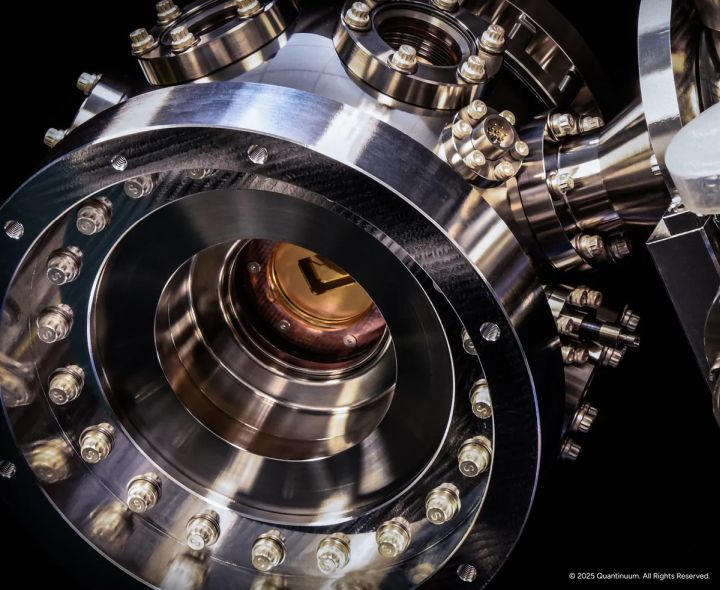
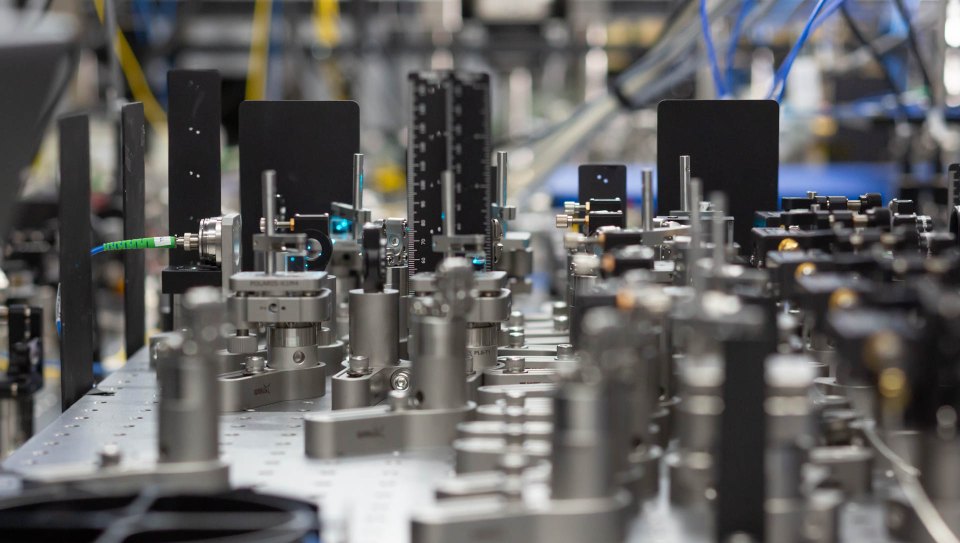
Quantinuum focuses on trapped-ion quantum computers, a system that uses ytterbium ions as qubits manipulated with lasers. Classical computers process information using bits that exist as either 0 or 1. Quantum computers use qubits that can exist in multiple states simultaneously, enabling certain calculations to be performed far more efficiently than on traditional machines.
The company says its H2 quantum computer has achieved industry-leading two-qubit gate fidelity, one of the most closely watched measurements for quantum reliability and error reduction. High error rates remain one of the biggest barriers to large-scale commercial deployment of quantum systems.
Quantinuum has already claimed the highest recorded quantum volume at 524,288, a benchmark that measures a combination of qubit count, connectivity, and error performance. The company has spent the past several years building an ecosystem around its hardware rather than relying solely on the machines themselves.
Its software products include InQuanto, used for quantum chemistry research, and Quantum Origin, a cybersecurity-focused platform designed to protect encryption keys against future quantum threats.
Large corporations are already experimenting with the technology. Companies including Airbus, BMW, HSBC, JPMorgan Chase, and Honeywell are testing Quantinuum’s systems across logistics, finance, materials science, and industrial simulation workloads.
The business still faces steep financial challenges. Quantinuum reported a net loss of $192.6 million on revenue of $30.9 million for 2025. A year earlier, the company posted a net loss of $144.1 million on revenue of $23 million.
“The company reported a net loss of $192.6 million on revenue of $30.9 million in 2025, compared with a net loss of $144.1 million on revenue of $23 million a year earlier,” Reuters reported.
That gap between revenue and spending reflects a broader reality across the quantum industry. Quantum computing remains one of the most expensive bets in tech, requiring massive investment in hardware, specialized talent, cryogenic systems, and years of research before meaningful commercial returns arrive.
Still, investor appetite for frontier technologies has remained surprisingly strong. Public market enthusiasm around AI has spilled into adjacent sectors tied to next-generation compute infrastructure, helping quantum startups attract fresh capital even as practical commercial use cases are still emerging.
Honeywell is expected to retain about 49.1% of Quantinuum’s combined voting power after the IPO and will continue serving as both a customer and strategic partner, according to the filing.
J.P. Morgan and Morgan Stanley are acting as joint lead book-running managers. Quantinuum plans to trade on the Nasdaq under the ticker symbol “QNT.”