Coins.ph expands QRPh crypto payments to Bitcoin and Ethereum across 700,000 merchants in the Philippines
 Nickie Louise
Posted On May 20, 2026
Nickie Louise
Posted On May 20, 2026
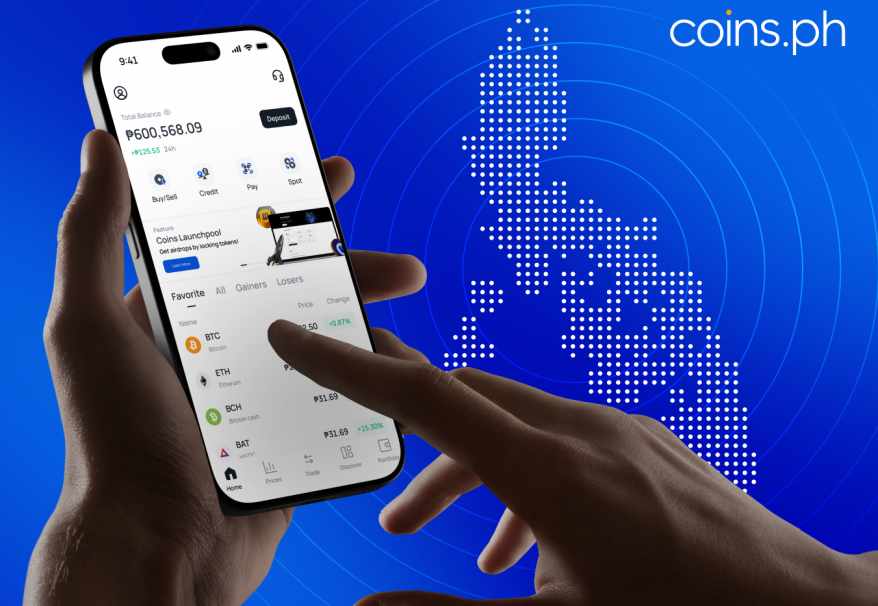
Coins.ph is pushing crypto payments deeper into everyday commerce in the Philippines, adding support for Bitcoin and Ethereum to its QRPh payment system, which already lets users pay merchants nationwide with stablecoins like USDT.
The move gives users access to roughly 700,000 QRPh-enabled merchants nationwide via the Bangko Sentral ng Pilipinas’ national QR code standard. Customers can scan a QRPh code and pay directly with crypto, with balances automatically converted into Philippine pesos at checkout.
The expansion builds on Coins.ph’s earlier rollout of QRPh-compatible USDT payments, which marked one of the first large-scale attempts to connect crypto assets directly to a national QR payment infrastructure used for daily transactions.
Why the Philippines Is Emerging as a Leader in Crypto Payments
That matters in a country where digital payments and crypto adoption have grown hand in hand. The Philippines remains one of the world’s largest recipients of remittances, receiving roughly $38 billion in annual inflows. Stablecoins have become increasingly popular for cross-border transfers, giving users a way to move funds outside traditional banking rails before converting into local currency.
Coins.ph is now betting that crypto holders want more than transfers and trading. The company wants digital assets to function like spendable money inside the local economy.
By adding Bitcoin and Ethereum to the same payment flow, Coins.ph is expanding the number of crypto assets consumers can use at physical merchants without changing the checkout experience. Users still scan the same QRPh codes already accepted across restaurants, convenience stores, retailers, and service providers connected to the network.
“The addition of new tokens to our QRPH crypto payments feature is a great achievement following the landmark introduction of USDT payments for the Philippine financial landscape. We aren’t just adding new tokens; we are redefining what a digital wallet can do. This is the future of finance in action, and we’re making the world’s most popular cryptocurrencies a functional part of the Filipino daily life,” said Wei Zhou, CEO of Coins.ph.
The company operates as a licensed Virtual Asset Service Provider and Electronic Money Issuer under BSP regulation. QRPh itself was introduced as a national interoperability standard to enable banks, e-wallets, and financial institutions to operate through a unified QR payment system.
Crypto adoption in the Philippines has remained strong despite volatility across the broader digital asset market. Industry estimates place the country’s crypto user base at more than 15 million people, or roughly 13.4% of the population.
Coins.ph says its broader goal is to turn crypto and stablecoin infrastructure into a practical financial layer for payments, remittances, treasury services, currency conversion, and digital banking products.
The company is part of a broader push across Asia to connect blockchain-based settlement systems to local payment rails, reducing friction between digital assets and the traditional money systems consumers already use every day.