Elon Musk’s Grok loses momentum in AI race as Anthropic takes SpaceX compute power
 Daniel Levi
Posted On May 12, 2026
Daniel Levi
Posted On May 12, 2026
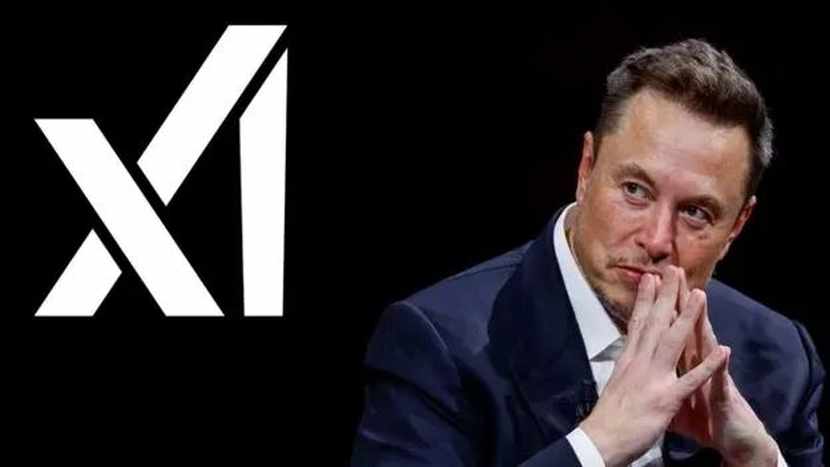
Last week, Anthropic secured access to one of the largest AI compute clusters in the United States after signing a deal to lease capacity at SpaceX’s massive Memphis data center. The facility, known as Colossus 1, houses more than 220,000 Nvidia GPUs and has become one of the most closely watched AI infrastructure projects in the country.
At first glance, the agreement looked like another sign of the relentless demand for AI compute. OpenAI, Anthropic, Google, Meta, and xAI have all been scrambling for chips and data center space as AI models grow larger and more expensive to run.
Now, a new report from the Wall Street Journal points to a deeper story behind the deal. The agreement may have exposed a growing problem for Elon Musk’s AI company xAI: Grok is struggling to keep pace with ChatGPT, Claude, and Gemini.
The Journal reported that Grok’s growth has slowed in both consumer and enterprise markets, raising questions about whether Musk’s AI ambitions can still keep pace in a market moving at breakneck speed.
Grok arrived in late 2023 with big promises. Musk pitched the chatbot as a less-filtered, more “truth-seeking” alternative to competitors he accused of being too politically constrained. The product gained attention through its tight integration with X, formerly Twitter, and through controversial features that pushed the boundaries of AI-generated content.
For a moment, the strategy appeared to work.
Grok downloads plunge as Musk rents SpaceX AI infrastructure to rival Anthropic
According to AppMagic data cited by the Wall Street Journal, Grok downloads surged past 20 million in January. The spike came shortly after an update that allowed users to virtually undress people in photos. The feature quickly triggered backlash after images involving minors circulated online, drawing scrutiny from regulators and lawmakers. Access was later restricted.
The momentum did not last.
AppMagic data shows Grok downloads fell to roughly 8.3 million in April. Separate research from Recon Analytics found Grok’s paid adoption barely moved over the past year. In a survey of more than 260,000 U.S. consumers and workers who use AI, only 0.174% reported paying for Grok in the second quarter of 2026. More than 6% reported paying for ChatGPT.
“Downloads of Grok fell to about 8.3 million in April, from a high of more than 20 million in January,” the Wall Street Journal reported, citing data from analysis firm AppMagic.
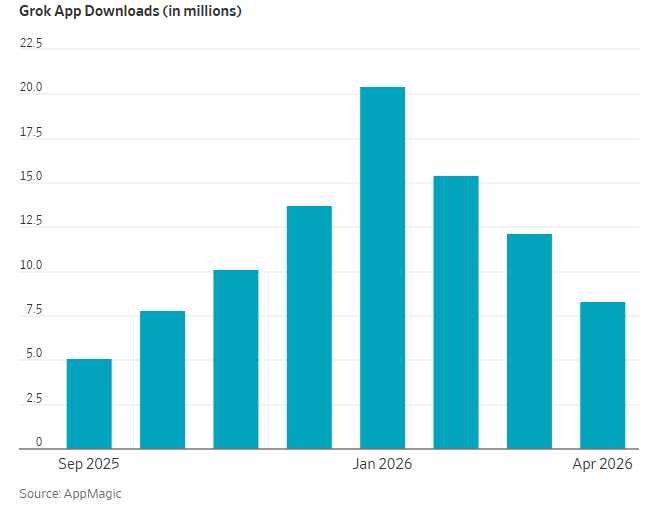
Grok App Downloads (in millions) Credit: WSJ
“OpenAI is Coke, Anthropic is Pepsi, and Grok is RC Cola,” said Ben Pouladian, a Los Angeles-based engineer and investor, in comments published by the Journal. “I never really saw people drinking it.”
Enterprise adoption tells a similar story.
Musk’s Grok falls behind in AI race as enterprise users flock to Claude and ChatGPT
Research firm Enterprise Technology Research found corporate usage of Anthropic’s Claude and Google Gemini climbed sharply this year. Grok showed only modest gains. About 48% of surveyed companies said they were actively using Claude and planned to continue, up from 21% a year earlier. Gemini rose from 27% to 40%. Grok moved from 4% to 7%.
That gap matters.
The current AI race is no longer just about flashy chatbot demos or viral consumer apps. The biggest fight is happening in enterprise software, coding assistants, cloud infrastructure, and developer tools, where recurring revenue is growing at a staggering pace.
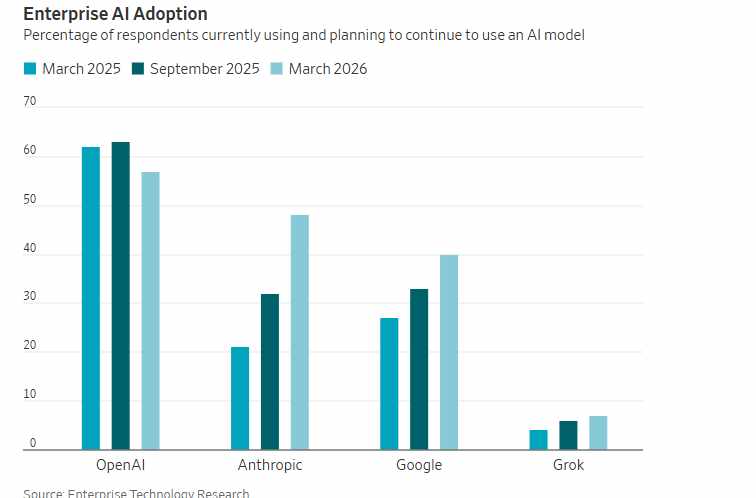
Enterprise AI Adoption (Credit: WSJ)
Musk has spent billions trying to close that gap. Much of 2025 was devoted to building xAI’s infrastructure footprint, including the Memphis supercluster packed with Nvidia processors. Musk personally pushed xAI engineers to move faster as OpenAI, Anthropic, and Google widened their lead.
The Anthropic lease changes the optics around that infrastructure buildout.
Instead of using all of Colossus internally for Grok training and inference, SpaceX is now renting a major portion of the capacity to one of xAI’s biggest rivals. Analysts told the Journal the agreement could generate billions of dollars annually ahead of SpaceX’s expected IPO.
Arnal Dayaratna, vice president of software development at IDC, said the move signals a shift in strategy. Colossus may evolve into a commercial AI compute platform serving external labs rather than functioning purely as xAI’s internal engine.
The irony is hard to miss.
Earlier this year, Musk publicly criticized Anthropic on X, describing its AI as “misanthropic and evil.” Now, Anthropic is gaining access to the same GPU infrastructure Musk built to compete against OpenAI and the rest of the AI field.
Still, some investors believe it is too early to count Musk out.
Guillermo Rauch, CEO of hosting platform Vercel, told the Journal that developers often switch models quickly when performance improves. A stronger Grok release could still attract engineers and enterprise users if xAI delivers meaningful gains.
“Once Elon focuses, which is what is happening right now, we see him perform very, very well,” Rauch said.
That may end up being the central question hanging over xAI.
Musk has the chips. He has the data centers. He has one of the largest consumer platforms on the internet through X. What remains unclear is whether Grok can become a product people consistently choose over ChatGPT, Claude, and Gemini once the novelty fades.