It’s Monday, May 11, 2026, and AI’s hunger for power, data, and dominance is colliding with hard limits on energy, regulation, and security. From battery factories racing to fuel data centers to home-scale AI nodes, U.S.-China AI diplomacy, and fresh cyber breaches hitting everything from open-source models to student records, here are the 15 stories moving markets and shaping the next wave of tech and startups.
AI is no longer competing just on models. The battle has expanded into power grids, robot factories, military policy, data centers, biotech labs, classrooms, and even the future of work itself. In the last 24 hours alone, billion-dollar infrastructure deals reshaped the AI compute race, Coinbase signaled another wave of AI-driven workforce cuts, China pushed deeper into AI-powered commerce and biotech, and lawmakers in Washington moved closer to a formal federal AI oversight framework. At the same time, cybersecurity threats continued to hit critical digital systems, reminding the industry that the infrastructure powering modern life is becoming both more intelligent and more vulnerable.
Here are today’s top technology news stories shaping the industry today.
Technology News Today
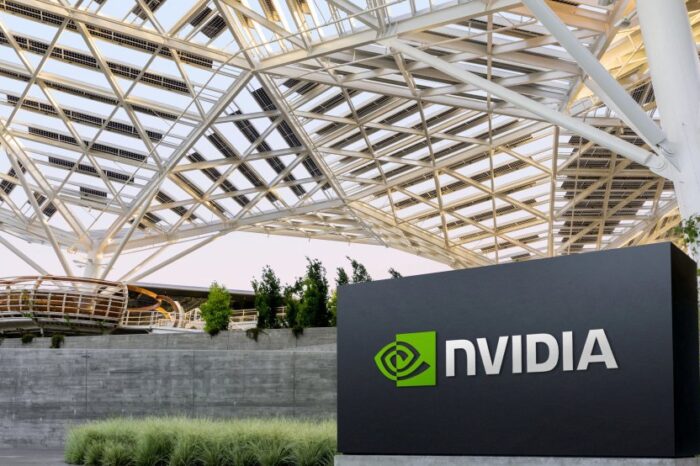
Alphabet poised to overtake Nvidia as world’s largest company amid AI momentum
Alphabet’s market capitalization has surged on the back of AI advancements across search, cloud, and consumer products, closing in on Nvidia’s valuation. The company holds strong positions throughout the AI stack, from models to infrastructure.
Investors increasingly favor integrated players capable of capturing value across the ecosystem.
Why It Matters: Alphabet’s rise illustrates how comprehensive AI strategies can drive outsized market value and challenge pure-play hardware leaders.
Source: Fortune.
Blackstone and Halliburton back VoltaGrid in $1B AI data center power push
Blackstone and Halliburton are reportedly investing $1 billion in VoltaGrid, a Houston company building gas-powered microgrids for rapid data center deployments. The timing matters: AI infrastructure is increasingly constrained by power availability, not just chips.
For startups and hyperscalers, energy is becoming a competitive moat. Companies that can bring compute online faster may win the next phase of the AI race.
Why It Matters: AI’s bottleneck is shifting from GPUs to electricity.
Source: Bloomberg.
SoftBank Plans Large-Scale Battery Production for AI Data Centers
SoftBank Group’s mobile unit will begin manufacturing large-scale battery cells at its Sakai, Osaka plant to meet surging power needs from AI services. The initiative includes two new ventures: AX Factory for AI data center operations and hardware, and GX Factory for next-generation batteries, solar panels, and related products. Capacity could reach several GWh, with plans for global expansion.
The effort directly tackles energy constraints that limit AI infrastructure growth by integrating storage with renewable tech. It positions SoftBank as a key player bridging telecom, energy, and computing in the AI boom.
Why It Matters: SoftBank’s battery push addresses the power bottleneck for AI data centers, advancing sustainable infrastructure solutions at an industrial scale.
Source: Bloomberg.
Google Rolls Out AI-Powered Finance Tool Across Europe
Google launched its reimagined AI-enhanced Google Finance platform in Europe, offering localized language support and advanced features to help users analyze financial data and markets. The rollout expands the tool’s capabilities beyond the U.S.
It demonstrates Big Tech’s strategy to embed generative AI into everyday consumer and business services.
Why It Matters: Google’s AI Finance expansion integrates advanced analytics into mainstream tools, potentially reshaping how users and startups interact with financial information.
Source: Google Blog.
Korean tech giants back Config, the startup building the data layer for robot AI
Samsung, Hyundai, and LG have backed Config, a robotics data startup that wants to become the “TSMC of robot data.” The company is positioning itself as a neutral supplier to manufacturers building their own robot AI systems.
That could become a major category as robotics moves from demos to industrial deployment. Robot models need high-quality physical-world data, and manufacturers may prefer infrastructure partners that do not compete with them directly.
Why It Matters: Robotics AI is becoming a data infrastructure race.
Source: TechCrunch.
Alibaba brings Qwen AI into Taobao as China’s ‘chat-to-buy’ race accelerates
Alibaba is integrating its Qwen AI model with Taobao, a move aimed at reshaping e-commerce around conversational shopping. The push reflects a broader race among Chinese tech companies to integrate AI agents into everyday consumer transactions.
This is not just a shopping feature. It points to a future where search, product discovery, recommendations, and checkout converge inside AI-driven interfaces.
Why It Matters: AI shopping agents are moving from experiment to platform strategy.
Source: South China Morning Post.
China ranks third globally in AI life sciences competitiveness
China ranked third behind the U.S. and the U.K. in a global index measuring AI competitiveness in life sciences. The ranking points to China’s scale in AI, biotech, and technical talent.
The result matters because AI-driven drug discovery and life sciences research are becoming strategic national priorities. Countries with strong AI-biotech ecosystems could gain an edge in medicine, diagnostics, and industrial biology.
Why It Matters: AI leadership is spreading beyond chatbots into biotech and national competitiveness.
Source: South China Morning Post.
US Senators propose federal AI commission after Anthropic Pentagon fallout
U.S. senators are proposing a federal AI commission shortly after the Pentagon reportedly designated Anthropic a supply-chain risk and ordered agencies to cut ties. The dispute highlights growing tension between frontier AI companies, military use, and federal oversight.
The proposal shows Washington is still searching for a durable AI governance model. As AI becomes tied to defense, procurement, and national security, voluntary safety pledges may no longer be enough.
Why It Matters: AI regulation is increasingly shaping national security policy.
Source: The Wall Street Journal.
Musk-OpenAI trial shows how chatbot records can become legal evidence
The Musk-OpenAI case is putting private digital records, including chatbot-related materials, under legal scrutiny. Axios framed the trial as a warning that AI-era records can become evidence in high-stakes disputes.
Court documents in Elon Musk’s lawsuit against OpenAI reveal that internal texts, emails, and diary entries generated via company AI chatbots are now being used as evidence. Executives, including Sam Altman and Greg Brockman, relied on these tools for sensitive communications, and those communications have entered the discovery process. The case underscores how AI-generated content is increasingly treated like traditional records in litigation.
Legal experts warn that this sets a precedent for future disputes involving AI tools, forcing tech firms to reconsider data retention and usage policies for internal systems. It also raises privacy and compliance challenges as more companies embed chatbots in workflows
For startups, the lesson is clear: AI interactions, internal notes, and digital collaboration trails may expose them to legal risk. As founders use AI tools for strategy, coding, and decision-making, recordkeeping discipline becomes more important.
Why It Matters: AI tools are becoming part of the legal discovery battlefield. Courts treating AI chatbot outputs as admissible evidence create new legal risks for Big Tech and startups, pushing for stricter controls on sensitive AI-assisted communications.
Source: Axios.
Coinbase plans job cuts as CEO says AI is reshaping the company
Coinbase is preparing to cut jobs and rebuild itself as an “AI-first” organization, according to the Financial Times. The crypto exchange’s leadership says AI is accelerating internal processes, reducing the need for certain roles.
This fits a broader pattern across tech: companies are pairing automation with headcount discipline. The shift may improve margins, but it also raises questions about how much of the AI productivity boom will translate into fewer jobs.
Why It Matters: AI is moving from a productivity tool to a workforce restructuring lever.
Source: Financial Times.
SpaceX to rent major AI data center capacity to Anthropic
SpaceX is reportedly renting more than 300 megawatts of compute capacity at its huge Tennessee data center to Anthropic. The deal shows how AI labs are competing not just for models and talent, but for physical infrastructure.
It also blurs the line between AI companies, cloud providers, and industrial-scale infrastructure operators. In the AI boom, whoever controls power, chips, and data center capacity gains strategic leverage.
Why It Matters: AI competition is turning data centers into strategic assets.
Source: Financial Times.
Google’s Gemma 4 AI models get a major speed boost through speculative decoding
Google’s Gemma 4 open AI models can now run up to three times faster using speculative decoding, according to Ars Technica. The technique predicts future tokens to improve speed without sacrificing output quality.
Faster open models matter for developers and startups that need lower inference costs. If model speed improves while quality holds, more AI applications can run cheaply across consumer devices, enterprise tools, and edge environments.
Why It Matters: Open AI models are becoming faster and more practical for builders.
Source: Ars Technica.
Chrome’s local AI confusion shows backlash risk for Big Tech
Ars Technica reported on confusion around Chrome’s local AI features and a large on-device model. The broader issue is user trust: people are increasingly questioning how much AI is being added to products without clear explanations.
For Big Tech, AI adoption is no longer just a feature race. Companies must explain privacy, local processing, data use, and user control in plain language or risk backlash.
Why It Matters: AI product strategy now depends on trust and transparency.
Source: Ars Technica.
Canvas cyberattack disrupts schools as hacker deadline looms
Canvas access has been restored for some Australian schools and universities, but a hacker deadline remains in place. The incident has disrupted education platforms used by students and faculty during a sensitive academic period.
The attack shows how deeply schools now depend on centralized learning systems. When those platforms are hit, the damage is not abstract: grades, assignments, exams, and student communications can all be affected.
Why It Matters: Education technology has become critical infrastructure.
Source: ABC News Australia.
AI’s workplace risk shifts from job loss to worker surveillance
The Guardian argues that AI’s biggest workplace threat may not be mass unemployment alone, but the rise of AI-powered surveillance and control systems. The divide is between workers who use AI to expand their skills and those managed by opaque algorithms.
That distinction matters for employers, regulators, and startups building workplace AI. Productivity tools can empower workers, but monitoring tools can weaken trust and deepen labor tensions.
Why It Matters: The AI labor debate is moving from replacement to control.
Source: The Guardian.
Jensen Huang tells graduates to run toward AI, not away from it
Nvidia CEO Jensen Huang told Carnegie Mellon graduates to “run” toward AI, framing the technology as a new era of science and discovery. His message comes as many students worry AI could shrink early-career opportunities.
The speech reflects Nvidia’s broader position in the AI economy: the company benefits when developers, researchers, and startups build more aggressively on AI infrastructure.
Why It Matters: Nvidia is pushing AI adoption as a career and economic opportunity.
Source: Axios.
French startup Genesis AI unveils robot model and human-like robotic hand
Genesis AI introduced GENE-26.5, an AI model for robotics, alongside a dexterous robotic hand capable of performing delicate tasks. The French startup has raised $105 million and is targeting industrial applications across Europe.
The announcement adds to the growing race to build foundation models for physical work. Robotics startups are now competing on models, hardware, datasets, and industrial partnerships.
Why It Matters: Physical AI is becoming one of Europe’s most important startup battlegrounds.
Source: Reuters.
Turkey’s Grand Games raises $70M as mobile gaming startups regain investor attention
Turkish mobile gaming startup Grand Games raised $70 million in a Series B round led by Balderton Capital. The deal shows that investor appetite remains strong for category-specific consumer startups with global reach.
Gaming remains one of the few tech sectors where small teams can build massive international businesses. Turkey has already produced notable gaming exits, and new funding rounds suggest the region’s startup pipeline is still strong.
Why It Matters: Global gaming startups remain attractive even in a cautious venture market.
Source: Bloomberg.