
In February 2026, Anthropic released a set of plugins for its Claude Cowork AI agent, setting off what the market quickly dubbed the “SaaSpocalypse.” Within days, nearly $285 billion in software market value was wiped out as investors reacted to a new reality: autonomous AI agents were no longer just assisting with tasks. They were starting to replace entire SaaS workflows, from contract review and financial analysis to sales orchestration and data extraction. The per-user pricing model that defined the SaaS era suddenly looked fragile. One AI “coworker” could now do the work of dozens of human seats.
That moment did more than shake valuations. It forced a rapid shift inside the software industry.
SaaS companies saw the same thing investors did. If AI agents could move across tools, pull data, and execute workflows on their own, the traditional model of charging per human user would start to break down. The risk was not gradual erosion. It was compression, fast and hard.
So the response came quickly.
Why SaaS Companies Are Building AI Agent Toll Gates
Instead of cutting prices or resisting the shift, software companies began building new layers of control between their platforms and these emerging AI agents. These layers act as checkpoints. They determine how agents access data, what actions they are allowed to take, and how that activity is measured and priced.
This is where software agent toll gates come in.
A toll gate is not just a pricing change. It is a structural shift. Companies are moving away from selling access to software interfaces and toward controlling access to execution itself. If an AI agent wants to read data, trigger a workflow, or perform actions within a platform, it now has to pass through a controlled layer that can monitor, limit, and charge for those activities.
The model is simple in concept but powerful in effect. In the past, revenue scaled with the number of human users. In this new model, revenue can scale with the intensity of machine activity.
That changes the economics entirely.
From Metering to Blocking: How SaaS Companies Are Locking Down AI Agent Access
What started as a theoretical exercise is now playing out across the industry in real time. SaaS platforms are no longer just updating pricing pages. They are reworking how access to their systems is controlled. And the number of these toll gates is growing fast.
On Monday, ServiceNow became the latest major player to join CRM firms such as HubSpot and Workday in outlining how it plans to charge customers when AI agents tap into data inside its products. At its financial analyst day in Las Vegas, ServiceNow introduced “Action Fabric,” a new layer that sits between its applications and any external AI agent trying to interact with them.
The idea is straightforward. Instead of letting agents move freely through its systems, ServiceNow routes higher-value interactions through this layer, where usage can be tracked and priced. COO Amit Zavery said the company will measure how often customers access the Action Fabric, “meter” that usage, and charge customers for it.
JPMorgan analyst Mark Murphy framed it more bluntly, describing the approach as a tax on customers who use external AI agents to interact with data within ServiceNow’s ecosystem. The move is expected to spark debate about whether these controls strengthen or weaken a company’s long-term position.
Inside the industry, there is little hesitation about the opportunity.
Workday CEO Aneel Bhusri has already pointed to the financial upside of charging for AI agent activity, saying it could deliver “a lot of upside” for the company. ServiceNow is leaning into that same view.
“This is a tremendous [market] opportunity for our company,” said Jon Sigler, executive vice president of ServiceNow’s AI platform, The Information reported.
The company is not just adding pricing layers. It is building infrastructure around them. Sigler said ServiceNow has developed a connector that allows Claude Cowork to integrate directly with Action Fabric, enabling agents to take actions and even build applications within the platform.
“What’s going to end up happening is we’re going to have this universal action layer, where all of these systems are calling directly into our Action Fabric,” he said.
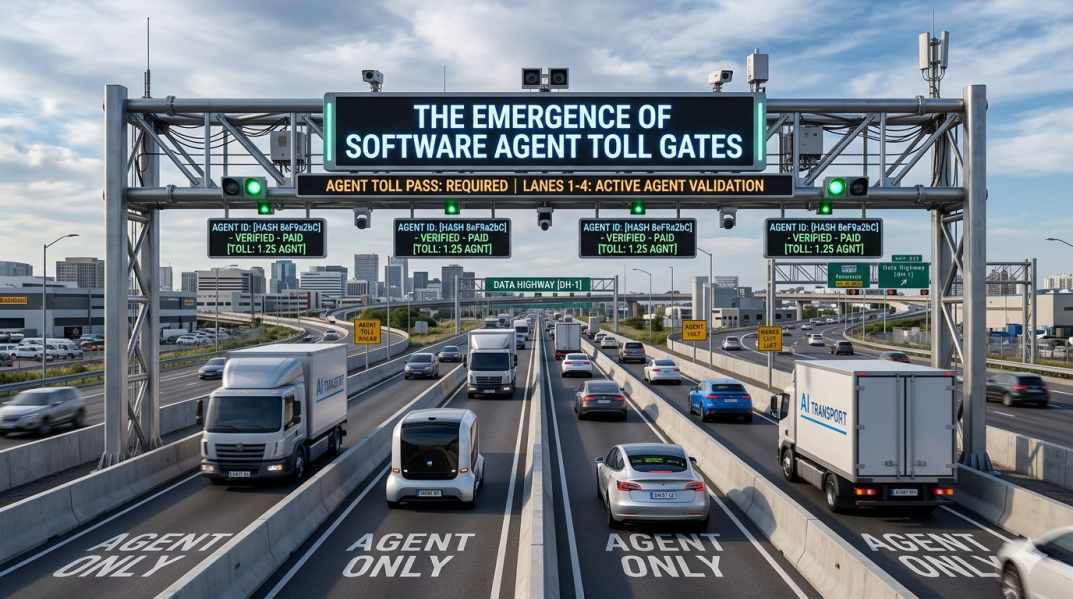
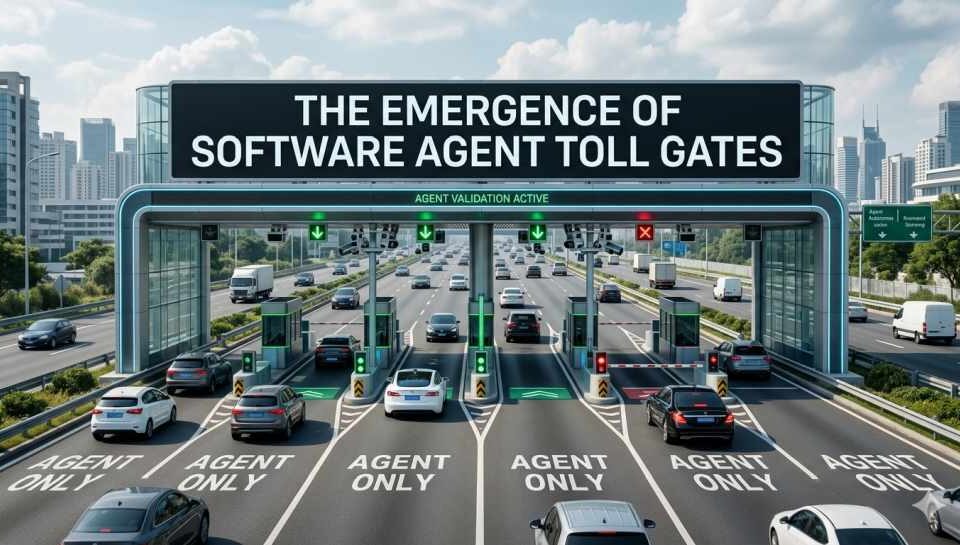
The Emergence of Software Agent Toll Gates
Under this model, pricing shifts from users to activity. Customers are charged based on the number of actions AI agents perform as they move through the system. Standard APIs still exist, but deeper access and more powerful capabilities now sit behind this metered layer.
Other companies are taking different approaches, but the direction is the same.
Datadog has introduced hard limits on how frequently AI agents can interact with its tools. Its model context protocol server allows up to 5,000 daily requests or 50,000 monthly requests. After that, usage slows or stops unless expanded.
Then there is SAP, which is moving more aggressively to block OpenClaw and Other unauthorized AI agents. The company has signaled that external AI agents may not be allowed to access customer data inside its systems without explicit approval, drawing a clear boundary around its platform.
Put together, these moves show a pattern forming. Some companies are metering access. Others are limiting it. A few are prepared to block it entirely. What they share is a common goal: staying in control as AI agents become the ones doing the work. The direction is clear. As AI agents become more capable, the software they rely on is becoming more guarded.
Why Software Agent Toll Gates Are Emerging
Behind these changes is a simple realization that’s hard to ignore.
If an AI agent can replace the work of ten users, then a pricing model built on ten separate subscriptions starts to collapse. What used to scale with headcount now risks shrinking as companies automate more of that work through software.
That pressure is forcing SaaS companies to rethink where their value actually sits.
For years, much of that value lived in the interface. Dashboards, workflows, and user experience kept customers inside the product. But AI agents do not rely on interfaces. They operate through APIs, connectors, and direct system access. They move faster, pull more data, and execute tasks without ever touching the UI that once defined the product.
That shift changes everything.
Now the real leverage point is not the interface. It is the data and the ability to act on it. The companies that own critical data systems are realizing they can control how that data is accessed, how often it is used, and what actions can be taken on it.
That is what toll gates are designed to protect.
There is also a growing concern around volume. AI agents do not behave like human users. They can run continuously, execute thousands of actions in minutes, and pull large amounts of data in ways that traditional systems were not built to handle at scale. Without limits, that kind of activity can strain infrastructure and create new risks around cost, performance, and security.
At the same time, there is a competitive angle. External agents built on platforms like Anthropic or OpenAI can sit on top of multiple SaaS tools and orchestrate workflows across them. That reduces the importance of any single product and makes it easier for customers to switch between vendors.
For SaaS companies, that is a direct threat to the stickiness that once defined their business.
Toll gates are the response. They give companies a way to maintain control, manage scale, and capture value in a world where the user is no longer human, but software acting on behalf of the customer.
The Pushback: Customers May Not Play Along
As SaaS companies tighten control, a new friction point is emerging.
Customers are beginning to question why they should pay more to access data that already sits inside platforms they are paying for. From their perspective, AI agents are simply a more efficient way to use tools they already license. Adding toll gates on top of that can feel like being charged twice for the same system.
That tension is likely to grow.
In many organizations, the promise of AI agents is straightforward. Do more work with fewer people. Move faster. Reduce operational overhead. But if every action an agent takes is metered, limited, or blocked, those gains start to erode. What looks like efficiency on paper can turn into rising costs in practice.
There is also a deeper concern around control.
If SaaS vendors begin deciding which agents can access data and under what conditions, customers risk losing flexibility. They may find themselves locked into specific ecosystems or forced to use approved integrations rather than the tools that best fit their needs. For companies trying to build their own AI-driven workflows, this can become a serious constraint.
Some executives have warned that locking down access too aggressively could push customers toward more open platforms that allow agents to operate freely.
That creates a delicate balance.
If SaaS companies leave systems open, they risk losing revenue as agents compress usage. If they lock things down too tightly, they risk alienating customers and driving them elsewhere.
What Comes Next: Open Systems vs Controlled Platforms
If toll gates are the industry’s response, they are also the start of a new divide.
On one side are companies building tightly controlled platforms. They meter access, restrict agents, and keep execution within their own systems. The goal is clear. Preserve revenue, maintain control, and capture value at every step an AI agent takes.
On the other side are more open approaches. These systems prioritize flexibility, allowing AI agents to move more freely across tools, data, and workflows. The bet here is different. Lower friction attracts more usage, and more usage creates its own form of value.
That tension is likely to shape the next phase of the software industry.
If controlled platforms push too far, they risk driving customers toward alternatives that offer fewer restrictions. If open systems give away too much, they may struggle to capture value as agents rapidly scale usage. Most companies will land somewhere in between.
What makes this moment different is the speed at which these choices are being made. AI agents are improving quickly, and companies are being forced to rethink years of business logic in a matter of months.
The New Battleground: Control Over Execution
What is taking shape is not a temporary adjustment. It is a shift in where control lives in the software stack.
For years, SaaS companies competed on features and user experience. That model worked when humans were the primary users. The interface was the product, and the seat was the unit of revenue.
That is no longer the case.
AI agents are turning software into something that runs behind the scenes. They do not rely on dashboards or navigation. They rely on access, permissions, and the ability to execute tasks across systems. That moves the point of control away from the interface and deeper into the platform itself.
The companies that control execution will have the advantage.
That is what software agent toll gates are really about. They are control points. They determine how work gets done, how often it runs, and who gets to participate in that process.
The SaaSpocalypse narrative captured the shock of what AI agents could do to the economics of software. The response now taking shape shows how the industry plans to adapt.
Software is not going away. But the way companies make money from it is changing.
Access is being measured. Actions are being priced. And the platforms that sit at the center of these workflows are making sure they remain part of every transaction, even when the work is no longer done by humans.
The next phase of SaaS will not be defined by the number of users a company has. It will be defined by the amount of activity it controls.
Trending Now