Peter Thiel-backed Panthalassa raises $140M to build wave-powered floating AI data centers
 Daniel Levi
Posted On May 5, 2026
Daniel Levi
Posted On May 5, 2026
The race to build bigger AI models is running into a hard limit: power. A single training run can burn through as much electricity as thousands of homes, and new data centers are getting stuck in years-long queues for grid access. Now one startup wants to sidestep the problem entirely by taking AI infrastructure out to sea.
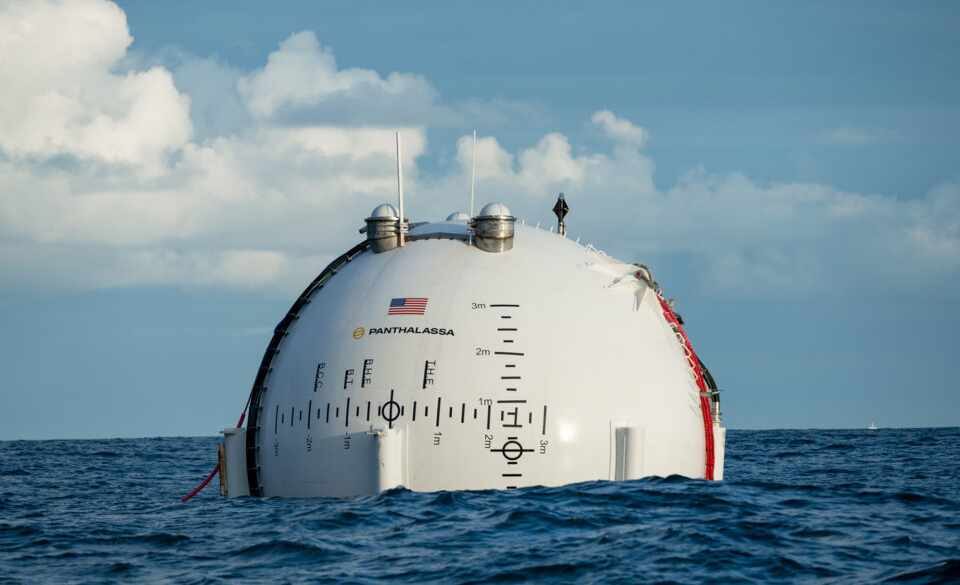
Panthalassa, a Silicon Valley data center startup backed by Peter Thiel, has raised $140 million in fresh funding, pushing its valuation close to $1 billion, according to the Financial Times. The company is working on a bold idea: floating AI data centers that generate their own electricity from ocean waves and cool themselves using seawater.
“US tech billionaire leads $140mn investment into Panthalassa as search for AI power pushes into exotic new frontiers,” The Financial Times reported.
Each unit, roughly 85 meters in diameter, is built to operate far from land. Instead of plugging into the grid, the platforms rely on wave turbines for continuous energy. Cooling comes straight from the surrounding ocean, removing the need for freshwater systems that have sparked backlash in drought-prone regions like Arizona and Nevada. Data is transmitted back to shore through satellite links, and the platforms drift with ocean currents rather than using traditional propulsion.
The timing lines up with a growing strain across the industry. AI workloads have surged, pushing cloud providers and hyperscalers to their limits. New data center projects often face delays tied to power shortages, land constraints, and environmental concerns. Panthalassa’s approach reframes the equation by moving compute to where energy and cooling are abundant.
Panthalassa is structured as a public-benefit corporation, signaling a focus on long-term environmental impact alongside commercial goals. The team draws on companies that build in extreme conditions, including SpaceX, Tesla, NASA, Google, Apple, and Blue Origin. It includes veterans from aerospace, naval engineering, and the armed forces, bringing together offshore engineering, autonomous systems, and thermal management in a single design. Early prototypes have already shown stable power output in controlled wave tank tests, according to people familiar with the work.
Why AI’s Next Data Centers May Be Built at Sea
The idea is ambitious, and the open ocean is unforgiving. Saltwater corrosion, marine growth, and extreme weather could wear down critical components over time. Maintenance crews would face higher costs and longer response times compared with land-based facilities. Regulators are likely to examine the impact on marine ecosystems, shipping routes, and communication systems before giving approvals.
Panthalassa has not disclosed where it plans to deploy its first units, though executives have pointed to international waters as a potential starting point.
If the company can make it work, the implications extend beyond a single startup. Floating data centers could give cloud providers a way to expand capacity without waiting on local permits or grid upgrades. They could reduce reliance on freshwater and lessen friction with communities pushing back against new builds. For smaller AI companies, access to distributed compute at sea could open doors that have been closed by limited GPU supply on land.
The funding round signals a broader shift in venture capital. Investors who once focused on model builders are now looking at the physical layer that supports AI growth. Energy, cooling, and location have become central to the conversation. Panthalassa joins a wave of companies exploring unconventional solutions, from solar-heavy desert campuses to small modular nuclear projects, all aiming to keep AI infrastructure from hitting a wall.
Panthalassa’s bet is simple at its core. Move compute to the ocean, tap into a constant energy source, and remove some of the biggest constraints facing AI today. Whether the ocean proves to be a reliable home for data centers remains to be seen. The industry will be watching closely.