AI chip startup Cerebras targets $3.5B IPO on Nasdaq as AI race heats up, eyes $26.6B valuation
 Nickie Louise
Posted On May 4, 2026
Nickie Louise
Posted On May 4, 2026

Cerebras is aiming to raise up to $3.5 billion in a Nasdaq listing, according to an updated prospectus filed Monday—a move first reported by CNBC. The company plans to sell 28 million shares priced between $115 and $125. At the top end, Cerebras could land a $26.6 billion valuation, making it one of the most closely watched AI offerings in years.
The move follows a report from The Information three months ago that the company was exploring a $1 billion raise at a $22 billion valuation ahead of a 2026 IPO.
The timing says a lot about where the market is right now. Tech IPOs slowed after interest rates climbed in 2022, cooling the appetite for companies still chasing profitability. That mood has shifted as investors pile into anything tied to generative AI. Tools like ChatGPT have reshaped expectations, and companies building the infrastructure behind that surge are getting a second look.
Founded in 2015, Cerebras has carved out a unique position in the AI hardware race. Its signature product, the Wafer-Scale Engine, takes a very different approach from traditional GPUs. The latest version, WSE-3, is about the size of a dinner plate and packs four trillion transistors. With nearly 900,000 AI-focused cores, it delivers up to 125 petaflops of compute performance.
The pitch is simple: build one giant chip instead of stitching together thousands of smaller ones. By placing compute, memory, and interconnects on a single die, Cerebras reduces much of the latency that slows GPU clusters. The result is faster training and inference for massive AI models, including systems with trillions of parameters.
From hardware to cloud: Cerebras bets on AI infrastructure demand
Cerebras sits right in that lane. Its chips are built as an alternative to the GPUs that have made Nvidia the dominant force in AI computing. At the same time, the company has been moving beyond hardware. After announcing its IPO plans last year, Cerebras reworked its model, leaning into a cloud-based approach in which customers access computing power directly rather than buying chips outright.
That pivot is starting to show up in the numbers. Fourth-quarter revenue climbed 76% year over year to $510 million, and the company reported $87.9 million in net income for the period, CNBC reported. It’s a notable shift for a business that had been seen largely as a capital-intensive hardware play.
There’s more riding on its cloud strategy. In January, Cerebras said it would provide up to 750 megawatts of AI computing capacity to OpenAI through 2028, in a deal valued at more than $20 billion. Agreements like that position the company as a supplier of large-scale AI infrastructure at a time when demand continues to climb.
Competition isn’t standing still. CoreWeave, which rents out Nvidia GPUs as a cloud service, raised $1.5 billion in its own IPO last year, even without turning a profit. That offering signaled that investors are willing to back companies tied to the AI buildout, even when the financial picture is still taking shape.
Cerebras enters this next phase with a mix of momentum and risk. Co-founder and CEO Andrew Feldman is not selling shares in the offering and is expected to hold about 10.3 million shares after the IPO, which would be worth up to $1.28 billion at the high end of the range. The company has the option to sell an additional 4.2 million shares to underwriters, which could bring in another $525 million.
For now, the bigger story is the reopening of the IPO window for AI infrastructure companies. Cerebras isn’t just testing investor demand for its own business—it’s helping define how far the market is willing to go in backing the next wave of AI hardware and cloud providers.
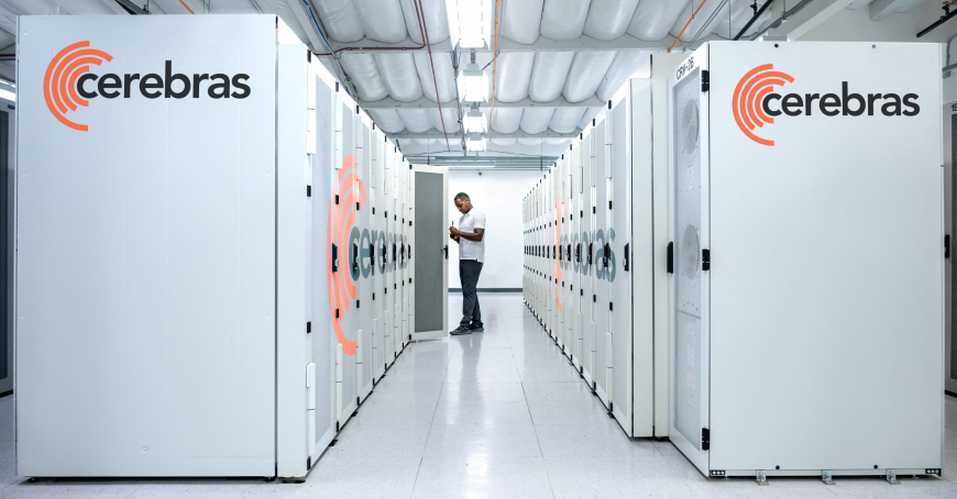
Cerebras (Credit: Cerebras)