AI startup Misti AI raises £250K to turn camera feeds into real-time alerts and operational insights
 Daniel Levi
Posted On April 29, 2026
Daniel Levi
Posted On April 29, 2026
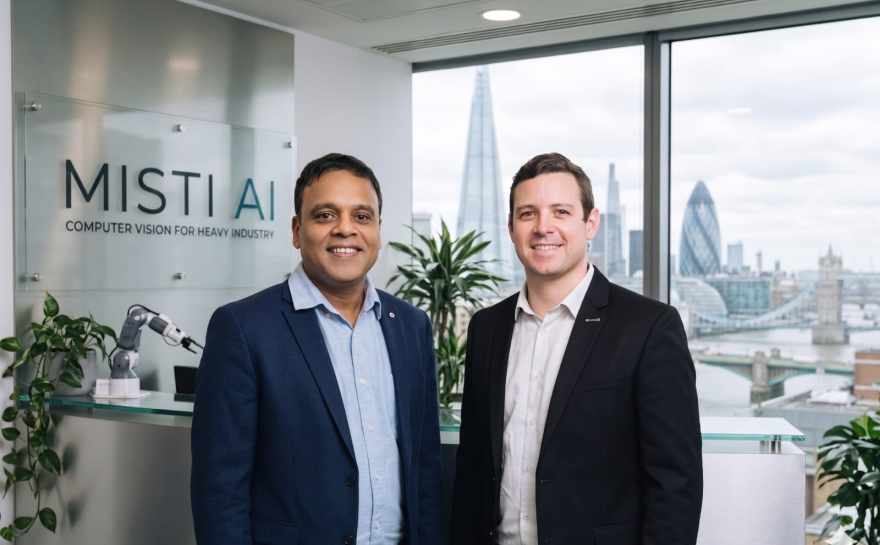
Misti AI has raised £250,000 in pre-seed funding led by Fuel Ventures, with plans to close the round at £500,000. The pitch is straightforward: take the vast network of existing cameras inside heavy industry and turn them into systems that can actually “see,” flag risks, and make sense of what’s happening on the ground as it unfolds.
Right now, most industrial video systems act like passive storage. Footage sits there until someone reviews it after something goes wrong. The London-based Misti AI flips that model. Its software analyzes live camera feeds and turns them into signals—alerts, patterns, and context that operators can act on in real time.
That shift matters most in places where visibility is limited and response time carries real consequences. The company has already begun deploying its technology across mining and energy sites in Peru, where connectivity is unreliable, and conditions can change quickly. These early rollouts are meant to prove a simple point: the system can run on-site, process data locally, and still deliver timely insights without depending on constant cloud access.
Co-founder and CEO Carlos Samame frames the opportunity in broader terms. “We’re entering the decade of Physical AI. Every industrial site is already instrumented with cameras, but they’re blind systems, recording without understanding. We’re building the intelligence layer that allows machines to interpret, reason, and act on what’s happening in the real world. We’re starting with observability, but the long-term vision is to become the system of intelligence for physical operations globally.”
With £250K in funding, Misti AI wants to turn every industrial camera into an AI sensor
The technical challenge isn’t spotting objects on video—that part is largely solved. The harder problem is making sense of what those signals mean in context and doing it in environments where bandwidth is limited and conditions are unpredictable. Co-founder and CTO Jalaj Jain points to that gap. “What makes this hard isn’t computer vision, it’s building systems that can operate reliably in harsh, low-connectivity environments while delivering structured, real-time intelligence. We’re combining edge AI with vision-language models to move from detection to reasoning, understanding not just what is happening, but why it matters operationally.”
That approach leans on running AI models directly at the edge, near the cameras themselves, rather than sending everything back to the cloud. It’s a practical choice for remote sites and one that keeps latency low when seconds matter.
Fuel Ventures, which led the round, is betting that this layer—turning video into usable operational data—could become a foundational piece of industrial infrastructure. “The vast network of cameras in heavy industry represents the last untapped frontier for real-time operational data. Misti AI is not creating a feature; they are defining Physical Observability – a massive new infrastructure category. We led this pre-seed round because Sama and the team, with their top-tier pedigree and UK Tech Nation Global Talent status, have proven they possess the deep technical knowledge and enterprise vision required to build this foundational layer,” said Mark Pearson, founder of Fuel Ventures.
The idea of “physical observability” borrows from software, where platforms monitor systems, track performance, and surface issues before they escalate. Misti AI is applying that thinking to the physical world, where machines, people, and environments interact in ways that are harder to measure.
If it works, the implications go beyond safety alerts. Continuous visibility could reshape how companies manage operations, enforce compliance, and respond to risk across large, distributed sites.
For now, Misti AI is focused on proving it can turn existing camera infrastructure into something more than a recording tool. The early deployments in Latin America will serve as its testing ground—and a signal of whether real-time video insights can move from promise to everyday use.