True Anomaly raises $650M at $2.2B valuation to build space interceptors for Trump’s $185B Golden Dome
 Daniel Levi
Posted On April 28, 2026
Daniel Levi
Posted On April 28, 2026
True Anomaly just pulled in a massive $650 million round, pushing the four-year-old startup to a $2.2 billion valuation and putting it squarely at the center of a growing race to control space-based defense.
The Colorado defense startup is building space interceptors tied to the ambitious “Golden Dome” initiative championed by Donald Trump. The project, which calls for a sweeping missile defense shield, reflects a broader shift in how governments are thinking about space. It’s no longer just about exploration or communications. It’s about security.
“Today, we are announcing our $650 million Series D financing, surpassing $1 billion in total capital raised since our 2022 founding. This milestone reflects both the momentum we have built in four short years and the urgency of the moment the United States and its Allies face in ensuring freedom of action in space. The window for the U.S. and its Allies to establish space superiority is open, but it is narrowing rapidly,” the company said in a news release.
$650M Bet on Space Warfare: Defense Startup True Anomaly Targets Golden Dome Missile Defense Push
That shift is pulling in serious capital. True Anomaly has now raised about $1 billion in total and plans to use the new funding to ramp up production, launch new products, and nearly double its workforce to 500 employees by year’s end. The company is scaling its manufacturing footprint in a big way, aiming to grow from 140,000 square feet today to roughly 2 million square feet over the next four years.
“Space is a war-fighting domain, and our adversaries are building space war-fighting capabilities at a scale that we’ve never seen,” CEO Even Rogers told CNBC.
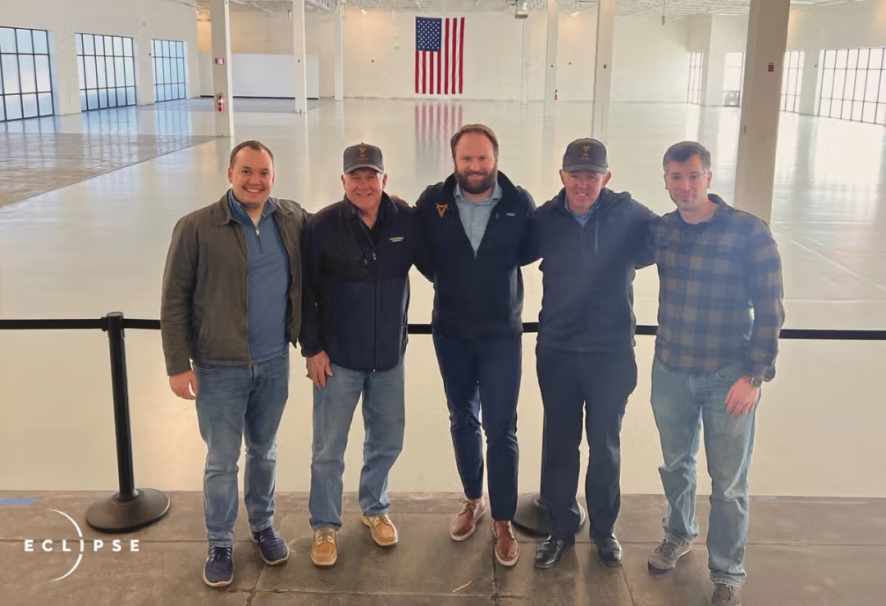
A group of True Anomaly Co-Founders and board members gathered shortly after construction began on the company’s satellite manufacturing facility in Centennial, CO. Pictured from left to right: True Anomaly Chief Product Officer Tom Nichols, Board Member U.S. Air Force Lt. Gen. (Ret.) Wally Moorehead, True Anomaly CEO Even Rogers, Board Member William McCaffrey, and Electrical Engineer Dan Brunksi. (Courtesy: Eclipse Capital)
The timing aligns with a surge of interest in the space sector. Investors are watching closely as companies position themselves around defense, satellites, and infrastructure tied to national security. Anticipation around a potential public debut from SpaceX has only added fuel, with capital flowing into adjacent players like Vast and Sierra Space, each closing rounds north of $500 million.
Government priorities are shifting just as quickly. The U.S. is preparing to return astronauts to the moon through the Artemis program, its first such effort in decades, signaling a renewed push to establish a long-term presence in space. At the same time, defense spending tied to space is rising, with the proposed Golden Dome system alone estimated at $185 billion and part of a broader push to increase the defense budget.
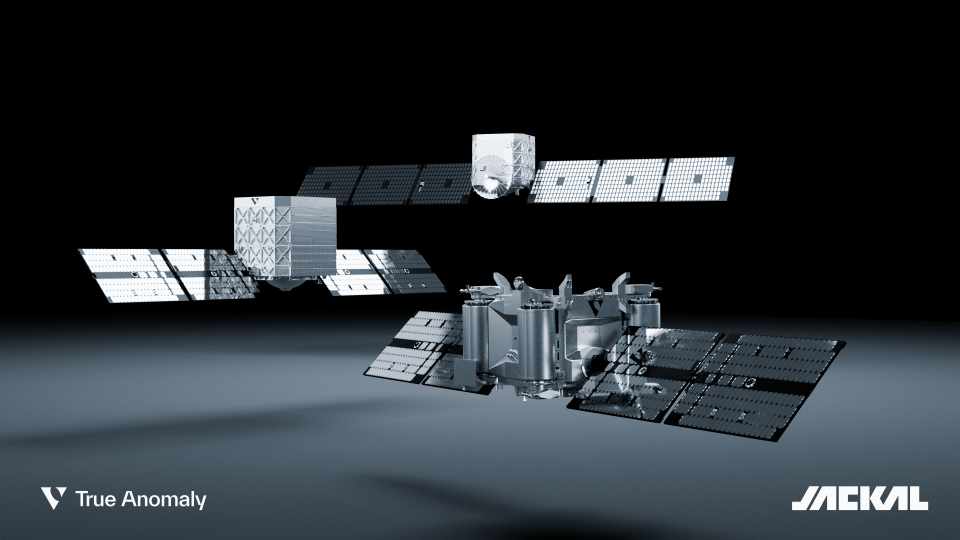
True Anomaly is betting that demand for systems capable of tracking and intercepting threats in orbit will only grow. Its work goes beyond interceptors. The company builds autonomous orbital satellites called Jackal and runs a software platform known as Mosaic, which coordinates satellite operations and decision-making in space.
That mix of hardware and software has already earned it a spot among a select group of companies working with the U.S. Space Force. True Anomaly is one of 12 firms, alongside players like Anduril and SpaceX, competing for contracts worth up to $3.2 billion tied to Golden Dome missile defense systems.
Competition is building across the board. Amazon is working to establish its own satellite network through Project Kuiper, now referred to as Leo, aiming to carve out a position alongside existing heavyweights. SpaceX still leads the pack with Starlink, and its defense-focused counterpart Starshield is already tailored for military and government use.
What stands out is how quickly this category is taking shape. Space interceptors weren’t even a defined market a few years ago. Now they’re attracting billions in funding and government contracts, as well as some of the most ambitious engineering efforts in defense tech.
For True Anomaly, this round isn’t just about growth. It’s a signal that space is becoming a frontline domain, and the companies building for it are moving from experimental to essential.