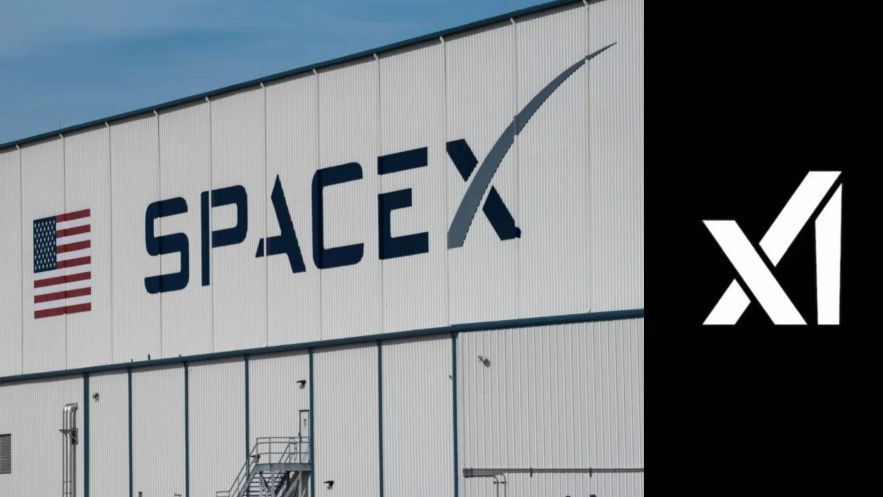
Elon Musk has spent years selling Mars as the endgame for SpaceX. The latest glimpse into its finances tells a different story. The company is pouring billions into artificial intelligence, turning what was once a rocket business into an AI infrastructure play.
According to a Reuters report, documents tied to a potential IPO show a company in transition. The biggest source of profit today is Starlink, the satellite broadband network that has quietly grown into a cash engine. Last year, Starlink more than doubled operating income to $4.42 billion, covering losses from the space division, where spending on next-generation rockets continues to climb.
That cushion has given Musk room to push deeper into AI. Inside the company, the shift is already visible. In 2025, the AI unit, which includes xAI, accounted for 61% of total capital spending, or $20.74 billion across the business. The same unit posted an operating loss of $6.4 billion. The gap shows how far ahead of revenue the company is willing to spend.
That has emboldened Musk to remake SpaceX as an AI-first company, dramatically shifting its spending profile.
“While Alphabet and Microsoft have deep operating cash flows, SpaceX is bankrolling its push with revenue from rockets and satellites, leaving it with a cash-burn profile closer to a late-stage startup than a trillion-dollar incumbent,” Reuters reported.
Meanwhile, SpaceX’s push into AI isn’t new. The Wall Street Journal reported in July 2025 that the company planned to invest $2 billion into xAI as part of a broader $5 billion equity round.
Inside SpaceX: Starlink Pays the Bills While AI Burns Through Cash
The ambition is far larger than training models on Earth. SpaceX is working toward a network of space-based data centers, backed by a proposed constellation that could reach one million satellites. Analysts estimate the cost could run into the trillions. That scale would place SpaceX in direct competition with companies like Alphabet Inc., Microsoft, Meta Platforms, Amazon, and Oracle, all of which are spending heavily on AI infrastructure. Combined, those firms are expected to invest more than $600 billion this year alone.
There is a key difference. Big Tech is funding its AI push with profits from advertising, cloud computing, and enterprise software. SpaceX is relying on Starlink and its launch business, leaving its finances closer to a late-stage startup than a mature tech giant.
That contrast sits at the center of the company’s IPO pitch. SpaceX is aiming to raise about $75 billion at a $1.75 trillion valuation, suggesting a total addressable market of $28.5 trillion, largely driven by AI demand. The opportunity is massive. The path to sustained profitability is less clear.
“What investors will be looking for is clear visibility on how the business model evolves with this financing and whether it can make the economics of compute work at scale,” Melissa Otto, head of research at S&P Global Visible Alpha, told Reuters. “In many ways, SpaceX looks like a super-sized startup.”
The numbers back that view. Capital spending has surged past revenue, with last year’s outlay exceeding sales by roughly $2 billion. If that gap widens, the company may need to return to capital markets sooner than expected.
Another variable is a potential deal with Cursor, an AI coding startup. SpaceX holds an option to acquire the company for about $60 billion, or walk away and pay roughly $10 billion for a partnership. The structure gives SpaceX time. It pushes a major decision until after the IPO.
Each path carries trade-offs. A full acquisition could bring in high-value enterprise customers and deepen SpaceX’s AI capabilities. It would add pressure to an already stretched balance sheet. A smaller partnership keeps cash intact while still offering productivity gains within the AI division, though access to Cursor’s customer base could be limited.
Neither company has outlined how such a deal would be financed. A stock-heavy transaction would protect cash reserves. Any meaningful cash component could force cuts elsewhere or trigger another funding round sooner than planned.
For now, the story remains unfinished. The financials still reflect a rocket-and-satellite business. The valuation reflects something closer to a future AI infrastructure giant.
“That doesn’t make the story broken but it does mean IPO buyers would be paying upfront for a transformation that still needs to show up more clearly in the numbers,” said Shay Boloor, chief market strategist at Futurum Equities.
SpaceX is asking investors to believe that transformation is already underway. The cash from Starlink is real. The AI bet is getting bigger. The question hanging over the IPO is whether the payoff arrives before the runway runs out.