This Texas high school promises $1M by graduation, or your tuition back
 Daniel Levi
Posted On April 23, 2026
Daniel Levi
Posted On April 23, 2026
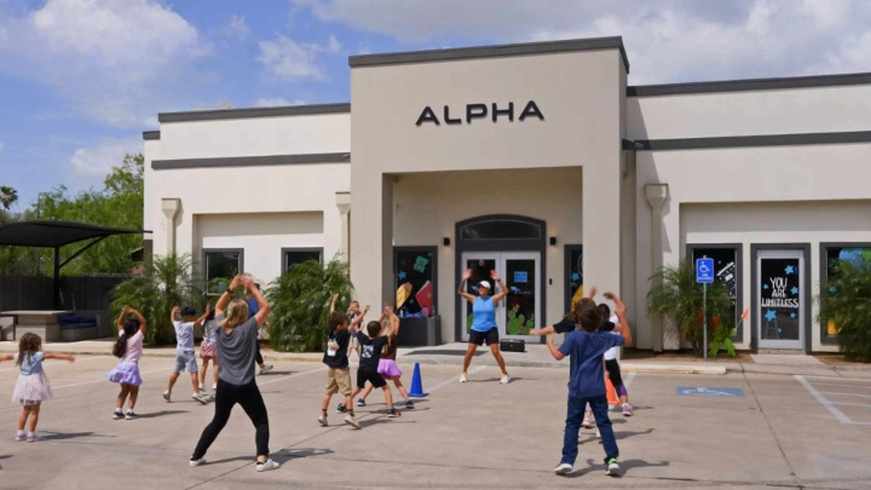
A Texas private school already under scrutiny for replacing traditional classrooms with AI-powered learning is now making one of the boldest promises yet in education: make $1 million by graduation, or get your tuition back.
Alpha School, founded in 2014 and now operating in cities including Austin, Miami, and Palo Alto, has built its model around what it calls “2-Hour Learning”—a system where students complete core academics using adaptive software in roughly two hours a day, then spend the rest of their time on workshops like coding, entrepreneurship, and public speaking. The approach has drawn attention for its claims of rapid learning and top-tier test scores. It has also faced criticism, with investigations raising questions about the quality of its AI-generated curriculum and reports of student dissatisfaction.
Now, with a new entrepreneur-focused track promising students $1 million in earnings by graduation—or a full tuition refund—Alpha is pushing its model into even riskier territory, raising a bigger question: can a school really guarantee outcomes that even most startups fail to achieve?
What Alpha School is
Alpha School is not a brand-new experiment built around a viral post. It is a private K–12 school network that started in Austin in 2014 and built its identity around a model it calls “2 Hour Learning.”
The pitch is simple and provocative: students spend roughly two hours a day moving through core academics on AI-powered and software-based systems, then use the rest of the school day for workshops focused on coding, entrepreneurship, public speaking, leadership, and other practical skills. Human adults are there, but Alpha does not position them as traditional classroom teachers. It calls them “guides,” and their role is framed more around coaching, motivation, and support than direct instruction.

Credit: Alpha School
That model has helped Alpha stand out at a time when many parents are questioning what schools are supposed to prepare children for. The company’s pitch is bigger than better test scores or shorter school days. It is selling a different theory of education itself: let software handle core instruction, free up time, and use those extra hours to build students into confident, self-directed young people who can speak clearly, lead teams, start businesses, and adapt early to an AI-shaped economy. In interviews and podcast appearances, Alpha’s leadership has framed traditional schooling as outdated and too slow for the future students are heading into.
That message has given the school a profile far beyond Austin. Alpha has grown into multiple cities, including Miami and Palo Alto, and has promoted at-home options under the Alpha Anywhere brand. Its supporters present the school as proof that education can be rebuilt from scratch. Its critics see something more troubling: a high-priced private system making unusually big claims about outcomes, student performance, and the role AI should play in a child’s daily learning. That tension is a big part of why the school keeps drawing attention. Alpha is not just offering a new campus or a fresh curriculum. It is making a direct challenge to the classroom model most families still know.
The $1 Million Promise
The latest claim tied to Alpha School pushes its model into far more ambitious territory. In recent posts, entrepreneur Nat Eliason, who is also Alpha School’s Head of Founder Development, described a new high school track connected to Alpha that promises something rarely seen in education: “Make $1M by graduation or get 100% of your tuition refunded.” The idea reads less like a school brochure and more like a startup guarantee, tying the value of education directly to financial outcomes.
Make $1m by graduation.
Or get 100% of your tuition refunded.
That’s the promise of the new high school for entrepreneurs Cameron and I are launching this fall through @AlphaSchoolATX.
We need 2-3 coaches to help make it happen.
DM us or apply! https://t.co/iy4sHHSrHr
— Nat Eliason (@nateliason) March 13, 2026
The program is framed around entrepreneurship. Students are expected to spend their time building businesses, launching projects, and learning how to generate revenue before they leave high school. The pitch suggests that traditional milestones like grades, GPAs, or even college admissions matter less than real-world output. If students can build something that makes money, the argument goes, they are already ahead.
What remains unclear is how the promise will be measured or enforced. The details behind “make $1M” have not been publicly broken down in a way that answers obvious questions. Does the figure refer to revenue, profit, or equity value? Is it individual or team-based? What happens if a student comes close but does not reach the target? And how many students, if any, have already done it?
There is no public track record yet showing that Alpha students are consistently hitting that level of financial outcome. The guarantee appears to be new, which means it has not been tested across graduating classes or market cycles. That gap between the promise and the proof is where the story starts to shift from bold vision to open question.
At the same time, the framing is deliberate. Alpha is leaning into a growing belief that education should be judged by results rather than credentials. A tuition refund tied to income is a direct challenge to both private schools and universities, many of which charge significant fees without any guarantee of career success. By putting a financial outcome on the table, Alpha is signaling that it is willing to be judged differently, even if the details of that bet are still taking shape.
Alpha School Criticism
Alpha’s approach has drawn as much skepticism as it has attention, and that tension didn’t start with the $1M promise. Long before the new guarantee surfaced, the school’s core model was already under scrutiny from educators, parents, and journalists.
Investigations cited in recent reporting raised questions about the quality of Alpha’s AI-driven curriculum. Some lesson materials were described as poorly constructed, with confusing or illogical multiple-choice questions that did not meet expected academic standards. Reports from NPR affiliate WBUR and 404 Media pointed to concerns from families, including accounts of students feeling disengaged or frustrated with a system that relies heavily on software for instruction.
“Investigation finds faulty lesson plans and unhappy students at an AI-powered private school,” NPR affiliate WBUR wrote.
Critics have focused on a deeper issue: whether replacing teachers with AI systems and “guides” changes more than just how students learn. It shifts who is accountable. In a traditional classroom, responsibility sits clearly with educators and institutions. In a system driven by software, that line becomes harder to define. If a student falls behind or struggles, is it the platform, the guide, or the model itself?
There are also broader concerns about the school’s claims. Alpha has said its students perform in the top 1–2% nationally and move through material far faster than peers in traditional schools. Independent verification of those outcomes has been limited, and that gap has fueled ongoing debate about how much of the narrative is backed by external data versus internal reporting.
The school has pushed back on criticism, calling some reports inaccurate and reaffirming its position that its model is grounded in research and designed with student well-being in mind. Supporters point to high engagement levels and strong test performance as evidence that the approach works. Detractors argue that the model is still experimental and question whether students are being used to test a system that has yet to prove itself at scale.
That backdrop matters. The $1M guarantee did not appear in a vacuum. It lands on top of an already polarizing model, one that is trying to redefine what school looks like at a time when trust in traditional education is already under pressure.
The Bigger Question: Is This the Future of Education—or Hype?
Alpha’s latest promise lands at a moment when the ground under education is already shifting. College costs have surged for decades. Confidence in the value of a degree has slipped. At the same time, AI tools are starting to change how people learn, build, and earn. Against that backdrop, a school tying tuition to a financial outcome feels less like a stunt and more like a signal.
The idea behind it is straightforward. If students can learn faster through software and spend more time building real projects, they might leave school with skills and income instead of debt. For families questioning the return on traditional education, that framing is compelling. It speaks to a growing appetite for results that can be measured outside transcripts and test scores.
Yet the gap between theory and reality is wide. Most startups fail. Most first-time founders do not generate meaningful revenue, let alone seven figures, within a few years. Translating entrepreneurial success into a predictable educational outcome is a different challenge altogether. A guarantee tied to that outcome raises questions about selection, expectations, and how success will be defined in practice.
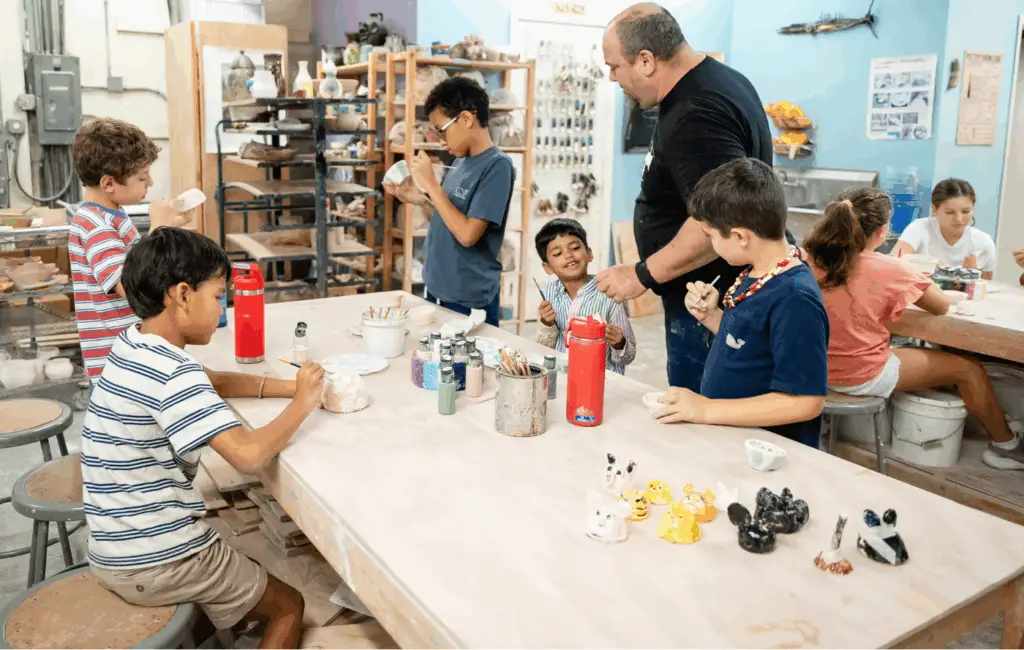
Credit: Alpha School
There is a broader tension here that extends beyond a single school. Education has long been built around inputs: hours in class, standardized curricula, and degrees earned. Alpha is pushing toward outputs: what a student can actually do, build, or earn. That shift is appealing, though it carries risk. Outputs are harder to standardize, harder to measure, and far less predictable across a large group of students.
Alpha is not alone in trying to rethink school for an AI-driven economy. New programs, bootcamps, and alternative education models have been gaining traction for years. What sets this apart is the willingness to attach a concrete financial promise to the outcome. That move draws a clear line in the sand. It invites attention, skepticism, and scrutiny in equal measure.
The result is a story that feels bigger than a single program launch. It touches a deeper question many families and founders are starting to ask: if the old system no longer guarantees opportunity, what should replace it—and who is willing to stand behind that answer with more than words?
Below is a CBS Evening News segment that breaks down how Alpha School actually works—from its two-hour learning model to the questions it’s raising about the future of education.