A&K Robotics raises $8M to bring self-driving mobility pods to airports, tackling accessibility and congestion
 Nickie Louise
Posted On April 21, 2026
Nickie Louise
Posted On April 21, 2026
Airports are built for movement. Yet for millions of travelers, getting from security to the gate can feel like the hardest part of the trip. Roughly 17% of the global population lives with mobility challenges. Requests for airport assistance are rising 10–15% each year, outpacing overall passenger growth. That gap is turning into a real operational problem for airports already stretched on staffing and space.
Amid that strain, Canadian startup A&K Robotics is betting autonomy can fix one of air travel’s most overlooked pain points. The company announced it has raised $8 million CAD in Series A funding to scale what it calls a new layer of airport infrastructure: self-driving vehicles that carry passengers through terminals.
The round was led by BDC Capital’s Industrial Innovation Venture Fund and Vantage Futures, the venture arm of airport infrastructure firm Vantage Group. Investors are placing a clear bet that airports will need more than incremental fixes as passenger volumes climb.
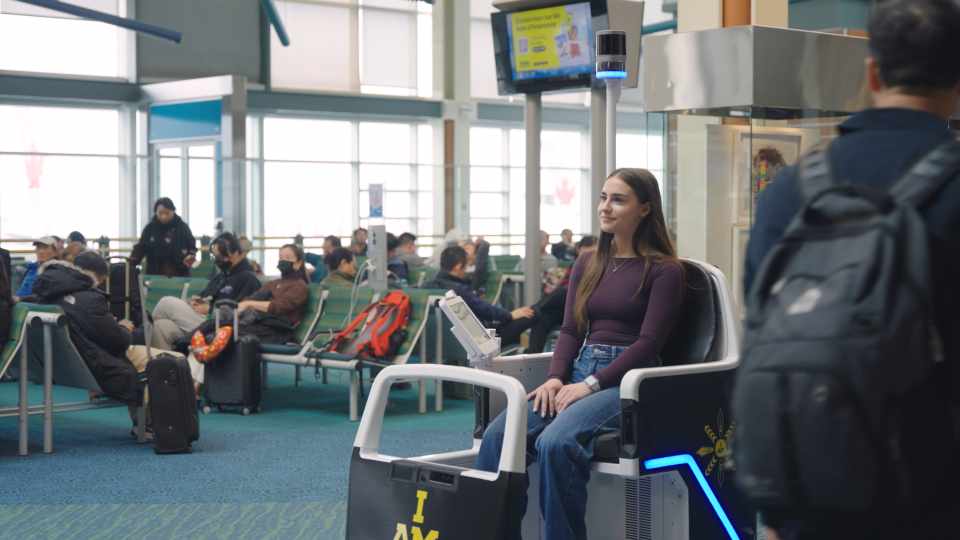
A&K Robotics is building small, autonomous mobility pods designed for indoor environments like airport terminals. Its flagship product, Cruz, works like a self-driving shuttle built for crowded hallways instead of highways. A passenger selects a destination, and the vehicle moves through the terminal on its own, adjusting in real time as people cross its path.
“Air travel is chaotic enough — getting to your gate shouldn’t be part of the problem,” said Matthew Anderson, CEO of A&K Robotics. “We’re building the infrastructure that helps airports move more people, more safely, and with greater independence; all while fitting seamlessly into existing operations.”
This startup wants to fix airport chaos with self-driving mobility robots: A&K Robotics raises $8M
A&K Robotics isn’t testing in controlled environments. Cruz is already operating inside active airports, including Vancouver International Airport and Madrid-Barajas Airport. These are high-traffic spaces with unpredictable movement, the kind that has slowed adoption of indoor autonomy for years.
“We’re bringing autonomy indoors,” said Jessica Yip, COO of A&K Robotics. “While others focus on roads, we’re tackling the harder problem — navigating dense, unpredictable airport crowds. Autonomous mobility is already standard in warehouses. We are bringing it into the most complex indoor environments: airports.”
That distinction matters. Warehouses are structured and predictable. Airports are not. Travelers stop abruptly, change direction, cluster around gates, and carry luggage that shifts their movement. Getting a machine to operate safely in that setting is a different level of challenge.
The company’s pitch to airports is straightforward: improve accessibility, reduce reliance on staff for passenger transport, and keep people moving through terminals more efficiently. For operators, the appeal goes beyond passenger experience. Labor shortages and rising costs have made manual assistance harder to scale.
The investor lineup reflects that broader infrastructure angle. Alongside BDC and Vantage Futures, the round includes RiSC Capital, Grep VC, Nimbus Synergies, and Dan Gelbart, co-founder of Creo and Kardium.
“We are pleased to partner with A&K Robotics and support its work to address a critical need in modern transportation infrastructure,” said Matthew Handford, Executive Managing Director, Vantage Futures. “Their ability to deploy in dense, high-traffic airport environments positions them as a key partner for operators looking to improve operational efficiency, enhance passenger experience, and scale autonomous mobility across global networks.”
“Canada is home to some of the world’s most advanced robotics and AI companies,” said Byron Thom, Partner at BDC’s Industrial Innovation Fund. “A&K Robotics represents the next generation of industrial innovation, combining deep technology with real-world deployment in complex, human-centered environments. That’s the type of deep technology companies that strengthen Canada’s global competitiveness in advanced industries and contribute to its economic sovereignty.”
The new funding will push A&K Robotics out of pilot programs and into permanent deployments. The company is increasing production capacity and investing in new facilities to meet demand from airport operators. A new R&D and prototyping center is already in place, with a third facility planned in Surrey, British Columbia, inside a 55,000-square-foot site operated by Manterra Technologies.
That expansion marks a shift from experimentation to scale. The company expects to move from producing dozens of vehicles each year to hundreds, a signal that airports are starting to treat autonomous mobility as part of core infrastructure rather than an optional add-on.
At a time when most headlines about autonomy still focus on cars and public roads, A&K Robotics is taking a different path. Airports may turn out to be among the first places where autonomy becomes routine, not as a spectacle but as a quiet fix to a problem travelers face every day.
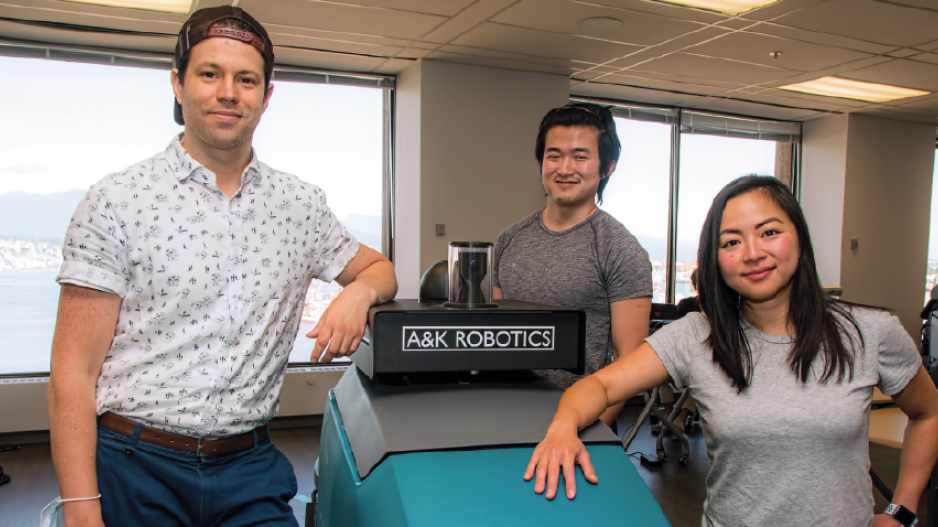
A&K Robotics founders