U.S. Navy Drone Tests Fail After Starlink Outage, Exposing Pentagon’s Reliance on SpaceX
 Daniel Levi
Posted On April 16, 2026
Daniel Levi
Posted On April 16, 2026
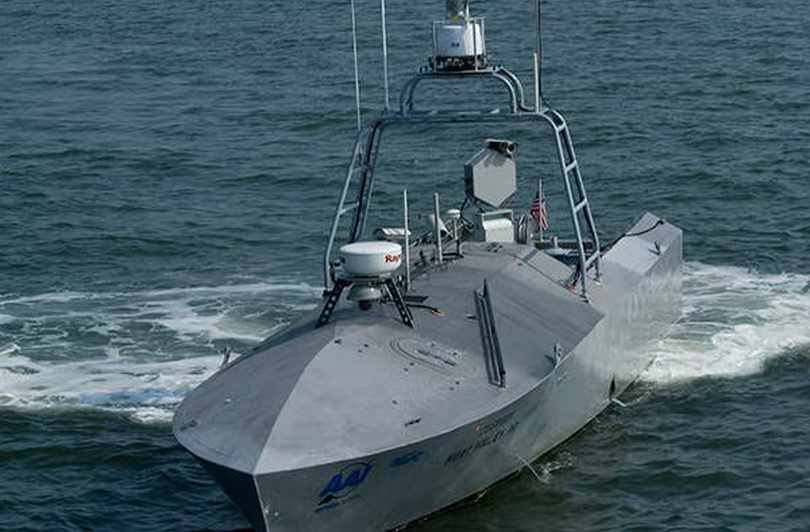
A routine Navy exercise off the California coast turned into a quiet stress test of the Pentagon’s tech stack. When SpaceX’s Starlink network went down during a global outage last August, more than two dozen unmanned surface vessels lost contact and drifted in place. For nearly an hour, operators couldn’t reach them. The incident, revealed in an exclusive investigative report from Reuters, offers a rare look at how deeply the U.S. military now depends on a commercial satellite network run by Elon Musk.
The episode, drawn from internal Navy documents and a person familiar with the tests, offers a rare look at how deeply the U.S. military now depends on a commercial satellite network run by Elon Musk. The vessels were part of a broader push toward autonomous systems meant to give the Navy new options in a potential conflict with China. When the connection dropped, operations stopped.
“The incident, which involved drones intended to bolster U.S. military options in a conflict with China, was one of several Navy test disruptions linked to SpaceX’s Starlink that left operators unable to connect with autonomous boats,” Reuters reported, citing internal Navy documents and a person familiar with the matter.
The news comes four months after SpaceX’s Starlink lost communication with one of its satellites following a rare in-orbit failure, adding another real-world data point to the growing challenge of managing massive fleets in low Earth orbit.
Meanwhile, the recent incident wasn’t isolated. Multiple tests tied to the same program encountered connection issues with Starlink, leaving crews unable to communicate with autonomous boats. The problems hadn’t been publicly disclosed.
Starlink Failure Leaves U.S. Navy Drones Adrift, Highlighting Single Point of Failure Risk
That reliance sits at the center of a larger shift. SpaceX has become a core supplier to the U.S. government, spanning launches, satellite communications, and military-focused AI systems. Starlink, its low-Earth orbit network with thousands of satellites, has become a backbone for projects ranging from drones to missile tracking. The scale gives the military wide coverage and resilience against many forms of disruption. It also creates a new kind of exposure.
“If there were no Starlink, the U.S. government wouldn’t have access to a global constellation of low-earth-orbit communications,” said Clayton Swope of the Center for Strategic and International Studies.
Officials declined to comment on the specific tests. A Pentagon spokesperson said the department relies on “multiple, robust, resilient systems” across its networks. The Navy and SpaceX did not respond to requests for comment.
The backdrop is shifting fast. Amazon this week announced an $11.6 billion deal to acquire satellite operator Globalstar, a sign that rivals want a bigger role in low-Earth orbit communications. Even so, SpaceX remains far ahead. It dominates launch capacity and operates both Starlink and its national security-focused counterpart, Starshield. Those businesses now generate billions.
Lawmakers have been warning about the risks of leaning too heavily on a single provider led by one individual. Recent tensions around AI vendors have shown how quickly access to key systems can become a point of friction. Earlier reporting described how the Starlink service to Ukrainian forces was switched off during a critical moment, raising questions among allies. In Taiwan, concerns surfaced over whether service had been withheld from U.S. personnel, claims the company disputed.
Inside the Navy’s test program, the technical limits were becoming visible. During exercises in April 2025 involving unmanned boats and aerial drones, Starlink struggled to maintain stable connections under heavy data load, according to a safety report. The system was handling multiple vehicles at once, each streaming data and receiving commands. The network faltered.
“Starlink reliance exposed limitations under multiple-vehicle load,” the report said. It pointed to additional issues tied to radios from Silvus and networking systems from Viasat.
Weeks before the August outage, other tests had already seen intermittent drops in connectivity. The exact cause of those losses wasn’t clear from the documents.
Even with those setbacks, some defense analysts argue the tradeoff still favors Starlink. The service is relatively low-cost and widely available, giving the military reach that would be difficult to replicate on its own. Bryan Clark, an autonomous warfare expert at the Hudson Institute, framed it bluntly: “You accept those vulnerabilities because of the benefits you get from the ubiquity it provides.”
That balance is now harder to ignore. The same network that keeps systems connected across oceans can, in a single outage, leave them adrift.

Starlink
Trending Now