Passive Income While You Sleep? The Truth Nobody Tells You
 Daniel Levi
Posted On December 12, 2025
Daniel Levi
Posted On December 12, 2025
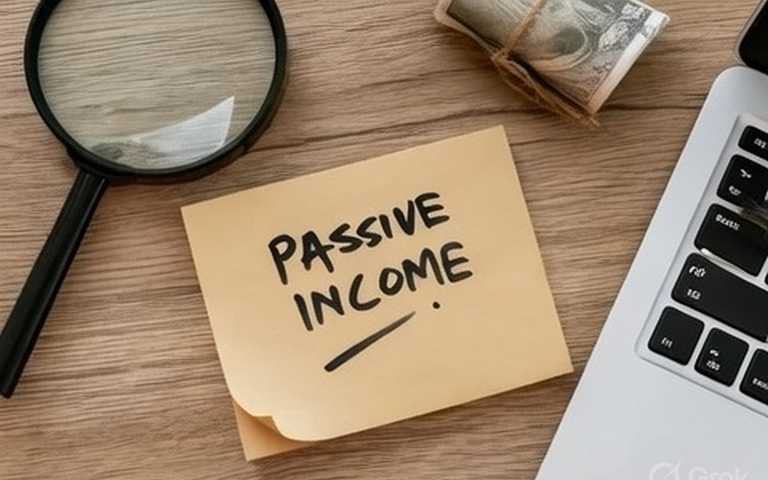
The promise of passive income while you sleep has been sold as a shortcut to wealth—but the reality is very different.
In a tech economy increasingly shaped by automation, AI, and software leverage, the idea of “passive income” has moved beyond personal finance blogs and into conversations among founders and startups. For many builders, though, the phrase feels gimmicky — more closely associated with get-rich-quick schemes, flashy dashboards, and internet hype than with building real businesses. That skepticism is earned: the way “earning while you sleep” is marketed online bears little resemblance to how durable companies, software products, or scalable systems are actually created.
But beneath that mistrust sits a more legitimate ambition. Not effortless money — but income that isn’t permanently tethered to a founder’s daily time and attention. Building something once and letting systems, software, or assets continue to generate revenue is far more sustainable than endlessly selling hours to the highest bidder. That desire for leverage, not laziness, is what draws many entrepreneurs to automation, digital products, and scalable business models.
For years, the internet has sold a seductive promise: build a “passive income” business once, then watch the money roll in while you sleep. YouTube thumbnails shout about overnight profits. Influencers preach time freedom. Blogs churn out lists of “easy passive income ideas.” And millions of people chase the idea that financial independence is one clever hustle away.
But talk to economists, tax professionals, or founders who actually built income-producing assets, and a very different picture emerges.
Passive income is real — but not in the way it’s portrayed.
Every credible source agrees on the same point: there is no such thing as a passive income business that requires no work and pays you while you sleep from day one.
Financial scholars define passive income as revenue derived from assets or activities in which you do not materially participate — but emphasize that these assets require front-loaded effort, capital, or both. The IRS echoes this distinction: passive income generally comes from rentals, royalties, and limited partnerships, but it still requires setup, management, and periodic oversight to remain compliant and profitable.
Business operators say the same thing. In dozens of real-world accounts — from Reddit operators to indie hackers to small business owners — one theme is universal:
Passive income becomes passive only after significant upfront investment of time, systems, or money.
Creating a course, writing a book, launching a SaaS tool, building digital assets, buying rental property, or developing automations can lead to low-maintenance income. But none become passive without weeks, months, or even years of building before the “while you sleep” stage ever happens. Even then, most require periodic updates, monitoring, or optimization — not daily work, but not zero effort either.
What no one talks about is the middle ground: the truth that passive income isn’t magic, isn’t instant, and isn’t easy — but it is achievable when approached with the right expectations, long-term thinking, and a willingness to build assets that continue to work long after you do.
This article breaks down the real story behind passive income — the myth, the mechanics, the expert consensus, and what founders and operators say actually works. Because understanding the truth isn’t discouraging; it’s liberating. When you know what passive income really is, you can finally build it the right way.
Where the Myth of Passive Income Came From — And Why It’s Misleading
For most people, the idea of “passive income while you sleep” didn’t come from financial textbooks or business schools. It came from internet culture — a mix of influencer marketing, self-help channels, and viral money hacks that spread faster than nuance ever could.

The image many “passive income” campaigns sell: money arriving effortlessly while you sleep.
A. The “Money While You Sleep” Marketing Machine
The modern passive-income fantasy was shaped not by economists, but by creators selling the dream of frictionless wealth. YouTube thumbnails feature screenshots of dashboards that earn thousands overnight. Instagram feeds show laptops on beaches. The subtext is simple and extremely powerful:
“If you’re still trading hours for dollars, you’re doing it wrong.”
This messaging works because it speaks directly to people’s frustrations with traditional work. But it rarely discloses what economists and business operators repeatedly emphasize: every passive income stream begins with non-passive work.
Harvard Business Review has noted that the rise of “hustle influencers” has led to “a distortion of what entrepreneurial freedom actually looks like,” pointing out that most online narratives skip the years of groundwork that precede autonomous income.
Financial planners echo the same sentiment. The CFP Board explains that passive income is often advertised as effortless, but in reality, it requires “meaningful upfront investment or ongoing risk management.”
But this nuance is rarely part of the sales pitch.
B. Why People Believe It
Psychologists who study financial behavior point to three forces that make “passive income” so compelling:
1. Ease Bias
Humans are wired to prefer solutions that promise the greatest reward for the least effort.
The idea that income could materialize without continuous work feels like a breakthrough, not a warning sign.
2. Scarcity Frustration
In a world of rising living costs and stagnant wages, the concept of income divorced from labor feels like liberation.
3. Visibility Bias
We see outcomes online—dashboards, screenshots, success stories—but rarely the work, failures, or years of iteration behind them.
Economist and Nobel laureate Robert Shiller has written extensively about how narratives around money spread faster than data. He developed the concept of narrative economics, arguing that economic outcomes are shaped not only by data and fundamentals but also by stories that spread socially. He added that economic stories can be more powerful than economic facts.
The passive-income myth is one of the most durable examples.
C. The Missing Disclaimer
Every reputable institution agrees on one foundational point:
Passive income is not income without effort — it is income without ongoing active labor.
The IRS draws a sharp distinction here. In its official guidance, passive income is defined as revenue from activities in which you do not materially participate.
But it also notes that these activities must still be managed, maintained, or monitored to remain profitable and compliant.
In other words:
-
Writing a book is not passive — royalties are.
-
Building rental property systems is not passive — rental revenue becomes passive only when management is delegated.
-
Developing a digital course isn’t passive — course sales can become passive after the system is built.
-
Building software isn’t passive — subscription revenue becomes passive once updates and hosting are automated.
In its 2023 piece, “The Myth of Passive Income Streams for Small Businesses,” Harvard Business Review cautioned against the growing wave of passive income scams. Instead, it emphasized a more grounded approach: building tangible assets, diversifying income streams — such as rentals, royalties, online courses, or dividend stocks — and leveraging skills to create scalable digital ventures. The article warned against “get-rich-quick” schemes, stressed the importance of validation before scaling (customers actually paying), and framed side hustles as tools for long-term career stability and freedom rather than shortcuts to fast cash. At its core, HBR’s argument centers on building systems that generate revenue with minimal ongoing involvement, often by applying sound business principles to personal finance and career development.
Summarizing its findings, HBR warned that many so-called “passive income” streams promoted online are misleading or outright scams, particularly those tied to expensive courses and marketplaces.
“Bottom line: Passive income streams promoted on the Internet are bogus. Stay away from “passive income” traps, especially on Amazon. Most are scams to get people to sign up for expensive masterclasses, and provide terrible advice that will lead to wasted time, lost money, and possible account bans. It’s possible to create a legitimate online business, but it takes work, creativity, and patience … not easy money fantasies.”
Yet these distinctions rarely appear in the “get rich while you sleep” versions of the passive income story.
The myth persists because it’s simple, emotional, and seductive.
The truth persists because it’s grounded in economic realities, tax law, and thousands of real-world operator experiences.
What Passive Income Actually Means (According to Experts)

Strip away the marketing and the YouTube thumbnails, and a consistent definition emerges from economists, tax authorities, and financial analysts:
Passive income is real — but it is neither instant nor effort-free.
Experts across disciplines agree that passive income is ongoing revenue generated from an asset or system after the initial work or investment is complete.
Here’s what the most reputable sources actually say.
A. Economists: Passive Income Is Built on Assets, Not Wishes
Economists who study income dynamics define passive income as revenue derived from productive assets rather than labor. These assets may include intellectual property, equity ownership, rental property, or financial instruments. But across the board, economists emphasize front-loaded effort or capital as the entry point.
Economist Thomas Piketty, in his work on capital and income distribution, explains that capital generates income only because substantial investment was made beforehand, whether through time, money, or innovation. In other words, the “passive” part only applies after the asset exists.
Similarly, academic literature in financial economics describes passive income streams as “residual flows” that continue after the creator’s active involvement tapers off — but none claim they arise spontaneously or without setup.
The economic consensus is clear:
Passive income is the output of previous labor, not the absence of labor.
B. Tax Experts (Including the IRS): Passive ≠ No Work
The IRS provides one of the most precise definitions of passive income.
According to IRS Publication 925, passive income generally comes from:
-
Rental activities, or
-
Businesses in which you do not materially participate
However — and this is the part rarely discussed online — IRS guidelines explicitly note that these activities still require management, upkeep, and monitoring. A rental property must comply with local regulations, handle repairs, and maintain occupancy. A business you don’t “materially participate” in still has operational needs, risks, and responsibilities.
The IRS definition of passive income underscores a critical truth:
“Passive activities include trade or business activities in which you don’t materially participate. You materially participate in an activity if you’re involved in the operation of the activity on a regular, continuous, and substantial basis. In general, rental activities, including rental real estate activities, are passive activities even if you materially participate.”
You may not work every day, but you remain responsible for the asset’s ongoing viability.
C. Financial Analysts: Passive Income Requires Upfront Investment and Ongoing Oversight
Professional financial planners, including those certified by the CFP Board, consistently warn that passive income is misunderstood. Their published guidance stresses three realities:
-
Upfront cost or effort is unavoidable.
Whether writing a book, creating a course, buying rental property, or building digital products, there is always an initial investment. -
Maintenance never fully disappears.
They note that courses require updates, software needs patches, and even dividend portfolios must be periodically rebalanced. -
Risk does not disappear simply because labor does.
Analysts at the CFA Institute note that passive income streams still face economic, operational, and market risks—especially when built on digital or financial assets.
Their position ultimately aligns with tax authorities and economists:
Passive income is not a loophole — it is a long-term strategy built on assets, systems, and leverage.
D. What Business Operators Say: Passive Comes After the Hard Part
Among founders and small business operators, there is near-unanimous agreement:
Every passive income business begins with a non-passive phase.
Indie hackers describe months spent building micro-SaaS tools before subscriptions became hands-off.
Course creators report that recording, editing, and launching a course takes more time than maintaining it.
Digital product sellers emphasize that marketing, SEO, and iteration require upfront intensity before sales become automated.
The recurring message from people actually doing it:
Passive income is the reward for building systems — not a shortcut that replaces systems.
Once systems, processes, or automation are in place, the business shifts from labor-driven to leverage-driven. That’s when income can continue to flow with minimal oversight, sometimes even “while you sleep” — but never at the beginning.
The Expert Consensus in One Sentence
Across all reputable sources — economists, the IRS, financial analysts, and founders — the truth is consistent:
Passive income is absolutely real, but it is always preceded by upfront effort, ongoing oversight, and the creation or acquisition of assets that continue working after you do.
What Real Business Owners and Successful Entrepreneurs Say
If you strip away the marketing hype and talk directly to people who have actually built passive income streams — founders, indie hackers, rental owners, digital creators, and small SaaS operators — the story changes quickly. Across hundreds of in-depth discussions in communities like r/Entrepreneur, r/Passive_Income, r/IndieHackers, and r/SmallBusiness, the consensus is strikingly consistent.
Real operators don’t describe passive income as magic.
They describe it as a front-loaded effort that turns into a back-loaded reward.
Here’s what they actually say — over and over.
A. It took me months (or years) before it felt passive.
Across Reddit case studies and Indie Hacker build logs, one theme repeats: the early phase is the hardest.
Operators consistently report that:
-
building the product
-
validating demand
-
creating content
-
acquiring the first users
-
optimizing SEO
-
automating workflows
…requires substantial upfront effort before income stabilizes.
Many describe a timeline of 6 to 18 months before their business shifted from daily involvement to occasional monitoring — far from the “instant passive” narrative popularized online.
This mirrors what founders say privately:
Passive income begins only after the infrastructure is built.
B. Passive doesn’t mean no work — it means predictable, low-maintenance work.
Real operators reject the fantasy that passive income is completely hands-off.
They report activities such as:
-
occasional updates to content or software
-
responding to periodic support emails
-
performing security patches
-
refreshing outdated modules
-
restocking or coordinating suppliers
-
fixing automation failures
-
monitoring analytics
In community discussions, many describe the work as light, intermittent, and often enjoyable, but still present.
The real consensus:
Passive income becomes passive when the effort-to-income ratio drops — not when effort disappears.
C. Most passive income ideas fail because people quit before the compounding kicks in.
Operators frequently mention that newcomers underestimate the patience required.
In Reddit threads discussing failed attempts at passive income, the most common frustrations include:
-
“I expected results in weeks, not months.”
-
“I didn’t realize I needed traffic first.”
-
“I built something once and hoped users would magically show up.”
-
“I didn’t expect maintenance, so I abandoned it.”
Founders emphasize that the early stage often appears to be zero progress, even when systems are quietly building momentum.
Many say it’s like planting a seed and walking away before it sprouts.
What separates successful operators from unsuccessful ones is not intelligence — it’s staying in the game long enough to reach the leverage phase.
D. The closest things to true passive income are content, software, automation, and capital.
In thread after thread, experienced operators point to the same categories as the most scalable and realistically passive once established:
-
Digital products (courses, templates, downloads)
-
Automated SaaS or micro-SaaS tools
-
Programmatic content sites
-
Affiliate sites with organic traffic
-
Niche calculators and utilities
-
APIs
-
Licensing (IP, code, art, datasets)
-
Rental properties with delegated management
-
Dividend stocks and REITs
These categories work because they leverage:
-
software
-
automation
-
evergreen intent
-
compounding traffic
-
third-party distribution
-
capital (in the case of investing or real estate)
Real operators warn, however, that even the most passive of these require:
-
periodic updates
-
optimization
-
monitoring
-
occasional problem-solving
Again, passive ≠ zero.
Passive = the system works harder than you do.
E. If it truly requires zero work, it’s not a business — it’s an investment.
Experienced founders draw a sharp distinction that often gets lost online:
-
A business can become low-maintenance, but it always involves some oversight.
-
An investment (such as dividends, index funds, REITs, or bonds) can be hands-off after purchase but requires upfront capital, not just effort.
Reddit’s long-running passive-income megathreads often highlight that people conflate the two, which leads to frustration when supposedly “passive businesses” require real maintenance.
The takeaway from operators:
If you want a passive business, build a system.
If you want something that requires no effort on your part, invest capital.
The Real-World Consensus
When you assemble the experiences of thousands of small creators, SaaS founders, rental owners, and digital entrepreneurs, the message is remarkably unified:
Passive income is not effortless — but it is attainable when built on systems, automation, and assets that keep working long after you do.
This is the part the internet rarely talks about.
It’s also the part that makes passive income actually achievable — not as a fantasy, but as a long-term strategy.
The Harsh Truth About Passive Income No One Talks About

Passive income is one of the most over-marketed ideas on the internet — and one of the least understood. The concept isn’t a scam; the way it’s portrayed often is. After separating hype from reality, there are several brutal truths that founders, financial experts, and long-time operators all agree on but rarely say out loud.
These are the truths that determine whether a passive-income business succeeds or fails.
1. Everything Requires Upfront Work — Usually a Lot of It
This is the part most people never see.
Before the “while you sleep” phase, there’s a build phase:
-
writing the course
-
building the software
-
designing the product
-
creating the content
-
optimizing the SEO
-
testing automations
-
hiring freelancers or VAs
-
setting up systems and documentation
Operators consistently report that 70–90% of the work occurs before any passive income is generated.
The myth isn’t that passive income exists — the myth is that it exists instantly.
2. Most People Fail Because They Expect Results Too Quickly
Communities like r/Entrepreneur and r/Passive_Income are full of stories from people who quit after:
-
3 weeks of blogging
-
2 months of YouTube videos
-
60 days of no traction
-
One failed product launch
-
One automation breaking
The emotional truth:
People don’t fail because passive income doesn’t work.
People fail because passive income takes longer than they expected.
If you imagine a timeline of days, you quit.
If you imagine a timeline of seasons or years, you persist long enough to hit leverage.
3. Passive Income Isn’t Passive — It Becomes Passive
No credible expert — not the IRS, not economists, not portfolio managers — claims passive income involves zero effort.
Instead, the consensus is that passive income involves:
-
front-loaded effort
-
declining involvement over time
-
eventual low-maintenance oversight
In every real case study, the transition looks like this:
Active Build → Semi-Passive Optimization → Passive Maintenance
But skipping the Active Build phase doesn’t work.
You cannot automate what does not yet exist.
4. Systems, Not Ideas, Make Passive Income Possible
The harsh truth:
Most passive income ideas fail not because the idea is bad, but because the system behind it never gets built.
Passive income only becomes real when the following systems exist:
-
automated workflows
-
delegated tasks
-
documented processes
-
software that handles predictable operations
-
marketing that compounds (SEO, email, evergreen assets)
-
Distribution that doesn’t rely on you
Ideas don’t create passive income — systems do.
5. Even “Passive” Streams Still Need Maintenance
Operators describe maintenance in terms like this:
-
“Once a month, I go in and check everything.”
-
“I spend two hours a month on updates.”
-
“I respond to support emails every few days.”
-
“I fix bugs 2–3 times a year.”
-
“I update my course once a quarter.”
These aren’t heavy workloads, but they’re not zero.
The internet often frames passive income as “set it and forget it.”
The reality is closer to “set it, refine it, then monitor it lightly.”
Passive income is light, not nonexistent.
6. You Don’t Eliminate Work — You Shift Work to Leverage
This is the truth that separates amateurs from experts.
Passive income doesn’t remove effort.
It redirects it from:
-
daily labor → one-time creation
-
hourly tasks → automated systems
-
hands-on management → outsourcing
-
unpredictable work → predictable workflows
-
time-based income → asset-based income
Passive income is ultimately a question of leverage, not laziness.
7. If It Truly Requires Zero Work, It’s Not a Business — It’s an Investment
Business operators draw a hard line here:
-
A passive income business is still a business. It requires some oversight.
-
A truly hands-off asset is an investment — stocks, bonds, REITs, index funds, or royalty positions.
People confuse the two, and that confusion creates impossible expectations.
One requires capital.
One requires work.
Neither is magical.
8. The Biggest Risk: People Copy the Fantasy, Not the Reality
Most passive income failures come from copying what people say online, not from copying what experts and operators actually do.
The fantasy version:
-
“Make money with zero work.”
-
“Launch once, earn forever.”
-
“Income on autopilot instantly.”
The real version:
-
Build something valuable
-
Automate what can be automated
-
Delegate what must be delegated
-
Maintain what matters
-
Let the system compound over the years
People chase the fantasy and quit.
People who embrace reality—the harsh truth—are the ones who eventually unlock real leverage.
The Unfiltered Takeaway
The reason no one talks about these truths is simple:
They’re not sexy. They don’t sell.
No YouTube thumbnail goes viral with:
“Work hard for 6 months, then maybe it becomes passive later.”
But that’s the real path.
Passive income is absolutely possible, absolutely life-changing, and absolutely worth pursuing —
When you know the truth and build like a founder, not a dreamer.
Examples That Actually Work — The Closest Thing to Real Passive Income
If “make money while you sleep” has a real-world counterpart, this is it:
Business models built on leverage — software, automation, content, intellectual property, and systems that continue generating value long after the initial work is done.
Not every model is right for every entrepreneur, but each one below meets the criteria that experts and operators consistently point to:
-
substantial upfront effort
-
declining involvement over time
-
systems and automation replacing daily labor
-
high potential for compounding
-
real-world success stories
These are the closest things to true passive income — based on how operators, Indie Hackers, and founders describe what works.
1. IP Licensing Marketplaces
Why it works:
Creators upload intellectual property once, and it generates recurring licensing fees indefinitely.
This includes:
-
code libraries
-
APIs
-
AI models / LoRAs
-
design assets
-
datasets
-
templates
-
3D models
-
audio packs
-
research frameworks
-
branding kits
Once submitted, the marketplace handles distribution, transactions, and delivery.
Upfront work:
Build the platform or curate/licensing engine.
Creators provide assets.
What becomes passive:
Licensing revenue + marketplace fees.
2. Micro-API Services (API-as-a-Product)
Why it works:
A small API addressing a narrow problem can generate recurring revenue for years with minimal maintenance. Indie hackers report APIs earning anywhere from $500/mo to $10k/mo — often after months of zero involvement.
Examples include:
-
barcode generation
-
weather data
-
IP lookups
-
ESG data
-
niche pricing data
-
QR code creation
Upfront work:
Build the API, documentation, and billing.
What becomes passive:
Automated usage + subscription renewals.
3. Hyper-Specific Online Calculators
These rank for long-tail keywords and generate ongoing ad or affiliate income.
Examples:
-
asphalt tonnage calculators
-
roofing cost calculators
-
tree spacing calculators
-
freight/shipping cost calculators
Builders on Reddit report these tools generating thousands per month with near-zero upkeep.
Upfront work:
Build the calculator + optimize for SEO.
What becomes passive:
Traffic → ad revenue → long-term compounding.
4. Automated Job Boards in Tiny Niches
A job board doesn’t need to be huge to be profitable if it owns a micro-niche:
Examples:
-
Speech therapists in rural counties
-
cybersecurity contractors in Texas
-
part-time tutors for special-needs students
-
drone operators for agriculture
Why it works:
Niche demand + low competition + listings that renew automatically.
Upfront work:
Build the board, integrate Stripe, automate listings.
What becomes passive:
Recurring payments and inbound listing submissions.
5. Subscription Data Sheets
A surprisingly successful category. Real operators charge monthly fees for:
-
curated credit card rewards
-
market trackers
-
healthcare billing codes (CPT/ICD)
-
real estate comps
-
venture capital alerts
-
13F portfolio tracking
-
lead lists updated via automation
Many report earning $1k–$8k/mo from a single sheet.
Upfront work:
Collect data, build automations, and create a clean interface.
What becomes passive:
Updates run on autopilot → subscriptions continue.
6. Invisible WordPress Plugins (Single-Purpose Plugins)
Small plugins — image resizers, security add-ons, backup utilities — quietly generate consistent revenue with almost no support required.
Many developers on Indie Hackers report:
-
a $29 plugin earning 4–5 figures per month
-
a one-time build that requires only annual updates
-
negligible customer support
Upfront work:
Develop plugin + documentation.
What becomes passive:
Marketplace sales + downloads.
7. Automated Local Review Directories
These perform well in local markets and require minimal involvement after setup.
Examples:
-
“Best Dentists in Utah County”
-
“Top Roofers in Nashville”
-
“Best Immigration Lawyers in Arizona”
Why it works:
Local SEO is evergreen, and competitors often lack an understanding of automation or structured data.
Upfront work:
Build directory, populate initial data, and add request-listing form.
What becomes passive:
Traffic + paid upgrades from local businesses.
8. Narrow Content Aggregators (Fully Automated)
Highly focused aggregators pull specific types of content and update themselves continuously:
Examples:
-
government RFPs
-
tech layoffs
-
FDA recalls
-
venture capital announcements
-
cybersecurity CVEs
-
startup funding filings
Upfront work:
Build a scraper, set up filters, and create a front-end interface.
What becomes passive:
The system updates itself → you monetize with ads or subscriptions.
9. Industry-Specific Pricing Tools
These tools solve immediate pain for B2B users:
-
freight calculators
-
chemical mixing calculators
-
bulk pricing tools
-
Solar System Sizing Tools
-
loan amortization tools for niche lenders
These generate high-intent traffic and convert extremely well into affiliate or lead-gen revenue.
Upfront work:
Develop a tool, model formulas, and create a UX.
What becomes passive:
High-intent SEO → recurring income.
10. Digital Assets with Evergreen Value (Templates, Frameworks, Scripts)
This includes:
-
legal templates
-
onboarding frameworks
-
SOP libraries
-
UI kits
-
pitch deck templates
-
financial models
-
no-code workflows
Once created, these sell for years with no additional work beyond occasional updating.
Upfront work:
Create the asset + write sales page.
What becomes passive:
Marketplace or Gumroad/Shopify sales.
The Common Thread Across All 10 Models
None of these ideas promises overnight wealth.
None is effortless.
None requires you to be a coding genius or a social media star.
What they offer is leverage:
-
You build once
-
You automate distribution
-
The system works for you afterward
These models succeed because they benefit from:
-
compounding traffic
-
compounding marketplace exposure
-
compounding subscriptions
-
compounding licensing revenue
In other words:
Your work continues to pay dividends long after you actively stop working.
This is the closest thing to real passive income.
The Mindset Shift — From Passive Income to Leveraged Income
The biggest misunderstanding about passive income isn’t the business models.
It’s the mindset behind them.
People pursue “passive income” to achieve freedom, security, and time. But the phrase itself creates unrealistic expectations. It implies that income can be detached from effort entirely — that money can appear without building, without investment, without systems.
Experts, financial planners, and operators all point to the same truth:
Passive income isn’t about avoiding work — it’s about changing your relationship to work.
The moment you frame the goal as leveraged income instead of passive income, everything becomes clearer, more realistic, and more achievable.
Here’s how the mindset shifts.
1. You Stop Asking “How Do I Make Money While I Sleep?”
And Start Asking “What Can I Build That Works Even When I’m Not?”**
The first question leads to gimmicks.
The second leads to assets.
Leverage means:
-
Software works for you
-
content works for you
-
systems work for you
-
automation works for you
-
Capital works for you
-
other people’s time works for you
In every real passive income story, the shift happens the moment the creator begins thinking in terms of assets and systems, not shortcuts.
2. You Stop Valuing Tasks
And Start Valuing Systems**
People who fail at passive income focus on:
-
individual posts
-
individual products
-
individual videos
-
individual workflows
Successful operators focus on systems that:
-
generate traffic continuously
-
onboard customers automatically
-
handle operations without them
-
Renew payments without manual intervention,
-
deliver recurring value with minimal touch
The mindset shift is simple but powerful:
Build once, refine occasionally, monetize continuously.
3. You Stop Trading Time for Money
And Start Trading Work for Leverage**
Passive income isn’t about escaping effort — it’s about redirecting effort toward long-term payoff.
Instead of:
-
doing tasks
-
doing support
-
doing fulfillment
You build:
-
automation
-
documentation
-
templates
-
processes
-
evergreen assets
-
self-serve interfaces
Every hour spent building leverage removes dozens of hours you would’ve spent doing repetitive, low-value work later.
4. You Stop Expecting Quick Wins
And Start Building for Compounding**
Founders who succeed at passive income embrace the same principle as successful investors:
The power of compounding.
-
Compounding traffic
-
Compounding SEO authority
-
Compounding marketplace exposure
-
Compounding subscriptions
-
Compounding licensing revenue
Most people quit before the compounding begins.
Those who stay long enough to reach compounding discover that leverage, not luck, creates passive income.
5. You Stop Thinking “Set It and Forget It.”
And Start Thinking “Set It and Maintain It”**
Real passive income isn’t fire-and-forget.
It’s build-and-optimize.
Maintenance is light, but it exists:
-
small updates
-
occasional customer support
-
redesigns every few years
-
security patches
-
watching for broken automations
This mindset keeps operators resilient instead of disappointed.
It separates the hype-driven from the reality-driven.
**6. You Stop Looking for Zero Work
And Start Looking for High-Leverage Work**
The highest-performing operators don’t ask:
“How do I work less?”
They ask:
“What work can I do once that pays off forever?”
That’s the essence of leveraged income:
-
write the book → earn royalties for years
-
build the SaaS → subscriptions compound
-
create the course → sales scale on autopilot
-
build the API → automated billing
-
publish the tool → evergreen traffic
-
license the assets → recurring royalties
The shift is from effort to impact.
7. You Stop Imagining Passive Income as an Escape
And Start Seeing It as a Transition**
The myth sells passive income as a way to escape work.
The truth is that it is a strategy to transition from labor-based income to asset-based income.
This is the same principle that separates:
-
Freelancers from founders
-
employees from entrepreneurs
-
hourly income from exponential income
Passive income isn’t about avoiding responsibilities.
It’s about creating a life where your income is unlinked from your daily availability.
The Mindset Shift in One Sentence
Passive income is not freedom from work — it’s freedom from trading hours for dollars.
Leverage is what makes that possible.
So… Is Passive Income Real or Not?
After sifting through the hype, the expert definitions, the IRS rules, and the lived experiences of thousands of operators, the answer is finally clear — and far more nuanced than the internet ever admits.
Yes, passive income is real.
No, it is not what most people think.
Here is the truth, based on reputable sources and real-world operators:
1. Passive Income Exists — But Only After the Hard Part
You cannot skip the build phase.
Every legitimate source agrees:
-
the IRS
-
economists
-
financial planners
-
founders
-
real business owners
They all describe passive income not as a starting point, but as an outcome — the second phase of a system you’ve already built, automated, documented, or invested in.
In academic terms, passive income is residual income produced by existing assets.
In practical terms, it is the phase where your systems do the heavy lifting, not your hours.
2. Passive Income Is Not Instant
The biggest misconception is the timeline.
Experts describe passive income as a long-term strategy, not a short-term tactic.
Business owners report that it often takes months or years, not weeks, for income streams to:
-
stabilize
-
compound
-
detach from daily labor
This is why most failed attempts have nothing to do with the model itself — they fail because expectations were set by marketing, not reality.
3. Passive Income Is Not Effort-Free — It’s Effort-Shifted
No academic, financial, or operational definition of passive income suggests you eliminate work.
Instead, the work shifts from:
-
doing → building
-
reacting → designing
-
maintaining → automating
-
time-based → asset-based
Maintenance becomes light—but it’s not zero.
Even the IRS acknowledges this: passive income activities still require oversight, compliance, or minimal involvement.
4. Passive Income Without Leverage Doesn’t Exist
The only way to separate income from your daily time is through leverage.
Every expert definition and real-world case points to the same leverage categories:
-
software
-
automation
-
intellectual property
-
distribution systems
-
content engines
-
capital investments
-
platform marketplaces
-
delegated labor
If you remove leverage, what remains isn’t passive — it’s just work.
5. True Passive Income Is Rare — But Realistic
Most “passive income ideas” fail because they are marketed as effortless.
But real passive income streams absolutely exist when built the right way:
-
royalties from IP
-
automated SaaS tools
-
marketplaces
-
digital asset libraries
-
niche calculators and utilities
-
job boards and directories
-
content with compounding SEO
-
API services
-
dividend portfolios
-
REITs and limited partnerships
These models are proven, durable, and widely validated — just not instant.
6. The Real Answer: It’s Not Passive Income… It’s Leveraged Income
When you zoom out, every credible source is saying the same thing:
Passive income is the byproduct of leverage — not the absence of work.
Leverage is what makes income flow when you’re not actively working:
-
assets work for you
-
systems work for you
-
Software works for you
-
Automation works for you
-
Capital works for you
This is the real “while you sleep” effect — not magic, but mathematics.
The Bottom Line
Passive income is real.
Passive income, as marketed online, is not.
What people want isn’t “zero-work money.”
What they want is:
-
freedom from hourly labor
-
freedom from geographic constraints
-
freedom from unpredictable income
-
freedom from working nights and weekends
-
freedom to build once and benefit repeatedly
These freedoms come not from chasing passive-income fantasies, but from mastering leveraged-income realities.
Passive income isn’t the shortcut to wealth.
It’s the reward for building something that keeps working after you do.
Closing — The Truth That Helps People, Not Hype That Hurts Them
The phrase “passive income while you sleep” has misled millions of people into believing that wealth can be separated from effort, skill, or systems. It promises shortcuts that don’t exist, timelines that aren’t real, and outcomes that few achieve without years of patience and leverage. The harm isn’t just financial — it’s emotional. When the fantasy doesn’t materialize, people assume they failed, when in reality, they were set up with the wrong expectations.
The truth is far more empowering than the myth.
Passive income is not a trick. It’s not a loophole. It’s not a secret reserved for the lucky or the gifted. It is the outcome of building something that works beyond your own time and energy — something rooted in systems, automation, creativity, capital, or intellectual property. It’s slow at first, invisible at times, and frustrating in the middle. But it is absolutely achievable.
This is why honesty matters.
Hype sells dreams, but truth builds durable success.
Your life doesn’t change because you chase a magic formula. It changes as you understand how leverage works and put in the early effort that compounds over time. Every operator who’s built real passive income, every economist who has studied it, and every expert who teaches it arrives at the same conclusion: you earn while you sleep only after you’ve earned while you’re awake.
And that’s not discouraging — it’s clarifying.
Because once you know what passive income really is, you stop chasing illusions and start building assets. You stop seeking shortcuts and start designing systems. You stop quitting early and start thinking in years, not weeks. You stop feeling behind and start feeling empowered.
So yes—passive income is real.
But the only version worth pursuing is the one grounded in truth, not wishful thinking. When you build with leverage, patience, and integrity, the outcome isn’t just money that flows when you’re not working. It’s freedom. It’s security. It’s the ability to spend your time on what matters most. And unlike the myths, that’s a promise reality can keep.