How Real-Time Data Platforms Change Online Market Transparency
 Nickie Louise
Posted On December 12, 2025
Nickie Louise
Posted On December 12, 2025
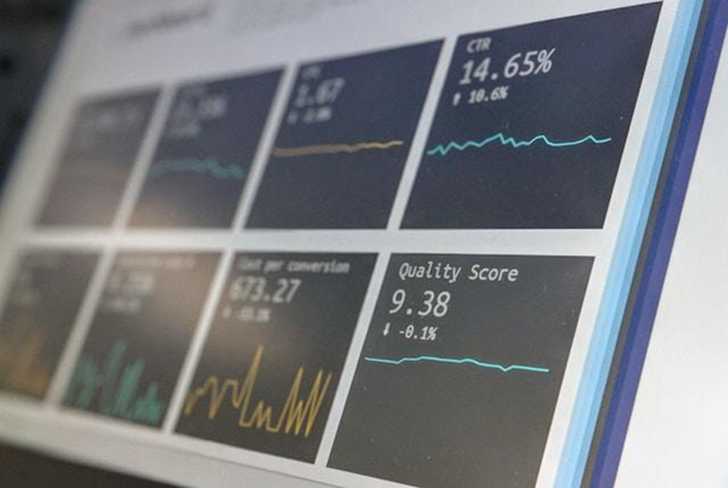
Imagine a fast-moving market that changes in seconds, and your data feed is lagging. By the time you become aware, prices have moved, and orders are stale, leaving you to try to salvage your trade or business. But with real-time data, those changes become opportunities, not surprises, enabling you to make timely decisions with confidence.
More platforms now offer instant data streams and unified views across multiple sources, helping to narrow the information gap between those with live information and those without. This article explores how real-time data platforms are changing online market transparency and how businesses are already benefiting from these transformations.
Improves Visibility And Reduces Information Gaps
Real-time information reduces disparities in access to current information among various parties. These disparities may be due to batch price updates, outdated dashboards, or earlier manual reporting. These gaps are bridged by real-time pipelines that reliably move information.
Having access to real-time data, rather than piecing together discrete chunks, allows you to see the whole picture at a glance and make important decisions with zero lag. This shift is most evident in online casino and poker ecosystems, where players and platforms rely on up-to-date indicators to understand market conditions and avoid blind spots. A PokerScout analysis of the US poker market provides an example, offering both new and experienced players a clear overview of active platforms and the broader landscape in real time. It all boils down to one thing: no blind spots.
The full picture cuts down confusion in markets where prices can change several times a minute. For consumers, it builds trust because the on-screen numbers reflect the current state of the market. In marketplaces, it fosters fairer participation. Transparency removes many of the blind spots that once helped dishonest traders or automated systems exploit timing differences.
Makes Tracking Market Activity Much More Practical
Real-time data platforms provide businesses with visibility into what is happening in fast-moving digital markets. They process and stream data in real time as it is created, without the delays associated with batch processing common in older systems.
Real-time architectures provide businesses with unprecedented insight, enabling operations to keep pace with a dynamic market and decisions to be informed by rapidly changing market conditions. Today’s largest marketplaces update thousands of prices, orders, and interactions per second. Live-streamed data gives buyers, sellers, and analysts a clearer view of true market conditions.
In that regard, the speed at which real-time data is updated on the digital frontier makes it easier to interpret online activity in retail sales, ridesharing prices, and digital assets. This way, users can see movements virtually within seconds, while platforms can address issues much faster.
Facilitates Market Integrity By Enabling Faster Responses
Real-time platforms also improve the speed and accuracy of risk detection. AI is expected to play a significant role in 2026 and beyond, including by sifting through continuous streams of data and providing early notice to fraud-monitoring teams, rather than requiring them to act on end-of-day reports. When data refreshes at a millisecond cadence, unusual activity is much easier to detect. Using change data capture pipelines, businesses process updates as they occur and respond to irregular events with minimal delay.
In markets involving digital transactions or high-volume interactions, faster detection enhances safety and stability. A platform may temporarily shut down harmful activity, adjust pricing, or warn users well before problems escalate. The environment becomes more predictable and trustworthy, core facets of market transparency.
Unifies Streams Of Data To Enhance Price Accuracy
Real-time systems also enable platforms to display more accurate and consistent prices. Many online marketplaces pull information from internal tools, third-party services, and external feeds. Without a single streaming layer to align these inputs, discrepancies in price and refresh delays can appear on the page.
This will ensure price information remains stable for users during system-wide updates. Online retailers avoid mismatched numbers across product pages. Quotes match actual trading conditions on financial platforms, while fees and availability are consistently managed on digital service marketplaces. All these provide an improved experience.
Makes Market Volatility More Understandable
Real-time data also completely changes how platforms communicate rapid shifts in supply, demand, or prices. Previously, such volatility was confusing because updates reached users too slowly. Streaming systems address this issue by displaying changes in real time. This allows users to track price swings without making guesses, making the market even more open and predictable.
Live dashboards can also provide context for price movements by showing related supply changes, user demand, or external events. Users understand why something changed, rather than feeling blindsided. In the process, this gives marketplaces a chance to educate users in real time, reduce frustration, and build long-term trust.
Conclusion
Fundamentally, real-time data platforms are reshaping the cutting edge of how online markets operate. They make information comprehensible, timely, and usable, helping businesses stay ahead in an ever-changing environment. It ultimately helps business owners understand audience behavior and act on insights as they arise. As these tools continue to evolve, they will ultimately drive digital markets toward greater transparency, efficiency, and fairness for everyone involved.