Top Tech News Today: AI & Startup Stories, December 10, 2025
 Daniel Levi
Posted On December 10, 2025
Daniel Levi
Posted On December 10, 2025
Researchers are revisiting the origins of Parkinson’s disease — long thought to be primarily genetic — now arguing that environmental toxins, including contaminated water and chemicals such as industrial solvents, may be a major cause. According to a new article in Wired, only about 10–15% of Parkinson’s cases are directly linked to genetic mutations. The rest, the majority, may result from decades-long exposure to pollutants, industrial solvents like Trichloroethylene (TCE), pesticides, PFAS, and other environmental toxicants that persist in water, soil, and air.
Historically, cases like those caused by the neurotoxin MPTP — which in the early 1980s triggered Parkinson-like symptoms overnight in people who used a faulty batch of recreational drugs — first showed that chemicals, not just genes, could kill dopamine-producing neurons in ways indistinguishable from “classic” Parkinson’s. Today’s renewed scrutiny builds on decades of research demonstrating an elevated risk of Parkinson’s disease among individuals exposed to solvents, pesticides, industrial pollutants, and contaminated groundwater.
Because environmental exposures are — in principle — modifiable, this line of research reframes Parkinson’s as potentially a preventable disease on a population level. Reducing or eliminating exposure to neurotoxic chemicals in water, air, soil and products could meaningfully lower incidence over the long term. Reducing reliance on genetic inevitability and increasing emphasis on prevention could shift public health, regulatory, and industrial priorities globally.
Why It Matters: If Parkinson’s is in part driven by environmental toxins — especially contaminated water and industrial chemicals — then regulation, cleanup, and safer chemical policy could substantially reduce future disease burden worldwide.
Source: Wired.
2. Chinese Tech Giants Rush to Secure Nvidia’s H200 AI Chips After US Export Green Light
ByteDance and Alibaba have moved quickly to explore large orders of Nvidia’s H200 GPUs after President Trump signaled that exports of the powerful AI chip to China would be allowed, subject to Beijing’s approval. The H200 is almost six times more powerful than the H20, previously the most advanced AI chip that could legally be exported to China, making it a prized asset for training cutting-edge AI models. Chinese officials have reportedly convened major tech firms, including ByteDance, Alibaba, and Tencent, to assess demand and prepare a coordinated response, while regulators may review each purchase request to ensure it aligns with national priorities.
The scramble underscores a paradox at the heart of AI geopolitics: Chinese companies still rely heavily on Nvidia’s AI hardware to train frontier models even as Beijing pushes domestic chip champions like Huawei and Cambricon. Limited H200 production and US export controls mean any shipments to China will be tightly constrained and politically sensitive, with “grey-market” attempts by universities and military-linked entities already documented. For Nvidia, the H200 represents both a lucrative opportunity and a regulatory minefield as Washington and Beijing each try to shape where advanced AI compute ends up.
Why It Matters: The fight over H200 access shows how AI chips have become a strategic technology asset, shaping the balance of power between US and Chinese tech ecosystems and determining who can train the next generation of AI models.
Source: Reuters.
3. Nvidia Builds AI Chip Location Tech to Curb Smuggling and Sanctions Evasion
Nvidia is rolling out a new location-verification feature for its GPUs that could help governments and cloud providers ensure AI chips aren’t being smuggled into sanctioned markets. The system uses telemetry data from its GPUs to verify the hardware’s physical location, making it harder for restricted countries or intermediaries to move AI compute into blacklisted jurisdictions quietly. US lawmakers and the White House have called explicitly for location controls on AI accelerators as part of a broader strategy to enforce export restrictions and prevent military or surveillance use by adversaries.
In practice, the feature enables regulators and hyperscale cloud platforms to audit AI infrastructure fleets at scale, not just at the point of sale. It also gives Nvidia a more active role in compliance, which could ease political pressure while raising questions about data access, customer privacy, and the extent of vendor control over deployed hardware. For AI startups and enterprises, the change is another reminder that high-end compute is not just a technical resource but a regulated asset, with governance and compliance now baked into the infrastructure layer.
Why It Matters: Embedding geolocation into AI chips could become a default compliance requirement, reshaping how global AI infrastructure is deployed, monitored, and financed.
Source: Reuters.
4. Flying Abroad? Get Ready for New Facial-Recognition Tech at Departure Gates.
The expansion of facial-recognition technology in air travel has entered a new phase. What was once used primarily for entry and security checks is now being rolled out at departure gates across U.S. airports, making facial scans a standard part of outbound international travel. According to recent reports, the nationwide “biometric exit” program under U.S. Customs and Border Protection (CBP) has moved from pilot status to near-universal deployment, meaning many travellers will now have their faces photographed at the gate and linked to their travel documents before being allowed to board.
At one of the newest adopters, Orlando International Airport (MCO) has launched a pilot program for passport-free international flights, in which biometric facial recognition replaces traditional passport checks during boarding—a move described in recent coverage as a major step toward frictionless, documentless travel.
The shift isn’t just about speed or convenience; it reflects the growing global adoption of biometric border-control systems (passport chips, facial recognition, fingerprint/iris scans, when needed) as part of modern travel infrastructure. Proponents highlight benefits such as fraud prevention, faster throughput, and improved tracking of visa overstays. Meanwhile, critics — including civil-liberties and privacy advocates — warn about mission creep, data retention, potential bias in facial-recognition accuracy, and the risk that these systems normalize pervasive biometric surveillance.
Why It Matters: As biometric exit and facial-recognition boarding become standard in airports worldwide, this shift could permanently redefine how people cross borders—increasing convenience and security while also raising profound questions about privacy, consent, bias, and the power dynamics of global travel.
Source: The New York Times and CBP.
5. Amazon Commits Over $35 Billion to AI and Exports Push in India
Amazon plans to invest more than $35 billion in India by 2030, with a clear focus on AI infrastructure, export growth, and logistics expansion. The company said the new capital will fund AI capabilities, upgraded logistics networks, small-business support, and job creation, building on roughly $40 billion it has invested since 2010. Amazon also noted that sellers on its platform have generated more than $20 billion in cumulative exports over the past decade, and it aims to quadruple that to $80 billion by 2030.
The announcement comes just a day after Microsoft pledged $17.5 billion for AI and cloud in India and follows Google’s commitment of $15 billion for AI data centers, underscoring how global tech giants see India as a strategic hub for data centers, AI engineering talent and export-led e-commerce. For Amazon, competing with Walmart-backed Flipkart and Reliance’s retail arm means going deeper into the country’s supply chain, building more resilient fulfillment infrastructure, and using AI to optimize everything from demand forecasting to cross-border trade.
Why It Matters: The wave of mega-investments by Amazon, Microsoft, and Google confirms India’s role as a key battleground for AI and tech infrastructure, reshaping global supply chains and e-commerce competition.
Source: Reuters.
6. Coupang CEO Steps Down After Massive Data Breach Exposes 33 Million Customers
South Korean e-commerce giant Coupang announced that its CEO, Park Dae-jun, has resigned following one of the country’s worst-ever data breaches, in which personal information from more than 33 million customers was compromised. The leak, believed to have begun in June, has sparked public outrage and increased scrutiny from regulators in Asia’s fourth-largest economy. Coupang issued an apology, pledging to strengthen security controls, restore customer trust, and overhaul its cybersecurity posture. Harold Rogers, a senior executive at its US parent company, will step in as interim CEO.
The incident underscores how consumer-facing tech platforms with large user bases have become prime targets for attackers—and how leadership accountability is becoming the norm following major breaches. For Asia’s fast-growing e-commerce and fintech startups, the Coupang episode is a warning: scaling quickly without commensurate investments in cybersecurity and data governance can carry existential brand and regulatory risks. Expect tighter enforcement, higher compliance costs, and potentially new data protection rules across the region as lawmakers respond to the breach’s fallout.
Why It Matters: The Coupang breach is a reminder that cybersecurity is now a board-level issue, with real leadership consequences when tech companies mishandle user data at scale.
Source: Reuters.
7. Oracle’s Deep Reliance on OpenAI Fuels Concerns Over Debt-Funded AI Buildout
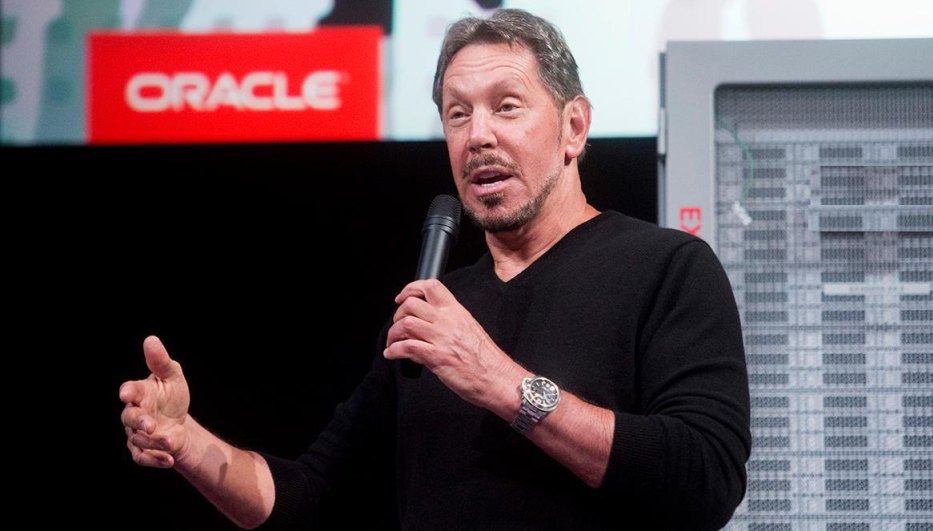
Oracle is under fresh scrutiny from investors and credit markets over how heavily it has bet its cloud and data center expansion on OpenAI, while borrowing aggressively to fund that AI infrastructure buildout. Analysts estimate that a significant portion of Oracle’s capital expenditure is tied to OpenAI-related data centers, even as OpenAI is valued at around $500 billion, remains unprofitable, and is expected to require more than $1 trillion in capex by 2030. Oracle’s stock has given back earlier AI-fueled gains, and its five-year credit default swaps have spiked to record levels as the company leans on debt to finance growth.
The concern isn’t just Oracle’s balance sheet; it’s whether the broader AI infrastructure boom is starting to look bubbly—with valuations, circular deals, and long-dated capex commitments outpacing real-world AI adoption. If OpenAI or broader AI workloads don’t ramp quickly enough to justify these investments, Oracle could find itself with heavily leveraged, underutilized capacity. For enterprise customers and AI startups, the story highlights a new kind of platform risk: not just vendor lock-in, but the financial health of the clouds that power their AI workloads.
Why It Matters: Oracle’s OpenAI-heavy AI strategy is a barometer for whether the current AI infrastructure boom is sustainable — or at risk of becoming a debt-fueled bubble.
Source: Reuters.
8. SpaceX Targets 2026 IPO at $1 Trillion+ Valuation
SpaceX is preparing a blockbuster IPO for 2026, aiming to raise more than $25 billion at a valuation north of $1 trillion, according to a source who spoke with Reuters. The company has reportedly begun discussions with banks to pursue a public listing around June or July next year, which would be among the largest technology and space IPOs in history. SpaceX’s launch business, Starlink satellite internet network, and deep pipeline of government and commercial space contracts have driven its private valuation higher in recent years, putting it in rare company alongside Saudi Aramco as a trillion-dollar-plus listing candidate.
An IPO of that scale would reshape the space and tech investing landscape, giving public market investors direct exposure to a company that sits at the center of commercial launch, satellite broadband, and future Mars ambitions. It could also unlock capital for even more aggressive Starlink and deep-space expansion, while subjecting SpaceX to public market discipline on transparency, governanc,e and financial performance. With governments and Big Tech increasingly reliant on the company’s infrastructure—from Starlink backhaul to national security launches—the listing will likely be closely watched by regulators.
Why It Matters: A $1 trillion-plus SpaceX IPO would redefine the upper bound for tech and space valuations, while giving public markets direct exposure to one of the most strategically important infrastructure companies on the planet.
Source: TechStartups via Reuters.
9. Intel Loses EU Antitrust Challenge but Sees Its Fine Cut by One-Third
Intel has lost its challenge against a €376 million EU antitrust fine for anti-competitive practices, but secured a partial win as Europe’s second-highest court reduced the penalty by about a third. The European Commission initially imposed a €1.06 billion fine in 2009 over Intel’s use of rebates and other tactics to thwart rival AMD, but that decision was later annulled and re-examined. In 2023, regulators reissued a narrower fine focused on specific abusive conduct; Wednesday’s ruling upholds the Commission’s findings while trimming the amount Intel must pay.
For Big Tech and major chipmakers, the ruling reinforces that the EU remains willing to pursue long-running antitrust cases — even when initial decisions are overturned — and to revisit fines while sharpening legal reasoning. It also lands as Brussels ramps up enforcement of the Digital Markets Act and pursues fresh investigations into AI and platform dominance. For Intel, still working to regain ground in AI chips and advanced manufacturing, the decision closes one chapter of a multi-decade legal saga but keeps antitrust risks firmly on the radar for large semiconductor and platform players.
Why It Matters: The Intel ruling signals that EU regulators will continue to push aggressive antitrust enforcement against big tech and chip companies, even if it takes years of litigation to stick.
Source: Reuters.
10. Microsoft Unveils $23 Billion AI Investment to Deepen Cloud & AI Infrastructure — $17.5 B to India
Microsoft India on Tuesday announced a sweeping new plan to invest $23 billion in artificial intelligence and cloud infrastructure, with $17.5 billion earmarked for India, marking the company’s largest-ever Asian investment.
The funds will be used to build new hyperscale data centers, expand cloud infrastructure, and support AI deployment across Microsoft’s global offerings, with the Indian investment scheduled to begin in 2026. According to CEO Satya Nadella, the move is part of Microsoft’s long-term strategy to tap rapidly growing markets, access AI talent, and meet rising demand for cloud-based AI services in emerging economies.
Why It Matters: This mega-investment underscores how the global AI race is shifting — not just within the US and China, but toward emerging markets like India, where tech adoption and infrastructure demand are exploding. For global cloud and AI markets, it strengthens competition and could accelerate adoption in geographies long considered “emerging.”
Source: TechStartups via Reuters.
11. Hinge Founder Leaves to Run Match-Backed AI Dating Startup
Justin McLeod, founder and CEO of dating app Hinge, is stepping down to lead a new AI dating startup backed by Match Group. The move underscores Match’s strategy to hedge its dominant position in traditional dating apps like Tinder, OkCupid, and Hinge with bets on AI-driven matchmaking. Analysts noted that Match’s sizable ownership stake in the new venture shows the company isn’t willing to be left behind as AI transforms how people meet and interact online.
The new AI dating startup aims to leverage AI models and recommendation engines to deliver more personalized, dynamic experiences for younger users, who increasingly expect AI-native social and relationship products. For Match, offloading Hinge’s founder to an AI-focused initiative could be a way to experiment with new business models and product experiences without disrupting its existing, highly profitable apps. It also highlights a broader shift in consumer tech: from static swipe interfaces to AI-mediated companions, matchmakers, and social graph builders that blur the line between utility and entertainment.
Why It Matters: The move shows how incumbents in consumer tech are using AI startups—often backed in-house—to rethink core markets like dating before new entrants do.
Source: TechStartups via CNBC.
12. EU Opens Antitrust Probe into Google’s AI Overviews and YouTube Training Data
The European Commission has launched a major antitrust investigation into Google’s use of publishers’ web content and YouTube videos to train its AI models and power AI Overviews, the AI-generated summaries now appearing above traditional search results in more than 100 countries. Regulators say they are concerned Google may be using online content without adequate compensation or opt-out mechanisms for publishers, and that it may be abusing its dominant search position by imposing unfair terms on news and creative industries. If found in breach of EU rules, Google could face fines of up to 10% of its global annual revenue.
Publishers and advocacy groups argue that Google has “broken the bargain that underpins the internet,” claiming the company now prioritizes its AI results, trained on their content, ahead of the very sites that produce original reporting. Google counters that the complaint risks stifling innovation in a competitive market and says it continues to work with media companies during the AI transition. The probe arrives just a week after the EU opened an investigation into Meta’s plans to block AI rivals from WhatsApp, signaling escalating regulatory pressure on US tech giants over how they deploy AI and leverage data.
Why It Matters: The case could define how Big Tech is allowed to use publisher content for AI training in Europe — and whether AI search products like AI Overviews can coexist with a sustainable news ecosystem.
Source: Reuters.
13. Fertility Startup Inito Raises $29M to Expand AI-Powered At-Home Hormone Testing
Bangalore-based health tech startup Inito has raised $29 million in Series B funding to scale its at-home diagnostics platform and develop AI-designed antibodies for a broader range of hormone and health tests. Inito’s core product is an at-home fertility monitor that quantifies estrogen, LH, progesterone (PdG), and FSH using a single test strip, with AI models interpreting hormone patterns to pinpoint fertile windows and confirm ovulation. Since launching in 2021, the startup says it has analyzed more than 30 million fertility hormone data points, making it a popular option for women seeking clinical-grade fertility insights without lab visits.
The new funding, led by Bertelsmann India Investments and Fireside Ventures, will help Inito expand manufacturing, grow its presence in the US and new international markets, and expand beyond fertility into broader hormone health, including pregnancy progression, menopause, and other endocrine markers. A key piece of that roadmap is AI-engineered antibodies, which the company says can improve sensitivity and enable at-home tests for biomarkers that traditional animal-grown antibodies struggle to detect. If successful, Inito could become a template for how AI, biotech, and consumer hardware converge to turn smartphones into full-stack hormone and health diagnostics hubs.
Why It Matters: Inito’s funding highlights how AI and biotech are converging to move diagnostics out of the lab and into the home, creating a new class of direct-to-consumer health tech startups.
Source: TechCrunch.
14. Google Backs Fervo’s $462M Round to Power AI Data Centers with Geothermal Energy
Geothermal startup Fervo Energy has raised a massive $462 million round with Google as a key investor, as the tech giant looks to lock in cleaner, always-on energy for its AI-hungry data centers. Fervo specializes in “enhanced geothermal” — using techniques borrowed from fracking and directional drilling to create engineered geothermal reservoirs in hot, dry rock where traditional geothermal isn’t viable. The company’s flagship Cape Station project is on track to be mechanically complete this year, with first-phase power targeted for 2026.
The financing comes just six months after Fervo announced a $206 million package of loans and project-level equity for Cape Station, and follows nearly $500 million raised last year. With AI workloads driving explosive growth in data center electricity demand, Google and other Big Tech firms are increasingly exploring geothermal as a complement or alternative to solar, wind, and grid purchases. A Rhodium Group analysis cited in the report suggests enhanced geothermal could provide nearly two-thirds of new US data center demand by 2030 at prices at or below what operators pay today, if projects like Fervo’s scale successfully.
Why It Matters: The Fervo round shows how AI’s energy demands are accelerating investment in frontier climate tech, with Big Tech directly funding new baseload clean power to keep data centers running.
Source: TechCrunch.
15. CoreWeave CEO Defends “Circular” AI Financing as New Cloud Model, Not a Bubble
CoreWeave CEO Michael Intrator pushed back on criticism of the company’s “circular” AI financing and heavy use of debt, arguing that its deals with Nvidia and other AI players represent a new way of building cloud infrastructure rather than a structural risk. Speaking at the Fortune Brainstorm AI summit, Intrator noted that CoreWeave’s collection of Nvidia GPUs is so valuable that the company borrows against it to fund ongoing data center expansion. After a high-profile IPO earlier this year that didn’t fully meet market hype, CoreWeave’s stock has swung from $40 at debut to well over $150 before settling around $90, prompting some analysts to liken it to a meme stock.
Critics argue that tight loops of equity, credit, and customer contracts between a small group of AI firms — including CoreWeave, Nvidia, OpenAI, Microsoft, and others — could create fragility if AI demand falls short of expectations. Intrator countered that these arrangements are about “working together” to manage a “violent change in supply and demand” for AI compute, and said disruption naturally brings volatility. CoreWeave started as a crypto miner before pivoting into AI infrastructure and has since acquired tools like Weights & Biases, OpenPipe, and other AI startups while expanding its partnerships with OpenAI and plans to enter the US federal market.
Why It Matters: CoreWeave’s stance highlights an emerging fault line: whether aggressive, interlinked AI infrastructure financing is an efficient new model for cloud — or a source of systemic risk in the AI tech ecosystem.
Source: TechCrunch.
Trending Now
Top Tech News Today, March 25, 2026