Gameboost: From a Startup Company to a Leading Gaming Marketplace
 Daniel Levi
Posted On November 11, 2025
Daniel Levi
Posted On November 11, 2025
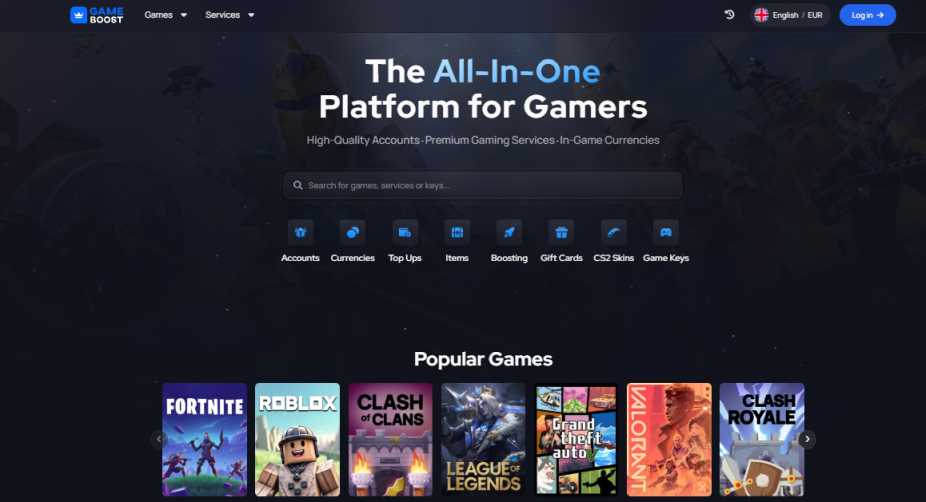
GameBoost is a Croatian gaming marketplace founded in 2022 by Kristijan Salijević. The platform connects gamers with professional sellers offering account selling, in-game items, and game keys across hundreds of popular titles.
The company secured €2.5 million in funding from Zagreb-based venture capital firms Fil Rouge Capital and Feelsgood Capital between 2022 and 2023. This capital fueled rapid expansion, growing the platform from 100 monthly visitors in early 2020 to 1.2 million today while processing over 2.1 million orders through a network of 3,000+ verified sellers.
GameBoost operates in a competitive market with multiple competitors, including G2G and PlayerAuctions, but has carved out a position as the go-to marketplace with strong trust metrics. The platform maintains a 4.4 out of 5 rating on Trustpilot from 15,000+ reviews and offers services across multiple gaming categories rather than specializing in a single niche.
In this article, we’ll explore GameBoost’s journey from startup to established marketplace, examining its founding story, funding rounds, business model, growth trajectory, and current position in the gaming services industry.
The Founding Story
Kristijan Salijević launched GameBoost in 2022 from Zagreb, Croatia. The company operates under the legal entity Global Gaming Services d.o.o., registered at Strmec Stubički 124 in Croatia.
Salijević’s goal was to create a comprehensive marketplace connecting gamers with elite players in the top 0.01% worldwide. The platform’s mission centered on providing services for popular online games at a high level, emphasizing affordable, fast, and reliable delivery.
GameBoost initially focused on competitive titles, including League of Legends, Valorant, Fortnite, Rocket League, Overwatch 2, World of Warcraft, Counter-Strike 2, and Dota 2. The platform started with basic boosting and coaching services before expanding into account sales, in-game items, and game keys.
By the time GameBoost went live, Salijević had assembled a small team to handle customer support, seller verification, and platform operations. The company positioned itself as a trusted alternative despite being new in the market.
The Funding Rounds
GameBoost secured its first institutional capital two months after launch with a €500,000 pre-seed round in April 2022 from Fil Rouge Capital. The Zagreb-based venture capital firm specializes in early-stage Croatian and regional startups, with a portfolio of 130+ companies, including two unicorns.
On March 27, 2023, GameBoost announced a €2 million seed round co-led by Fil Rouge Capital and Feelsgood Capital. Feelsgood Capital, a Zagreb-based social impact venture fund founded in 2021, contributed approximately €1 million, matching Fil Rouge’s investment. Legal advisors Šavorić & Partners confirmed the deal structure.
This brought GameBoost’s total capital raised to €2.5 million (approximately $4.33M USD). The company stated it would use the seed funding to expand into new markets, add support for more video games, and promote diversity within the IT industry.
Services
GameBoost launched with basic services for competitive titles like League of Legends, Valorant, and Counter-Strike 2. The platform connected gamers with skilled players who could improve rankings or provide training sessions.
The company expanded its offerings to become a comprehensive gaming marketplace. GameBoost now provides:
- Accounts
- Currencies
- Top Ups
- Items
- CS2 Skins
- Game Keys
The platform currently supports hundreds of games, including League of Legends, Valorant, Counter-Strike 2, World of Warcraft, Apex Legends, Rocket League, Overwatch 2, GTA V, Genshin Impact, Clash of Clans, Roblox, PUBG, Call of Duty, and various other games.
Final Words
GameBoost went from zero to 2.1 million orders in under three years. The Croatian marketplace secured €2.5 million in funding, built a network of 3,000+ sellers, and now attracts 1.2 million monthly visitors. The company carved out a solid position in a competitive market dominated by larger players, proving there’s room for well-executed regional marketplaces with strong trust metrics and diverse service offerings.