Groq looks to double its valuation to $6 billion as AI chip boom heats up

Posted On July 10, 2025
0
3.5K Views
Groq isn’t trying to beat Nvidia at its own game—it’s trying to change the game altogether. The Silicon Valley startup is now in talks to raise another $300 million to $500 million in fresh capital, pushing its valuation to as high as $6 billion, The Information reported on Wednesday, citing people with knowledge of the matter. That’s more than double where it stood less than a year ago.
The funding talks, first reported on July 9, come just eleven months after Groq raised $640 million in funding at a $2.8 billion valuation. This new round, if it closes, would confirm what many in tech have started to believe: Groq is no longer just a scrappy challenger—it’s a serious threat in the AI chip race.

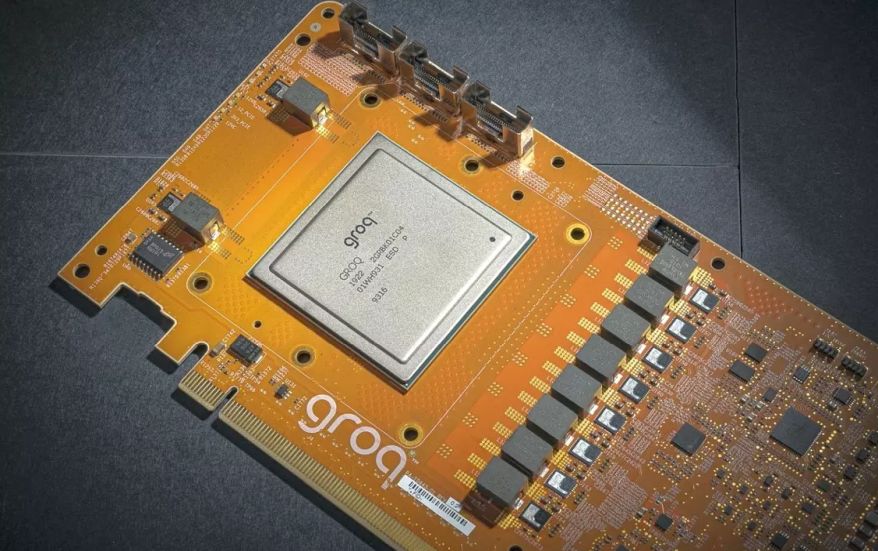
Groq was founded by CEO Jonathan Ross, who previously worked on Google’s TPU team. The company came out of stealth in 2016 with a different idea: build a chip purpose-built for inference, not training. Groq calls it the Language Processing Unit, or LPU. While Nvidia’s GPUs dominate AI training, Groq’s LPUs are built to run already-trained models—like GPT-4—faster and more efficiently.
The company says its chips can run generative AI models at up to ten times the speed and use just a tenth of the energy compared to current alternatives. That performance claim has struck a chord with developers hungry for faster response times and lower compute costs. Demand for Groq’s vertically integrated AI inference stack has surged as more companies look to deploy large language models at scale.
To do this, Groq built its own architecture from scratch, introducing what it calls the Language Processing Unit (LPU). These chips are built to run inference workloads faster and more efficiently—two things enterprise customers care about a lot when deploying AI at scale.
The company’s LPUs have drawn attention for their performance running large language models. And while Groq’s name isn’t as well-known as Nvidia’s, it’s gaining credibility. Meta’s chief AI scientist Yann LeCun is a technical advisor. Groq also launched its own AI cloud service, letting companies rent out compute power, much like AWS or Azure.
The fundraising effort follows Groq’s Series D in August 2024, led by BlackRock’s Private Equity Partners. That round included other big names like Neuberger Berman, Cisco Investments, Type One Ventures, and Samsung Catalyst Fund. The money helped Groq scale up, adding 100,000 new LPUs to its network to meet a growing crush of demand.
Now it’s going bigger. The new round, reportedly being handled by Morgan Stanley, is expected to fund the company’s international push. One of the biggest drivers? A $1.5 billion deal with HUMAIN, a Saudi AI firm backed by the country’s sovereign wealth fund and chaired by Crown Prince Mohammed bin Salman. Groq has been tapped to power HUMAIN’s inference operations, a huge win for a U.S. startup looking to play on the global stage.
Groq also opened its first European data center in Helsinki, a move that signals just how serious it is about going global.
Groq’s challenge comes at a time when Nvidia is flying high, recently hitting a $4 trillion market cap. That rise has been fueled almost entirely by its grip on AI infrastructure, particularly for model training. But Groq isn’t trying to displace Nvidia completely. It’s staking its claim on inference—a different part of the pipeline, but one that’s growing fast.
“Their chips are designed to ‘process and execute commands of pre-trained AI models with high speed and efficiency—a direct challenge to Nvidia,’” as Benzinga put it.
Groq CEO Jonathan Ross has no illusions about unseating Nvidia, but he’s happy to take a chunk of the market. “I don’t know if Nvidia will notice how much of the pie we eat, but we will feel quite full off of it,” he said.
The AI chip market is expected to hit $400 billion annually within five years. There’s plenty of room for new players. Alongside Groq, other startups like Cerebras, Etched, and SambaNova are jostling for a piece. And legacy players like AMD aren’t sitting still either.
Groq’s profile shot up in early 2024 after a viral moment in February—details are still unclear, but CEO Jonathan Ross called it a “game changer.” Whatever happened, it grabbed attention across the tech and investor world. That same month, Ross also stirred headlines with a tongue-in-cheek cease-and-desist letter aimed at Elon Musk’s xAI over its chatbot “Grok.” It wasn’t a serious legal move, but it showed Groq’s willingness to punch up and make noise in a crowded space.
According to the report, Groq is now seeking new funding in part to help fulfill a $1.5 billion agreement it signed with Saudi Arabia in February. The deal calls for Groq to ramp up delivery of its AI chips to support the kingdom’s growing investment in artificial intelligence infrastructure.
If the new raise goes through, Groq will be sitting on a $6 billion valuation and a war chest to match. That money would likely go toward expanding its chip production, building more data centers, and fulfilling major contracts like the Saudi deal. But competition is heating up. Everyone wants a piece of the AI hardware market, and growing at this scale takes real execution.
Still, Groq has momentum—and that counts for a lot. It’s betting that inference will become just as important as training in the AI boom. And if it’s right, it won’t need to replace Nvidia to win big. It just needs to keep proving there’s room for more than one giant at the table.