Startup Funding News Today, November 27, 2026: Altair Semiconductor, Zerith, Vector Singularity & More
 Nickie Louise
Posted On November 27, 2026

Investors continue to pour millions into the parts of the AI economy that cannot be built with software alone. Israeli chipmaker Altair Semiconductor raised $100 million to bring low-power connectivity chips to market, while Chinese robotics company Zerith and quantum computing startup Vector Singularity each disclosed new rounds worth several hundred million yuan. Alibaba joined Vector Singularity’s Series A, extending its investment interests into neutral-atom quantum computing.
The latest funding announcements also include biotechnology, tactile sensing for robots, industrial materials research, computer vision and an Indian ride-hailing platform that charges drivers no commission on fares. What connects most of these companies is the need to prove their technology works in environments where physical constraints, operating costs, and reliability matter as much as algorithm quality.
In today’s funding, six of the nine companies are classified here as AI-focused or AI-enabling businesses: Altair, Zerith, Liying Biotechnology, Dayan Technology, EcoMatrix and PixoAnalytics. Vector Singularity is classified separately as quantum computing, and Kejun as biotechnology despite its use of AI in drug research. Six companies are based in China. The U.S. Thanksgiving holiday coincided with the reporting period, making the geographic mix an unsuitable measure of a lasting shift in venture funding. The strict cutoff produced fewer than ten sufficiently verified rounds; older deals were not added to fill the list.
The Macro Environment: Capital Is Funding the Hard Parts of Technology
The economics of AI change when the technology moves from a screen into a factory, a laboratory or a device that must run on a small battery. Every physical deployment adds constraints that model developers can often avoid: sensor accuracy, maintenance costs, network availability, manufacturing tolerances, and the consequences of errors. Today’s rounds suggest investors see commercial opportunities in solving those constraints.
Altair and Zerith illustrate two different layers of that opportunity. Altair is working on connectivity for devices that may depend on remote AI services; Zerith is developing the ability to perform physical tasks reliably. Dayan approaches the same robotics market from the training-data side. These are complementary businesses, not direct competitors, and each could benefit from growing physical automation without needing to dominate the general-purpose model market.
The financing of Vector Singularity, Kejun Pharmaceutical, and EcoMatrix also shows why investor identity matters. Regional industrial funds, strategic corporate investors, and specialist venture firms can have different time horizons and investment motives. Publicly backed capital may support local research and industrial capacity alongside financial returns. Corporate investors may seek access to technology and potential future partnerships. These motivations are compatible, but they should not be mistaken for proof of product demand.
The mix of clinical research, semiconductor commercialization, and quantum engineering also reminds us that capital requirements vary significantly between startups. Investors may be financing a manufacturing ramp, a trial or a laboratory prototype rather than immediate revenue growth. A single holiday-affected reporting period cannot establish a new trend in interest rates, exit markets or global allocation. What it can reveal is the specific technological risks investors are willing to fund.
Altair Semiconductor raises $100M in funding to connect the next generation of AI devices
Altair Semiconductor secured $100 million in a Series A funding led by Maverick Silicon, with Pitango participating, Globes first reported on November 26. The Israeli company, which returned to independent ownership this April after a decade inside Sony, develops power-efficient cellular chips for connected devices. CTech reported that the proceeds will support production of its upcoming ALT1550 modem, additional chip development, and expansion to international customers.
The company’s opportunity is distinct from the AI accelerator market. A wearable assistant or smart pair of glasses may need to communicate with a cloud model without draining its battery or relying on a nearby phone. Altair is targeting the connection between the device and the network, not the processor that runs the model’s computation. Mass production of the new modem is planned for 2027.
Altair enters this market with existing semiconductor engineering capabilities and Internet of Things customers. Its April spinout announcement disclosed $50 million in initial financing and confirmed that Sony remained a shareholder. The latest round therefore takes disclosed funding since renewed independence to $150 million, not an all-time fundraising figure.
Investors are betting that connectivity will become more valuable as AI devices proliferate. That thesis depends on securing design wins and shipping at competitive cost and power consumption. The round size reflects the demands of semiconductor development, but Altair is an established spinout rather than a newly founded company. Its Series A should not be compared directly with the financing of a pre-product chip startup.
Funding Details
- Startup: Altair Semiconductor
- Investors: Maverick Silicon (lead), Pitango
- Amount Raised: $100 million
- Total Raised: $150 million since the 2026 spinout; lifetime total not disclosed
- Funding Stage: Series A
- Funding Date: November 26, 2026
- Headquarters: Hod Hasharon, Israel
- Sector: Semiconductors, cellular IoT and AI device connectivity
Zerith raises several hundred million yuan to commercialize robot manipulation
Zerith, a robotics company established in Hefei in January 2025, announced a new round worth several hundred million yuan on November 27. Investors include Zero2IPO Capital, Xizhou International, Zhuoyuan Asia, Yuemin Sufeng, local industrial investment institutions, and Jack Group. Existing shareholders also returned. All Weather Technology reported the announcement, and 36Kr published an interview detailing the company’s plans.
Zerith is concentrating on robotic picking rather than trying to make a machine that can perform every human task. Its products include robotic systems for retrieving goods and end effectors that can be integrated with different machines. The company plans to expand deployments in settings where it has tested its technology and prepare computing capacity for a Picking API expected by year-end.
The startup reports nearly 200 unattended retail installations and routine order-picking operations at a warehouse in Hefei. Those are company-reported deployments, not independent evidence of profitability. The business model could become more interesting if Zerith can license or charge for manipulation capabilities separately from selling complete robots.
For investors, the key test is whether performance carries over between locations without expensive retraining and intervention. A reliable picking service could generate revenue every time a machine performs useful work. But maintenance, uptime, human supervision and hardware depreciation will determine whether that revenue is economically attractive.
Funding Details
- Startup: Zerith
- Investors: Zero2IPO Capital, Xizhou International, Zhuoyuan Asia, Yuemin Sufeng, Wuxi Binhu, Hefei Construction Investment, Hefei Industrial Investment Guozheng, Jack Group and others; returning investors include Cowin Capital, Lihe Fund and Relay Angel
- Amount Raised: Several hundred million yuan; exact amount not disclosed
- Total Raised: Not disclosed
- Funding Stage: Not disclosed
- Funding Date: November 27, 2026 (China local date)
- Headquarters: Hefei, China
- Sector: Robotics, physical AI and manipulation software
Vector Singularity raises several hundred million yuan to build neutral-atom quantum computers
Beijing-based Vector Singularity completed a Series A worth several hundred million yuan, with Alibaba Group joining a syndicate of Chinese industrial, public-sector and venture investors. PE Daily’s original reporting identifies the Beijing AI Industry Investment Fund, Beijing industrial investment institutions, a national SME development fund and Zhongguancun Science City among the leading backers. The publication describes the investment as Alibaba’s first in a quantum computing company.
Founded in May 2026, Vector Singularity is developing quantum computers that use neutral atoms as qubits. It is pursuing two atomic technologies, based on rubidium and ytterbium, and expects to introduce its first prototype and QAgent products in the first half of 2027. These are development targets, not evidence of a commercially scalable quantum computer today.
The financing follows an angel round exceeding RMB 100 million, disclosed in August. Exact cumulative funding and valuation have not been released. A further round is reportedly being pursued; it is not included in today’s financing figures.
The strategic significance is less about immediate competition with conventional AI computing and more about gaining a position in a potentially important computing technology. Alibaba’s participation may bring industry relationships and expertise, but the decisive milestones remain reliable gates, error correction, useful logical qubits, and the ability to run workloads that justify the machine’s cost. Capital can buy engineering time; it cannot guarantee the underlying physics will translate into a profitable product.
Funding Details
- Startup: Vector Singularity
- Investors: Beijing AI Industry Investment Fund, Beijing Industrial Development Investment Management and Future Quantum Fund, national SME Development Promotion Fund and Zhongguancun Science City Fund; Alibaba Group, China Merchants Venture Capital, Qifu Capital, Hunan Caixin, Beiyang Haitang Fund and Yarui Capital
- Amount Raised: Several hundred million yuan; exact amount not disclosed
- Total Raised: Several hundred million yuan across two rounds; exact amount not disclosed
- Funding Stage: Series A
- Funding Date: November 27, 2026 (China local date)
- Headquarters: Beijing, China
- Sector: Quantum computing
Kejun Pharmaceutical raises several hundred million yuan to advance clinical drug development
Shanghai-based Kejun Pharmaceutical closed a Series C+ financing of several hundred million yuan, led by SDIC Chuanghe (SDIC Venture Capital), according to its November 27 company announcement. Specialist investors joined the round, the company’s second financing this year. An existing shareholder also increased its holding through a separate secondary transaction, which is excluded from the new financing amount.
Kejun develops medicines using targeted prodrug delivery and messenger RNA technology. The new capital will support three clinical programs: an antiplatelet drug (CG-0255), a metabolic disease candidate (CG-0416), and an investigational therapeutic hepatitis B vaccine (CG-1999). The company is developing both oral and intravenous versions of its antiplatelet candidate.
The broader opportunity is a repeatable research platform that can yield multiple drug candidates. If the delivery technology works across indications, it may make subsequent programs more efficient. But evidence supporting one drug cannot substitute for appropriate studies of another. The clinical safety, efficacy, and regulatory pathway for each candidate still need to be established.
This is a different kind of AI investment from financing an enterprise software product. The company uses AI as part of its prodrug platform, but its primary business is pharmaceutical development. Clinical milestones, intellectual property, and potential licensing opportunities will matter more to valuation than the number of models it operates.
Funding Details
- Startup: Kejun Pharmaceutical
- Investors: SDIC Chuanghe (lead), Cuiheng Venture Capital, Efung Capital, Tongying Capital, Fuhui Venture Capital and returning investor Yingfei Jiuzhou
- Amount Raised: Several hundred million yuan; exact amount not disclosed
- Total Raised: Not disclosed
- Funding Stage: Series C+
- Funding Date: November 27, 2026 (China local date)
- Headquarters: Shanghai, China
- Sector: Biotechnology, cardiovascular and metabolic therapeutics
Liying Biotechnology raises over RMB 100M to connect protein design with laboratory validation
Shenzhen Liying Biotechnology secured more than RMB 100 million in Series A+ financing led by Haohe Capital, with participation from Guangming Science City Industrial Development Group, Nanjing Healthcare Fund and existing shareholders. VCBeat first reported the round on November 27. The proceeds will support AI platform development, automated equipment production, research, regulatory work, and manufacturing expansion.
Liying is addressing a key weakness in computational biology: models can generate candidate proteins far faster than researchers can produce and test them. The startup combines computational design with automated, cell-free protein production and physical testing. It then uses the experimental results to improve future predictions and to help customers develop products.
The company claims its process has increased the number of sequences it can validate from approximately 200 to 20,000 per month. That figure is a reported operating metric, not an independently verified scientific result. More important over time will be the number of useful proteins developed, consistency of results across projects, and the cost of moving from an experimental sample to an industrial product.
The investment points to a commercial advantage that software alone cannot easily reproduce: experimental data generated through actual laboratory work. Whether that data becomes defensible depends on its quality, the rights the company holds to reuse it, and whether customer projects improve future outcomes.
Funding Details
- Startup: Liying Biotechnology
- Investors: Haohe Capital (lead), Guangming Science City Industrial Development Group, Nanjing Healthcare Fund and existing shareholders
- Amount Raised: More than RMB 100 million
- Total Raised: Several hundred million yuan across Series A financings; lifetime total not disclosed
- Funding Stage: Series A+
- Funding Date: November 27, 2026 (China local date)
- Headquarters: Shenzhen, China
- Sector: AI for biology, protein engineering and laboratory automation
Dayan Technology raises tens of millions of yuan to give robots a sense of touch
Dayan Technology completed a pre-Series A round worth tens of millions of yuan, led by SAGE Capital (Saizhi Bole), 36Kr reported on November 27. Puhua, Zheshang Venture Capital, and other investors joined, including an existing Zhejiang provincial innovation fund. The company plans to build out data infrastructure and a production line for tactile gloves.
Robots trained primarily on images can struggle to understand appropriate force or how objects respond to touch. Dayan builds sensing gloves that capture human hand interactions, alongside tactile models and simulations of physical contact. Its products could allow robot developers to collect information that ordinary internet-scale datasets do not contain.
The startup reports revenue in the tens of millions of yuan, although its margins and the split between hardware, data and software have not been independently established. It was founded in Tongxiang, Zhejiang, in May 2025 and previously announced an angel round in July 2026.
The commercial question is whether tactile information materially improves a robot’s ability to complete paid tasks. If data gathered through the gloves can be reused across machines and environments, Dayan could develop a scalable data business. If every new task requires a separate collection campaign, the economics may look more like contract engineering. The new funding will help establish which model is viable.
Funding Details
- Startup: Dayan Technology (大衍科技)
- Investors: SAGE Capital / Saizhi Bole (lead), Puhua, Zheshang Venture Capital, Zheli Xin and Zhejiang Provincial Science and Technology Innovation Mother Fund
- Amount Raised: Tens of millions of yuan; exact amount not disclosed
- Total Raised: Not disclosed
- Funding Stage: Pre-Series A
- Funding Date: November 27, 2026 (China local date)
- Headquarters: China (registered founding location: Tongxiang, Zhejiang; current headquarters not separately confirmed)
- Sector: Robotics training data, tactile sensing and physical AI
EcoMatrix raises tens of millions of yuan to bring AI into materials manufacturing
EcoMatrix raised an angel round worth tens of millions of yuan, led by Kaola Fund, with Zhongguancun Science City and the Beijing Academy of Artificial Intelligence for Science participating, Z Potentials reported on November 27. The startup plans to develop its materials models, build a research and manufacturing facility, and expand its engineering team.
The Beijing company addresses the gap between predicting a promising material and producing it reliably at industrial scale. Its models cover materials discovery and manufacturing processes. It works with industrial partners on projects that combine experimental data, production parameters, and physical validation.
EcoMatrix reports RMB 50 million in orders and more than two billion data points from research and industrial production. The orders are not recognized revenue, and the dataset’s commercial value depends on its quality and the company’s ability to reuse it across customers. Its planned science facility is intended to improve the feedback between experiments and manufacturing.
The investment matters because process knowledge is frequently a competitive advantage in materials industries. A company that improves yields, reduces waste, or cuts qualification time can potentially charge for measurable economic results. However, proving repeatability at one factory does not automatically establish that a model works at another. Integration costs and the transferability of results will be important measures of progress.
Funding Details
- Startup: EcoMatrix
- Investors: Kaola Fund (lead), Zhongguancun Science City, Beijing Academy of Artificial Intelligence for Science
- Amount Raised: Tens of millions of yuan; exact amount not disclosed
- Total Raised: Not disclosed
- Funding Stage: Angel
- Funding Date: November 27, 2026 (China local date)
- Headquarters: Beijing, China
- Sector: AI for materials science and industrial manufacturing
Namma Yatri raises ₹27.25 crore to expand zero-commission ride-hailing
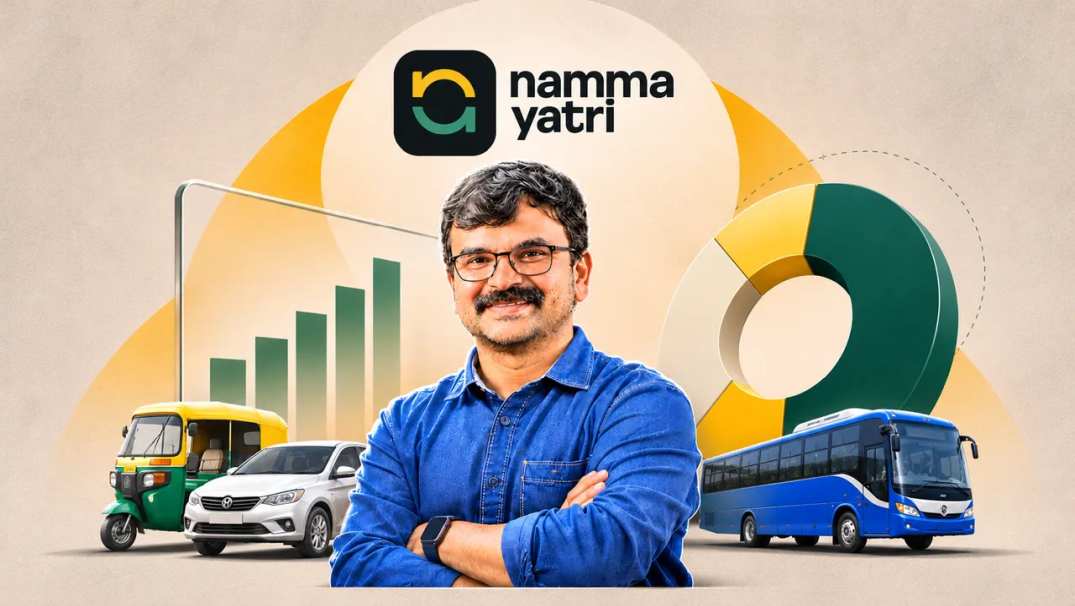
Moving Tech, the company behind Namma Yatri, secured ₹27.25 crore in an ongoing pre-Series A round led by the Michael & Susan Dell Foundation, with Narayana Hrudayalaya participating. Entrackr’s exclusive report on November 27 cites regulatory filings approving the allotment of convertible preference shares and equity shares. The amount is the reported tranche, not the final size of the open round.
The Bengaluru company’s ride-hailing model lets drivers retain the fare while the platform earns money through subscriptions or usage fees. It also operates Yatri Sathi and Bharat Taxi. The proposition departs from commission-based platforms, but it must still provide sufficient ride demand, support, and reliable matching to compete with established operators.
The same reporting puts FY26 operating revenue at ₹37.5 crore, up approximately 89% from the previous year, and net loss at ₹43.8 crore, down approximately 15%. The reported post-money valuation is an estimate of ₹526 crore, roughly unchanged from its previous round. Finance Outlook India corroborated the figures. The figures show improvement, but the company remains loss-making.
Namma Yatri is an important counterpoint to the deep-tech deals. Its potential advantage rests on incentives, distribution, and marketplace liquidity rather than specialized models or chip designs. The involvement of a social-impact investor fits the company’s driver-oriented proposition. Long-term sustainability still depends on whether driver fees and customer demand can cover the cost of running the network.
Funding Details
- Startup: Moving Tech (Namma Yatri)
- Investors: Michael & Susan Dell Foundation (lead), Narayana Hrudayalaya
- Amount Raised: ₹27.25 crore (reported tranche)
- Total Raised: Not disclosed on a verified cumulative basis
- Funding Stage: Pre-Series A (ongoing)
- Funding Date: November 27, 2026 (India local date; first identified filing-based disclosure)
- Headquarters: Bengaluru, India
- Sector: Mobility and ride-hailing marketplaces
- Valuation: Approximately ₹526 crore post-money (Entrackr estimate, not company-confirmed)
PixoAnalytics raises €1M in funding to track physical objects without labels
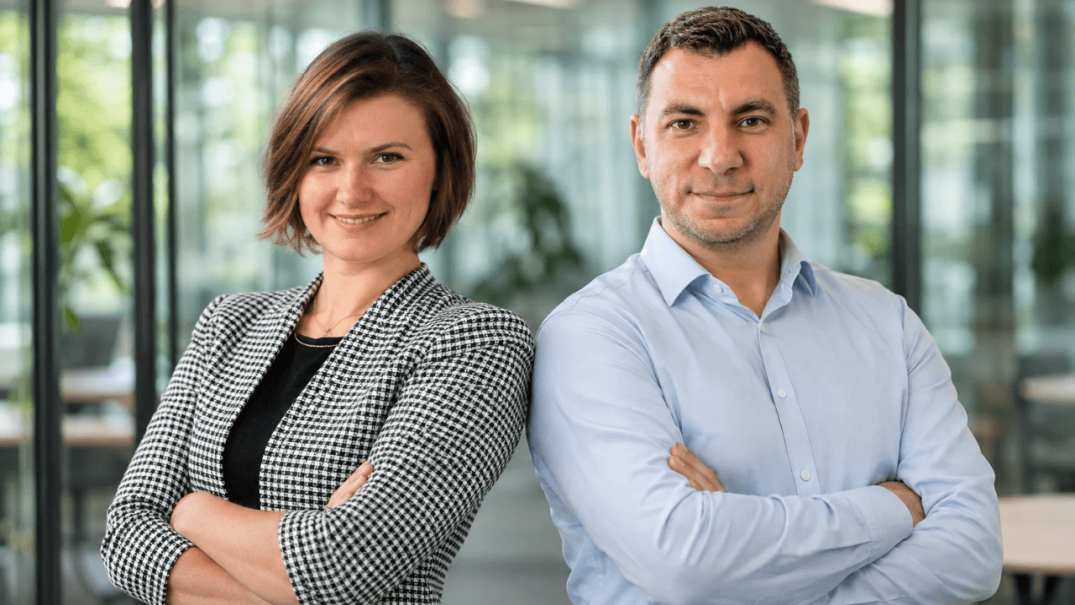
PixoAnalytics secured €1 million from ACT Venture Partners to grow its engineering team and expand across Europe and into North America, Turkish technology publication egirişim reported on November 26. The startup originated inside Deutsche Post DHL and became independent in 2021. Its company profile identifies London as its headquarters; it also operates in Istanbul.
PixoAnalytics uses computer vision to identify objects by the natural patterns on their surfaces. Instead of relying entirely on an attached barcode or tag, its software can compare an image of an item against an earlier record. Potential uses include parcel and baggage tracking, material identification, authentication and quality inspection.
The funding announcement reports commercial use in seven countries. The €1 million investment is modest compared with the capital committed to quantum computing or chip development, but it offers a useful example of a focused AI business addressing established customer problems.
The competitive advantage will depend on recognition accuracy under changing conditions and the cost of integrating the system into existing operations. If the technology prevents lost items or expensive identification errors without introducing new handling requirements, it can deliver a measurable return to buyers. That is a stronger commercial starting point than trying to sell AI as a feature in search of a problem.
Funding Details
- Startup: PixoAnalytics
- Investors: ACT Venture Partners
- Amount Raised: €1 million
- Total Raised: Not disclosed
- Funding Stage: Not disclosed in original reporting
- Funding Date: November 26, 2026
- Headquarters: London, United Kingdom; operations in Istanbul, Türkiye
- Sector: Industrial AI, computer vision and object traceability
What Today’s Funding Activity Reveals
AI investment is moving into the physical constraints of deployment. Four of the six AI-related companies in this selection address sensing, robotics, biological experiments, or materials production directly (Zerith, Dayan, Liying, and EcoMatrix). Altair supplies connectivity, while PixoAnalytics applies vision to existing industrial workflows. The opportunities differ, but all depend on information or engineering that general-purpose AI models don’t readily provide.
Data ownership is becoming a commercial question, not just a technical one. Dayan can collect touch data, Liying can generate experimental protein results, and EcoMatrix can learn from manufacturing processes. Yet customer contracts may restrict how data is reused, and collection costs can grow with each deployment. The defensible business will convert repeatable data collection into a better product without spending proportionately more on each new customer.
Strategic and public-sector capital is prominent in today’s Chinese deals. Investors linked to regional industry and research institutions appear alongside commercial funds in quantum, robotics, biotechnology and materials. That combination can support technical development and industrial access, but it may have different objectives from an exclusively returns-driven venture fund. The geographic concentration in today’s sample is clear; an enduring geographic shift is not established.
Not every investment depends on AI. Namma Yatri’s funding illustrates how pricing and marketplace incentives can differentiate a business even when its primary offering is not a new technology. Kejun’s value will depend on clinical outcomes, while Vector Singularity still faces scientific and engineering hurdles. The common thread is capital directed at specific bottlenecks, not a single sector-wide story about AI.
Startup Funding Table
| Startup | Amount Raised | Sector | Funding Stage | Lead/Key Investors | Country |
|---|---|---|---|---|---|
| Altair Semiconductor | $100M | Connectivity chips | Series A | Maverick Silicon, Pitango | Israel |
| Zerith | Several hundred million RMB | Robotics | Not disclosed | Zero2IPO Capital, Jack Group, others | China |
| Vector Singularity | Several hundred million RMB | Quantum computing | Series A | Beijing industrial funds, Alibaba | China |
| Kejun Pharmaceutical | Several hundred million RMB | Biotechnology | Series C+ | SDIC Chuanghe | China |
| Liying Biotechnology | Over RMB 100M | Protein engineering | Series A+ | Haohe Capital | China |
| Dayan Technology | Tens of millions RMB | Tactile data | Pre-Series A | SAGE Capital, Puhua | China |
| EcoMatrix | Tens of millions RMB | Materials AI | Angel | Kaola Fund | China |
| Namma Yatri | ₹27.25 crore | Ride-hailing | Pre-Series A (ongoing) | Michael & Susan Dell Foundation | India |
| PixoAnalytics | €1M | Computer vision | Not disclosed | ACT Venture Partners | United Kingdom |
Amounts are in their original reported currencies. Approximate Chinese financing disclosures have not been converted into exact amounts. Namma Yatri’s financing is a disclosed tranche of an ongoing round, and Altair is a newly independent spinout of an established company.
Strategic Takeaways for Founders and Investors
1. Sell the result rather than the model. Zerith and PixoAnalytics have identifiable tasks to address: retrieving goods and identifying objects. Founders should establish a baseline cost and measure success rates, errors, downtime and savings against it. Those figures can support pricing and shorten the path from trial to paid deployment.
2. Build a data advantage that improves with use. Dayan, Liying and EcoMatrix all have opportunities to accumulate information from physical operations. Investors should ask what data the startup can legally retain, whether it transfers across customers, and how much a new training example costs. A large dataset is not a moat if every competitor can obtain it at the same price.
3. Match financing to the next technical milestone. Altair’s production ramp, Vector Singularity’s prototype and Kejun’s clinical development require different milestones and capital budgets. Founders should specify the evidence each funding round is intended to produce. Investors should distinguish technical progress from commercial traction and evaluate the risk of needing another round before revenue arrives.
4. Treat industrial partners as potential distribution channels, not guaranteed customers. Several Chinese deals involve organizations with research or industrial relationships. These investors can open doors to manufacturing and testing sites. Startups still need agreements that define procurement, data access, intellectual property, and commercial independence.
5. Test market economics before scaling an unconventional pricing model. Namma Yatri’s subscription-based approach changes how drivers pay for passenger access. Its growing revenue and persistent losses show why founders should model contribution margins, customer acquisition, and retention together. Lower fees can attract users without necessarily building a sustainable marketplace.
6. Do not mistake the size of the round for the quality of the investment. The nine announcements span small industrial software investments, a large semiconductor round, and approximate deep-tech disclosures. Returns depend on the capital required to reach a durable business, not just the headline amount. Compare financing with achievable milestones and customer value, rather than treating large checks as a shortcut to assessing defensibility.
Conclusion
Today’s funding activity shows investors financing the engineering, experimental data, and operating capabilities that increasingly determine whether advanced technology works outside a demonstration. Semiconductor connectivity, robot manipulation, clinical drug development and quantum computing all require substantial validation. Specialized computer vision and marketplace software, meanwhile, offer different routes to commercialization through narrower customer problems.
The smaller, holiday-affected selection does not establish a lasting change in global investment flows. But it offers a useful distinction for founders and investors: the hardest technology to build is not automatically the most valuable business. The opportunity belongs to companies that can turn that difficulty into reliable results customers will pay for repeatedly.