
Scottish startup Aqura Systems raises £2.1 million to protect fish farms with AI-powered robotics
 Nickie Louise
Posted On November 25, 2026
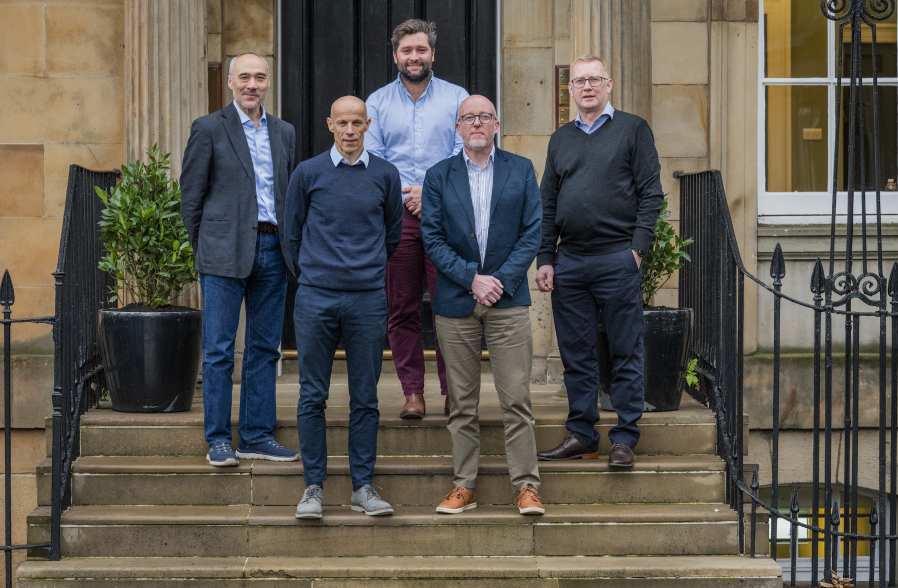
Scottish aquatech startup Aqura Systems has raised £2.1 million to tackle one of the most costly and unpredictable threats facing fish farmers: harmful microorganisms that can kill farmed fish before farmers know they are present.
The funding round was led by Archangels alongside Scottish Enterprise. The company will use the fresh capital to improve its AI-powered robotic monitoring platform, grow its AI training datasets, and conduct further testing ahead of its commercial launch.
Alongside the funding, Aqura Systems has appointed Norwegian salmon farming veteran Charles Høstlund as chair of its board. The appointment comes as the Scottish startup prepares to enter international markets, with Norway, which produces around half of the world’s farmed salmon, among its first targets.
Founded by Chris Hyde, Steve Ball, and Gareth Hammond, Aqura Systems brings together 80 years of combined aquaculture experience. The founders are betting that automation and artificial intelligence can address a problem the fish farming industry has long managed through manual processes.
At many fish farms, monitoring harmful microorganisms involves collecting water samples and examining them under microscopes. The process is labor-intensive, often inconsistent, and leaves gaps between sampling periods during which potentially harmful conditions can develop.
For farmers managing large salmon populations, those gaps can have expensive consequences.
Using AI and robotics to spot threats before fish farmers suffer losses
Aqura Systems has developed MIAbot, a fully automated robotic monitoring platform that identifies microscopic threats at different depths and locations across fish farms.
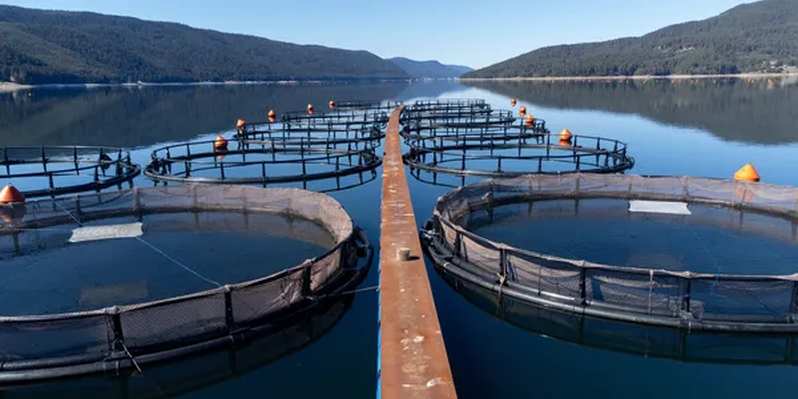
Image Credit: Aqura Systems
The system combines a proprietary imaging technology with the company’s AI engine to identify microorganisms at the species level, measure their concentrations, and collect data on water depth and other water quality parameters.
Its initial focus is on phytoplankton responsible for harmful algal blooms. Future applications include detecting micro jellyfish, sea lice, and amoeba, all of which can threaten fish health.
The idea is to give farmers enough warning to intervene before deteriorating water conditions lead to fish deaths and financial losses.
“The early reception and testing of MIAbot with industry has been very positive. Globally, aquaculture is a £371 billion industry, but many of its processes are still manual, so there’s a huge opportunity to harness technology to improve fish health and increase efficiencies,” Chris Hyde, CEO of Aqura Systems, said.
Pilot programs are already underway with major salmon farming companies in Scotland. The company has yet to disclose quantitative results from those trials, leaving questions about detection accuracy, operating costs, and performance at commercial scale.
Høstlund’s appointment could help Aqura bridge the gap between successful pilot programs and commercial adoption.
He brings more than 25 years of salmon farming experience, including eight years as CEO of Norway Royal Salmon until its 2022 merger with SalMar. He previously held senior positions at Marine Harvest, now Mowi, and currently serves as COO of Nordic Aquafarms.
“Harmful algal blooms are one of the most costly and least predictable risks salmon farmers face, in Norway just as much as in Scotland, and too often the first real warning comes from the fish themselves,” Høstlund said.
“What drew me to Aqura is a team that has spent its career in this industry and is building something farmers can act on: live, species-level information from throughout the water column and across the whole site.”
The investment reflects a less-publicized opportunity in artificial intelligence. Much of the attention surrounding AI has centered on chatbots, software development, and workplace automation. Industries such as aquaculture offer a different proposition, where AI’s economic value can be measured in healthier livestock, reduced losses, and lower operating costs.
For Aqura Systems, the next test is whether its robots can deliver reliable results under changing marine conditions and at a price that makes economic sense for fish farmers.
If the technology delivers on its promise, fish farmers could spend less time reacting to problems and more time preventing them.