Key1 Capital, founded by Former Goldman Sachs executives, raises $320M for second fund following two major exits
 Daniel Levi
Posted On November 23, 2026
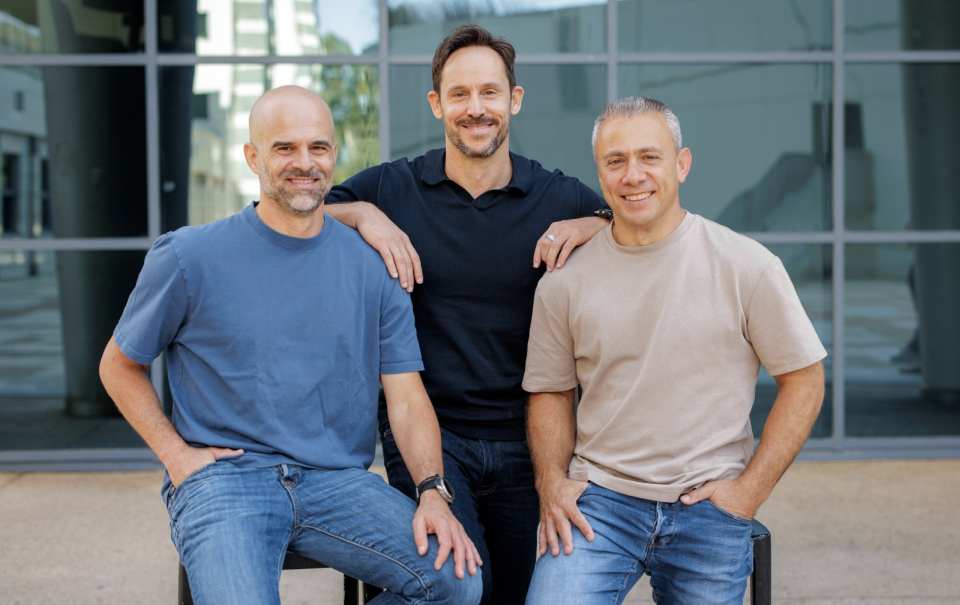
Key1 Capital, a technology investment firm founded by three former Goldman Sachs executives, has raised $320 million in the first close of its second fund, following two successful exits from its inaugural fund. The Tel Aviv-based firm is doubling down on late-stage technology companies, with a particular focus on the infrastructure supporting artificial intelligence, cybersecurity, and enterprise software.
The new fund follows Key1’s $300 million debut fund, which backed SuperPlay, acquired by Playtika in 2024, and DustPhotonics, acquired by Credo Technologies in 2026. Those exits have helped the young investment firm build a track record as venture investors face growing pressure to return capital to their backers.
According to Key1, its first fund ranked among the top 5% of funds from the same vintage for distributions to paid-in capital (DPI), a metric measuring how much money investors have received relative to their contributions. As of June 2026, the fund reported a 20.6% net internal rate of return, with an average investment holding period of less than two years.
That performance appears to be resonating with investors. Key1 said returning investors accounted for 95% of commitments at the new fund’s first close, which drew support from institutional investors, family offices, and technology entrepreneurs.
From Goldman Sachs to backing Israel’s next tech giants
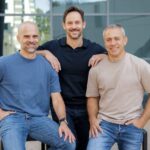
Key1 was founded in 2022 by Sarel Eldor, Amit Pilowsky, and Danny Akerman, three former Goldman Sachs executives who spent nearly two decades working together.
Eldor previously served as CEO of Goldman Sachs Israel, Akerman led technology investment banking in Israel, and Pilowsky headed EMEA Consumer and Retail in the Cross Markets Group.
Their investment strategy focuses on companies that have moved beyond the earliest stages of development. Rather than financing unproven ideas, Key1 targets businesses with established products, paying customers, and opportunities for international growth.
The approach reflects a broader shift in Israel’s technology sector, where more founders are building companies meant to compete globally rather than pursue early acquisitions.
“Over the last decade, we’ve seen a major change in how founders think about building companies. The ambition is no longer to build great technologies and sell early, but rather to build global businesses that lead their categories. More founders have done it, proving it’s possible. Israel had fewer than 10 billion-dollar companies a decade ago. Today, there are more than 100. We see this trend only accelerating, especially with AI enabling scale much quicker,” said Amit Pilowsky, Co-Founder of Key1 Capital.
Key1 estimates that growth-stage investment in Israel increased from $2.7 billion in 2015 to nearly $10 billion in 2025. Yet late-growth investment remains relatively underserved. According to the firm’s analysis, only four of about 210 Israeli venture capital funds focus primarily on late-growth companies.
That gap is central to Key1’s strategy: backing businesses that have demonstrated commercial demand but still need substantial capital and experienced financial guidance to reach the next stage.
Betting on AI infrastructure instead of the next AI model
Key1’s investment thesis stands apart from the rush to finance companies building foundation models and consumer AI applications.
The firm sees opportunities in the less visible technologies that make large-scale AI systems work, including semiconductors, networking, data infrastructure, and security.
“We’re not betting on the next AI model. We’re investing in what makes all of them possible: chips, networking, data, security, and unique applications. Israel has spent decades building expertise in these areas, and we believe this is where the next generation of global technology leaders will emerge,” said Sarel Eldor, Co-Founder of Key1 Capital.
Its portfolio reflects that approach. Key1 has backed WEKA, which develops data infrastructure for AI workloads; FundGuard, which provides cloud-based investment accounting software; Xsight Labs, a semiconductor company; and Sentra, a data security startup.
Other investments include CHEQ, Lyte, Healthee, and Holidu, giving the firm exposure to businesses beyond AI infrastructure.
Key1 says it often tracks prospective investments for years before committing capital. Its partners work with portfolio companies on financing, acquisitions, international growth, and strategic decisions.
The $320 million first close is an early fundraising milestone, rather than a final fund size. Key1 has not disclosed a final target for Fund II.
For Key1, the next test is whether it can repeat its early exits and investment performance across a larger portfolio. Its bet is that the companies supplying the technology behind AI’s growth may prove just as valuable as the companies building the models themselves.