Startup Funding News Today, November 20, 2026: Archer, Everful, Metano, Modern Industrials, SatSure & More
 Nickie Louise
Posted On November 20, 2026

Venture investors backed companies that solve unglamorous but expensive problems over the past 24 hours: sourcing goods from factories, protecting AI agents, moving containers through ports, financing small businesses, and turning satellite imagery into usable information. The largest qualifying round came from Everful, which raised $48.5 million to connect retailers with Chinese manufacturers. But the most revealing feature of the day was the range of real-world operations attracting capital, rather than a single breakthrough model or billion-dollar financing.
Metano disclosed a $12 million seed round for enterprise AI-agent security, while NEPRA – Let’s Recycle secured an $11.7 million equity commitment for waste-processing infrastructure in India. Nodal Networks raised $11.3 million to help cargo terminals make better operating decisions. In India, InPrime Finserv added about $10.7 million for small-business lending, and SatSure disclosed a roughly $7 million investment as part of an unfinished Series B for satellite-data services.
Across the nine qualifying financings selected for this edition, the disclosed amounts total approximately $118.7 million, using rounded dollar equivalents for the Indian investments. Everful alone represents roughly 41% of that figure; the three largest account for about 61%. These are selected announcements, not a census of every venture deal worldwide, and the total is an indicative comparison rather than a currency-exact calculation.
The smaller rounds matter as well. Archer, formerly hackajob, reported a $10 million investment for AI-assisted recruiting; Modern Industrials raised $6 million to put software agents into manufacturing operations; and Extrordinas secured $1.5 million for incident response. Each is competing for a budget that already exists. That is a more useful signal about demand than treating every product with an AI component as part of the same market.
The Macro Environment: Investors Are Paying to Fix Work That Companies Already Do
This reporting period offered no verified multibillion-dollar financing to distort the totals. Instead, it highlighted a different kind of conviction: investors are financing software and infrastructure that can eliminate identifiable delays, prevent costly failures or improve access to services. That can make for smaller checks, but it also gives startups clearer measures of whether their products are earning their keep.
Everful and Nodal illustrate two sides of international commerce. One tries to make sourcing from thousands of factories manageable for smaller buyers; the other works inside shipping terminals where coordination problems create delays. Both depend on messy operational data and relationships with existing industry participants. If sustained, their advantages may be harder for a generic AI assistant to reproduce than a user-facing feature.
Security and governance are another thread. Metano monitors what autonomous software agents do once they are given permissions to operate across corporate systems. Extrordinas tackles investigating and responding to cyber incidents. The two companies offer different products, but share a commercial premise: businesses will pay to reduce the financial and operational cost of mistakes, not merely to generate more information.
The Indian investments broaden the picture beyond software subscriptions. NEPRA is financing physical waste-processing capacity, InPrime is supplying credit to borrowers often underserved by formal lenders, and SatSure combines satellite imagery with analytics used by banks and infrastructure operators. These businesses have constraints that code alone cannot eliminate, including construction costs, loan losses, satellite hardware, and regulation. Those constraints also create opportunities for firms that can execute consistently.
None of these announcements by itself proves a shift in interest rates, exit markets, or global venture allocations. Nor does a successful fundraise establish profitability. The evidence supports a narrower reading: in this selection, investors back startups with a specific customer workflow, a measurable bottleneck, and a plausible reason for customers to keep paying after the initial deployment.
Everful raises $48.5M in funding to connect retailers with factories and simplify global sourcing
Everful announced a $48.5 million Series A funding round co-led by Vertex Ventures Southeast Asia & India and January Capital, with Square Peg and Lightspeed participating. The San Francisco- and Singapore-based startup helps small and mid-sized retailers source products from Chinese factories, then coordinates supplier selection, quality checks, and fulfillment. Its pitch is that businesses should be able to buy internationally without building their own full procurement organization.
The company says its network includes more than 30,000 factory partners and a catalog of over 20 million products. It reports shipping more than 5 million items a month to customers in over 60 countries and expects to approach $100 million in annualized revenue by year-end. Those operational and revenue figures are company claims, not audited disclosures. The reported annualized figure is a projection, not confirmed full-year revenue.
This round is significant because supplier relationships, transaction data, and delivery execution can reinforce one another. But tariffs, product quality, customs requirements, and working-capital demands remain important risks. Investors will ultimately need evidence that Everful can improve service and profitability while managing a complex, cross-border supply chain, not simply process more orders.
Funding Details
Startup: Everful
Investors: Vertex Ventures Southeast Asia & India, January Capital, Square Peg, Lightspeed
Amount Raised: $48.5 million
Total Raised: Not disclosed on a verified lifetime basis
Funding Stage: Series A
Funding Date: November 19, 2026
Headquarters: San Francisco, California, United States, and Singapore
Sector: Global commerce / sourcing infrastructure / supply-chain software
Valuation: Not disclosed
Metano raises $12M in funding to secure autonomous AI agents at work
San Jose-based Metano emerged from stealth on November 19 with a $12 million seed round led by Sierra Ventures. Correlation Ventures, High Alpha, and 360 ONE participated. Its platform discovers AI agents and related software components operating across enterprise systems, examines their activity, and applies controls intended to prevent harmful or unauthorized actions.
An employee using a chatbot is one thing; an agent permitted to read repositories, query databases or call business software is another. Security teams need to know what those agents can access and whether their actions are consistent with their assigned tasks. Metano says its Hive system links activity into a real-time context graph so that decisions can be evaluated across an entire session instead of in isolation.
The market opportunity stems from the gap between deploying agents and supervising them. Metano must show that its detections are accurate, its protections do not interrupt legitimate work, and its product integrates with the systems large customers already use. Those are demanding tests, especially as cloud providers and established cybersecurity companies build competing controls.
Funding Details
Startup: Metano
Investors: Sierra Ventures, Correlation Ventures, High Alpha, 360 ONE
Amount Raised: $12 million
Total Raised: $12 million publicly disclosed at launch
Funding Stage: Seed
Funding Date: November 19, 2026
Headquarters: San Jose, California, United States
Sector: AI agent security/enterprise cybersecurity
Valuation: Not disclosed
NEPRA – Let’s Recycle secures $11.7M in equity to expand waste-processing capacity
India’s NEPRA – Let’s Recycle received an ₹110 crore equity commitment, approximately $11.7 million, from the Private Infrastructure Development Group through its project-development business, InfraCo. The November 19 announcement identifies the investor’s commitment rather than a conventional venture round with a disclosed series label. Existing investors include Aavishkaar Capital, Circulate Capital, Blue Earth Capital and Asha Impact; their earlier investments should not be counted as additional new capital in this transaction.
The Ahmedabad-based recycling business operates in a market where waste collection, sorting and material recovery are often fragmented. It plans to expand daily processing capacity from about 900 tonnes to 1,880 tonnes, and annual plastics-recycling capacity from 6,200 tonnes to approximately 18,000 tonnes. That is planned capacity, not an output level the company has already achieved.
The investment is noteworthy because waste infrastructure demands physical sites, equipment, labor and reliable buyers for recovered materials. NEPRA also seeks to formalize work for informal waste pickers through safer processes and digital payments. Its long-term economics will depend on utilization, recovered-material prices, operating costs, and how consistently municipalities and businesses deliver usable feedstock.
Funding Details
Startup: NEPRA – Let’s Recycle
Investors: Private Infrastructure Development Group / InfraCo (new equity commitment); Aavishkaar Capital, Circulate Capital, Blue Earth Capital and Asha Impact are existing investors
Amount Raised: ₹110 crore (about $11.7 million), announced equity commitment
Total Raised: Not disclosed on a fully reconciled basis
Funding Stage: Equity investment; series not disclosed
Funding Date: November 19, 2026
Headquarters: Ahmedabad, Gujarat, India
Sector: Waste management/recycling infrastructure / circular economy
Valuation: Not disclosed
Nodal Networks raises $11.3M in funding to help shipping terminals move cargo faster

Nodal Networks disclosed an $11.3 million seed round, led by Eniac Ventures, on November 19. NewRoad Capital Partners participated alongside returning investors Riot Ventures, Trail Mix Ventures and Liquid 2 Ventures. The Los Angeles company says the round brings its total funding to $14.5 million.
Nodal’s Malcom platform combines forecasting models and AI-assisted analysis to help port and rail-terminal teams anticipate congestion, plan equipment use and respond to changes in vessel and yard operations. It can work with information scattered across terminal systems, schedules, and operational messages. Rather than replacing the people responsible for a terminal, the software is designed to improve the options they see before making decisions.
The value proposition is unusually concrete: moving more containers through existing facilities can improve capacity without the time and expense of constructing new infrastructure. Nodal says it has worked with terminals on three continents, though it has not disclosed independently verified performance figures for every deployment. Integration costs, reliability during unpredictable disruptions, and measurable throughput improvements will determine how far the company can expand.
Funding Details
Startup: Nodal Networks
Investors: Eniac Ventures, NewRoad Capital Partners, Riot Ventures, Trail Mix Ventures, Liquid 2 Ventures
Amount Raised: $11.3 million
Total Raised: $14.5 million
Funding Stage: Seed
Funding Date: November 19, 2026
Headquarters: Los Angeles, California, United States
Sector: Supply-chain technology/port operations / industrial AI
Valuation: Not disclosed
InPrime Finserv raises $10.7M to extend credit to underserved Indian borrowers
Bengaluru-based InPrime Finserv announced a ₹101 crore Series B, approximately $10.7 million, led by Dutch development bank FMO, with participation from existing investors Z47 and Pravega Ventures. The lender serves small entrepreneurs and households whose businesses may be operating successfully but whose financial records do not fit conventional bank underwriting models.
InPrime uses data analysis and automated tools alongside field operations to assess and service loans. The company says it has served more than 27,000 households, disbursed about ₹517 crore, and operates 46 area offices across several Indian states. It reported gross nonperforming assets of 0.80% as of September 30. That is a company-reported portfolio snapshot, not proof of future credit quality or profitability.
Its plan to expand into micro-mortgages could increase customer demand, but it also introduces longer loan durations and more complex risk management. For investors, the relevant questions are whether underwriting remains sound as the portfolio grows, whether collections perform through weaker economic conditions, and whether technology materially lowers the cost of serving borrowers.
Funding Details
Startup: InPrime Finserv
Investors: FMO, Z47, Pravega Ventures
Amount Raised: ₹101 crore (approximately $10.7 million)
Total Raised: ₹190 crore, reported
Funding Stage: Series B
Funding Date: November 19, 2026
Headquarters: Bengaluru, Karnataka, India
Sector: Fintech / non-bank lending/credit underwriting
Valuation: Not disclosed
Archer raises $10M in funding to bring AI-assisted recruiting to more employers
Archer, the AI-recruiting product developed by the company formerly known as hackajob, disclosed a $10 million financing led by Volition Capital, with participation from AVP. The company has not identified a conventional funding stage for this round.
Archer aims to fix a recruiting problem worsened by automation on both sides: job seekers can generate and submit far more applications, while employers face an expensive filtering exercise. Its software finds prospective candidates, checks qualifications and introduces them to recruiters, while also recommending relevant roles to job seekers. The company says it serves about 120 enterprise customers and that annual recurring revenue increased fivefold over the past year; it did not publish absolute revenue.
The investment tests whether AI can improve actual hiring outcomes rather than merely accelerate application volume. Recruitment software must deal with privacy, potential discrimination, unreliable candidate information, and integration into employers’ existing systems. A durable advantage will require independently measurable improvements in candidate quality, conversion rates and hiring costs.
Funding Details
Startup: Archer (formerly hackajob)
Investors: Volition Capital, AVP
Amount Raised: $10 million
Total Raised: Not disclosed on a verified lifetime basis
Funding Stage: Not disclosed
Funding Date: November 19, 2026 (first reported); company announcement dated November 20
Headquarters: London, United Kingdom, with operations in New York
Sector: Recruitment technology / AI enterprise software
Valuation: Not disclosed
SatSure discloses roughly $7M in funding from Indian space fund for satellite-data expansion
Indian Earth-observation startup SatSure disclosed a ₹600 million investment, which Reuters described as approximately $7 million, from the government-backed Antariksh Venture Capital Fund. It is part of an ongoing ₹2 billion Series B, not evidence that the entire round has closed. The investment carries a reported ₹8.7 billion post-money valuation.
SatSure combines satellite imagery with analytics used by banks, insurers, infrastructure firms and government agencies. Its subsidiary KaleidEO develops Earth-observation imaging systems. Named customers include HDFC Bank, ICICI Bank, Axis Bank, Bayer, and the Airports Authority of India. The financing is connected to imaging payloads planned for launch in 2027 and efforts to sell more satellite-derived intelligence internationally.
The distinction between committed and prospective financing is important here. The larger planned Series B includes ₹1.65 billion in new equity, ₹250 million in venture debt and ₹100 million in secondary share transfers. Those components should not be treated as one fully completed equity round. The business must also show that its proprietary imagery and interpretation provide enough value to justify recurring customer contracts amid competing satellite-data providers.
Funding Details
Startup: SatSure
Investors: Antariksh Venture Capital Fund, managed by SIDBI Venture Capital (newly reported commitment)
Amount Raised: ₹600 million (reported as approximately $7 million), committed within an ongoing Series B
Total Raised: ₹4.27 billion in institutional financing reported by Reuters, excluding grants
Funding Stage: Series B, ongoing and not fully closed
Funding Date: November 20, 2026
Headquarters: Bengaluru, Karnataka, India
Sector: Space technology / Earth observation / geospatial analytics
Valuation: ₹8.7 billion post-money, reported
Modern Industrials raises $6M in funding to automate manufacturing and distribution workflows

New York startup Modern Industrials announced a $6 million seed round, led by Glasswing Ventures, co-led by TMV, with participation from a16z speedrun and others. The company develops AI software agents for manufacturers and distributors, focusing on tasks such as quoting, order entry, procurement, inventory decisions, and customer support.
Industrial suppliers often rely on decades-old business systems that do not exchange information cleanly. Modern Industrials says it builds around those existing workflows rather than asking customers to replace their operational software. It cites deployments with manufacturing and distribution companies, though it has not independently established its claimed savings and efficiency improvements across a broad customer base.
The opportunity is substantial because mistakes in purchasing or order management directly affect margins and customer relationships. The risk is that custom implementations become expensive consulting projects rather than repeatable software revenue. Investors should watch deployment time, ongoing service costs, and whether customers expand usage without requiring a new integration for every workflow.
Funding Details
Startup: Modern Industrials
Investors: Glasswing Ventures, TMV, a16z speedrun and other investors
Amount Raised: $6 million
Total Raised: $6 million publicly disclosed
Funding Stage: Seed
Funding Date: November 19, 2026
Headquarters: New York, New York, United States
Sector: Industrial AI/manufacturing and distribution software
Valuation: Not disclosed
Extrordinas raises $1.5M in funding to simplify cybersecurity incident response
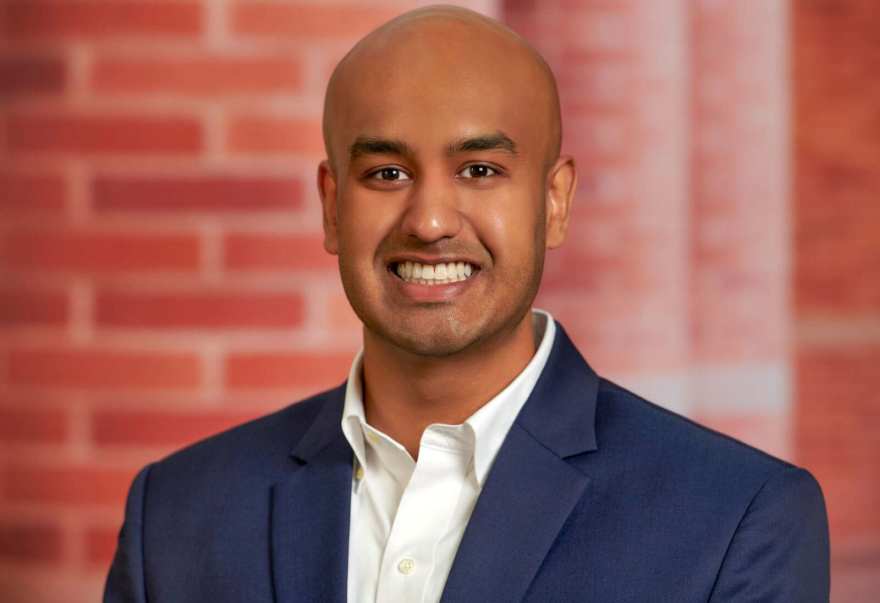
California-based Extrordinas announced $1.5 million from angel investors to develop an incident-response platform for specialist security firms, managed service providers, and enterprise teams. The company did not identify the investors individually or label the financing with a conventional stage.
Its software covers activities such as collecting evidence, investigating suspected ransomware or business email compromise, and producing information that helps organizations decide how to respond. The company uses AI as one component of that process rather than claiming that a language model can independently conduct every investigation. Its founders bring incident response experience from CrowdStrike and the FBI.
This is a small round, but it addresses a problem with a direct financial cost: prolonged outages and slower containment of attacks. The company must prove its tooling saves investigators time without sacrificing forensic accuracy or evidence handling. Distribution through service providers could give it a route to market, although established incident-response vendors present formidable competition.
Funding Details
Startup: Extrordinas
Investors: Unnamed angel investors
Amount Raised: $1.5 million
Total Raised: $1.5 million publicly disclosed
Funding Stage: Not disclosed
Funding Date: November 19, 2026
Headquarters: El Segundo, California, United States
Sector: Cybersecurity / incident-response software
Valuation: Not disclosed
What Today’s Funding Activity Reveals
Operational software remains an investable AI category. Everful, Nodal, Modern Industrials and Archer target established business processes with measurable costs. Their value proposition isn’t a better chat interface; it is fewer mistakes, less delay, or higher-quality results. Enterprise buyers can compare those claims against their own operating data.
India’s capital needs are unusually diverse in this selection. NEPRA’s recycling facilities, InPrime’s credit operations and SatSure’s satellite systems illustrate different kinds of capital intensity. They should not be lumped into one growth-software category. NEPRA needs physical capacity, InPrime needs strong loan underwriting, and SatSure needs reliable imaging and data services.
Security investment is moving into both prevention and response. Metano focuses on controlling what AI agents can do, while Extrordinas helps investigators respond after something has gone wrong. Different purchasing teams may own those budgets, and they measure return on investment differently. Both depend on credibility when errors are expensive.
Funding composition deserves more attention than eye-catching totals. NEPRA announced an equity commitment. SatSure’s broader, still-open round includes debt and secondary transfers. Reporting the full planned SatSure package as newly raised equity would misrepresent the capital available to operate the company. This matters particularly when comparing capital-efficient software startups with infrastructure-heavy businesses.
No sweeping geographic conclusion follows from one day. Five selected startups have a primary U.S. base, three are in India, and one is based in the United Kingdom. That reflects the announcement evidence available in this precise reporting period, not a new global ranking of venture ecosystems.
Tech Funding Table
| Startup | Amount Raised | Sector | Funding Stage | Lead/Key Investors | Country |
|---|---|---|---|---|---|
| Everful | $48.5M | Global sourcing and supply-chain software | Series A | Vertex Ventures Southeast Asia & India; January Capital | US / Singapore |
| Metano | $12M | AI-agent cybersecurity | Seed | Sierra Ventures | US |
| NEPRA – Let’s Recycle | ₹110Cr (~$11.7M) | Recycling infrastructure | Equity; stage undisclosed | PIDG / InfraCo | India |
| Nodal Networks | $11.3M | Port operations and industrial AI | Seed | Eniac Ventures; NewRoad Capital Partners | US |
| InPrime Finserv | ₹101Cr (~$10.7M) | Non-bank lending | Series B | FMO; Z47; Pravega Ventures | India |
| Archer | $10M | AI recruiting | Not disclosed | Volition Capital; AVP | UK |
| SatSure | ₹600M (~$7M) | Earth observation and geospatial analytics | Ongoing Series B | Antariksh Venture Capital Fund | India |
| Modern Industrials | $6M | Manufacturing and distribution AI | Seed | Glasswing Ventures; TMV; a16z speedrun | US |
| Extrordinas | $1.5M | Incident-response cybersecurity | Not disclosed | Angel investors | US |
Funding note: The approximately $118.7 million selection total uses published rounded U.S.-dollar equivalents. It counts only SatSure’s newly reported ₹600 million commitment, not its unfinished ₹2 billion financing package, and does not include secondary or prospective debt financing as new equity. NEPRA’s amount is an announced equity commitment. Differences in currency conversion and disbursement timing mean the figure should not be read as an audited cash-flow total.
Strategic Takeaways for Founders and Investors
1. Start with a bill the customer already pays. Nodal addresses terminal congestion; Modern Industrials targets order-processing labor; Archer tackles recruiting costs. A direct link to an operating expense makes a product easier to evaluate than a general promise of AI productivity.
2. Domain-specific data can be more defensible than a model feature. Everful’s supplier information and Nodal’s terminal-operating context are embedded in complex commercial relationships. Founders should consider whether the data improves with customer use and whether competitors can easily copy that improvement.
3. A security claim needs evidence, not just policy language. Metano must show it can recognize unsafe agent behavior and intervene without generating excessive false alarms. Extrordinas must preserve reliable investigative evidence. Credibility will depend on controlled tests and live customer outcomes.
4. Measure deployment economics before scaling sales. Modern Industrials and Nodal both integrate with existing systems. High revenue per customer may be less attractive if implementation and support costs eat into margins. Repeatable onboarding matters.
5. Capital intensity changes what good execution looks like. NEPRA needs facility utilization, SatSure needs payload and data performance, and InPrime must manage credit risk. Investors should avoid comparing those companies solely on revenue multiples or product release speed.
6. A reported transaction volume or AI efficiency claim is not profit. Everful’s projected annualized revenue, Archer’s customer benchmarks and InPrime’s loan performance figures offer useful leads for diligence, but none substitutes for verified profitability, retention or long-term loss performance.
7. Distinguish committed capital from a fundraising target. SatSure’s ₹600 million investment is meaningful; its wider ₹2 billion Series B is not yet a completed all-equity raise. That difference affects runway calculations, valuation comparisons and investor confidence.
8. Distribution matters as much as model performance. Archer’s recruiting relationships, InPrime’s regional offices and Everful’s factory network provide routes to customers and data. Software advantages can erode faster than a strong channel or trusted operating partnership.
9. A smaller round can still serve a compelling market. Extrordinas’ $1.5 million financing does not compete in size with Everful’s round, but the startup targets a recurring, costly security task. Assess market significance through adoption and margins, not the check alone.
Conclusion
The November 20 funding selection shows investors backing companies that can make existing systems work better: moving goods, securing agents, processing waste, financing underserved customers, and translating satellite data into decisions. Everful’s $48.5 million round dominates the total raised, but the smaller financings remind us that venture demand extends well beyond giant AI labs.
The next test for these companies will be commercial, not rhetorical. Can they lower a cost customers can measure, deliver reliably inside difficult environments, and maintain healthy economics as they grow? The companies that answer those questions with evidence will have a stronger argument than those relying on the size of a funding announcement.