Anthropic raises record $81.3 billion in historic IPO, surpasses spaceX ahead of Nasdaq debut at $1.5 trillion valuation
 Daniel Levi
Posted On November 19, 2026

Anthropic has raised a staggering $81.3 billion in the largest initial public offering in history, surpassing SpaceX’s record-setting June debut and giving the Claude AI maker a fully diluted valuation of approximately $1.5 trillion. The blockbuster offering comes as Wall Street wrestles with a question that could shape the next chapter of artificial intelligence: Can the companies building the most advanced AI systems generate enough profit to justify their enormous valuations?
The San Francisco-based AI company priced its IPO at $83 per share on Wednesday, November 18, above its original $70 to $78 range, according to CNBC, citing its regulatory filings. Anthropic increased the offering to 980 million shares from an initial 825 million, reflecting strong institutional demand.
Anthropic shares are expected to begin trading Thursday on the Nasdaq under the ticker symbol ANT, marking the first public listing of a major frontier AI model developer. The IPO’s pricing sets the stage for one of the most closely watched stock market debuts in years.
The historic offering eclipses Elon Musk’s SpaceX, which raised approximately $75 billion in its June IPO before additional share purchases increased the total to $85.7 billion.
Anthropic’s $107 Billion Capital Event Signals Wall Street’s Appetite for AI
The IPO is just one part of a much larger financial transaction.
According to Anthropic’s SEC filing, the company secured an additional $26 billion through a concurrent private placement involving major technology companies, bringing the combined IPO and private placement value to approximately $107.3 billion.
The private investors include Nvidia, Microsoft, Google, AMD, Broadcom, Micron, and Taiwan Semiconductor Manufacturing Company, among others.
The arrangement highlights the increasingly intertwined financial relationships shaping the AI industry. Several companies investing in Anthropic supply the chips, cloud infrastructure, and computing systems needed to train and operate its AI models.
Of the 980 million IPO shares, Anthropic is selling approximately 956.4 million. Existing shareholders are selling the remaining 23.6 million shares, meaning the full $81.3 billion offering does not go directly into the company’s treasury.
Investor enthusiasm has been difficult to ignore. Reuters reported that Anthropic shares were trading roughly 26% higher in the over-the-counter gray market ahead of their Nasdaq debut, according to brokerages IG Markets and CMC Markets.
The excitement has spread across technology stocks. Nasdaq futures climbed early Thursday as traders prepared for Anthropic’s listing, offering a rare boost to a sector facing renewed questions about AI spending and valuations.
The timing is significant. Nvidia’s latest earnings report and Anthropic’s market debut have become two major tests of investor confidence in the AI industry.
A $1.5 Trillion Valuation Comes With Enormous Expectations
Anthropic’s remarkable ascent began in 2021, when former OpenAI researchers, including siblings Dario and Daniela Amodei, founded the company to develop AI systems with a greater emphasis on safety.
Its Claude family of models has since emerged as a leading competitor to OpenAI’s ChatGPT, gaining traction among enterprises, software developers, and organizations adopting AI for complex business tasks.
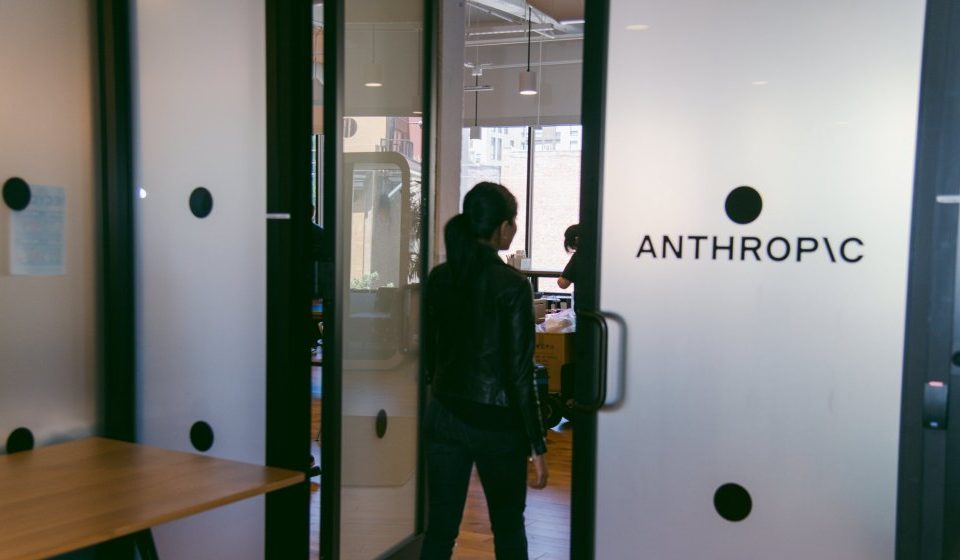
Anthropic (Credit: Anthropic)
The company’s growth has been extraordinary. Reuters also reported that Anthropic’s annualized revenue run rate reached approximately $81 billion by the end of October 2026, underscoring the commercial demand for its technology.
Yet generating revenue and producing sustainable profits are two very different challenges.
Anthropic has committed nearly $900 billion to future computing capacity through partnerships involving Amazon, Google’s parent company Alphabet, and other infrastructure providers. Those commitments reflect the extraordinary expense of competing at the frontier of AI development.
Investors must now weigh that spending against the company’s growth potential, mounting competition, and the possibility that cheaper AI models could put pressure on pricing.
The company’s own IPO prospectus acknowledges serious risks associated with developing increasingly capable AI systems, including unpredictable behavior, cybersecurity threats, and potentially catastrophic consequences.
For Wall Street, the immediate question is whether Anthropic’s shares can sustain their momentum once public trading begins.
For the broader technology industry, the stakes extend far beyond one company’s valuation.
Anthropic is becoming the first major publicly traded benchmark for frontier AI, giving investors a direct way to assess the economics of developing advanced AI models. OpenAI, its closest rival, is reportedly considering its own public listing in 2027.
Anthropic has already broken the IPO record. Its next challenge is proving that a $1.5 trillion AI company can eventually deliver profits worthy of its price tag.