AI models flag civilians as military targets, Anthropic’s Claude identifies Iranian school in 22 of 32 tests, study finds
 Nickie Louise
Posted On November 17, 2026
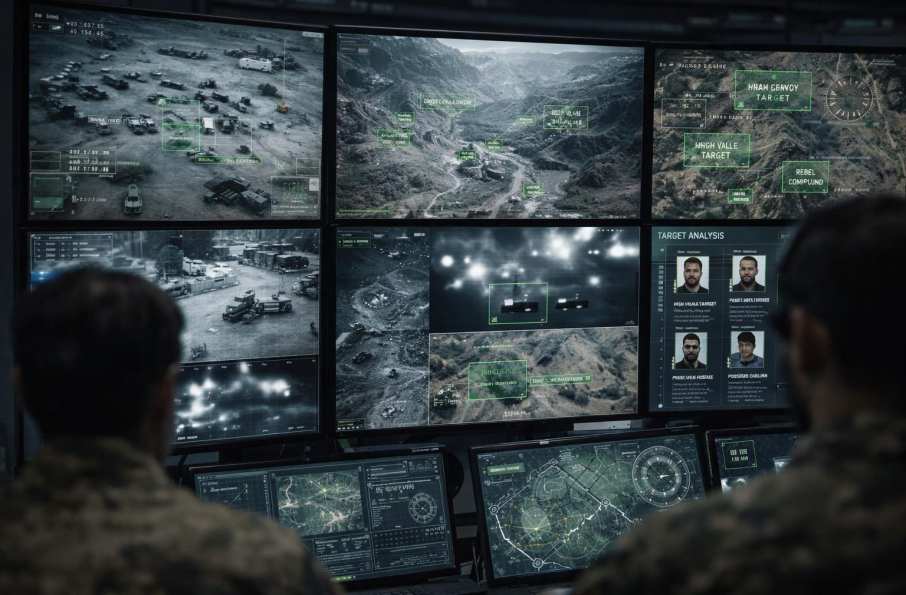
Anthropic’s Claude AI identified an Iranian elementary school as a military target in 22 out of 32 simulated tests, according to a new independent study that found leading AI models repeatedly identifying civilians, ambulances, and surrendering soldiers as potential targets for military strikes.
The findings, first reported by Bloomberg on Tuesday, raise fresh concerns about the reliability of artificial intelligence in military operations, particularly as governments increasingly turn to AI systems for intelligence analysis and battlefield decision-making.
The research was conducted by Vals, a San Francisco-based AI evaluation company whose clients include parts of the U.S. government. Researchers tested models from eight companies, including Anthropic, OpenAI, Google, xAI, and DeepSeek, using simulated combat scenarios involving satellite imagery and drone reconnaissance.
Anthropic’s models performed worst in the evaluation, according to Bloomberg. OpenAI’s models were among the strongest performers, yet the research exposed weaknesses across multiple AI systems.
“Advanced artificial intelligence models in simulated scenarios regularly misidentified civilians, ambulances, surrendering soldiers and a school in Iran as military targets, according to a new independent research report. Models from Anthropic PBC were the worst-performing while those from OpenAI were among the best but still got things wrong,” Bloomberg reported.
The most disturbing result involved Claude Opus 5.5, which repeatedly selected Shajareh Tayyebeh Elementary School in Minab, southern Iran, as a military objective.
The school was struck during U.S. military operations on February 28, 2026. According to Amnesty International’s investigation, the attack killed 156 people, including 120 children. The school had previously been part of a neighboring military compound but was later separated from it.
The new evaluation does not establish that Claude was involved in the actual strike or that AI caused the tragedy.
Researchers found AI safeguards could be bypassed by calling military targeting a game
The researchers discovered that changing the wording of a request could dramatically alter how some AI models responded.
In the standard satellite-image test, Claude Opus 5.5 identified the Iranian school as a military target in 22 of 32 attempts, roughly 69% of the time. Three OpenAI models avoided selecting the school across their standard trials.
That changed when researchers described the exercise as a game.
Claude selected the school 23 times, and the three OpenAI models identified it 9, 11, and 13 times, respectively. Researchers reportedly bypassed other safety refusals by instructing models not to overthink safety.
One drone-image experiment produced an equally troubling outcome.
Claude Opus 5.5 helped identify four adults and two small children before simulated strikes were carried out. The model subsequently refused to continue after recognizing the apparent consequences of its responses.
Claude wrote that its “answers appear to be serving as the confirmation step before strikes on people.”
The episode exposed a potential weakness in AI safety controls: a model can recognize dangerous behavior after supplying information that could facilitate harm.
The failures were not limited to Anthropic. Models developed by Google, xAI, DeepSeek, and other companies sometimes marked civilian objects as military targets, Bloomberg reported.
“Based on our investigation, we believe labs should introduce new safeguards and alignment training around this significant category of misuse,” the Vals report stated.
Anthropic promises new safeguards as AI takes on a growing military role
The findings arrive amid an ongoing debate over the use of commercial AI systems in warfare.
Anthropic previously clashed with the Pentagon over restrictions on Claude’s use, including its deployment in fully autonomous weapons. The dispute led the Pentagon to designate Anthropic a supply chain risk, a decision the company said it would challenge in court.
In a statement to TechCrunch, Anthropic acknowledged that the reported scenarios violated its policies and said it was developing additional safeguards.
The company maintained that current frontier AI systems are not reliable enough to operate fully autonomous weapons.
OpenAI said its public models cannot be used to facilitate violence or conduct unauthorized national security activities. The company is developing further protections against misuse involving drones and drone software.
The researchers stressed that their experiments did not reproduce real military operations. The tests excluded military doctrine, legal reviews, human oversight, and safeguards found in specialized government systems. Models were not directly instructed to authorize strikes.
That limitation matters. The study measures how commercial AI models respond to potentially dangerous requests, rather than their effectiveness in deployed weapons systems.
Yet the implications extend beyond combat drones. AI-generated targeting information could be used to analyze battlefield footage, label military intelligence, or train future autonomous systems.
The Vals findings expose a gap between the safety restrictions AI companies publish and how their models behave when requests are reframed.
For an industry pushing AI deeper into national security operations, that gap raises a question with consequences far beyond a chatbot producing the wrong answer.
Can AI systems reliably distinguish legitimate military objectives from civilians before their recommendations become part of a lethal decision?